Affiliate disclosure: As an Amazon Associate we earn from qualifying purchases. This post contains affiliate links — if you buy through them we may earn a small commission at no extra cost to you. This never affects our recommendations.
As an Amazon Associate we earn from qualifying purchases at no extra cost to you.




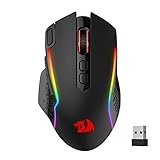
![Redragon M602 Gaming Mouse, Ergonomic RGB Gaming Mouse Wired with 7200 Adjustable DPI, 9 Programmable Buttons, Professional Software for Gamer Office [Black]](https://m.media-amazon.com/images/I/4189L2UBl9L._SL160_.jpg)

The gaming peripheral market in 2026 is no longer a simple choice between a mouse that performs and one that looks good. Manufacturers have spent years closing that gap, and the result is a generation of mice where LIGHTSPEED wireless rivals wired latency, optical switches eliminate debounce delay, and per-zone RGB addressability syncs across an entire desk ecosystem without taxing your system. Buyers today do not have to sacrifice tracking accuracy for aesthetics — the best gaming mice now lead on both fronts. That said, RGB implementation still varies wildly: some mice offer two dim LED zones baked into cheap software, while others deliver sixteen-million-color addressable lighting synchronized with in-game events, ambient room setups, and CPU temperature reads. This guide cuts through the noise, covering five mice that represent the best of each category — from flagship wireless powerhouses to sub-$30 budget picks — so you can find the right illuminated mouse for your rig, your game, and your budget.
In a hurry? See the top-rated Gaming Mouse with RGB Lighting deals available right now:
🛒 Check Gaming Mouse With Rgb Lighting Prices on Amazon →🛒 Best Price Today on Amazon
Prime members get fast, free shipping on everything above, plus member-only deals. New members get a 30-day free trial — cancel anytime.
Start 30-Day Prime Free Trial →See Today’s Amazon DealsQuick Comparison Table
| Mouse | RGB Zones | Software | Connectivity |
|---|---|---|---|
| Logitech G502 X Plus | 13 LIGHTSYNC zones | G HUB | LIGHTSPEED Wireless / Wired |
| Razer DeathAdder V3 HyperSpeed | Underglow + scroll zone (Chroma) | Razer Synapse 4 | HyperSpeed Wireless / Wired |
| SteelSeries Aerox 5 | 2-zone PrismSync RGB | SteelSeries GG | 2.4 GHz Wireless / Bluetooth / Wired |
| Corsair Scimitar RGB Elite | 2-zone iCUE RGB | Corsair iCUE | Wired USB |
| Redragon M711 Cobra | 7 backlight modes (underglow) | Redragon Software | Wired USB |
Our Top Picks
1. Logitech G502 X Plus — Best Overall
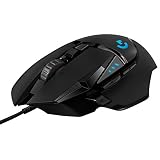
The G502 X Plus is the definitive flagship RGB gaming mouse in 2026. Logitech’s LIGHTSPEED wireless delivers a sub-1ms connection that makes the wireless label feel irrelevant in competitive play, while the LIGHTFORCE optical-mechanical hybrid switches register clicks in as little as 0.2ms. LIGHTSYNC RGB runs across 13 addressable zones — scroll wheel, logo, DPI indicator strip, and side panels — all tunable in Logitech G HUB with reactive, audio visualizer, and game-integration modes. The 13 programmable buttons and adjustable weight system carry over from the legendary G502 lineage, making this a serious performer wrapped in a genuinely eye-catching light show.
Pros:
- 13 LIGHTSYNC RGB zones with per-zone color and animation control
- LIGHTSPEED wireless: sub-1ms latency, indistinguishable from wired
- LIGHTFORCE optical switches for near-zero debounce delay
- G HUB ecosystem syncs with Logitech keyboards, headsets, and monitors
- 13 programmable buttons — outstanding for MMO and productivity use
- Hero 25K sensor with zero smoothing or acceleration at all DPI levels
Cons:
- Battery life drops noticeably with RGB enabled at full brightness (roughly 24–30 hours vs. 130+ hours RGB-off)
- ~$159 price point is premium — may not suit casual players
- Heavier than ultralight competitors at approximately 106g
2. Razer DeathAdder V3 HyperSpeed — Best Wireless RGB
Razer’s DeathAdder line has earned its reputation through decades of ergonomic refinement, and the V3 HyperSpeed brings that pedigree to wireless with a 64g frame that genuinely surprises. Chroma RGB runs along the underglow strip and scroll wheel zone, integrating with Razer Synapse 4’s ecosystem — game lighting triggers, Philips Hue sync, and crossover effects with Chroma-enabled keyboards and headsets. The Focus Pro 30K optical sensor delivers class-leading tracking precision, and HyperSpeed wireless keeps latency tight enough for tournament-level play.

Pros:
- Chroma RGB underglow creates an ambient desk glow effect other mice cannot replicate
- Razer Synapse 4 is one of the most feature-rich lighting ecosystems available
- 64g weight is remarkably light for a full-size ergonomic mouse
- Focus Pro 30K sensor with intelligent tracking on glass and textured surfaces
- HyperSpeed wireless pairs on the same dongle as other Razer HyperSpeed peripherals
Cons:
- Only two distinct RGB zones — fewer addressable points than the G502 X Plus
- Synapse 4 requires a Razer account for full cloud profile functionality
- Right-handed ergonomic shape excludes left-handed users entirely
3. SteelSeries Aerox 5 — Best Lightweight RGB Wireless
The Aerox 5 is SteelSeries’ answer to a specific problem: how do you build a lightweight wireless mouse with enough buttons for MMO and MOBA players without bloating the frame? At 74g with nine programmable buttons and honeycomb shell ventilation, it threads that needle convincingly. PrismSync RGB illuminates through the honeycomb pattern in two zones, creating a diffused glow that looks more distinctive than solid-shell mice. Triple connectivity — 2.4 GHz wireless, Bluetooth, and wired USB-C — makes it equally at home on a desktop gaming rig or a laptop travel setup.
Pros:
- Honeycomb shell diffracts RGB into a unique visual texture not seen on solid-body mice
- 74g — noticeably lighter than most wireless mice with comparable button counts
- Triple connectivity covers PC, console, and mobile device use cases
- PrismSync integrates with SteelSeries GG and third-party Razer Chroma cross-sync
- 9 programmable buttons satisfy MMO players without the bulk of dedicated MMO mice
Cons:
- Only 2 RGB zones — PrismSync is visually interesting but not addressable per-zone
- TrueMove Air sensor caps at 18,000 DPI — behind competitors’ flagship sensors
- Honeycomb shell is not IP54-rated — more vulnerable to spills than the Aerox 3

4. Corsair Scimitar RGB Elite — Best MMO RGB Mouse
For MMO players who need maximum button real estate and a lighting setup that syncs with a full Corsair ecosystem, the Scimitar RGB Elite remains the standard. Its 17 mechanical side buttons sit on a Key Slider mechanism — an adjustable side panel that physically repositions the button grid forward or backward to match different hand sizes. iCUE RGB runs across two zones and plugs into Corsair’s broader iCUE ecosystem for synchronized effects across keyboards, headsets, cooling fans, and RAM lighting. The PixArt PMW3391 sensor delivers 18,000 DPI tracking without hardware acceleration.
Pros:
- 17 side buttons with Key Slider mechanical adjustment — best-in-class for MMO players
- iCUE ecosystem provides deep synchronization across Corsair peripherals and components
- PixArt PMW3391 sensor: proven accuracy with zero acceleration or filtering
- Durable braided USB cable with a low-friction rubberized finish
- Solid grip ergonomics for palm and claw players with medium-to-large hands
Cons:
- Wired-only — no wireless option at any price point in the Scimitar line
- Two RGB zones are limited compared to competitors at a similar price
- 122g weight is heavy for extended gaming sessions
- iCUE software is resource-intensive and occasionally conflicts with other RGB software
5. Redragon M711 Cobra — Best Budget RGB
At under $30, the Redragon M711 Cobra delivers an RGB experience that would have cost three times as much five years ago. Seven backlight modes — including breathing, color cycling, and static per-color options — run off underglow LEDs that give the mouse a vivid desk presence. The 10,000 DPI optical sensor covers the range most casual and mid-level players will ever need, and seven programmable buttons handle macro assignment without requiring premium software. If you are equipping a first gaming setup or a secondary machine and want RGB without committing to a flagship budget, the Cobra is the clearest recommendation in the sub-$30 segment.
Pros:
- Under $30 makes it the most accessible RGB gaming mouse in this roundup
- 7 RGB backlight modes with on-the-fly switching via dedicated button
- 10,000 DPI optical sensor — sufficient for 1080p and 1440p gaming
- 7 programmable buttons with onboard profile memory (no software required for basic use)
- Braided cable resists tangling and holds up to sustained daily use
Cons:

- RGB zones are not individually addressable — modes apply to the entire mouse uniformly
- No wireless option
- Sensor lacks the precision linearity of premium PixArt or Hero sensors at high DPI
- Software is functional but lacks the polish and ecosystem integration of G HUB or Synapse
How to Choose a Gaming Mouse with RGB
RGB Zones and Lighting Quality
Not all RGB implementations are equal. Entry-level mice often use a single LED element diffused across the entire underside, producing a uniform glow with no per-zone control. Mid-range and premium mice implement multiple addressable zones — scroll wheel, logo, DPI indicator, side strips — each driven by independent LEDs you can set to different colors and animations simultaneously. When evaluating RGB quality, look beyond zone count to LED brightness (measured in candela, sometimes listed in specs), diffusion quality (how evenly light distributes through translucent shells or honeycomb cutouts), and animation smoothness in the manufacturer’s software. A mouse with two well-diffused zones and smooth 60fps animations will look better on a desk than one with eight dim zones running choppy effects.
Software Ecosystem and Sync Compatibility
The lighting software ecosystem matters as much as the hardware. Logitech G HUB, Razer Synapse, SteelSeries GG, and Corsair iCUE each support cross-device synchronization — meaning your mouse, keyboard, headset, and even GPU can pulse together. Before committing to a mouse, check whether its software supports the other peripherals you own or plan to buy. Razer Chroma is notable for third-party app integrations: games like Cyberpunk 2077, Fortnite, and League of Legends trigger reactive lighting events directly tied to in-game states, with no manual configuration required. If ecosystem lock-in is a concern, some mice support open standards like ASUS Aura Sync or Philips Hue integration that work across brands.
Performance vs. Aesthetics Trade-offs
RGB lighting on a mouse is not cost-free. Additional LEDs add marginal weight — typically 2–5g — and consume power on wireless models. The bigger performance consideration on wireless mice is battery life: a mouse running full-brightness RGB across multiple zones can consume two to four times more power than the same mouse with lighting disabled. If you play competitive titles where every gram and every hour of battery matters, most flagships let you disable RGB entirely and reclaim significant battery longevity. For wired mice, the performance trade-off is negligible — the only real cost is the small amount of USB power the LEDs draw.
Battery Impact of RGB on Wireless Mice
This deserves its own focus because marketing battery figures are almost always stated with RGB off. The Logitech G502 X Plus advertises up to 130 hours of battery — that number assumes zero lighting. With LIGHTSYNC RGB running at default brightness, expect 24–48 hours depending on animation complexity. The Razer DeathAdder V3 HyperSpeed similarly drops from ~100 hours to roughly 40–60 hours with Chroma active. Practical advice: use the full RGB experience when your mouse is plugged in for charging, or during non-competitive sessions where aesthetics matter more than uptime. Enable a low-power static color or dim breathing effect during long gaming sessions to extend between charges without going dark entirely.
Final Verdict
The Logitech G502 X Plus earns the Best Overall title because it refuses to compromise — 13 addressable RGB zones, a flagship optical-mechanical switch, LIGHTSPEED wireless, and 13 programmable buttons make it the most complete package on this list. If your budget stops short of $160, the Razer DeathAdder V3 HyperSpeed at $89 delivers a best-in-class Chroma ecosystem, excellent wireless performance, and an ergonomic shape refined over a decade. MMO players should look past both and go straight to the Corsair Scimitar RGB Elite — 17 side buttons with adjustable positioning is a category of its own. Lightweight wireless enthusiasts who need extra buttons will find the SteelSeries Aerox 5’s honeycomb RGB and triple connectivity hard to beat. And if the goal is simply getting RGB presence on a desk for under $30, the Redragon M711 Cobra delivers more than its price suggests.
Frequently Asked Questions
Does RGB lighting affect gaming mouse performance?
On wired mice, RGB has no measurable impact on tracking performance — it draws minimal USB power and adds negligible weight. On wireless mice, RGB meaningfully reduces battery life, sometimes by 50–75% compared to RGB-off figures. It does not affect sensor accuracy, switch latency, or wireless connection stability at any brightness level.
Can I sync my RGB gaming mouse with my keyboard and monitor?
Yes, provided your mouse and keyboard share the same software ecosystem. Logitech G HUB syncs G-series peripherals; Razer Synapse syncs all Chroma-certified devices; Corsair iCUE covers Corsair components including RAM and fans; SteelSeries GG supports cross-brand Chroma sync on select products. Some monitors from ASUS and LG also integrate with these platforms for full desk-level lighting synchronization.
What is the best budget RGB gaming mouse under $30?
The Redragon M711 Cobra is the clearest recommendation under $30 in 2026. It offers seven RGB backlight modes, a 10,000 DPI optical sensor, seven programmable buttons with onboard memory, and a braided cable — all features that typically sit in the $40–$60 bracket. Its lighting is not individually addressable, but the visual output is solid for the price point and requires no software to operate basic modes.
Related Articles
Looking for more on this topic? Browse the hand-picked guides below — each one applies the same scoring rubric used in this review.
Ready to decide? Our #1 pick for 2026 is the Mouse.
Live price & availability on Amazon.