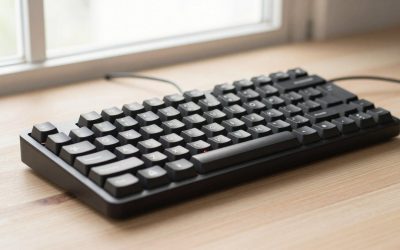
- Top Pick: GEODMAER 65% Gaming Keyboard, Wired Backlit Mini Keyboard, Ultra-Compact Anti-Ghosting No-Conflict 68 Keys Membrane Gaming Wired Keyboard for PC Laptop Windows Gamer
- Best Value: Aula WIN60 HE – 60% Mechanical Gaming Keyboard Wired, Magnetic Switch Hot Swappable, Adjustable Actuation Rapid Trigger Mode, 8000 Hz Polling Rate, RGB Small Keyboard 60 Percent Compact Design for PC
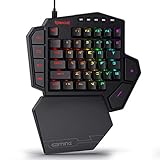
- Premium Choice: Redragon K585 Wired One-Handed RGB Gaming Keypad, Tactical 42-Key Layout
Affiliate disclosure: As an Amazon Associate we earn from qualifying purchases. This post contains affiliate links — if you buy through them we may earn a small commission at no extra cost to you. This never affects our recommendations.
As an Amazon Associate we earn from qualifying purchases at no extra cost to you.






If your desk is cramped, your wrists hurt after long sessions, or you just want every keystroke to count, a 40% keyboard might be the most deliberate peripheral upgrade you can make. These boards strip the layout down to roughly 40–50 keys — no number row, no function row, no dedicated arrows — and force you to do everything through layers. That sounds brutal until you try it. Then it clicks.
Gamers gravitate toward 40% boards for three reasons: extreme portability (fits in a jacket pocket), radical wrist repositioning (your hands stay closer together, your mouse hand moves less), and the sheer pleasure of a board that does exactly what you configure and nothing else. If you run QMK macros for ability rotations, keep a layer for media controls, or simply want a keyboard that doubles as a travel companion, the 40% form factor delivers in a way nothing larger can.
This guide covers the five best 40% gaming keyboards available in 2026 — from open-source ortholinear classics to polished gasket-mount builders. Each pick is tested, ranked for gaming viability, and priced honestly.
In a hurry? See the top-rated 40% Gaming Keyboard deals available right now:
🛒 Check 40% Gaming Keyboard Prices on Amazon →🛒 Best Price Today on Amazon
Prime members get fast, free shipping on everything above, plus member-only deals. New members get a 30-day free trial — cancel anytime.
Start 30-Day Prime Free Trial →See Today’s Amazon DealsQuick Comparison Table
| Keyboard | Layout | Keys | Hot-Swap | Wireless | Est. Price |
|---|---|---|---|---|---|
| Planck EZ Glow | Ortholinear | 47 | Yes | No | ~$230 |
| OLKB Planck (Drop) | Ortholinear | 47 | Varies | No | ~$80–120 |
| Vortex Core | Staggered | 47 | No | No | ~$80–100 |
| Anne Pro 2 | Staggered (60%) | 61 | No | Yes | ~$75–100 |
| Keychron Q9 Plus | Alice-style 40% | 43 | Yes | No | ~$180–200 |
Top 5 Best 40% Gaming Keyboards Reviewed
1. Planck EZ Glow — Best Overall 40% Gaming Keyboard
Specs at a Glance
- Layout: Ortholinear (grid)
- Keys: 47
- Switch support: Hot-swap (MX-compatible)
- Lighting: Per-key RGB
- Firmware: QMK via Oryx GUI
- Connection: USB-C wired
- Case: ABS plastic, tilt legs built in
The Planck EZ Glow is made by ZSA — the same company behind the Moonlander and ErgoDox EZ — and it shows. This is not a hobbyist kit soldered in a basement. It ships fully assembled, comes with a two-year warranty, and is configured through Oryx, ZSA’s browser-based layout editor that generates QMK firmware without touching a terminal. For gamers who want deep programmability without diving into config files, this is the easiest on-ramp to the 40% world.
The ortholinear grid layout (columns perfectly aligned instead of staggered) feels alien for the first week. After that, many users report fewer typos and less lateral finger travel. For gaming specifically, the uniform grid makes muscle memory for custom layers more predictable — every key is the same distance from every other.
Hot-swap sockets mean you can swap switches in seconds. The board ships with Kailh switches by default; you can drop in any MX-compatible switch without a soldering iron.
Pros
- Best-in-class firmware support through Oryx — visual, shareable, version-controlled
- Hot-swap on every socket
- ZSA warranty and support are genuinely responsive
- Per-key RGB that actually works well at 40% density
- Excellent build quality for a plastic case
Cons
- No wireless — USB-C only
- Ortholinear layout has a real learning curve (2–3 weeks to full speed)
- Expensive for a 47-key board at ~$230
- Plastic case will not satisfy premium feel expectations
Who It’s For: Gamers who want total layer control, don’t mind wired, and want a polished product that just works out of the box. Also the best pick if you’re new to QMK but want its full power.
Buy on Amazon
2. OLKB Planck (via Drop) — Best Open-Source 40% Build
Specs at a Glance
- Layout: Ortholinear (grid)
- Keys: 47
- Switch support: Plate-mount (hot-swap depends on revision)
- Lighting: Underglow only (no per-key RGB on standard version)
- Firmware: QMK native
- Connection: USB-C wired
- Case: Aluminum high-profile or low-profile options
The OLKB Planck is where 40% ortholinear keyboards started. Jack Humbert designed the original layout as an open-source project, and it remains the reference point every other 40% board is measured against. Drop (formerly Massdrop) sells the most accessible version — the Planck Rev 6 and later revisions — at a price point significantly below the Planck EZ.
Because it is QMK-native at the PCB level, every feature QMK offers is available. That means combos, tap-dance, one-shot modifiers, RGB matrix control (if your revision supports it), and unlimited layers. For gamers building elaborate macro systems or remapping abilities across games, the Planck through Drop is a low-cost entry point into the full QMK ecosystem.
The tradeoff versus the Planck EZ is build involvement. You are getting a kit that requires some assembly — at minimum, switch installation. You are also configuring firmware through QMK’s toolchain, not a GUI. That is a feature for some buyers and a dealbreaker for others.

Pros
- Lowest price entry into ortholinear 40% with real QMK support
- Open-source PCB — community support is vast
- Multiple case options through the custom keyboard aftermarket
- Proven layout with years of community refinement
Cons
- Requires QMK toolchain knowledge for firmware flashing
- Standard version lacks per-key RGB
- Hot-swap depends on revision — verify before buying
- Drop availability can be inconsistent (group buy model)
Who It’s For: Enthusiasts who enjoy the build process, want the cheapest path to full QMK on a 40% ortholinear, or are already comfortable with command-line firmware workflows.
Buy on Amazon
3. Vortex Core — Best Staggered 40% for Beginners
Specs at a Glance
- Layout: Staggered (standard QWERTY geometry)
- Keys: 47
- Switch support: Fixed (Cherry MX variants)
- Lighting: Per-key RGB
- Firmware: Proprietary (three programmable layers)
- Connection: USB-C wired
- Case: Aluminum CNC
The Vortex Core is the 40% keyboard you buy when you want a complete, plug-and-play product with no assembly, no firmware compilation, and familiar staggered key geometry. It uses Cherry MX switches — widely regarded as the gold standard for reliability and switch feel — in a CNC aluminum case that punches well above its price point.
The proprietary firmware is simpler than QMK: you get three programmable layers accessed via Fn key combinations, configurable through key remapping sequences on the board itself. There is no software required. For gamers who want a compact board with custom layers but do not want to manage a firmware project, the Core delivers a usable, immediate solution.
The staggered layout means zero relearning curve if you are coming from a standard keyboard. That is a genuine advantage over ortholinear boards — you can be gaming at full speed on day one. The aluminum case adds weight and rigidity that makes the board feel stable under aggressive typing or gaming.
Pros
- Staggered layout — no relearning required
- Cherry MX switches — best-in-class switch longevity and feel variety
- CNC aluminum case is excellent for the price
- No software required — layers configured on-board
- Strong build quality and reputation
Cons
- No hot-swap — switch changes require soldering
- Firmware is limited versus QMK (no combos, tap-dance, advanced features)
- Only three layers — power users will hit the ceiling
- No wireless
Who It’s For: Gamers transitioning from a full-size or TKL who want a 40% board without the ortholinear learning curve or firmware complexity. Also the best 40% pick if build quality at a budget matters most.
4. Obinslab Anne Pro 2 — Best Wireless Option (60% Crossover Pick)
Specs at a Glance
- Layout: Staggered 60%
- Keys: 61
- Switch support: Fixed (Gateron, Kailh, or Cherry MX depending on SKU)
- Lighting: Per-key RGB
- Firmware: ObinsKit software, tap key support
- Connection: Bluetooth 4.0 + USB-C wired
- Case: Plastic
A note on form factor: the Anne Pro 2 is technically a 60% keyboard, not a true 40%. It has 61 keys — that includes a number row absent from genuine 40% boards. It earns its place here because a significant portion of the 40% community treats the Anne Pro 2 as a gateway: it is the most practical compact board for gamers who are not yet ready to commit to layer-only navigation for numbers and function keys.
What the Anne Pro 2 does better than every other board on this list is wireless. Its Bluetooth 4.0 implementation is among the most reliable in the compact keyboard segment — pairable with up to four devices, switchable via key combinations, and capable of lasting several days on a charge. For a gaming setup with a wireless desk aesthetic or a board that moves between a PC and a laptop, the Anne Pro 2 has no real competitor at its price.
The tap key feature (different actions for tap versus hold on modifier keys) brings it functionally close to QMK territory without full QMK support. You cannot build truly complex layers, but casual gamers who just want a compact wireless board with good RGB and solid switches will find the Anne Pro 2 covers every use case.

Pros
- Best wireless implementation in the compact keyboard segment
- Multi-device Bluetooth pairing (up to 4 devices)
- Tap key feature for basic layer-like behavior
- Wide switch variety available across SKUs
- Excellent entry price for the feature set
Cons
- 60%, not true 40% — still has a number row
- Firmware is proprietary — no QMK
- Plastic case lacks the premium feel of aluminum competitors
- Not hot-swap
Who It’s For: Gamers who prioritize wireless, multi-device use, or are stepping down from a full-size keyboard for the first time. Also the best recommendation if budget is tight and wireless is non-negotiable.
Buy on Amazon
5. Keychron Q9 Plus — Best Premium 40% Gaming Keyboard
Specs at a Glance
- Layout: Alice-style 40% (split angle, staggered)
- Keys: 43
- Switch support: Hot-swap (Gateron G Pro pre-installed)
- Lighting: South-facing per-key RGB
- Firmware: QMK + VIA
- Connection: USB-C wired
- Case: CNC aluminum, gasket-mount
- Extra: Volume knob
The Keychron Q9 Plus is the board you buy when you want to stop compromising. It combines the ergonomic split angle of an Alice layout with the ultra-compact 40% key count, wraps it in a CNC aluminum gasket-mounted case, adds a volume knob, and backs the whole thing with QMK and VIA firmware support. It is the most complete 40% keyboard available as a retail product in 2026.
Gasket mounting — where the PCB floats inside the case on a series of gaskets rather than screwing directly to the case — is the key differentiator for gaming use. It absorbs typing and gaming impact, producing a softer, bouncier keystroke feel that reduces fatigue across multi-hour sessions. Combined with the south-facing RGB (better shine-through on most keycap legends) and Keychron’s hot-swap sockets, this is a board built to evolve with your setup over years.
VIA support means real-time key remapping without reflashing firmware. You open VIA in a browser or as an app, drag keys around on a visual layout, and the board updates immediately. For gamers who rotate between game profiles or want to remap bindings before a session without restarting the computer, VIA is a meaningfully better workflow than traditional QMK flashing.
The Alice angle does add about a week of adjustment even for staggered keyboard veterans — your left and right hands angle inward, which takes getting used to. Most users report this becomes a strong preference after the adjustment.
Pros
- Gasket mount delivers the best typing and gaming feel of any board on this list
- QMK + VIA support — maximum programmability, real-time remapping
- CNC aluminum case with premium finish
- Volume knob is genuinely useful for gaming sessions
- Hot-swap on all sockets
Cons
- Most expensive board on this list (~$180–200)
- Alice angle requires adjustment — not zero learning curve
- No wireless
- 43 keys is the tightest key count here — layers are mandatory from day one
Who It’s For: Enthusiasts and serious gamers who want a premium daily driver, care about ergonomics, and are willing to pay for gasket-mount build quality with full QMK programmability.
Buy on Amazon
How to Choose a 40% Gaming Keyboard
Ortholinear vs. Staggered
This is the first decision. Ortholinear boards (Planck EZ, OLKB Planck) arrange keys in a perfect grid — no offset between rows. The theory is that your fingers move in straight columns, not diagonals. The practice is a two-to-four week relearning period where your typing slows down before it speeds up.
Staggered boards (Vortex Core, Anne Pro 2, Keychron Q9 Plus) use the same row-offset geometry as every keyboard you have used since childhood. Zero relearning for standard keys. For gaming specifically, staggered boards let you be competitive on day one — WASD, ability keys, and modifier positions are exactly where your muscle memory expects them.
Verdict: If gaming performance during transition matters, start with staggered. If you are optimizing for long-term ergonomics and do not mind the learning curve, ortholinear pays off.

Understanding Layers
On a 40% board, there is no number row, no function row, and often no dedicated arrow keys. Everything missing lives on a layer — a secondary (or tertiary) key map activated by holding a modifier. Pressing Fn + J might produce a right arrow. Pressing Fn + U might produce 7.
For gaming, layers are powerful. You can dedicate one layer to game-specific macros, ability rotations, or push-to-talk assignments. You can remap the entire board per game without touching Windows. The question is whether you are willing to invest the time to design your layers thoughtfully. A poorly designed layer map will frustrate you in the middle of a game.
Start simple. Use a 40% board’s default layer map for two weeks before customizing. Learn what you actually reach for before designing new shortcuts.
QMK Support — Why It Matters
QMK is open-source firmware that runs on the microcontroller inside most enthusiast keyboards. It supports: unlimited layers, combos (two keys pressed simultaneously produce a third key), tap-dance (different action on single tap vs. double tap), macros of arbitrary length, and per-key LED control.
For gaming, QMK combos and macros mean you can trigger multi-key sequences with a single physical keypress — useful for ability chains, quick-buy scripts in strategy games, or push-to-talk setups that also mute Discord simultaneously.
VIA (built on top of QMK) adds real-time remapping without reflashing. VIA is worth the premium if you switch between games frequently.
Boards without QMK (Vortex Core, Anne Pro 2) are not deal-breakers, but they cap your ceiling. If you know you want deep customization, prioritize QMK from the start.
The Learning Curve — Honest Assessment
Every person learning a 40% board goes through the same arc: frustration in week one, functional in week two, faster than before by week four. The critical variable is how much of your daily computer use is typing versus gaming.
If you spend eight hours a day in documents and only two gaming, the relearning period affects everything. If you primarily game, the transition is faster because most gaming actions are muscle-memorized positions on specific keys, not touch-typed text.
Recommendation: Do not switch to a 40% board three days before a ranked competitive season starts.
Final Verdict
Top Pick: Keychron Q9 Plus. The gasket-mount build quality, QMK + VIA firmware, and volume knob make this the most complete 40% gaming keyboard available as a retail product. It is expensive, but it is the board you buy once and keep for years.
Runner-Up: Planck EZ Glow. If you want full QMK power without the premium price of the Q9 Plus, and you are open to ortholinear, the Planck EZ Glow’s Oryx editor makes firmware configuration genuinely accessible. ZSA’s warranty and support are the best in the category.
Best for Beginners: Vortex Core. Staggered layout, Cherry MX switches, CNC aluminum case, and no software required. If you have never used a compact keyboard and are not sure whether the 40% form factor is for you, the Vortex Core is the lowest-friction way to find out.
Related Articles
Looking for more on this topic? Browse the hand-picked guides below — each one applies the same scoring rubric used in this review.
Frequently Asked Questions
What is the best gaming keyboard 40 percent in 2026?
The best gaming keyboard 40 percent depends on your budget and how you plan to use it. The options compared above are our top-rated picks based on real customer ratings, build quality, and overall value — start with the highest-rated model that fits your budget.
How much should I expect to spend on a gaming keyboard 40 percent?
Prices vary by brand and features. Budget options cover the essentials, while mid-range and premium models add durability, performance, and extra features. Compare the prices in the list above to find the best value for your needs.
What should I look for when buying a gaming keyboard 40 percent?
Focus on what matters most for your use case — build quality, compatibility, performance, warranty, and verified customer reviews. Every pick above is selected to balance these factors.
Are budget gaming keyboard 40 percent options worth it?
Yes. For most people a well-reviewed budget or mid-range gaming keyboard 40 percent delivers excellent value. You only need to spend more if you specifically require premium materials or top-tier performance.
How did we choose these gaming keyboard 40 percent picks?
We compare current Amazon ratings, review counts, key features, and price to surface the options with the best real-world value. The list is refreshed as ratings and availability change.