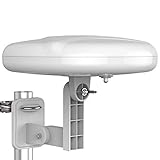
- Top Pick: RUSHFPV FPV Goggles Antenna RHCP Long Range 5.8g Dual-Unit Patch Antenna SMA 11dBi for FPV Drone Goggles
- Best Value: 2pcs FOXEER FPV Antenna Lollipop 4 Updated Version 5.8GHz RHCP 2.5Dbi SMA for FPV Racing Drone Fatshark Goggles TX RX
- Premium Choice: 2pcs FOXEER FPV Antenna Lollipop 4 5.8GHz RHCP 2.6Dbi Stubby Antenna SMA for FPV Drone Racing Quadcopeter Multicopter Fatshark Goggles TX RX(White-SMA)
Stock goggle antennas are usually the first thing FPV pilots swap, and for good reason: the picture you fly by is only as clean as the signal reaching your receiver. The decision behind “best FPV goggle antennas” is less about chasing the biggest number and more about matching three things: polarization, connector and pattern. A patch that sees far in one direction behaves nothing like a small omni stubby, and mixing left-hand and right-hand polarization between goggles and aircraft can hurt the link more than any gain figure helps.
This guide is written for pilots flying 5.8GHz analog or digital systems who want a swap for their goggle receiver, whether that is a Fatshark-style headset, a box-style receiver module, or DJI digital goggles. Everything below is judged from the specs in each listing for 2026 buyers, with no performance numbers added, so check each connector note carefully before you order.
Quick Picks
As an Amazon Associate we earn from qualifying purchases at no extra cost to you.




| Product | Best for | Key spec from the title |
|---|---|---|
| RUSHFPV Dual-Unit Patch | Long-range directional viewing | 11dBi, RHCP, 5.8G, SMA |
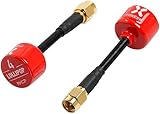
| Foxeer Lollipop 4 Updated 2-Pack | Compact omni on goggles | 2.5dBi, RHCP, 5.8GHz, SMA |
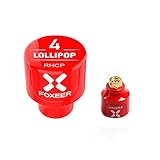
| Foxeer Lollipop 4 Stubby 2-Pack | Short, low-profile omni | 2.6dBi, RHCP, white, SMA |
| Foxeer Lollipop Stubby 2-Pack | Original lollipop shape | 2.5dBi, RHCP, SMA |
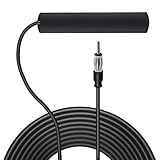
| SKYZONE Panel and Mushroom | Diversity receiver setups | Flat panel plus mushroom, SMA, 5.8G |
| Foxeer Pagoda | Omni with a classic shape | 5.8GHz RHCP, omnidirectional, SMA |
| 14dBi Panel and Mushroom Combo | Maximum directional gain | 14dBi flat panel, mushroom, EV800D |
| CORONIR LHCP Mini Omni 2-Pack | DJI digital HD goggles | LHCP, 5.8GHz, RP-SMA male |
| FPVDrone 5dBi Mini Stubby | Simple stubby swap | 5dBi, RHCP, SMA |
How to Choose
Polarization has to match your aircraft
Most analog FPV gear uses right-hand circular polarization, written RHCP, while some digital systems use left-hand, written LHCP. A goggle antenna and the video transmitter on the aircraft should share the same hand. A mismatch can weaken the link badly even when the gain number looks impressive. Check the aircraft first, then buy to match.
Choose omni, patch or a mix
Omni stubbies, lollipops and pagodas pick up signal around you and tolerate head turns, which suits freestyle and racing at close range. Patch and panel antennas concentrate sensitivity forward, often 11dBi or more, and trade angle for reach. A common setup pairs one patch with one omni on a diversity receiver, so ask whether your goggles have two inputs.
Connector type is the usual trap
SMA and RP-SMA look the same at a glance but have different center contacts. DJI goggles are listed here with RP-SMA, while most analog headsets use SMA. Confirm the connector on your goggles or module before choosing, because an adapter adds a stress point on a bay that already holds a heavy antenna.
Ignore gain labels without context
Small lollipops listed around 2.5dBi are not weak; they are designed for a wide pattern. Large figures such as 14dBi belong to panels and need aiming. Budget models can skimp on shielding and cable quality, so look for clear polarization and band wording, and avoid listings that omit them. Also remember that one goggle antenna cannot fix a weak transmitter, so match expectations to the whole video chain, not just the headset side. Tighten the connector by hand and avoid bending the mast.
The 9 Best Options
RUSHFPV Dual-Unit Patch
This is a directional long-range part for pilots who want a patch on their goggles, listing 11dBi, RHCP polarization, 5.8GHz and an SMA connector. The dual-unit wording suggests two antennas in a single package, which is useful for diversity receivers. Patches like this are usually clipped to the front of the goggles or a separate mount, so think about how you will hold your head while flying. Pilots who launch from a fixed spot and fly away from it, such as at an open field, are the audience.
- Strength: 11dBi gain for concentrated forward reach.
- Strength: RHCP and SMA match common analog goggle setups.
- Trade-off: a patch narrows the viewing angle, so you need to aim it.
Skip it if you fly close to your position and turn your head often.
Foxeer Lollipop 4 Updated 2-Pack
A pair of compact lollipop antennas, listed at 2.5dBi with RHCP polarization, 5.8GHz and an SMA connector for Fatshark goggles and TX or RX use. Lollipops are a longstanding upgrade over stock rubber ducks because the pattern is more even, and the listing names Fatshark-style goggles plus both TX and RX use, so one pair can serve as a spare for the aircraft too.
- Strength: two antennas included for dual-input goggles or spares.
- Strength: the updated version note shows a refined design of a familiar shape.
- Trade-off: low gain limits distance compared with a patch.
Skip it if you need extra reach for long-range flying.
Foxeer Lollipop 4 Stubby 2-Pack
A stubby variation listed at 2.6dBi, in white, with RHCP and an SMA connector. The shorter body keeps the antenna close to the goggles. The white finish is a small cosmetic note from the listing, but the stubby length matters if your headset sits against a hat brim, a helmet or a bag strap that could bend a longer antenna.
- Strength: a low-profile design that is less likely to snag.
- Strength: two-piece pack suits diversity goggles.
- Trade-off: stubby size and low gain mean modest reach.
Skip it if your goggle bay has limited clearance or you need a patch.
Foxeer Lollipop Stubby 2-Pack
The original lollipop stubby pair, listed at 2.5dBi with RHCP and SMA for racing drone goggles. It serves as a baseline spare set. With so many similar lollipop listings, the useful differences are the version name and stated dBi. This one is the plainest, which makes it a fair choice as a easy-to-replace spare kept in a field bag.
- Strength: familiar shape for generic goggle replacements.
- Strength: two antennas per pack.
- Trade-off: nearly the same stated gain as other lollipops, so little separates it beyond the version name.
Skip it if you want a measurable step up in range.
SKYZONE Panel and Mushroom
A paired set with a flat panel and a mushroom antenna on SMA, built for 5.8G goggles and receivers. It follows the common approach of one directional and one omni for diversity. The mushroom side gives you a wide pattern when you move your head, while the panel gives you a forward bias when the aircraft is far away. Receiver modules and monitors that list SMA ports are the target.
- Strength: panel and mushroom together balance reach and coverage.
- Strength: SMA plug suits many receivers and monitors.
- Trade-off: the title gives no gain or polarization figure.
Skip it if your receiver has a single antenna port.
Foxeer Pagoda
A pagoda-style omni with RHCP polarization for transmit or receive use, on an SMA connector. Pagoda antennas are known for a roughly circular pattern with decent polarization purity, which is why they appear on both goggles and aircraft. The listing mentions quadcopters and TX or RX use, so it is a flexible spare.
- Strength: omnidirectional pattern keeps the link steady when you turn.
- Strength: listed for TX and RX use at 5.8GHz.
- Trade-off: no gain figure is given, and only a single antenna is implied.
Skip it if you want a two-pack or a directional boost.
14dBi Panel and Mushroom Combo
A high-gain pairing of a flat panel and a mushroom antenna, listed for the EV800D goggle receiver and 5.8G use. The 14dBi panel is the sort of part used when the pilot stays in one place and the aircraft flies in a known direction. The EV800D reference tells you this set is meant for a particular box-style receiver.
- Strength: 14dBi on the panel is the highest gain listed here.
- Strength: the mushroom adds omni coverage.
- Trade-off: it is built around a specific EV800D receiver family.
Skip it if your goggles are a different model.
CORONIR LHCP Mini Omni 2-Pack
Aimed at digital pilots, this two-pack lists LHCP polarization, 5.8GHz and an RP-SMA male connector for DJI digital HD goggles. DJI digital systems use left-hand polarization, which is the reason this listing stresses LHCP, and the RP-SMA connector is also unlike the usual analog SMA. Pilots moving from analog to digital often buy the wrong hand here.
- Strength: LHCP and RP-SMA match the DJI-style setup it names.
- Strength: mini omni design suits compact goggles.
- Trade-off: LHCP will not suit RHCP analog aircraft.
Skip it if you fly analog video.
FPVDrone 5dBi Mini Stubby
A simple mini stubby listed at 5dBi with RHCP and SMA. The title does not name a goggle brand, so confirm your connector. Its 5dBi figure is higher than the lollipop group, so it could appeal to pilots who want slightly more reach in a short stubby shape. Anyone buying should still verify the goggle port because the title is brief.
- Strength: 5dBi is the highest gain among the small omni options here.
- Strength: RHCP and SMA fit mainstream analog gear.
- Trade-off: no pack count or goggle compatibility is listed.
Skip it if you need a confirmed fit for a particular headset.
Which One Fits Your Situation
You fly long range and glide
Pair the RUSHFPV patch or the 14dBi panel combo with an omni, and plan to aim it toward the aircraft. Keep a small omni on the second port so the link does not vanish when the aircraft turns away or passes overhead.
You fly racing or freestyle close by
The Foxeer Lollipop 4 pairs or the FPVDrone stubby keep the pattern wide and the link steady during fast turns. Because both Foxeer lines ship two to a pack, you also get a spare for the next crash.
You use DJI digital goggles
The CORONIR LHCP pair is the only option written for those goggles, so that is the logical choice. Confirm that your aircraft system also uses left-hand polarization before you buy.
You want a diversity upgrade in one box
The SKYZONE panel and mushroom set provides a directional and an omni element together. Check that your receiver has two inputs, otherwise only one half of the set will be useful.
Common Mistakes
- Mixing RHCP and LHCP between goggles and the aircraft.
- Confusing SMA with RP-SMA and ordering a part that will not mate.
- Judging an omni by gain alone, when pattern matters more.
- Using a patch antenna and then flying behind or beside the pilot.
- Ignoring cable strain, so the connector loosens after a crash.
Related guides
- Combination Smoke And Carbon Monoxide Detectors
- Aio Liquid Coolers For High Performance Gaming
- Graphics Cards For Low Wattage Power Supplies
Frequently Asked Questions
Do I need two matching goggle antennas?
If your goggles have two receiver inputs, two antennas allow diversity switching. Mixing a patch and an omni is common. Single-input receivers need only one.
Is higher dBi always better?
No. Higher gain narrows the beam. A small omni at lower gain is easier to live with for freestyle, while patches suit pilots who stay in one position.
Can I use a 5.8GHz antenna on any frequency?
No. These antennas are listed for 5.8GHz, so they suit systems on that band. Other bands need their own antennas.
Why does connector type matter?
SMA and RP-SMA have different pin layouts. The wrong one will not seat or make contact, so check the goggle port first.