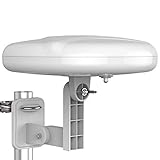
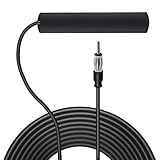
- Top Pick: HGLRC RHCP SMA Long Range Antenna FPV Hammer Mini 2.5dBi Super Mini 5.8G for RC Drone (2pcs)
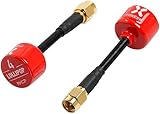
- Best Value: 2pcs FOXEER FPV Antenna Lollipop 4 Updated Version 5.8GHz RHCP 2.5Dbi SMA for FPV Racing Drone Fatshark Goggles TX RX
- Premium Choice: RadioMaster RP3 ELRS Receiver 2.4GHz ExpressLRS Nano Receiver FPV Receiver | Dual Antenna, Long Range, Low Latency, for FPV Drone Racing Drone Quadcopter
Nobody sells a diversity antenna as a single magic part. Diversity is a receiver feature: two radio modules inside your goggles or video receiver, each with its own antenna, and a circuit that picks whichever signal is cleaner at that moment. So when you search for the best FPV diversity antennas, the real decision is which two antennas to pair, and whether they match your connector, your polarization, and the way you fly.
This guide is for pilots running 5.8 GHz video links who want to upgrade the stock rubber duck pair on their goggles. In 2026 that still means choosing between compact omnidirectional antennas for freestyle and racing, and bigger patch or panel styles for long-range cruising. Every description below comes from the listing text, which means gain figures, polarization, connector type, and pack counts, and nothing else is assumed.
Quick Picks
As an Amazon Associate we earn from qualifying purchases at no extra cost to you.



| Product | Best for | Key spec from the title |
|---|---|---|
| HGLRC Hammer Mini RHCP | Compact long-range omni | RHCP, SMA, 2.5dBi, pack of 2 |
| Foxeer Lollipop 4 2.5dBi | Goggle upgrades | RHCP, SMA, 5.8GHz, pack of 2 |
| Foxeer Pagoda | Omnidirectional coverage | RHCP, SMA, TX or RX use |
| HGLRC Hammer LHCP | LHCP video systems | LHCP, 2.5dBi, long UFL, pack of 2 |
| E-outstanding 7cm IPEX | Compact builds | 7cm, IPEX, pack of 2 |
| Foxeer Lollipop 4 Stubby | Short, rugged feel | 2.6dBi, RHCP, SMA, pack of 2 |
| SoloGood Panel and Mushroom Combo | Patch plus omni pairing | 14dBi flat panel, mushroom antenna |
| RushFPV Dual Patch | Long-range goggle use | 11dBi, RHCP, dual-unit patch, SMA |
| Foxeer Lollipop 4 UFL 165mm | UFL receiver boards | 165mm, 2.6dBi, RHCP, IPEX |
How to Choose
Match the polarization first
RHCP and LHCP describe the direction a signal rotates. Your video transmitter and both receiver antennas should share the same one. Most 5.8 GHz gear is RHCP, so an LHCP antenna such as the HGLRC Hammer LHCP only makes sense if the rest of your system is already LHCP. Mixing them can cut the signal sharply.
Check the connector before the gain
SMA is the screw-on connector most goggles use. UFL, also called IPEX, is the tiny snap-on type found on receiver boards, so a UFL antenna needs a board that accepts it or an adapter. Verify what your goggles have before ordering, because a perfect antenna with the wrong plug is just a spare part.
Think pairs and coverage
The common diversity layout is one omnidirectional antenna covering all directions and one patch or panel antenna aimed forward for distance. Two identical omnis are simpler and fine for close-in flying. Gain figures like 2.5dBi are modest; panels listed at 11dBi or 14dBi focus the signal in a narrower direction, so they help at range and hurt if you turn away. Treat the dBi figure as a trade between reach and forgiveness, not a quality score.
Ignore what the listing does not support
Skip tiny details like color, and do not trust long-range wording without a gain figure. Also watch for products that are not antennas at all, such as control-link receivers. They belong to a different part of the system and will not improve your video picture. A 2.4GHz control link and a 5.8GHz video link are separate systems, and only the video side is covered here.
The 9 Best Options
HGLRC Hammer Mini RHCP
This is a compact pair of 5.8G antennas with SMA connectors. The title lists RHCP, long range, 2.5dBi gain, a Super Mini shape, and two pieces in the pack, which matches what most diversity receivers need straight out of the box. For a pilot upgrading from stock antennas without changing anything else in the setup, that simplicity is the main draw.
- A matched pair arrives in one package.
- SMA fits most goggles without adapters.
Trade-off: the mini size leaves less room for the extra directionality of a big patch. Skip it if you need a forward-focused antenna for distance, because a compact omni spreads its listed gain around instead of aiming it.
Foxeer Lollipop 4 Updated 2.5dBi
The updated Lollipop 4 lists 5.8GHz RHCP, 2.5dBi gain, SMA, and two pieces, and its title names Fatshark goggles, TX, and RX use. That compatibility wording makes it a familiar choice for people swapping out stock antennas. Because both pieces arrive together, it can fill both receiver ports and give a balanced omni pair for close-in racing and freestyle lines.
- Named goggle compatibility in the title.
- Pack of two, ready for both receiver ports.
Trade-off: it is an omnidirectional design and does not focus a beam forward. Skip it if distance matters more than all-around coverage, or if you plan to pair it with a different style of antenna on the second port.
Foxeer Pagoda Omnidirectional
The Pagoda is listed as 5.8GHz RHCP and omnidirectional with SMA, for TX or RX use. The title does not state a pack count or gain figure, so it is best treated as a single antenna you might pair with another type. A pagoda-style omni is often the partner for a directional patch, giving the receiver one antenna that hears every direction while the other focuses forward.
- Omnidirectional coverage is stated outright.
- Usable on both transmitter and receiver sides.
Trade-off: no gain figure or pack count appears in the title. Skip it if you want a ready-made matched pair, since you would need to buy a second antenna separately.
HGLRC Hammer LHCP
The Hammer LHCP uses left-hand circular polarization, with 2.5dBi, a mini 5.8G build, two pieces, and long UFL leads. It is a specialist part, meant for systems already built around LHCP. The long UFL leads suggest a receiver board with IPEX ports, so check the connector at the same time as the polarization.
- LHCP is for LHCP-based setups.
- Two included, with long UFL connectors.
Trade-off: it mismatches the RHCP gear most pilots own. Skip it unless your transmitter is LHCP, as any mismatch weakens the link and no gain figure can make up for it.
E-outstanding 7cm IPEX Antenna
These are simple 5.8GHz antennas, two pieces, 7cm long, with IPEX connectors. The title does not mention polarization or gain, so details are sparse and the listing sells convenience more than specifications. That makes it a plausible spare or compact-build option, but it requires you to confirm compatibility yourself before it goes on a receiver.
- Pair included in the pack.
- Small, short length listed at 7cm.
Trade-off: no polarization or gain figure is given. Skip it if you want to confirm RHCP or LHCP matching before buying, because the seller leaves that detail out of the title.
Foxeer Lollipop 4 Stubby 2.6dBi
A stubby version of the Lollipop 4, with 5.8GHz RHCP, 2.6dBi gain, SMA, two pieces, and a white SMA option. It targets racing and freestyle pilots who want a short antenna on their goggles. The slightly higher 2.6dBi figure sets it apart from the 2.5dBi Lollipop version, though the difference is small on paper and the listing gives no further performance data.
- Slightly higher gain than the 2.5dBi versions.
- Short profile suited to goggle use.
Trade-off: it is still an omni, so it cannot match a patch for forward range. Skip it if you want distance-focused reception, or if you need a longer antenna body for a particular mounting angle.
SoloGood Panel and Mushroom Combo
This kit pairs a 14dBi flat panel antenna with a mushroom antenna for EV800D goggles receivers. The pairing mirrors the classic diversity layout of one directional and one omni antenna, which gives distance in one direction and close coverage in all others. Because the kit is sold as a combination for one named receiver, it removes the guesswork of picking two compatible parts, which many first-time upgraders find confusing.
- 14dBi panel is the highest gain figure in the list.
- One directional and one omni in the same box.
Trade-off: it is described for EV800D goggles, so check your receiver. Skip it if your goggles use a different connector or form factor, or if the EV800D name does not match your gear.
RushFPV Dual Patch
A goggle-mounted patch, listed as RHCP, long range, 5.8G, dual-unit, SMA, and 11dBi. It suits pilots who want a forward-aimed antenna on their goggles for cruising and long-distance flights. As a dual-unit patch it fits the role of the forward-aimed half of a diversity pair, leaving a small omni on the other port for coverage behind and to the sides.
- 11dBi gain is listed for focused reception.
- RHCP and SMA fit common setups.
Trade-off: patch antennas cover a narrower area. Skip it if you fly close-in and turn often, since a patch needs to stay aimed at the aircraft to deliver its listed gain.
Foxeer Lollipop 4 UFL 165mm
This Lollipop 4 is built for UFL boards, with IPEX connector, RHCP, 5.8G, 2.6dBi, a 165mm length, and two pieces. The title names TX and RX use for racing drones and quadcopters. At 165mm it is longer than the stubby models, which can put the radiating element further from the body of the goggles.
- Pair included with explicit length.
- 2.6dBi RHCP omni for UFL receivers.
Trade-off: UFL connectors need a compatible board or adapter. Skip it if your goggles use SMA antennas, unless you already own a pigtail adapter that bridges the two connector types.
Which One Fits Your Situation
Freestyle and racing close to you
Take a pair of omnis such as the Foxeer Lollipop 4 2.5dBi or the HGLRC Hammer Mini RHCP. They cover all directions and need no aiming.
Long cruising flights
Choose a panel or patch like the RushFPV Dual Patch or the SoloGood Panel and Mushroom Combo, and keep it pointed toward the aircraft.
Receiver board with UFL ports
The Foxeer Lollipop 4 UFL 165mm or the E-outstanding 7cm IPEX are the options that list the matching connector.
LHCP video system
Only the HGLRC Hammer LHCP applies, and only if your transmitter is also LHCP.
Common Mistakes
- Pairing LHCP antennas with an RHCP transmitter.
- Ordering a UFL antenna for an SMA connector, or the reverse.
- Assuming higher gain always improves the picture when it narrows the coverage.
- Buying a control-link receiver and expecting a video upgrade.
- Ignoring pack counts and ending up with a single antenna for a two-port receiver.
Related guides
- Battery Operated Smoke And Carbon Monoxide Detectors
- Combination Smoke And Carbon Monoxide Detectors
- Aio Liquid Coolers For High Performance Gaming
Frequently Asked Questions
What makes an antenna set diversity?
Diversity comes from the receiver having two antennas feed two radio modules. Any two compatible antennas can serve, though pairing an omni with a patch is common. Listings rarely call themselves diversity antennas, so read the connector, polarization, and pack count instead of the headline.
Should both antennas match?
They must match in polarization and frequency. They do not have to match in shape or gain.
Are higher dBi numbers always better?
No. Gain narrows the signal pattern, so a high-gain patch helps at distance but can fade when you turn.
Can I use these for the transmitter side?
Some listings name TX use directly. Check the title for TX and RX wording before buying, and remember that the transmitter and receiver sides should share the same polarization.