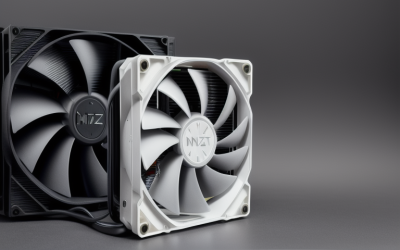
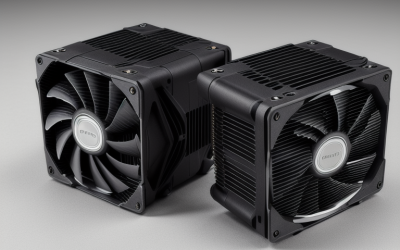
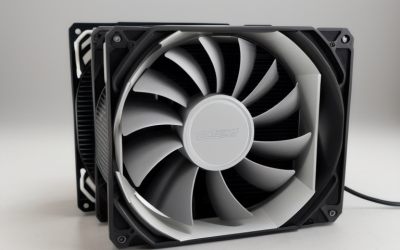
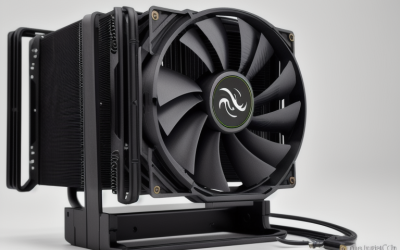
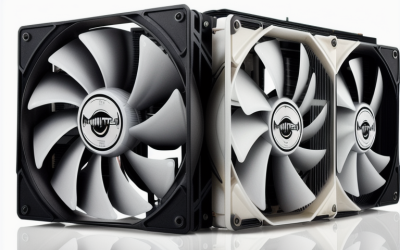
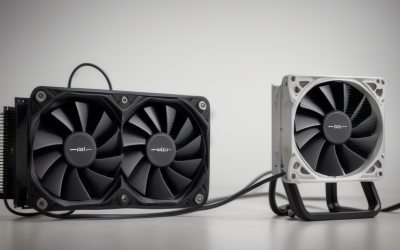
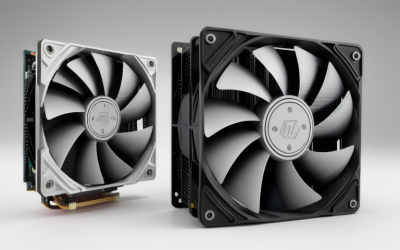
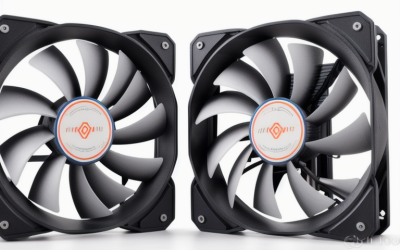
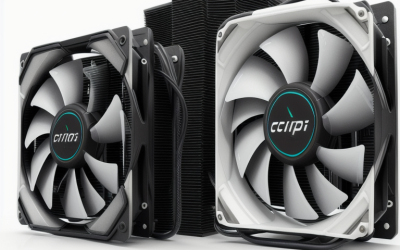
- Top Pick: Thermalright Assassin X120 Refined SE CPU Air Cooler, 4 Heat Pipes, TL-C12C PWM Fan, Aluminium Heatsink Cover, AGHP Technology, for AMD AM4/AM5/Intel LGA 1150/1151/1155/1200/1700/1851(AX120 R SE)
- Best Value: Noctua NH-U9S, Quiet High-Performance Single Tower CPU Cooler | Compact 125mm Height, ITX SFF Low-Noise Cooling, For Intel & AMD, 92mm Fan, 100% RAM Compatibility, Rich Accessory Kit
- Premium Choice: Thermalright Peerless Assassin 120 Vision MAX ARGB White CPU Air Cooler, Twin Tower Radiator 2150RPM,480×854 Resolving Power IPS Screen with 5’’,Computer Cooler for Intel lga1851/1700/115x,AM4/AM5
A 150mm ceiling on cooler height is rarely a preference. It is a wall. Compact towers, small-form-factor cases and many mid-tower side panels leave only a few centimeters above the motherboard, and a cooler that overshoots by even a few millimeters means the panel will not close. This guide is built around that single constraint, so the shortlist starts from fit rather than from headline cooling claims. Models whose listings point to a tall twin-tower layout or a liquid loop were left out, as were any that print a height above the limit.
The audience is the builder with a tight case, a modest-to-mid-range processor and a preference for air cooling over a pump that can fail. If you are planning a quiet 2026 build that still leaves room for tall memory, or you are swapping out a stock cooler in a case with a hard clearance spec, the six coolers here cover the realistic range: a low-profile slim unit, a short single tower, and several four-heat-pipe designs in plain and ARGB versions. Always compare the clearance figure printed in your case manual against the height printed on the cooler listing before you order.
Quick Picks
As an Amazon Associate we earn from qualifying purchases at no extra cost to you.




| Product | Best for | Key spec from the title |
|---|---|---|
| Thermalright Assassin X120 Refined SE | Balanced all-round upgrade | 4 heat pipes, TL-C12C PWM fan |
| Noctua NH-U9S | Small-form-factor and quiet builds | 125mm height, 92mm fan |
| ID-COOLING SE-903-XT V2 | Compact, no-frills builds | 3 heat pipes, 100mm PWM fan, 150W |
| ID-COOLING IS-40X V3 | Very low clearance cases | 45mm low profile, 15mm-thick fan |
| Thermalright Assassin X 90 SE ARGB | Short build with lighting | 4 heat pipes, TL-P9-S ARGB fan |
| Thermalright Assassin X120 Refined SE ARGB | Same tower with a lit fan | 4 heat pipes, TL-C12C-S PWM fan |
How to Choose
Read the height, not the name
Cooler height is measured from the processor surface to the top of the fan or fin stack, and it is the number that decides whether your side panel closes. Take your case manual’s maximum CPU cooler height, subtract a few millimeters of margin, and treat the result as your real limit. Some listings state a figure outright, such as 125mm or 45mm, while others bury it in the specifications below the fold. A cooler that prints 152mm anywhere in its listing already misses a 150mm cap, so do not round in your favor. When a title leaves the height out, open the spec sheet before ordering.
Check the socket list line by line
Compatibility strings in listings are long on purpose. Confirm that your exact socket appears: AM4 and AM5 for Ryzen, and LGA 1700, 1200 or 115X for Intel, with LGA 1851 now relevant for newer boards. Mounting hardware is normally included for each listed socket, but a list that omits yours usually means no bracket in the box. Also consider your board’s rear access, since some compact cases have no backplate cutout and make retention swaps awkward after the board is installed.
A useful habit is to write down three numbers before browsing: the case’s cooler limit, the distance from the board to the nearest obstruction such as a side-panel bulge or a power-supply shroud, and the height of the tallest memory module you plan to install. The smallest of those margins sets the practical ceiling, and it is sometimes lower than the number printed on the case box.
Heat pipes and wattage headroom
More heat pipes generally mean more capacity to carry heat from the base into the fins, which is why a four-pipe tower sits above a three-pipe tower in the stack. One listing here states a 150W figure for its three-pipe unit; treat any stated wattage as a ceiling, not a target, and leave margin. Pair a chip that sustains heavy loads with a four-pipe tower, and reserve slim or low-profile designs for efficient processors that rarely run flat out for long stretches.
Memory clearance and fan noise
Height is not the only collision risk. A tower that overhangs the first memory slot can block tall heat-spreader modules, so look for wording about full memory compatibility, or plan to slide the fan up on its clips. A smaller fan has to spin faster to push the same volume of air, so a 92mm or 100mm unit trades some quietness for compactness. Ignore lighting when the choice is close; it adds nothing to cooling, and ARGB models simply add another header to your wiring. Budget coolers tend to cut corners on the accessory kit, so check whether thermal paste and a full set of mounting brackets are listed as included.
Finally, remember that a short cooler is only half of a quiet build. Case intake, exhaust and fan curves decide how often the cooler fan has to ramp up, so a modest tower in a well-ventilated case can end up calmer than a bigger one in a sealed box.
The 6 Best Options
Thermalright Assassin X120 Refined SE
This is the straightforward tower for builders who want solid air cooling without lighting or a premium badge. The listing shows four heat pipes, a TL-C12C PWM fan and an aluminum heatsink cover, and the title also names AGHP technology.
- Four heat pipes and a PWM fan put it in the mid-range tier for cooling potential.
- A long socket list covers AM4, AM5 and Intel LGA 1150 through 1851.
- Trade-off: the title does not print a height, so you must confirm clearance on the spec sheet before ordering.
Skip it if your case allows only a slim profile, or if you want a lit fan.
Noctua NH-U9S
The NH-U9S is the clearest fit for the 150mm limit because its title states a compact 125mm height. It is a single-tower design with a 92mm fan, pitched at ITX and small-form-factor cases and at buyers who care about low noise.
- A stated 125mm height leaves a comfortable margin under the cap.
- The listing promises full RAM compatibility and a rich accessory kit, which eases installation in a crowded case.
- Trade-off: a 92mm fan and single tower leave less headroom for hot, heavily overclocked chips than a larger fan would.
Skip it if you run a high-power processor flat out for hours at a time.
ID-COOLING SE-903-XT V2
This compact air cooler suits a small build around a modest processor. The title lists three heat pipes with direct-touch contact, a 100mm PWM fan and a 150W figure, and it is stated as compatible with both Intel and AMD platforms.
- Direct-touch heat pipes mean the pipes meet the processor surface themselves, which keeps the base design simple.
- The PWM fan lets the motherboard adjust speed to temperature, a good match for a quiet desktop.
- Trade-off: three heat pipes and a 150W figure make it the lowest-capacity tower in this group.
Skip it if your processor draws sustained heavy loads or you need an exact socket list from the title.
ID-COOLING IS-40X V3
When even a short tower will not fit, this slim unit is the answer. The title gives a 45mm low-profile height, four heat pipes and a 15mm-thick slim fan, aimed at compact builds on AM5, AM4, LGA1700, LGA1200 or 115X.
- At 45mm it should clear nearly any case that has any CPU space at all.
- Four heat pipes are a respectable count for a slim cooler.
- Trade-off: a thin fan and short fin stack mean it is best matched with efficient, lower-power processors.
Skip it if your case has room for a full tower, since a taller design usually has more fin area.
Thermalright Assassin X 90 SE ARGB
The X 90 SE adds lighting to the Assassin lineup. The title lists four heat pipes, a TL-P9-S PWM ARGB fan, AGHP 4.0 technology and support for AM4, AM5 and Intel LGA 1150, 1151, 1200 and 1700.
- Four heat pipes and a PWM fan give it a cooling structure on par with the larger X120 variants.
- ARGB lighting is included for builders who want a matching glow inside the case.
- Trade-off: the socket list in the title stops at LGA 1700, so confirm support first if you run a newer Intel board.
Skip it if you want LGA 1851 spelled out or have no interest in lighting.
Thermalright Assassin X120 Refined SE ARGB
This is the lit counterpart of the plain X120, with a TL-C12C-S PWM fan and the same four-heat-pipe design under an aluminum cover. The title lists AM4, AM5 and Intel sockets from LGA 1150 through 1851.
- Same four-pipe layout as the non-lit version, so the cooling structure is identical on paper.
- A fan with ARGB lighting that can sync with compatible boards.
- Trade-off: no height appears in the title, and the lighting adds an extra cable to route.
Skip it if you want the simplest wiring or the lowest-profile design.
Which One Fits Your Situation
Mini-ITX build with tall memory
Start with the Noctua NH-U9S. Its stated 125mm height and full RAM compatibility claim address the two biggest headaches in a small case, and the accessory kit helps with fitting.
Ultra-slim case
Choose the ID-COOLING IS-40X V3. At 45mm it is the only option in this group that makes sense when vertical space is truly scarce, as in a slim desktop or media PC.
Mid-tower with a tight panel clearance
The Thermalright Assassin X120 Refined SE is the sensible pick, provided the height figure on its spec sheet sits under your case limit. Move to the ARGB version only if you want lighting in the build.
Modest processor, simple build
The ID-COOLING SE-903-XT V2 handles a lower-power chip without fuss. For a lit shorter tower, the Assassin X 90 SE ARGB is the alternative.
Common Mistakes
- Measuring the cooler body only and forgetting that an added second fan or taller clips change the total height.
- Assuming a cooler built around a 120mm fan is under 150mm tall; the name describes the fan, not the overall height.
- Skipping the socket list and finding the bracket missing for a newer Intel board.
- Buying a slim low-profile unit for a processor that sustains heavy workloads.
- Ignoring memory clearance and discovering the first slot is blocked by the fin stack.
Related guides
- Battery Operated Smoke And Carbon Monoxide Detectors
- Combination Smoke And Carbon Monoxide Detectors
- Aio Liquid Coolers For High Performance Gaming
Frequently Asked Questions
Why is 150mm such a common limit?
Many compact cases and some mid-towers list a maximum CPU cooler height at or near that number. It leaves enough room for a decent tower while keeping the case body small, so the figure shows up constantly in spec sheets.
Are low-profile coolers good enough for gaming?
For efficient processors, they can be. A slim cooler keeps a lower-power chip in a reasonable range, but the more heat a processor makes, the more a larger heat-pipe tower helps.
Do ARGB coolers cool better?
No. Lighting is cosmetic, and cooling comes from the heat pipes, fins and fan. Choose ARGB for appearance and nothing else, and confirm your board has a spare header.
Should I trust the stated wattage figure?
Treat it as an upper guide from the manufacturer. Leave margin below it if the processor tends to run hot or if the case has weak airflow, and prefer a four-pipe tower when in doubt.