

- Top Pick: HP 17 Laptop Essential Computer, 17.3 IPS FHD Business PC, 6-Core AMD Ryzen 5, 32GB RAM, 1.5TB Storage (1TB SSD + 500GB Ext), Windows 11 Pro Copilot AI + Office, HubxcelAddons, Number Pad
- Best Value: Phatom 15.6" FHD Laptop Computer 4GB RAM 128GB SSD Windows 11 Compatible | Upgradeable RAM+SSD,Pentium (Beats Celeron), Support UP to 2TB, 1080P HDMI, for Business, Student laptops for school
- Premium Choice: HP 14" Laptop Computer for 2026 Student Business Productivity, MS Office & Win 11 Pro, Copilot AI, Intel 4-Core CPU, 4GB DDR5 RAM, 628GB Storage (128GB UFS+500GB Ext), Wi-Fi 6, HubxcelAddon, Lavender
A business laptop under 1000 dollars sits in an awkward corner of the market. The label gets stuck on everything from a 4GB student machine to a 32GB workstation-style notebook, so the word “business” tells you very little. What actually separates a work-ready laptop from a pretender is a short list: a Pro edition of Windows for device management, enough memory to keep a dozen browser tabs and a spreadsheet open, a screen with a usable resolution, and storage you can trust.
This guide is for owners of small offices, freelancers, remote employees and anyone setting up a back-office machine for 2026. Every pick below is judged only from what its listing states: processor class, RAM, storage, display, operating system edition and ports. Where a listing leaves out something important, the entry says so, and the scenario section at the end maps each type of buyer to a specific model.
Quick Picks
As an Amazon Associate we earn from qualifying purchases at no extra cost to you.


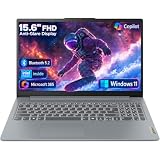
| Product | Best for | Key spec from the title |
|---|---|---|
| HP 17 Essential | Big-screen spreadsheet work | 17.3″ IPS FHD, Ryzen 5 6-core, 32GB RAM |
| Phatom 15.6″ FHD | Light office tasks, upgrade path | Pentium, 4GB RAM, 128GB SSD |
| HP 14 Lavender | Portable email and documents | Intel 4-core, 4GB DDR5, Win 11 Pro |
| HP Ultrabook 14 | Home-and-office light use | Quad-core Intel, Windows 11 Home |
| Dell 16 Touchscreen | Premium-tier daily driver | Core 7 150U, 32GB DDR5, 1TB SSD |
| HP 14 Green 16GB | Multitasking on a small body | Quad-core Intel, 16GB RAM, Win 11 Pro |
| HP 14 Sky Blue | Carry-everywhere basics | Intel 4-core, 4GB RAM, Win 11 Pro |
| HP 15.6 N150 | Entry-level office use | Intel N150, 128GB UFS, 1TB cloud |
| HP OmniBook 3 17.3″ | Secure sign-in and a docking hub | Core 5 120U, 16GB DDR5, FHD IR camera |
| Lenovo Business 15.6″ | USB-C and anti-glare screens | 8GB DDR5, 128GB, USB-C, anti-glare |
How to Choose
Memory first, then storage type
For real business use, 16GB of RAM is the comfortable floor, and 8GB is workable for browser-and-office routines. Models with 4GB leave little room once video calls and several tabs run together. Watch the storage wording too: an SSD behaves differently from UFS flash, and totals such as 628GB often add an external 500GB drive to a small internal chip. Judge the internal storage on its own. A sensible split is 8GB for a single-task front desk, 16GB for most office staff, and 32GB for anyone working in large workbooks or databases. DDR5 is a newer memory standard than DDR4, but capacity matters more than the label.
Windows edition and security features
Windows 11 Pro adds management and encryption options that Home lacks, which matters if the laptop joins a company network. An infrared camera, as listed on the OmniBook 3, supports facial sign-in. If compliance matters, ignore marketing words like “AI” and focus on the edition and the sign-in hardware. Listings that mention a Copilot key or AI features describe software and keyboard additions, not extra horsepower, so they should not drive the decision.
Screen size, panel and keyboard
Look for at least a 1920 x 1080 panel; the 16:10 FHD+ screen on the Dell 16 gives extra vertical room for documents. A 17.3-inch body suits desk use, while 14 inches travels better. A numeric keypad speeds data entry, and a backlit keyboard helps in dim rooms. HD+ resolution, as listed on one 17.3-inch model, is noticeably softer than FHD. Brightness matters too: a panel listed at 300 nits stays readable near windows, while unlisted brightness is a gamble.
Where budget models cut corners
Entry processors like the N150 and Pentium class handle documents but slow down with heavy spreadsheets. Bundled “cloud storage” and office subscriptions are time-limited services, not local capacity. Accessory bundles from resellers add little to the machine itself, so treat the CPU, RAM and drive as the real specification. Colors and color names are cosmetic, and a long-battery claim without hours attached is only a marketing line.
The 10 Best Options
HP 17 Essential
This is the large-format pick for people who live in spreadsheets and long reports. The listing pairs a six-core Ryzen 5 with 32GB of memory, which is the most generous memory figure among the Windows 11 Pro options here, and it adds a number pad for data entry.
- Strength: 32GB RAM and a 17.3-inch IPS FHD display give room for big workbooks.
- Strength: 1TB SSD plus a 500GB external drive, running Windows 11 Pro.
- Trade-off: a 17.3-inch body is awkward to carry every day.
Skip it if your commute involves a small backpack and a crowded train.
Phatom 15.6″ FHD
The entry-level choice, listing a Pentium processor, 4GB of RAM and a 128GB SSD behind a 15.6-inch FHD panel. Its most unusual claim is that both memory and SSD are upgradeable, up to 2TB of storage, which gives it a path beyond its modest launch configuration.
- Strength: upgradeable RAM and SSD extend its working life.
- Strength: an HDMI output supports an external monitor at 1080P.
- Trade-off: only 4GB of memory out of the box, and the title says Windows 11 compatible, not Pro.
Skip it for managed company deployments or heavy multitasking.
HP 14 Lavender
A compact 14-inch notebook that lists an Intel four-core processor, 4GB of DDR5 memory, Windows 11 Pro and Wi-Fi 6. It targets students and light-duty professionals who want the Pro edition without moving up to a larger chassis.
- Strength: the Pro edition suits workplace sign-in and policy tools.
- Strength: Wi-Fi 6 helps on crowded office networks.
- Trade-off: 4GB of RAM is thin, and the 628GB total includes a 500GB external drive.
Skip it if you keep many programs open or rely on internal storage.
HP Ultrabook 14
A slim 14-inch ultrabook for hybrid home and office routines. The listing names a quad-core Intel processor and lifetime Office for the web, which covers documents and spreadsheets in a browser without extra setup.
- Strength: slim, portable styling suited to frequent movement.
- Strength: Office web apps are included per the listing.
- Trade-off: the title omits RAM and storage figures and ships with Windows 11 Home.
Skip it if you need device management or want confirmed memory numbers before buying.
Dell 16 Touchscreen
The premium-tier entry, built around a Core 7 150U processor with 32GB of DDR5 and a 1TB SSD. The 16:10 FHD+ touchscreen at 300 nits gives extra vertical room for documents, and a Copilot key sits on the keyboard.
- Strength: 32GB memory and 1TB storage hold up for years of use.
- Strength: backlit full-size keyboard with number pad and Windows 11 Pro.
- Trade-off: a 16-inch body is bigger than typical travel laptops, and it sits near the cap.
Skip it if you want the smallest possible body or the lowest outlay.
HP 14 Green 16GB
The multitasking variant of the HP 14 family, with a quad-core Intel CPU, 16GB of RAM and Windows 11 Pro in a slim body. It suits people who want to run a browser, chat and office apps together on a small screen.
- Strength: 16GB of memory in a lightweight design.
- Strength: Pro edition and Wi-Fi 6 for managed, connected work.
- Trade-off: just 128GB of internal UFS, with the rest a 500GB external drive.
Skip it if you store large local project files or media.
HP 14 Sky Blue
A lightweight 14-inch model branded ultra-portable, listing an Intel four-core processor and Windows 11 Pro. It aims at buyers who value a light carry and a Pro edition more than extra performance.
- Strength: portable design with Pro edition features.
- Strength: the listing highlights long battery life, though no hour figure is given.
- Trade-off: 4GB of RAM and mostly external storage.
Skip it if you run many applications at once or want fast internal storage.
HP 15.6 N150
A plain 15.6-inch laptop with a four-core Intel N150, 128GB of UFS storage and a numeric keypad. Microsoft 365 and 1TB of cloud storage are part of the listing, so it fits cloud-first routines.
- Strength: a full keypad and roomy screen for data entry.
- Strength: Microsoft 365 is included as listed.
- Trade-off: Windows 11 Home and limited local space, since cloud storage is not local capacity.
Skip it if you need a Pro edition or large offline libraries.
HP OmniBook 3 17.3″
A 17.3-inch business notebook with a Core 5 120U, 16GB of DDR5 and an FHD infrared camera. The camera supports facial sign-in, and the bundle adds a docking hub for desk setups.
- Strength: 16GB memory, Windows 11 Pro and a backlit keyboard.
- Strength: infrared camera and docking hub suit shared desks.
- Trade-off: a 256GB SSD and an HD+ display that is less sharp than FHD.
Skip it if screen detail or large local storage is your priority.
Lenovo Business 15.6″
A straightforward 15.6-inch FHD laptop that lists 8GB of DDR5, 128GB of storage, USB-C and an anti-glare screen. It reads as a sensible office terminal rather than a power machine.
- Strength: anti-glare FHD panel suits bright rooms.
- Strength: USB-C and Wi-Fi 6 for modern accessories.
- Trade-off: 128GB of storage, and the listing leaves the processor model unnamed.
Skip it if you need to keep large files on the drive.
Which One Fits Your Situation
You work in spreadsheets and reports all day
The HP 17 Essential and the Dell 16 Touchscreen offer 32GB of RAM and larger displays for long documents. The Dell adds a touchscreen and a 1TB SSD, while the HP gives a Ryzen 5 and a number pad on a bigger screen.
You travel between meetings
The HP 14 Green 16GB brings 16GB in a small body, with the lighter Sky Blue as a simpler option for email-only roles. Both come with Windows 11 Pro, so they can join a managed fleet.
You manage a secure small office
The HP OmniBook 3 17.3″ pairs Windows 11 Pro with an infrared camera, which suits sign-in policies. The docking hub in the listing also helps when several people share a desk.
You need a basic back-office terminal
The Lenovo Business 15.6″ and HP 15.6 N150 cover reception desks, with the Phatom as a base for later upgrades. None of these are meant for heavy multitasking, so keep their jobs simple.
Common Mistakes
- Reading the total storage figure without separating internal flash from an external drive.
- Choosing Windows 11 Home when company tools need a Pro edition.
- Accepting 4GB of RAM for a role that involves video calls.
- Counting a cloud subscription as local capacity.
- Skipping resolution details and ending up with an HD+ screen.
Related guides
- Combination Smoke And Carbon Monoxide Detectors
- Aio Liquid Coolers For High Performance Gaming
- Graphics Cards For Low Wattage Power Supplies
Frequently Asked Questions
Is 8GB of RAM enough for business use?
It handles browsers and office apps, but 16GB gives a longer working life. Models that list 4GB will feel tight under video calls.
Do I need Windows 11 Pro?
If your employer manages devices or requires disk encryption controls, yes. Solo users who only need basic tools can work on Home.
Are bundled drives and cloud storage useful?
They add space, but an external drive is easy to forget and a cloud plan expires. Prioritize the internal SSD.
What screen size suits a business laptop?
Fourteen inches suits travel, 15.6 is the middle ground, and 16 or 17.3 inches is better for desk work with lots of data.









