Affiliate disclosure: As an Amazon Associate we earn from qualifying purchases. This post contains affiliate links — if you buy through them we may earn a small commission at no extra cost to you. This never affects our recommendations.
A quality power supply is the foundation of any stable gaming PC. Choose the wrong one and you risk instability, hardware damage, or coil whine that ruins gaming sessions. The 650W tier remains the most popular choice for gaming builds in 2025 — it’s sufficient for combinations like an Intel Core i7-14700K with an RTX 5070, while leaving 10-15% headroom for safe operation and future minor upgrades.
The key specifications to understand in 2025 are ATX 3.1 compliance (which standardizes the 12V-2×6 connector for high-TDP GPUs), 80 Plus Gold efficiency (85-89% efficient at typical loads), and modular cabling (which dramatically simplifies installation and cable management). All three picks in our focused PSU lineup meet these standards.
We’ve also included two case recommendations — the Corsair 4000D RS ARGB and NZXT H7 Flow — as ideal companions for these PSUs, particularly if you’re planning a complete mid-range gaming build. These cases have excellent PSU mounting positions, ample cable routing, and accommodating PSU shrouds.
In a hurry? See the top-rated 650W Power Supplies for Gaming deals available right now:
🛒 Check 650W Power Supplies For Gaming Prices on Amazon →🛒 Best Price Today on Amazon
Prime members get fast, free shipping on everything above, plus member-only deals. New members get a 30-day free trial — cancel anytime.
Start 30-Day Prime Free Trial →See Today’s Amazon DealsTop Picks at a Glance
| Product | Best For |
|---|---|
| NZXT C850 Gold Core 850W ATX 3.1 | High-TDP builds needing headroom |
| be quiet! Pure Power 12 650W 80+ Gold | Best 650W overall pick |
| RAIDMAX Cobra 80+ Gold ATX 3.1 | Best budget ATX 3.1 PSU |
| Corsair 4000D RS ARGB (case pairing) | Best case pairing for PSU builds |
| NZXT H7 Flow (case pairing) | Airflow-focused case pairing |
As an Amazon Associate we earn from qualifying purchases at no extra cost to you.


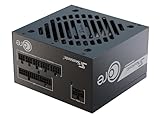
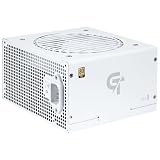

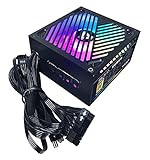


NZXT C850 Gold Core 850W ATX 3.1
The NZXT C850 Gold Core steps up to 850W — enough headroom for RTX 5080 and high-end Ryzen 9 combinations. Full ATX 3.1 compliance means the native 12V-2×6 connector handles GPU power delivery safely without adapter cables. The modular design keeps the cable bundle minimal, and the semi-fanless mode keeps the unit completely silent at loads below 40%. NZXT’s 10-year warranty provides exceptional long-term peace of mind.
- Pros: 850W headroom, ATX 3.1 native 12V-2×6, 10-year warranty, semi-fanless mode
- Cons: Overkill wattage for most 650W-tier builds, at the $100 ceiling
be quiet! Pure Power 12 650W 80+ Gold
The Pure Power 12 is be quiet!’s most accessible PSU and it punches well above its price. The 80 Plus Gold certification guarantees 87% efficiency at 50% load, reducing heat and electricity costs over the unit’s lifetime. The semi-modular design includes permanently attached ATX and EPS cables while keeping PCIe and peripheral cables detachable. The 120mm fan runs whisper-quiet under normal gaming loads, living up to be quiet!’s reputation. This is the go-to 650W recommendation for RTX 5070 and Radeon RX 9070 builds.
- Pros: Excellent value, near-silent operation, 80 Plus Gold, 5-year warranty
- Cons: Semi-modular (not fully modular), ATX 3.0 not 3.1 compliance
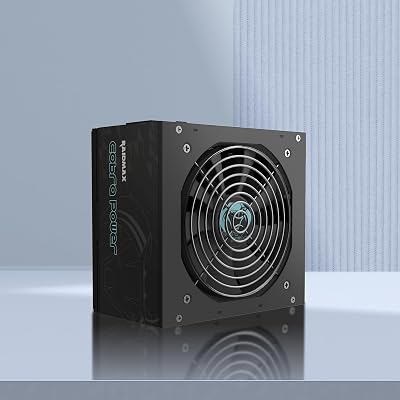
RAIDMAX Cobra 80+ Gold ATX 3.1
The RAIDMAX Cobra is the most affordable ATX 3.1-compliant PSU on the market, making it a compelling option for budget builders who want full standard compliance without compromise. The native 16-pin 12V-2×6 connector eliminates adapter concerns. Modular cabling simplifies installation. The 80 Plus Gold certification is verified, not just claimed. For a first build or budget upgrade, the Cobra delivers the essential specifications at a price that leaves more room for GPU and CPU investment.

- Pros: Lowest price ATX 3.1, fully modular, native 12V-2×6 connector
- Cons: Less established brand, shorter warranty period, louder fan under load
Case Pairing: Corsair 4000D RS ARGB
The Corsair 4000D RS ARGB is an ideal companion for any of the PSUs above. Its PSU shroud fully conceals the power supply and cables, the routing channels accommodate modular cable management elegantly, and the interior depth provides ample clearance for high-end fully-modular units. The side-mounted PSU position with bottom ventilation ensures the unit draws cool air even under full gaming load. Pair with the be quiet! Pure Power 12 for a quiet, clean mid-range build.
- Pros: Excellent PSU shroud, strong cable management, spacious interior
- Cons: Solid front panel limits intake airflow vs mesh alternatives
Case Pairing: NZXT H7 Flow 2026
The NZXT H7 Flow 2024 pairs particularly well with the RAIDMAX Cobra or be quiet! Pure Power 12 for a budget-conscious full build. The H7 Flow’s fully perforated front panel ensures the PSU receives cool ambient air via the bottom intake, and NZXT’s cable management channels handle even fully modular bundles with ease. The combination of H7 Flow + be quiet! Pure Power 12 creates a quiet, well-ventilated gaming system under $135 in case and PSU costs.

- Pros: Best airflow at this price, PSU sits in cool bottom-intake airstream
- Cons: No pre-installed fans, requires separate fan purchase for full airflow
Buying Guide
ATX 3.1 vs ATX 3.0: What’s the Difference?
ATX 3.0 introduced the 16-pin 12VHPWR connector and required PSUs to handle 200% transient power spikes (common in modern GPUs during rasterization bursts). ATX 3.1 refines this standard with the 12V-2×6 connector — a mechanically improved version of 12VHPWR that is less prone to the melting issues that plagued some early 12VHPWR cables. If you’re buying a new PSU in 2025, ATX 3.1 is the specification to target. The RAIDMAX Cobra and NZXT C850 are both ATX 3.1 compliant.
How Much Wattage Do You Actually Need?
A common mistake is massively over-specifying PSU wattage. For a 2025 gaming build with a 125W TDP CPU and an RTX 5070 (rated at approximately 200W TDP), total system draw under gaming load is approximately 380-420W. A 650W PSU operates at 60-65% load in this scenario — the most efficient operating range for 80 Plus Gold units. Adding a 750W or 850W unit for this build wastes money and operates at lower efficiency. 650W is the sweet spot for RTX 5070 and Radeon RX 9070-class builds.
Modular vs Semi-Modular vs Non-Modular
Fully modular PSUs (all cables detachable) give maximum cable management flexibility. Semi-modular units keep the 24-pin ATX and CPU EPS cables permanently attached since these are always needed, while making peripheral cables detachable. Non-modular PSUs include all cables permanently — avoid these for builds where cable management and airflow matter. The be quiet! Pure Power 12 is semi-modular, the RAIDMAX Cobra and NZXT C850 are fully modular.
Warranty as a Quality Indicator
Reputable PSU manufacturers back their products with long warranties because a quality unit should last the warranty period without issue. be quiet! offers 5 years, NZXT offers 10 years on the C850 Gold Core. The RAIDMAX Cobra’s warranty is shorter — factor this into your decision if system longevity is a priority. A PSU failure can damage connected components, so investing slightly more in a well-warranted unit from a reputable brand is worthwhile.
Frequently Asked Questions
Is 650W enough for an RTX 5070 and Core i7 build?
Yes. The RTX 5070 has a TDP of approximately 200W, and a Core i7-14700K draws up to 125W under gaming loads. Total system power including storage, RAM, fans, and motherboard typically adds 50-80W. This puts total draw at approximately 375-405W — comfortably within 650W capacity with 35-40% headroom. A 650W 80 Plus Gold PSU is the correct specification for this build tier in 2025.
What is the 12V-2×6 connector and do I need it?
The 12V-2×6 is the updated GPU power connector introduced in ATX 3.1. It replaces the 12VHPWR connector used in ATX 3.0 with improved contact retention to prevent the overheating issues some users experienced. All RTX 5000-series GPUs use either 12VHPWR or 12V-2×6. If your PSU includes a native 12V-2×6 cable (like the RAIDMAX Cobra), use it directly. If it includes 12VHPWR, that is also compatible. Avoid using adapter cables from dual 8-pin PCIe whenever possible.
How loud are 80 Plus Gold PSUs under gaming load?
It depends on the specific unit. be quiet! PSUs are among the quietest in the industry — the Pure Power 12 is nearly inaudible during typical gaming sessions. The RAIDMAX Cobra is audible under full load. The NZXT C850 features a semi-fanless mode that keeps it completely silent below 40% load. For quiet gaming environments, the be quiet! Pure Power 12 is the clear recommendation.
Should I get a 650W or 750W PSU for future-proofing?
For most builds, 650W is sufficient and operates most efficiently. If you plan to upgrade to an RTX 5080 or 5090 in the next two years, step up to 750W or 850W now. The RTX 5080 has a 320W TDP — paired with a high-end CPU, that pushes total system draw toward 550-580W, which leaves only 70-100W headroom on a 650W unit. The NZXT C850 Gold Core at $99.99 is an excellent choice if higher-tier GPU upgrades are in the plan.
Verdict
The be quiet! Pure Power 12 650W 80+ Gold is the best 650W gaming PSU in 2025 — quiet, efficient, reliable, and well-priced at $64.90. Budget builders get ATX 3.1 compliance from the RAIDMAX Cobra at $54.99. If you’re planning a high-TDP build or future GPU upgrade, step up to the NZXT C850 Gold Core 850W for long-term headroom. Pair either PSU with the NZXT H7 Flow 2024 or Corsair 4000D RS ARGB for a clean, well-ventilated build.
Related Articles
Looking for more on this topic? Browse the hand-picked guides below — each one applies the same scoring rubric used in this review.
Ready to decide? Our #1 pick for 2026 is the NZXT C850 Gold Core 850W ATX 3.1.
Live price & availability on Amazon.