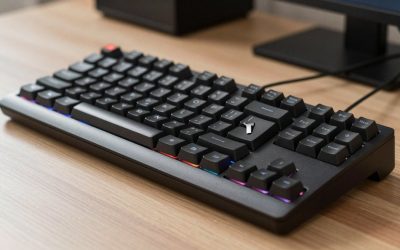
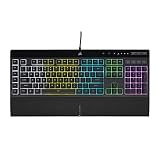
- Top Pick: Razer Huntsman V3 HE Magnetic Mini 65% 8KHz Wired Gaming Keyboard | Hall Effect Magnetic Switches, 8000 Hz Polling, Razer Snap Flex, Snap Tap, Rapid Trigger, Adjustable Actuation, Synapse Web
- Best Value: Razer Huntsman V3 HE Magnetic TKL 8KHz Wired Gaming Keyboard | Hall Effect Magnetic Switches, 8000 Hz Polling, Razer Snap Flex, Snap Tap, Rapid Trigger, Adjustable Actuation, Synapse Web
- Premium Choice: Razer Huntsman V3 Pro TKL Esports Gaming Keyboard, Black | Analog Optical Switches, Snap Tap, Rapid Trigger, Adjustable Actuation, Media Keys & Dial, Doubleshot PBT Keycaps, Wrist Rest
The best gaming keyboards with rapid trigger are Hall effect boards such as the Wooting 80HE and 60HE+, the SteelSeries Apex Pro TKL, the Razer Huntsman V3 Pro family and the Corsair K70 Pro TKL, with budget magnetic options from Keychron and DrunkDeer for players who want the feature without paying flagship prices. All of them do the same core trick: they reset a key the instant your finger starts lifting, instead of waiting for it to pass a fixed reset point.
That sounds small, but the gain is measurable. Below we work out how much time rapid trigger actually saves, which features matter beyond the headline, and how to set one up for tactical shooters.
As an Amazon Associate we earn from qualifying purchases at no extra cost to you.


How a hall effect keyboard differs from a mechanical one
A traditional mechanical switch has a metal contact that closes at a fixed actuation point, usually around 2.0mm, and opens again only once the key rises past a reset point slightly above that. A hall effect keyboard instead uses a magnet in each switch stem and a sensor beneath it that measures the exact height of the key at all times. Because the board knows the position continuously, it can actuate and release at any depth you choose, and it can apply rapid trigger logic: press down a fraction of a millimetre to activate, lift a fraction of a millimetre to release, wherever the key happens to be in its travel.
The math: how much time does rapid trigger save?
Consider a counter-strafe in a tactical shooter. You fully press A to move left, then release it to stop. On a mechanical switch with 4.0mm total travel, the key must rise from the bottom to roughly the 1.5mm reset point, a distance of about 2.5mm. With rapid trigger at 0.15mm sensitivity, the key releases after just 0.15mm of upward movement.
| Finger lift speed | Mechanical release (2.5mm) | Rapid trigger release (0.15mm) | Time saved |
|---|---|---|---|
| 100 mm/s (relaxed) | 25.0 ms | 1.5 ms | 23.5 ms |
| 150 mm/s (typical) | 16.7 ms | 1.0 ms | 15.7 ms |
| 250 mm/s (fast) | 10.0 ms | 0.6 ms | 9.4 ms |
At a typical lift speed, that is roughly 15 ms faster per release. In a game where movement inaccuracy disappears once you stop, shaving that much off every stop is why the rapid trigger keyboard for Valorant and Counter-Strike 2 became the standard among competitive players. The effect is largest for movement keys; for ability keys and typing it is much less noticeable.
Features that matter beyond rapid trigger
Sensitivity range
Most magnetic switch keyboards allow rapid trigger sensitivity between 0.1mm and 0.2mm at the low end. Going finer than 0.1mm rarely helps, because tiny tremors in your finger can cause accidental releases.
Polling rate
A 1,000Hz keyboard reports every 1 ms; an 8,000Hz board reports every 0.125 ms. That is a real but small improvement next to the 10–20 ms rapid trigger can save, so treat high polling as a bonus, not a reason to buy.
SOCD and snap tap features
Some boards can prioritise the last pressed of two opposing keys, such as A and D. Valve blocks this kind of automated input on official Counter-Strike 2 servers, and tournament rules vary, so keep it disabled for competitive play unless the game explicitly permits it.
Software quality
Per-key settings are only useful if the software is pleasant to use. Web-based configurators that store profiles on the board itself are the most convenient, because your settings travel with the keyboard to any PC.
Rapid trigger keyboards compared
| Keyboard | Layout | Min. rapid trigger sensitivity | Polling | Typical market range |
|---|---|---|---|---|
| Wooting 60HE+ | 60% | 0.1mm | 1,000Hz | usually $175–$200 |
| Wooting 80HE | 75%/80% with F-row | 0.1mm | Up to 8,000Hz | usually $200–$230 |
| SteelSeries Apex Pro TKL | TKL | 0.1mm | 1,000Hz or higher by version | usually $190–$250 |
| Razer Huntsman V3 Pro TKL | TKL | 0.1mm | Up to 8,000Hz | usually $200–$250 |
| Corsair K70 Pro TKL | TKL | 0.1mm | Up to 8,000Hz | usually $180–$230 |
| Budget magnetic boards (Keychron HE series, DrunkDeer) | 60%–75% | 0.1–0.2mm | 1,000Hz | usually $90–$150 |
Which magnetic switch keyboard suits you?
| Your priority | Best fit | Why |
|---|---|---|
| Maximum mouse space, pure FPS | Wooting 60HE+ | Compact 60% layout, mature software |
| FPS plus everyday use with function keys | Wooting 80HE or Corsair K70 Pro TKL | Keeps F-row and arrows |
| Premium feel, media controls | SteelSeries Apex Pro TKL or Razer Huntsman V3 Pro TKL | OLED or dial controls, solid build |
| Trying rapid trigger on a budget | Keychron HE or DrunkDeer boards | Core feature at roughly half the cost |
Recommended settings for tactical shooters
- Movement keys (WASD): actuation at 0.8–1.2mm, rapid trigger on at 0.15mm. A slightly deeper actuation prevents accidental presses when resting fingers on the keys.
- Crouch and walk: actuation at 1.5–2.0mm, rapid trigger optional. These do not benefit as much from instant release.
- Ability and utility keys: actuation at 1.5–2.0mm, rapid trigger off. Deeper actuation avoids misfires in tense moments.
- Typing keys: leave at default or 2.0mm for a familiar feel outside games.
Start with these values and adjust in small steps of 0.05mm. If you notice keys releasing when you did not intend to, raise the rapid trigger sensitivity slightly.
Bottom line
A hall effect keyboard with rapid trigger gives competitive players a genuine 10–20 ms edge on movement keys, which is far more than polling-rate upgrades provide. The Wooting boards remain the reference for software and responsiveness, the SteelSeries, Razer and Corsair options add premium build and extras, and budget magnetic keyboards now deliver the core benefit at a much lower entry point.