- Top Pick: ARCTIC Liquid Freezer III Pro 360 A-RGB – AIO CPU Cooler, Water Cooling
- Best Value: CORSAIR Nautilus 360 RS ARGB Liquid CPU Cooler – 360mm AIO – Low-Noise – Direct Motherboard Connection – Daisy-Chain – Intel LGA 1851/1700, AMD AM5/AM4 – 3X RS120 ARGB Fans Included – Black
- Premium Choice: Thermalright FW PRO 360 ARGB RB CPU AIO Cooler,Computer Water Cooler System,IPS LCD Screen with 320×320 Resolution,for AM5,Intel LGA1700/1851,CPU Cooler with 2.73-in LCD Display,Magnetic Cold Head-Red
Affiliate disclosure: As an Amazon Associate we earn from qualifying purchases. This post contains affiliate links — if you buy through them we may earn a small commission at no extra cost to you. This never affects our recommendations.
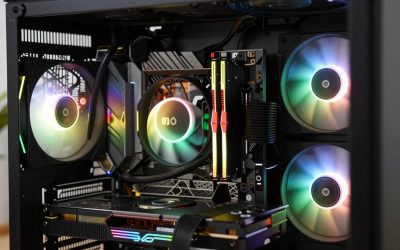
High-end gaming CPUs in 2025 are thermal beasts. Intel’s Core i9-14900K can sustain over 250W all-core load, and AMD’s Ryzen 9 9950X isn’t far behind at around 230W. Air coolers — even excellent ones — struggle to maintain peak performance under sustained workloads at these power levels. A 360mm AIO liquid cooler changes the equation entirely, spreading heat across a large radiator surface with three 120mm fans to dissipate thermal load that would overwhelm any tower air cooler.
The case for 360mm specifically over 240mm or 280mm AIOs comes down to thermal headroom. At 360mm, you have enough radiator surface to keep a 250W CPU below thermal throttling thresholds even under simultaneous gaming and streaming loads. Smaller AIOs work for mid-range CPUs; for anything above a Core i7-13700K or Ryzen 9 7900X, 360mm is the recommended minimum.
Below are the best 360mm AIO liquid coolers for 2025, along with premium air cooler alternatives for builders who prefer air-based solutions or have cases that don’t support 360mm radiators.
In a hurry? See the top-rated 360mm AIO Liquid Coolers for High-End Gaming PCs deals available right now:
🛒 Check 360Mm Aio Liquid Coolers For High-End Gaming Pcs Prices on Amazon →🛒 Best Price Today on Amazon
Prime members get fast, free shipping on everything above, plus member-only deals. New members get a 30-day free trial — cancel anytime.
Start 30-Day Prime Free Trial →See Today’s Amazon DealsTop Picks at a Glance
| Cooler | Type | Radiator | Best For |
|---|---|---|---|
| Corsair Nautilus 360 RS ARGB | 360mm AIO | 360mm | Best overall 360mm AIO |
| Corsair Nautilus 360 RS ARGB v2 | 360mm AIO | 360mm | Best updated 360mm AIO |
| Corsair Nautilus 360 RS | 360mm AIO | 360mm | Best value 360mm AIO (no RGB) |
| Thermalright Peerless Assassin 120 SE | Air Cooler | Twin-tower | Best budget air cooler alternative |
| be quiet! Dark Rock Pro 5 | Air Cooler | Twin-tower | Best premium air cooler alternative |
As an Amazon Associate we earn from qualifying purchases at no extra cost to you.

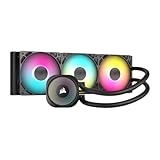


Corsair Nautilus 360 RS ARGB — Best Overall 360mm AIO Liquid Cooler
The Corsair Nautilus 360 RS ARGB sets the standard for 360mm AIO performance in the sub-$100 bracket. Three 120mm ARGB fans move air through a dense aluminum radiator backed by a copper cold plate that makes direct, efficient contact with CPU heat spreaders. The pump operates quietly under gaming loads and ramps appropriately only under sustained stress. iCUE software integration provides full ARGB lighting control and fan curve customization. Broad socket support covers Intel LGA 1700/1851 and AMD AM4/AM5. At around $99, it’s the most complete 360mm AIO available at the price.
- Pros: Exceptional thermal performance, copper cold plate, ARGB fans, iCUE integration, LGA 1700/AM5 support
- Cons: iCUE software adds system resource overhead, 360mm requires large case, tubing is semi-rigid
Corsair Nautilus 360 RS ARGB v2 — Best Updated 360mm AIO with Refined Pump
The v2 revision refines the Nautilus RS ARGB with an improved pump bearing design and updated fan blade geometry that reduces audible noise at moderate RPM settings. Gaming workloads — which sustain but don’t necessarily maximize CPU load — benefit most from the v2’s quieter mid-range fan operation. Thermal ceiling performance is essentially equal between v1 and v2; the improvement is in acoustic quality during the 8–10 hour gaming sessions where noise becomes fatiguing. Same around $99 price, making it the easy choice for new purchases.
- Pros: Quieter pump bearing, refined fan acoustics, same strong cooling performance, same compatibility
- Cons: Improvement over v1 is primarily acoustic rather than thermal, still requires 360mm case support
Corsair Nautilus 360 RS — Best Value 360mm AIO Without RGB
The standard Corsair Nautilus 360 RS strips the ARGB lighting from the fans and pump head but delivers identical thermal performance to the ARGB variants. Cold plate, radiator, pump, and tube quality are unchanged. For builders running closed-panel cases, or those who simply don’t care about RGB lighting on their cooler, the standard RS saves $10 at around $89. It’s one of the most cost-efficient 360mm AIOs on the market — exceptional cooling for under $90 is a remarkable value proposition.

- Pros: Same thermal performance as ARGB, $10 savings, cleaner look in windowless cases, no RGB software needed
- Cons: No ARGB fans or pump lighting, less visually impressive in windowed builds
Thermalright Peerless Assassin 120 SE — Best Budget Air Cooler Alternative
Not every build needs or can accommodate a 360mm AIO. The Thermalright Peerless Assassin 120 SE is the gold standard of budget air cooling in 2025, capable of handling Core i7 and Ryzen 7 class CPUs at their rated TDP without thermal throttling. Its twin-tower design with dual 120mm fans provides impressive airflow and a thermal ceiling that competes with 240mm AIOs at one-third the cost. At around $33, it’s the recommendation for mid-range CPU builds where AIO liquid cooling isn’t necessary or case-compatible.
- Pros: Outstanding value, no liquid, no pump noise, zero leak risk, handles up to 220W TDP
- Cons: Tall profile may cause RAM clearance issues, no 360mm-equivalent thermal headroom for i9/R9
be quiet! Dark Rock Pro 5 — Best Premium Air Cooler Alternative
The be quiet! Dark Rock Pro 5 is the pinnacle of consumer air cooling for 2025. Its asymmetric twin-tower design maximizes heat dissipation while maintaining RAM slot clearance, and the included Silent Wings fans operate at near-inaudible levels even under sustained load. The Dark Rock Pro 5 can handle Core i9 and Ryzen 9 CPUs at moderate overclocks — not quite matching a 360mm AIO at peak sustained load, but getting remarkably close with zero liquid, zero leak risk, and near-silent operation. At around $84, it’s the air cooler for builders who prioritize acoustics.
- Pros: Near-silent Silent Wings fans, handles high-TDP air-cooled builds, premium build quality, no liquid
- Cons: Can’t match 360mm AIO at peak sustained overclocking, large footprint, specific RAM height compatibility
Buying Guide
Do You Actually Need a 360mm AIO?
The honest answer: it depends on your CPU. A 360mm AIO is strongly recommended — and in some cases necessary — for the following processors: Intel Core i9-13900K/KS, i9-14900K/KS, Core Ultra 9 285K, AMD Ryzen 9 7950X, Ryzen 9 9950X, and any overclocked Core i7 or Ryzen 9 variant. For mid-range CPUs like Core i5-13600K, Core i5-14600K, Ryzen 7 7700X, or Ryzen 7 9700X, a 240mm AIO or a premium air cooler like the be quiet! Dark Rock Pro 5 provides more than adequate cooling with less expense.

When to Choose Air Over Liquid Cooling
Air cooling has genuine advantages that liquid AIOs don’t. Air coolers have no moving parts except fans — no pump to fail, no tubing to degrade, and no coolant to potentially leak. Premium air coolers like the Dark Rock Pro 5 and the Thermalright Peerless Assassin 120 SE are more reliable over a 5-to-7 year system lifespan than AIOs, which can develop pump bearing noise or coolant evaporation after several years. Choose air cooling when: your CPU TDP is under 180W, your case doesn’t support 360mm radiator mounting, you’re building a long-term system where reliability trumps peak cooling headroom, or you want completely silent operation.
Radiator Placement: Top vs. Front Mount
360mm radiators can mount on the top or front of most full-tower and some mid-tower cases. Top mounting allows hot air to exhaust directly out of the case, which slightly benefits overall system thermals. Front mounting pulls cool outside air directly through the radiator before it enters the case, which can yield marginally lower CPU temperatures at the cost of slightly warmer GPU exhaust. Most benchmark testing shows the difference between top and front mount is within 2–3°C — choose based on your case’s layout and cable routing preferences.

RGB and Software Ecosystem Considerations
The Corsair Nautilus RS ARGB variants integrate with Corsair iCUE — a powerful but resource-intensive software suite. If your build is primarily Corsair-branded (keyboard, mouse, fans, case lighting), iCUE provides unified control that’s genuinely useful. If you’re mixing brands, the software overhead may not be worth it. The standard Nautilus RS (non-ARGB) eliminates the software dependency entirely. Alternative: ARGB headers on the motherboard can control many ARGB fan ecosystems directly through your motherboard’s own BIOS lighting control without third-party software.
Pump Noise and Long-Term Reliability
AIO pump noise is most noticeable during the first startup of a new system — new bearings can sound slightly rough for the first 30–60 minutes until fluid fully circulates and air bubbles purge. This is normal. Persistent pump noise after break-in, or gurgling sounds during use, indicates an air pocket that hasn’t purged or a potential early pump bearing issue. Corsair’s warranty covers pump defects. The v2 revision of the Nautilus RS ARGB specifically addresses bearing noise with an improved pump design for quieter operation throughout the product’s lifetime.
Frequently Asked Questions
Is a 360mm AIO worth it over 240mm for gaming?
For CPUs with TDP above 200W (Core i9, Ryzen 9 flagship), yes — the additional radiator surface of a 360mm AIO provides meaningful headroom that prevents thermal throttling under sustained gaming and streaming workloads. For CPUs in the 150–180W range (Core i7, Ryzen 7), a quality 240mm AIO provides sufficient cooling at lower cost. The 360mm is insurance against throttling on the most demanding processors.
How long do AIO liquid coolers last?
Quality AIOs from Corsair, NZXT, and Arctic typically last 5–7 years under normal gaming use. Pump bearing wear and slow coolant evaporation are the primary failure modes over time. The Corsair Nautilus series uses sealed coolant loops that don’t require maintenance. Corsair provides multi-year warranties on their AIO products — verify the specific warranty period at purchase.
Can a 360mm AIO fit in a mid-tower case?
Many mid-tower cases support 360mm radiators on the front panel or top. Always check your specific case’s radiator support specifications before purchasing a 360mm AIO. Popular mid-towers with 360mm support include the Fractal Design Define 7, Lian Li Lancool III, and NZXT H7. Compact mid-towers may be limited to 240mm or 280mm — verify before buying.
Is the Corsair Nautilus 360 RS better than Corsair H150i?
The Nautilus RS lineup is Corsair’s current generation replacement for the Hydro H-series. The Nautilus 360 RS ARGB delivers comparable or superior thermal performance to the H150i RGB at a lower price point in 2025. If you’re choosing between current inventory, the Nautilus RS is the newer and recommended product in Corsair’s lineup.
Verdict
The Corsair Nautilus 360 RS ARGB is the top 360mm AIO recommendation for high-end gaming PCs in 2025. At around $99 it delivers thermal performance that keeps Core i9 and Ryzen 9 processors well clear of throttling thresholds, with ARGB aesthetics and iCUE integration for builders who want unified lighting control. The v2 variant is the better buy at the same price if you’re noise-sensitive. For builders whose CPU doesn’t need full 360mm thermal headroom, or whose case won’t accommodate the radiator, the be quiet! Dark Rock Pro 5 (around $84) is the premium air cooler alternative that gets surprisingly close to liquid cooling performance in a reliable, maintenance-free package.
Related Articles
Looking for more on this topic? Browse the hand-picked guides below — each one applies the same scoring rubric used in this review.