ASTLIBRA Revision is KEIZO’s long-form action RPG, published by WhisperGames and released on 13 October 2022 after years as a freeware project in Japan. Its Steam record is one of the plainest Windows-only files in this catalogue: one platform flag, one content depot, and two requirement tabs that open onto nothing. There is no ambiguity to resolve here, because no layer of the record pretends otherwise.
What makes the game worth a status page is the gap between that bare record and its lived reputation on Linux. Valve graded the Windows build Steam Deck Verified in December 2022, and ProtonDB’s file has settled at Platinum across 22 reports. So the honest summary is a split one: nothing native exists to buy, yet the Proton route is about as well documented as a Windows-only release ever gets.
As an Amazon Associate, we earn from qualifying purchases.
Quick answer
ASTLIBRA Revision has no native Linux or Mac build. Steam’s record flags Windows only, both other requirement tabs are empty shells, and the single content depot is a Windows 64-bit build. Linux play runs through Proton, where 22 reports settle at Platinum, and the Steam Deck badge is Verified, tested in December 2022 with Proton 7.0-6 named.
The record, layer by layer
Start with the platform flags, because everything else agrees with them. The store record reads windows true, mac false, linux false. The Windows requirements tab is genuinely populated in both tiers: the minimum asks for a 64-bit Windows, a Core i3-380UM at 1.33 GHz, 4 GB of RAM, Intel HD Graphics and 4 GB of storage, while the recommended tier steps up to a Core i3-4330, 8 GB of RAM and a GeForce GTX 460 for FullHD or a GTX 750 Ti for 4K. These are modest demands from a 2D game, and they matter later for the Deck discussion.
The Mac and Linux requirements fields are the populated-but-empty shell shape: the Minimum and Recommended headings render, and the lists beneath them are empty. A shell is paperwork, not a port. It appears on Windows-only records across the store, and on its own it promises nothing; here it does not even have company, because the depot census closes the question.
SteamDB’s depot page for the app lists exactly one content depot for the base game: depot 1718571, configured Windows 64-bit, at 2.53 GiB. There is no Linux depot, no Mac depot, no shared depot and no size-less ghost entry. The registered store assets are clienticon, clienttga, icon, logo and logo_small. No LinuxClientIcon exists in any form, and there is no Mac client icon either, so neither the fossil-icon shape nor the inverse-icon case arises; the asset set simply matches the flags. The one expansion, ASTLIBRA Gaiden: The Cave of Phantom Mist (app 2669360, released 13 February 2024), was read individually: it is also Windows-only, with its own Windows depot of 1.92 GiB. The record exposes no soundtrack app, so the familiar all-true soundtrack trap never gets a chance to fire. The family’s Linux flag count is zero, top to bottom.
The controller field is the one generous line in the record: Steam lists full controller support, with DualShock and DualSense support named in the categories. That claim comes from the game’s own record, and it is the only controller claim this page makes.
What the ProtonDB file actually says
The summary read succeeded in full: settled tier Platinum, best-reported Platinum, trending tier Gold, 22 reports, confidence good. One stray piece of paperwork sits at the top of the game’s ProtonDB page, a “Natively Supports:” heading. Steam’s record contradicts it on every layer, flags, requirements, depots and assets alike, so the heading is wrong and this article follows Steam. The Platinum classification itself is a Proton verdict, not a native one, and the reports underneath it read that way.
The colour in the file is mostly calm. Deck reports describe the game as flawless or perfect, holding 60 frames per second at very low power limits, one at a 3-watt cap with scaling enabled and another at 5 watts through the final areas. The recurring fault is audio crackling, which several filings trace to the default audio driver and fix by switching the in-game audio setting to DirectSound. Two desktop-side wrinkles are worth knowing. One Deck report on Proton 9.0-2 found the resolution capped at 720p, described as a compatibility measure that desktop players also run into. A Linux Mint report found the window clipping part of the picture under the default tool, cured by forcing Proton 9.0-4. The file’s outright failures sit on integrated Intel graphics at or below the published minimum, which the minimum spec already warns about. Anti-cheat is a non-issue: the game is single-player, names no anti-cheat on its record, and the AreWeAntiCheatYet root games.json, read in full at 1,167 entries, holds no entry for it in either direction. That is documentation silence, not a clearance, and the article states it as such.
There is no second storefront copy to weigh. The natural GOG product address redirects to the general games catalogue, GOG’s catalogue search surfaces only unrelated titles, and the embed search returns zero products, so the ruling rests on the absent page plus the records: no GOG edition exists. The Steam copy is the only PC edition, and it is the build both compatibility records describe.
The Deck badge and its date
Valve’s own compatibility endpoint answers directly for this app: resolved category 3, Verified, with all four checks passing. The default controller configuration is fully functional, the game shows Deck controller icons, interface text is legible, and the default graphics configuration performs well. SteamOS separately rates Compatible. The configuration names gamepad input, small_text 0, and no manual keyboard invocation.
The test metadata comes from SteamDB’s republication of Valve’s sheet, and it carries a date that matters: the test is stamped 20 December 2022, against build 10074933, with recommended runtime proton-7.0-6. The current public build is 21868037, dated February 2026. The badge therefore grades a build from the game’s launch season, more than three years of patches ago, and the Gaiden expansion arrived after the test entirely. That makes this a supplement-candidate sheet: the verdict is real, the paperwork is old, and the ProtonDB file above is the more current evidence for how the game behaves today.
Gear that fits the record
The gear below follows the record’s shape: the handheld the badge was written for, two pads for docked and desktop play, a mouse for menu-heavy desktop sessions, and library storage.
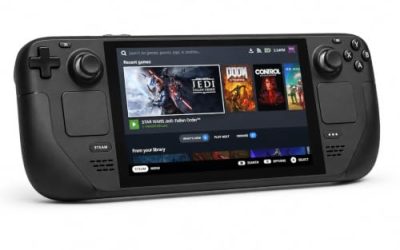
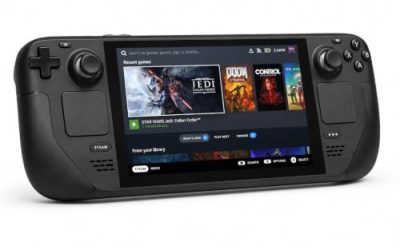
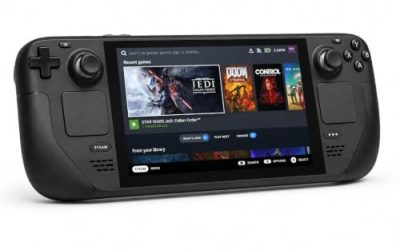
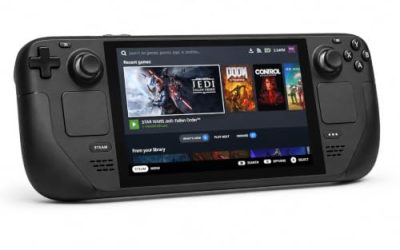
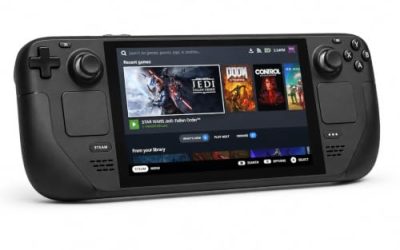
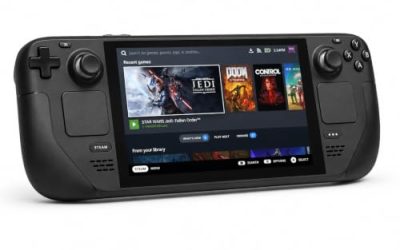
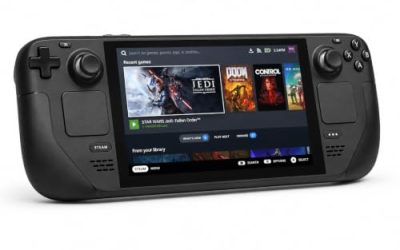
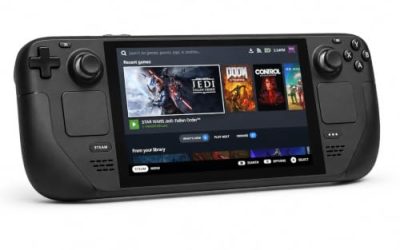
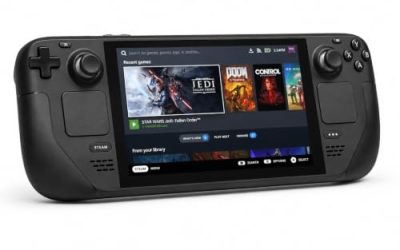
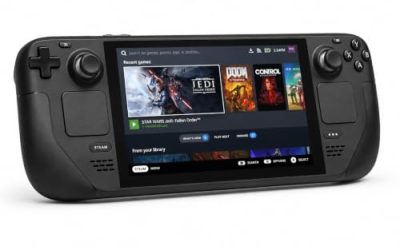
Valve Steam Deck OLED 512GB

The handheld the Verified badge was written for. The game’s published requirements are a rounding error next to the Deck’s APU, and ProtonDB’s Deck filings describe full playthroughs at low power limits.
Specs
- Display: 7.4-inch HDR OLED, 1280 by 800, up to 90 Hz
- Processor: AMD Zen 2 and RDNA 2 custom APU
- Memory: 16 GB LPDDR5
- Storage: 512 GB NVMe, plus a microSD slot
- Wireless: Wi-Fi 6E and Bluetooth
- Channel note: Valve sells the Deck mainly through its own store, so Amazon listings are third-party sellers
8BitDo Ultimate 2 Bluetooth Controller
The docked and desktop pad pick. Steam lists full controller support for the game, and this pad covers the couch case with modern sticks and triggers plus back buttons for menu shortcuts.
Specs
- Connectivity: Bluetooth wireless and USB-C wired
- Joysticks: TMR electromagnetic, anti-drift design
- Triggers: Hall effect, with mode switching
- Extras: two remappable back buttons, motion control
- In the box: charging dock included
Xbox Wireless Controller, Carbon Black
The safest guest pad in PC gaming: Steam Input support is universal, the glyphs match what most games display, and it pairs over Bluetooth or its own wireless standard.
- Connectivity: Xbox Wireless and Bluetooth
- Port: USB-C for wired play
- Controls: hybrid D-pad, dedicated Share button
- Power: AA batteries or optional rechargeable pack
Logitech G502 HERO
ASTLIBRA’s menus, shops and synthesis screens are a large share of a long playthrough, and at a desk a precise wired mouse turns inventory work into single clicks. Eleven programmable buttons cover the confirm, cancel and camera inputs a session repeats.
Specs
- HERO optical sensor, up to 25,600 DPI
- 11 programmable buttons
- Adjustable weight system
- Wired USB connection
- On-board memory profiles
Samsung T9 Portable SSD 2TB
For moving a Linux game library between a desktop and a laptop, or keeping an offline backup of installers, a fast USB-C drive is the simple answer. The headline figure needs a Gen 2×2 host port; on a lesser port the drive runs at that ceiling instead.
Specs
- Capacity: 2 TB portable SSD
- Interface: USB 3.2 Gen 2×2, USB-C connector
- Maker-rated speeds: up to 2,000 MB per second read, 1,950 MB per second write
- Features: Dynamic Thermal Guard, maker-rated drop resistance
How to choose
Choose the Steam copy, because it is the only PC edition on sale and the exact build both records describe. On a desktop or laptop, install it under Proton and start with the default compatibility tool; if the picture clips at the window edge, the documented fix is forcing a current numbered Proton build. If audio crackles, switch the in-game audio driver to DirectSound before touching anything else. On the Deck, install and launch: the Verified badge and the Platinum file agree the default path works, and the low published requirements leave the APU with headroom to spare. For input, the record’s full controller support makes a pad the native shape of the game on every platform; a mouse earns its place for long desktop menu sessions.
Who should skip
Skip this one if a native Linux build is a condition of purchase, because none exists and none is hinted at anywhere in the record. Skip it if you buy on GOG only, since no edition is sold there. Integrated-graphics laptops at the very bottom of the published minimum should also pass: the file’s failures cluster exactly there. And anyone who wants a short game should know the shape of this one before buying; ASTLIBRA is a famously long campaign, and the Linux question is the easy part of the decision.
FAQ
Is there a native Linux version of ASTLIBRA Revision?
No. The record flags Windows only, the Linux requirements tab is an empty shell, and the sole content depot is a Windows 64-bit build. Linux play is Proton play, and ProtonDB rates that route Platinum across 22 reports.
Does the Gaiden expansion change the Linux picture?
No. ASTLIBRA Gaiden: The Cave of Phantom Mist was read individually and is Windows-only as well, with a Windows depot of its own. It also arrived in February 2024, after Valve’s December 2022 Deck test, so the Verified badge never covered it.
Why does ProtonDB show a native heading for a Windows-only game?
The heading is a stray label the page carries, and Steam’s record contradicts it at every layer. The summary data underneath, Platinum settled with a Gold trending tier, is a Proton classification, and that is the part worth trusting.
Is the Deck Verified badge current?
The verdict stands, but the test is dated 20 December 2022 against a launch-season build, and the game has been patched many times since. Treat the badge as a floor and the recent ProtonDB filings, which describe flawless Deck runs, as the fresher evidence.
Final verdict
ASTLIBRA Revision is the simplest kind of Windows-only record: one flag, one depot, empty shells where the other platforms would go, and an expansion that matches. Nothing about it is native, and nothing about it is pretending. What the buyer gets instead is a well-worn Proton path, a Platinum file with named and fixable faults, and a Deck badge whose only weakness is its age. For Linux players who buy on Proton evidence rather than platform flags, this is one of the safer Windows-only purchases in the catalogue.
Product and ASIN Reference
| Product | ASIN |
|---|---|
| Valve Steam Deck OLED 512GB | B0CQ3RWQQZ |
| 8BitDo Ultimate 2 Bluetooth Controller | B0F194QFT2 |
| Xbox Wireless Controller, Carbon Black | B08DF248LD |
| Logitech G502 HERO | B07GBZ4Q68 |
| Samsung T9 Portable SSD 2TB | B0CHFS9K14 |