Anodyne is a top-down action-adventure in a 16-bit-era visual style, developed by Melos Han-Tani and Marina Kittaka and published by Analgesic Productions. Its character, Young, wakes in a mysterious void of geometric white platforms and explores a dreamlike world of nature, urban and abstract themed areas, fighting through dungeons with a broom. Steam’s record dates the release to 22 March 2013, making its Linux paperwork older than most in this series.
That age is exactly why the record deserves a full read. A Linux flag from 2013 can mean a living build, a leftover build, or a flag with nothing behind it. This article reads every layer: the store flags and requirements fields, the depot table, the one soundtrack app in the family, the anti-cheat sources, the community file, Valve’s Deck sheet and the GOG catalogue.
As an Amazon Associate, we earn from qualifying purchases.
Quick answer
Yes. Anodyne is genuinely native on Linux: Steam flags all three platforms, the Linux requirements field is populated at both tiers, and the store package delivers a dedicated Linux depot. Valve rates the game Verified on Steam Deck with a native recommended runtime, ProtonDB’s page classifies it as Native, and a GOG edition listing Linux is also on sale.
The Steam record
Steam’s platform flags read windows, mac and linux all true, and the requirements fields back the flags. The Linux field is genuinely populated at both tiers. Its minimum tier lists a 1.5 GHz single-core processor, 1 GB of RAM, graphics listed simply as any, 200 MB of hard drive space and any sound hardware; the recommended tier raises the processor to a 2.0 GHz single core or better and the memory to 2 GB, and adds the maker’s note that this is not a GPU-intensive game. One clerical gap: the Linux minimum tier names no operating system line at all, opening straight into the hardware list. The Windows and Mac fields are likewise populated at both tiers.
The category list, exactly as the record lists it: Single-player, Steam Achievements, Full controller support, Steam Trading Cards, Camera Comfort, Adjustable Difficulty, Keyboard Only Option, DualShock Controller Support, DualSense Controller Support, Save Anytime, Steam Cloud and Family Sharing. The genres are Action, Adventure, Casual and Indie. Two absences complete the picture: the record carries no DRM notice and no external account notice, so neither a third-party DRM layer nor an account requirement is stated on it.
The depot table
Behind the store page, the depot table holds three content depots, one per platform: a Windows depot of 225.30 MiB, a macOS depot of 253.15 MiB and a dedicated Linux depot, numbered 234903, at 154.42 MiB on disk. The Linux depot’s own page lists the store package, named simply Anodyne with Store billing, among its packages, so the build is delivered to buyers rather than merely documented. Its current manifest, dated July 2024, includes a native shared library, and the public branch stands on a build from 20 July 2024.
Two metadata fields need ruling on. The extended OS field reads macos64, Mac packaging metadata and the single field that says nothing about Linux; it does not outweigh a flag, a tab and a depot that all agree. The architecture field is published as an empty string, so no architecture value is claimed. A Linux client icon sits in the asset list, and here the artwork matches a real delivered build.
The family: one soundtrack
The full add-on array holds exactly one app, read individually: the Anodyne OST, a music product credited to developer Sean Han Tani, released 12 November 2014. Its record publishes no publisher field, and none is asserted here. The soundtrack flags Windows, Mac and Linux all true, while its Mac and Linux requirements fields are empty lists outright and only its Windows field is populated: the soundtrack trap in its classic form, a bare flag on an audio product, firing harmlessly because the game’s own flag is backed by its tab, its depot and its package. Anodyne 2: Return to Dust is a separate game; nothing here is drawn from its record.
Anti-cheat, from three sources
The three sources were kept separate, and all three come back negative. Steam names none: the record is single-player only and neither notice field exists. The depot database’s detected technologies are the Adobe AIR Engine, the FNA Engine, the XNA Engine, the Adobe Flash SDK and the SDL SDK: engine and framework plumbing, no anti-cheat among them. The community anti-cheat tracker’s full dataset, searched by name and by app id, carries no entry for this game.
What ProtonDB says
ProtonDB’s summary record answered in full: headline Gold, best-reported Platinum, trending Gold, across 13 reports, with confidence rated moderate: a small file, claimed here at exactly that size. The game’s own ProtonDB page classifies it as Native under its Natively Supports heading, and on this record Steam agrees at every layer, so there is no contradiction to resolve. The report texture is kept at report weight: older reports describe an earlier native build tied to Adobe AIR dependencies that failed on newer distributions, while a later report describes a remaster update bringing a new native version that plays well, and the most recent reports include clean native runs. The Gold headline is the pooled grade of a small mixed file spanning both routes and two eras of the port, not a verdict against the native build delivered today.
The Steam Deck sheet
Valve’s own compatibility endpoint answered directly this session: resolved category three, Verified, all four Verified items passing, covering the default controller configuration, matching glyphs, legible interface text and a performant default graphics setup. SteamOS separately rates the game Compatible. One note item rides along: external controllers do not take over as the primary player’s pad by default and may need a manual switch through the Quick Access Menu.
The dated paperwork comes from the depot database’s republication of Valve’s compatibility data, disclosed here: the test is dated 26 September 2023, on a tested build numbered 12207830, with native named as the recommended runtime, so the badge as tested certifies the Linux build itself rather than a Proton run. The branch has since moved to a July 2024 build, so the paperwork predates the build now served: the badge is real, its runtime is the native one, and its test build is one step behind.
The GOG edition
A GOG edition exists and lists Linux, ruled from GOG’s own live product page, read directly: its works-on line lists Windows, Linux and Mac OS X, and its questions section states the game is officially supported on Windows, Linux and macOS. The DRM-free storefront is a genuine second Linux route.
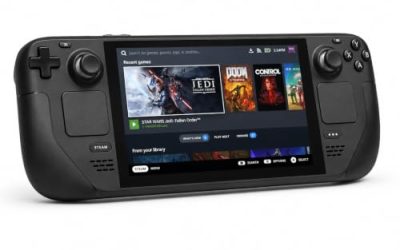
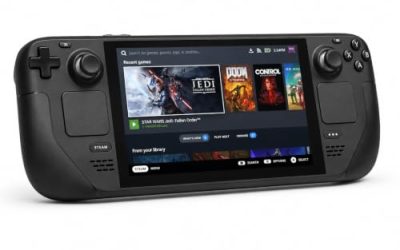
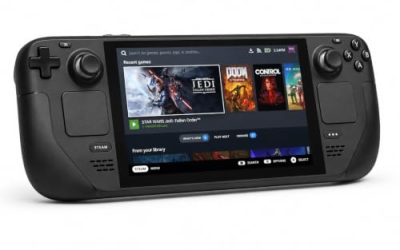
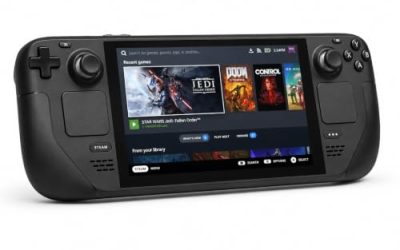
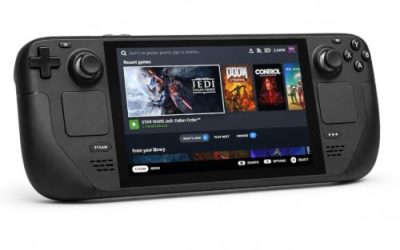
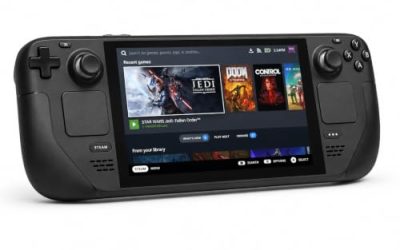
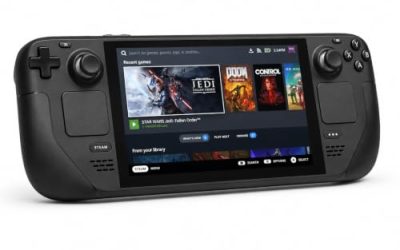
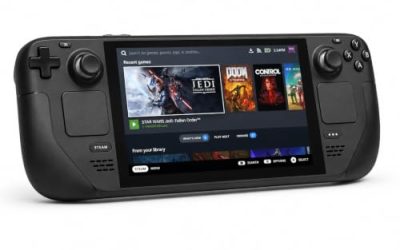
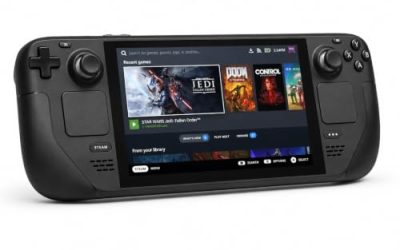
Valve Steam Deck OLED 512GB

The handheld the Verified badge was written for, and the test sheet names the native runtime, so the Deck runs the same Linux build the store package delivers.
Specs
- Display: 7.4-inch HDR OLED, 1280 by 800, up to 90 Hz
- Processor: AMD Zen 2 and RDNA 2 custom APU
- Memory: 16 GB LPDDR5
- Storage: 512 GB NVMe, plus a microSD slot
- Wireless: Wi-Fi 6E and Bluetooth
- Channel note: Valve sells the Deck mainly through its own store, so Amazon listings are third-party sellers
8BitDo Ultimate 2 Bluetooth Controller

Steam lists full controller support for Anodyne, and this pad covers the docked Deck and the desktop alike, with back buttons for the menu-heavy stretches.
Specs
- Connectivity: Bluetooth wireless and USB-C wired
- Joysticks: TMR electromagnetic, anti-drift design
- Triggers: Hall effect, with mode switching
- Extras: two remappable back buttons, motion control
- In the box: charging dock included
Xbox Wireless Controller, Carbon Black

The safest guest pad in PC gaming: Steam Input support is universal and the glyphs match what most games display. On the handheld, the test sheet’s note applies: an external pad may need a Quick Access Menu switch before it takes over.
- Connectivity: Xbox Wireless and Bluetooth
- Port: USB-C for wired play
- Controls: hybrid D-pad, dedicated Share button
- Power: AA batteries or optional rechargeable pack
Logitech G502 HERO

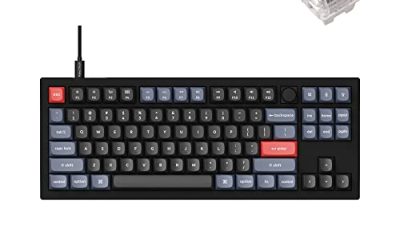
The record lists a Keyboard Only Option among its categories, so a keyboard and mouse route is a stated way to play; at a desk, a precise wired mouse turns menus and card screens into single clicks.
Specs
- HERO optical sensor, up to 25,600 DPI
- 11 programmable buttons
- Adjustable weight system
- Wired USB connection
- On-board memory profiles
Samsung T9 Portable SSD 2TB

The game itself asks for only 200 MB, so this drive is about the library around it: moving a Linux game collection between machines, or keeping offline installers backed up. The headline figure needs a Gen 2×2 host port; on a lesser port the drive runs at that ceiling.
Specs
- Capacity: 2 TB portable SSD
- Interface: USB 3.2 Gen 2×2, USB-C connector
- Maker-rated speeds: up to 2,000 MB per second read, 1,950 MB per second write
- Features: Dynamic Thermal Guard, maker-rated drop resistance
How to choose
Choose either storefront: both sell a native Linux build. The Steam copy is the one whose depot table and Deck sheet are read above; the GOG copy is the DRM-free route whose page lists Linux outright. On the Deck, install and launch; the Verified badge names the native runtime, so no compatibility tool needs selecting. Pair an external pad only if you accept the one manual controller switch the test sheet notes. The populated two-tier tab, not the soundtrack’s bare flag, is the buying evidence.
Who should skip
Skip the soundtrack’s platform flags as buying evidence: a bare flag on a music product proves nothing about any build. Skip this game if you want a large, current community file behind your purchase, because the ProtonDB pool stands at 13 reports with moderate confidence. Skip it if surreal, loosely explained exploration is not your shape of fun. And skip the older community advice that treats the native build as broken by default: it belongs to the port’s earlier era, and the current record supersedes it.
FAQ
Is Anodyne native on Linux?
Yes. Steam flags Linux true, the Linux requirements field is populated at both tiers, and the store package contains a dedicated Linux depot whose current manifest includes a native shared library.
Is Anodyne Steam Deck Verified?
Yes. Valve’s own record rates it Verified, all four items passing, and SteamOS separately rates it Compatible. The dated paperwork names the native runtime and a September 2023 test build; the branch has since moved to a July 2024 build, so the paperwork is one step behind the build now served.
Does the soundtrack prove a Linux build?
No. The Anodyne OST flags all three platforms while its Mac and Linux requirements fields are empty lists outright, a bare flag on an audio product. It is named here so nobody buys on it; the game’s build is proven by the game’s own tab, depot and package.
Can I buy Anodyne on GOG for Linux?
Yes. A GOG edition exists, and its product page lists Linux among the systems it works on and states official support for Linux. It is a second native route, not a Proton workaround.
Final verdict
Anodyne is one of the clean native records of its era: a true flag backed by a populated two-tier tab, a sized Linux depot inside the store package, a Deck badge whose paperwork names the native runtime, a community page classifying it Native in agreement with Steam, and a GOG edition listing Linux. The wrinkles are clerical or historical: a soundtrack flag with nothing behind it, a Mac metadata line in the extended field, Deck paperwork one build behind the branch, and a small community file grading a replaced port era. On Linux, install the native build and explore.
Product and ASIN Reference
| Product | ASIN |
|---|---|
| Valve Steam Deck OLED 512GB | B0CQ3RWQQZ |
| 8BitDo Ultimate 2 Bluetooth Controller | B0F194QFT2 |
| Xbox Wireless Controller, Carbon Black | B08DF248LD |
| Logitech G502 HERO | B07GBZ4Q68 |
| Samsung T9 Portable SSD 2TB | B0CHFS9K14 |