Afterimage is a hand-drawn metroidvania from Aurogon Shanghai, published by Maximum Entertainment and released on Steam on 25 April 2023. You play Renee, an amnesiac girl crossing the ruined world of Engardin through interconnected regions that open up as new traversal powers arrive. It is a long, painterly game in a genre Linux players love, which makes the platform question unavoidable: is there a native Linux build, or does playing it on Linux mean running the Windows version through Proton? The record answers clearly.
The short answer is that Steam’s record contains no Linux build at all, on any layer that can be checked. What it does contain is a fully passed Steam Deck test for the Windows build under Proton, so the game is a comfortable Linux play through the compatibility layer rather than through a port.
As an Amazon Associate, we earn from qualifying purchases.
Quick answer
Afterimage has no native Linux build: Steam’s record is Windows-only on every layer, and its Linux requirements tab is an empty shell. Linux players run the Windows build through Proton instead. Valve rates that route Deck Verified with all four checks passing, and the SteamOS side reads Compatible, so both Deck and desktop play rest on Proton, not a port.
What the platform flags say
Start with the simplest layer. The game’s platform flags on Steam read windows true, mac false, linux false. There is no ambiguity in that line, and nothing further down the record overturns it. The record’s own controller-support field reads full, a point that matters later for the Deck discussion.
The requirements tabs are where a careless reader could go wrong. The Windows tab is genuinely populated in both tiers: minimum Windows 7 64-bit, a Core 2 Duo E4500 or Athlon 64 X2 5600+, 4 GB of memory and Intel UHD Graphics 630; recommended Windows 10, a Core i5 or Ryzen 3, 8 GB and a GeForce GTX 560 or Radeon HD 6870. The mac and linux requirements fields, by contrast, are populated-but-empty shells: each carries the Minimum and Recommended headings over completely empty lists. A shell like that is storefront scaffolding, not a specification: it names no operating system, no processor and no graphics hardware, because there is no build for it to describe. Treating the mere presence of a Linux tab as evidence of a Linux version is the most common misreading of records like this one.
The depots settle it
Depots are where a build either exists or does not, and here the census is short. Steam delivers exactly two content depots: 1701521, Windows 64-bit for the global store, and 1701522, Windows 64-bit for the China store, each about 3.70 GiB. There is no Linux depot, no macOS depot and no shared cross-platform depot hiding behind either of them. The only other downloads attached to the app are the standard Windows redistributables.
The registered store assets point the same way: a client icon, a client tga, an icon, a logo and a small logo, with no LinuxClientIcon in any form and no Mac client icon either. One limitation deserves stating plainly: the discrete launch-entry list was not separately extractable in this session, so the ruling rests on the flags, the requirements fields, the depot census and the registered assets. Those four layers agree completely, and a launch entry for a build that has no depot would have nothing to launch.
The soundtrack trap, and the artbook
The record lists two add-ons, both read individually, because add-on records are where false Linux signals breed. The Afterimage: Artbook app is typed as downloadable content and reads windows true, mac false, linux false, matching the base game exactly.
The Afterimage: Soundtrack app is the trap. It is typed as music, and its platform flags read windows true, mac true and linux true, all three lit. That is the only Linux flag anywhere in this game’s family, and it means nothing for the game itself: a music app delivers audio files, its flags describe the soundtrack download, and there is no Linux game build, depot or requirements list behind it. The pattern is common enough on Steam to have a name in these status reports, the soundtrack all-true trap, and it is named here so nobody cites the soundtrack’s flags as evidence of a port.
Steam Deck: Verified, on dated paperwork
Valve’s compatibility record for the game, read from Valve’s own endpoint, resolves to category Verified. All four test items pass: the default controller configuration is fully functional, the controller glyphs match the Deck, the interface text is legible, and the default graphics configuration performs well. There are no deductions on the sheet at all. The SteamOS side resolves to Compatible, and the recommended runtime recorded by Valve is a Proton 8.0 release.
The paperwork is old, though. Valve’s test is dated 17 May 2023 and was run against build 11218150, the launch-era build. The current public build is 14404437, built in May 2024. So the Verified badge grades a replaced build, not the one on sale today. That makes this a supplement-candidate shape: the badge is real, and the route it certifies is the same Proton route a buyer uses now, but the test date should be quoted whenever the badge is.
ProtonDB: the summary feed is down
ProtonDB’s summary endpoint could not be read for this article. The request for this game’s summary returned the service’s page-not-found response, and a control request for a heavily reported game returned the same response, which marks this as a feed outage rather than a missing record. Because of that, this article claims no ProtonDB tier, no report count and no confidence score for Afterimage.
What can be said from the game page itself is narrower. The one report readable there describes the game running out of the box on a custom Proton build, with the reporter capping the frame rate through a launch option and keeping settings at medium after finding that higher settings cost performance without visible gain; the same report notes window quirks under XWayland that disappeared in a forced Wayland mode. That is one report’s colour, not a settled rating. The page’s native-support heading could not be verified from the fetched text, so no claim is made about it either way.
Anti-cheat and other storefronts
There is little to say on anti-cheat, and the little is worth saying exactly. Afterimage is a single-player game; no anti-cheat is named anywhere on its Steam record and there is no DRM notice to report. The community anti-cheat database maintained under the AreWeAntiCheatYet name, read in full at over eleven hundred entries, holds no entry for this game in either direction. That is documentation silence, not a clearance certificate, but for an offline title there is no server-side gate for a Linux player to hit.
On GOG, there is no edition to buy. The natural product address resolves to the general games catalogue rather than a product page, the store’s own game search returns no product for the name, and the catalogue records that do surface are unrelated titles. An absent page plus absent records is what a no-edition ruling rests on, not search silence alone.
Gear that suits this route
Since the Linux route is Proton, the useful gear is a Verified-badge handheld, pads Steam Input handles cleanly, and fast portable storage.
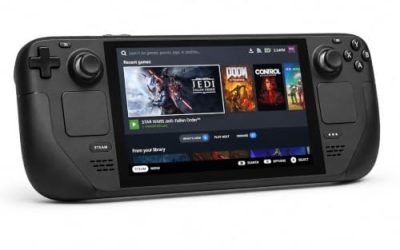
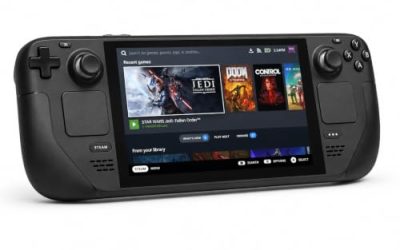
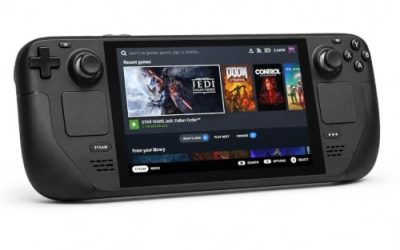
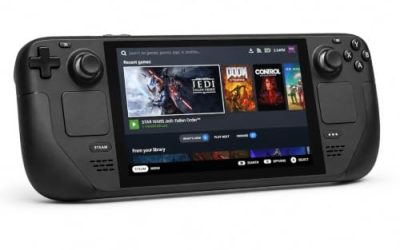
Valve Steam Deck OLED 512GB

The handheld the Verified badge was written for. The game’s published requirements are a rounding error next to the Deck’s APU, and Valve’s test sheet gives the Windows build a clean pass.
Specs
- Display: 7.4-inch HDR OLED, 1280 by 800, up to 90 Hz
- Processor: AMD Zen 2 and RDNA 2 custom APU
- Memory: 16 GB LPDDR5
- Storage: 512 GB NVMe, plus a microSD slot
- Wireless: Wi-Fi 6E and Bluetooth
- Channel note: Valve sells the Deck mainly through its own store, so Amazon listings are third-party sellers
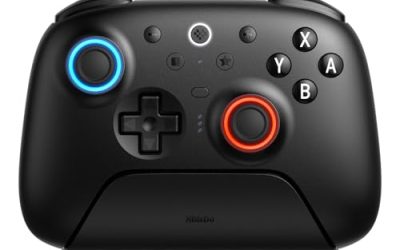
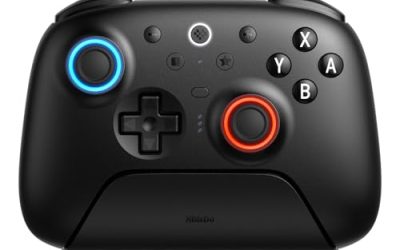
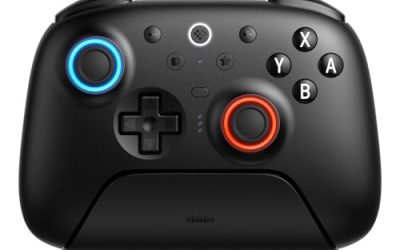
8BitDo Ultimate 2 Bluetooth Controller
The docked and desktop pad pick. The game’s own record lists full controller support, and this pad covers the couch case with modern sticks, triggers and back buttons for menu shortcuts.
Specs
- Connectivity: Bluetooth wireless and USB-C wired
- Joysticks: TMR electromagnetic, anti-drift design
- Triggers: Hall effect, with mode switching
- Extras: two remappable back buttons, motion control
- In the box: charging dock included
Xbox Wireless Controller, Carbon Black
The safest guest pad in PC gaming: Steam Input support is universal, the glyphs match what most games display, and it pairs over Bluetooth or its own wireless standard.
- Connectivity: Xbox Wireless and Bluetooth
- Port: USB-C for wired play
- Controls: hybrid D-pad, dedicated Share button
- Power: AA batteries or optional rechargeable pack
Logitech G502 HERO
A metroidvania lives on its map screen and menus, and at a desk a precise wired mouse turns inventory and map trips into single clicks. Eleven programmable buttons cover the inputs a long session repeats.
Specs
- HERO optical sensor, up to 25,600 DPI
- 11 programmable buttons
- Adjustable weight system
- Wired USB connection
- On-board memory profiles
Samsung T9 Portable SSD 2TB
For moving a Linux game library between machines, a fast USB-C drive is the simple answer. The headline figure needs a Gen 2×2 host port; on a lesser port the drive runs at that ceiling.
Specs
- Capacity: 2 TB portable SSD
- Interface: USB 3.2 Gen 2×2, USB-C connector
- Maker-rated speeds: up to 2,000 MB per second read, 1,950 MB per second write
- Features: Dynamic Thermal Guard, maker-rated drop resistance
How to choose
Choose the route first, because there is only one: the Windows build under Proton, on a Deck or a desktop. On the Deck, install and play; the Verified sheet says the default configuration needs nothing, though the badge was earned on the launch-era build, so a newer Proton than the recorded 8.0 series is the sensible default today. On a desktop, the published Windows requirements are so light that almost any machine with a working Vulkan stack qualifies, and the one readable ProtonDB report suggests medium settings and a frame-rate cap as the comfortable configuration. A pad is the intended input, since the record lists full controller support.
Who should skip
Skip this entirely if you buy only native Linux builds on principle: there is no port here, and the soundtrack’s Linux flag is not a down payment on one. Skip it if you need a current, build-matched Deck test before trusting a badge, because Valve’s paperwork predates the final build by a year. And skip the GOG hunt; there is no DRM-free edition to find.
FAQ
Is Afterimage native on Linux?
No. The platform flags read linux false, the Linux requirements field is an empty shell, the depot census contains only two Windows depots, and no Linux client icon is registered. Every checkable layer of the record agrees.
Why does the soundtrack show Linux support?
Because the soundtrack is a separate music app whose flags describe its own audio download, and those flags read all three platforms as true. It is the soundtrack all-true trap: the flag belongs to the music, not the game.
How does it run on Steam Deck?
Valve rates it Verified, with all four checks passing and no deductions, and SteamOS reads Compatible. The caveat is age: the test ran in May 2023 against the launch-era build, while the current public build dates from May 2024, so the badge grades a replaced build.
Can I buy Afterimage on GOG instead?
No. There is no GOG edition: the product address resolves to the general catalogue, the store search returns no product, and no product record exists.
Final verdict
Afterimage on Linux is a Proton story from top to bottom. The record offers no native build, dresses the absence in an empty-shell requirements tab, and hides its only Linux flag inside a soundtrack app where it means nothing. Against that, Valve’s Verified badge, even on May 2023 paperwork, plus a readable report of out-of-the-box play, make the Windows build an easy recommendation for Deck and desktop players alike.
Product and ASIN Reference
| Product | ASIN |
|---|---|
| Valve Steam Deck OLED 512GB | B0CQ3RWQQZ |
| 8BitDo Ultimate 2 Bluetooth Controller | B0F194QFT2 |
| Xbox Wireless Controller, Carbon Black | B08DF248LD |
| Logitech G502 HERO | B07GBZ4Q68 |
| Samsung T9 Portable SSD 2TB | B0CHFS9K14 |