Our Short List of 3

- Display: 7.4-inch HDR OLED, 1280 by 800, up to 90 Hz
- Processor: AMD Zen 2 and RDNA 2 custom APU
- Memory: 16 GB LPDDR5
- Storage: 512 GB NVMe, plus a microSD slot

- Connectivity: Bluetooth wireless and USB-C wired
- Joysticks: TMR electromagnetic, anti-drift design
- Triggers: Hall effect, with mode switching
- Extras: two remappable back buttons, motion control

- Connectivity: Xbox Wireless and Bluetooth
- Port: USB-C for wired play
- Controls: hybrid D-pad, dedicated Share button
- Power: AA batteries or optional rechargeable pack
All 5 Picks at a Glance
| Product | Specs | Action |
|---|---|---|
| Valve Steam Deck OLED 512GB |
| Check price on Amazon |
| 8BitDo Ultimate 2 Bluetooth Controller |
| Check price on Amazon |
| Xbox Wireless Controller, Carbon Black |
| Check price on Amazon |
 Logitech G502 HERO |
| Check price on Amazon |
 Samsung T9 Portable SSD 2TB |
| Check price on Amazon |
TROUBLESHOOTER: Abandoned Children is Dandylion’s turn-based strategy RPG set in the free trading city of Valhalla, where a newly licensed troubleshooter builds a company and works cases. It left early access in April 2020 and has grown since through two story expansions. For Linux players the question is narrower: is there a native build, and if not, how well does the Windows build behave under Proton?
Steam’s record answers the first half without ambiguity once you read past the platform icons. The flags sell a Windows-only game, the Mac and Linux requirement fields are populated-but-empty shells, and every content depot is a Windows depot. The second half is better news: ProtonDB reporters rate the game Gold, and Valve’s Deck testing calls it Playable.
As an Amazon Associate, we earn from qualifying purchases.
Quick answer
No native Linux build exists: Steam sells a Windows-only game whose Mac and Linux requirement fields are empty shells, and every depot is a Windows depot. Linux players run it through Proton instead, where ProtonDB settles at Gold from 23 reports, and Valve rates the Deck build Playable, with small text and keyboard quirks noted.
A Windows-only record wearing two empty shells
Start with the flags. The record for app 470310 reads windows true, mac false, linux false. The requirements tabs are where this listing gets slippery. The Windows tab is genuinely populated in both tiers: 8 GB of RAM and a GTX 650 class graphics card at minimum, rising to 16 GB of RAM and a GTX 1060 6G or RX 580 as recommended, with 9 GB of storage either way. Beside it, the Mac and Linux requirements fields both exist, and both contain nothing but their own Minimum and Recommended headings over empty lists. These are populated-but-empty shells: present, formatted and published, yet specifying no system requirements at all. Three platform tabs sit on the store page; only one of them says anything.
The depot census removes any doubt. The English content depot, 470311, holds 8.63 GiB of Windows 64-bit data, and the remaining base depots are tiny Windows language packs for Korean, Simplified Chinese, Japanese, Traditional Chinese and Russian. Total size on disk is 14.69 GiB once the art book depots are counted, and not one depot is tagged for macOS or Linux. The registered assets agree: clienticon, clienttga, icon, logo and logo_small are present, but there is no LinuxClientIcon in any form and no Mac client icon either. One disclosed limitation: the discrete launch-entry list was not separately extractable this session, so this ruling rests on flags, requirements, depots and registered assets together — and all four layers agree.
Twenty DLC listings, three soundtrack traps
The DLC array holds twenty entries, all read individually for this article. Seventeen match the base game exactly: windows true, mac false, linux false. That group covers both story expansions, their digital art books, a DLC test entry, and twelve costume sets.
The remaining three are the trap. The base game’s Soundtrack (1284900), the White Lion and Black Witch soundtrack (1856390) and the Crimson Crow soundtrack (2569740) are all type music, and all three carry platform flags of windows true, mac true, linux true. They are the only Linux flags anywhere in this game’s family, and they belong to audio packages. A soundtrack app needs no executable on any platform, so its flags describe no build — yet anyone filtering a library by Linux support will surface these listings and conclude the game supports it. It does not: the flags sit on the music, and the game they attach to is Windows-only on every layer that delivers software. This is the soundtrack all-true trap, fired three times by one title.
Steam Deck: Playable, on November 2022 paperwork
Valve’s compatibility sheet, read from the ajax endpoint and confirmed against SteamDB’s republication of the same data, resolves to category 2: Playable. The passing checks are the two that matter most for a tactics game — the default controller configuration is fully functional, and the default graphics configuration performs well. The deductions are interface issues rather than failures: the game sometimes shows mouse, keyboard or non-Steam-Deck controller icons, entering some text requires manually invoking the on-screen keyboard, and some in-game text is small and may be difficult to read. The SteamOS side resolves to Compatible. The configuration names proton-stable as the recommended runtime — Valve stating plainly that the tested route is the Windows build under Proton, not a native port.
Two dates frame how much weight that badge can carry. Valve’s test is timestamped 9 November 2022 against build 9521289. The current public build is 26887888, shipped 24 November 2026, after years of updates and expansions. The verdict is real, but it grades a build from before the Crimson Crow expansion existed, so it belongs on the supplement-candidate list: the paperwork predates the current build by a wide margin. The game’s own record lists controller support as partial, stated from its own controller field and category. ProtonDB’s Deck reporters add texture: several switched to a keyboard-and-mouse layout and called it the comfortable way to play, and one fixed persistent stutter with a GE-Proton build and async DXVK.
ProtonDB: Gold, with an alt-tab quirk to know about
ProtonDB’s full summary reads settled tier Gold, best-reported Platinum and trending Platinum, across 23 reports, with confidence rated good.
The newest filing, on Fedora 42 with Proton Experimental, reports no issues at all. A full playthrough of the base game and both story expansions on Proton 8.0-3 recorded a single crash in more than 200 hours. The recurring complaint is window focus: several desktop reporters describe freezing or crashing when alt-tabbed, and the fixes sit in the same reports — disabling the in-game option that mutes audio when the window loses focus, or adding PROTON_NO_ESYNC=1 to the launch options, with one reporter also using PROTON_USE_D9VK=1 on an older Proton line. None of this is native support, and the page’s presentation needs one correction: ProtonDB displays a “Natively Supports:” heading above this game’s requirements block, and against Steam’s record that heading is wrong. The article follows Steam, as it does on every layer above.
Two short answers close the record. On anti-cheat: the game is single-player only, names no anti-cheat, and the AreWeAntiCheatYet database, read in full at its current root file of 1,167 entries, holds no entry for this title in either direction — documentation silence, not a clearance. On GOG: there is no edition — the natural product address redirects to the general games catalogue and the records surface only unrelated titles, so the ruling rests on the absent page plus the records, not on search silence.
Gear that fits a Proton tactics game
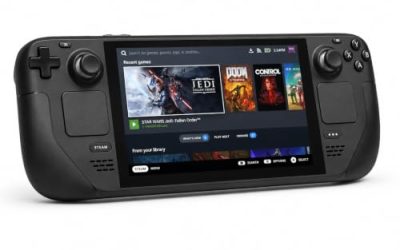
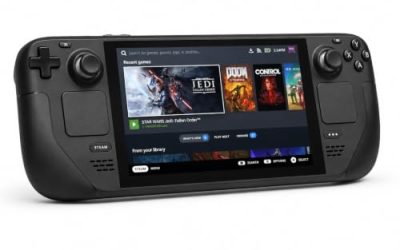
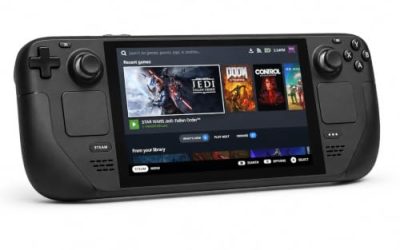
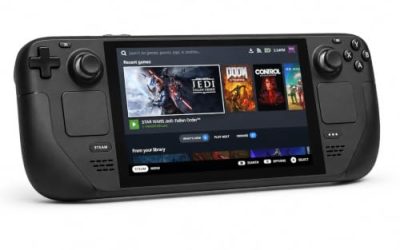
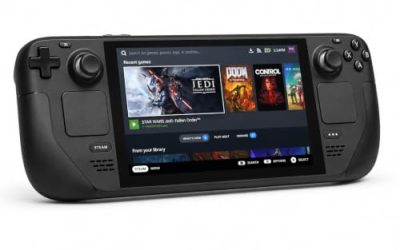
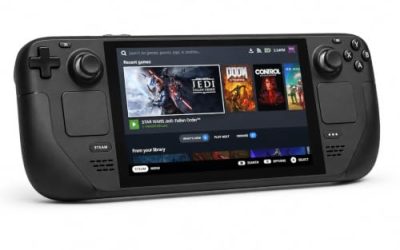
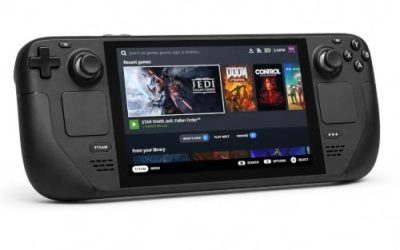
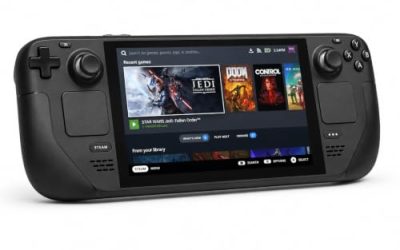
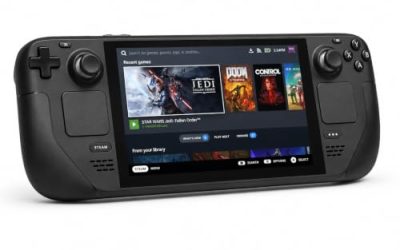
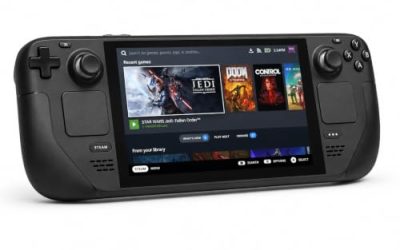
Valve Steam Deck OLED 512GB
- Display: 7.4-inch HDR OLED, 1280 by 800, up to 90 Hz
- Processor: AMD Zen 2 and RDNA 2 custom APU
- Memory: 16 GB LPDDR5
- Storage: 512 GB NVMe, plus a microSD slot
The handheld Valve’s Playable badge was written against. The sheet’s three deductions are interface-level, where the OLED screen helps a text-heavy tactics game stay readable.
8BitDo Ultimate 2 Bluetooth Controller
- Connectivity: Bluetooth wireless and USB-C wired
- Joysticks: TMR electromagnetic, anti-drift design
- Triggers: Hall effect, with mode switching
- Extras: two remappable back buttons, motion control
The docked and desktop pad pick. The record lists partial controller support, so a pad supplements mouse and keyboard rather than replacing them; this one covers the couch case with modern sticks, triggers and back buttons.
Xbox Wireless Controller, Carbon Black
- Connectivity: Xbox Wireless and Bluetooth
- Port: USB-C for wired play
- Controls: hybrid D-pad, dedicated Share button
- Power: AA batteries or optional rechargeable pack
The safest guest pad in PC gaming: Steam Input support is universal, and its glyphs are the set most Windows games draw when they show controller icons — relevant for a title whose sheet warns that non-Deck icons appear.
Logitech G502 HERO
- HERO optical sensor, up to 25,600 DPI
- 11 programmable buttons
- Adjustable weight system
- Wired USB connection
This is a mouse-first game at a desk: grid movement, mastery trees and company management are all pointer work. Eleven programmable buttons cover the confirm, cancel and camera inputs.
Samsung T9 Portable SSD 2TB
- Capacity: 2 TB portable SSD
- Interface: USB 3.2 Gen 2×2, USB-C connector
- Maker-rated speeds: up to 2,000 MB per second read, 1,950 MB per second write
- Features: Dynamic Thermal Guard, maker-rated drop resistance
The full install with both art books runs to roughly 14.69 GiB on disk. For moving a game library between machines, a fast USB-C drive is the simple answer; the headline figure needs a Gen 2×2 host port.
How to choose
Choose the Steam copy, because it is the only PC edition on sale and the exact build both records describe. On a Linux desktop or laptop, install under Proton and start with the default compatibility tool; the Gold settled tier with a Platinum best-reported tier says current Proton builds handle the game well, with the alt-tab fix above as the one known tinker step. On Steam Deck, expect Playable in the literal sense — functional default controls and good performance, paid for with small text, wrong glyphs and manual keyboard calls; a keyboard-and-mouse layout is the community-tested comfort option. At a desk, buy for the mouse first: the record lists controller support as partial and the grids and menus are pointer-shaped, so treat any pad as a couch supplement. And on the DLC page, ignore the three soundtracks’ platform flags — they describe audio files, not a Linux build.
Who should skip
Skip this one if you are shopping for a native Linux tactics game: there is no Linux build here, only empty requirement shells and soundtrack flags pointing nowhere. Skip it if you want a DRM-free offline installer, because no GOG edition exists. Skip the Deck plan if small interface text is a dealbreaker, because Valve’s sheet names legibility as a deduction. Skip it if you demand a pad-only experience, since the record’s controller rating is partial. And skip it if a 2022-dated compatibility test is not reassurance enough.
FAQ
Is TROUBLESHOOTER: Abandoned Children native on Linux?
No. The record flags the game Windows-only, the Linux requirements field is a populated-but-empty shell, every content depot is a Windows depot, and no Linux client icon is registered. Linux play happens through Proton, where it is rated Gold on ProtonDB.
Why do the soundtracks list Linux and Mac support?
Because the three soundtrack apps carry all-true platform flags as music packages. Audio files need no per-platform build, so those flags describe nothing deliverable. The game itself and all seventeen other DLC entries are flagged Windows-only.
How well does it run on Steam Deck?
Valve rates it Playable and SteamOS Compatible: the default controller configuration is fully functional and default graphics perform well, with deductions for small text, non-Deck glyphs and manual keyboard invocation. The test dates from November 2022 and grades an older build.
Is there a GOG or DRM-free version?
No. GOG carries no product page for this title — the natural address redirects to the general catalogue — so Steam is the only PC storefront, and the only route to the game on Linux is the Steam copy under Proton.
Final verdict
TROUBLESHOOTER: Abandoned Children is a Windows-only release whose store page works harder than most to look otherwise: two empty platform shells beside the real Windows requirements, and three soundtrack listings waving Linux flags the game never earned. What Linux players actually get is a well-behaved Proton title: Gold across 23 ProtonDB reports with one documented alt-tab fix, a full story playthrough on record with a single crash in 200 hours, and a genuine if dated Playable badge on Deck. Buy it on Steam for desktop Proton play with a mouse, treat the Deck as a workable second screen, and let the soundtrack flags fool someone else.
Product and ASIN Reference
| Product | ASIN |
|---|---|
| Valve Steam Deck OLED 512GB | B0CQ3RWQQZ |
| 8BitDo Ultimate 2 Bluetooth Controller | B0F194QFT2 |
| Xbox Wireless Controller, Carbon Black | B08DF248LD |
| Logitech G502 HERO | B07GBZ4Q68 |
| Samsung T9 Portable SSD 2TB | B0CHFS9K14 |