State of Mind is Daedalic Entertainment’s dystopian thriller set in Berlin in 2048, a story about a journalist, a virtual city and a world where consciousness can be copied and moved between machines. Its themes are played as narrative adventure mechanics — exploration, dialogue and investigation — and its Linux question is unusually two-sided, because the store record and the handheld record point in opposite directions.
On the desktop side, everything a Linux player could ask for is present: a Linux platform flag, a full requirements tab and a delivered Linux build. On the Steam Deck side, Valve’s own compatibility sheet refuses the game outright. This article reads both records at full size, plus the family apps, the ProtonDB file and the GOG edition.
As an Amazon Associate, we earn from qualifying purchases.
Quick answer
Yes — State of Mind is genuinely native on Linux. Steam’s record flags Linux, publishes a full two-tier Linux requirements tab, and delivers a Linux binaries depot about the same size as the Windows one. GOG sells the same native build. The catch sits on the handheld: Valve’s compatibility sheet rates the game Unsupported on Steam Deck and SteamOS, so desktop is the supported route.
The store record: flag, tab and depot all agree
Steam’s record for app 437630 names Daedalic Entertainment as both developer and publisher, released 15 August 2018. Its platform flags read windows, mac and linux all true. That alone would settle little — flags are cheap — but here the paperwork behind the flag is complete. The Linux requirements field is genuinely populated at both tiers: the minimum names Ubuntu 16.04 or 18.04, a 2.8 GHz dual-core processor, 4 GB of memory, a GeForce 660 or Radeon 7870 class card and 23 GB of storage; the recommended tier raises those figures. The Windows and Mac fields carry the same detail, so the Linux tab is a real port specification.
The depot table, read through SteamDB, closes the case. Alongside a Windows binaries depot of 19.00 GiB and a macOS binaries depot of 20.08 GiB sits a dedicated Linux binaries depot, 437636, at 19.10 GiB — a delivered build in the same size class as the other two. The public branch has stood on build 3186359 since October 2018, so the table describes the build buyers still download today. One field dissents cosmetically: osextended reads macos64, a Mac packaging value. Against a true flag, a populated tab and a sized depot, that string is metadata, not a verdict. This is a native Linux game.
The family shelf: two more Linux flags that prove less
The game’s record carries a DLC array of exactly two apps, and both flag Linux as well, which makes the family count three of three — a figure worth unpacking before it impresses anyone. The Soundtrack, app 884030, is a music product: it flags all three platforms true while its Linux requirements field is an empty list outright, a bare flag on audio files. The Artbook, app 884031, also flags all three, and its Linux field answers with a single minimum line naming any operating system — the paperwork of a document.
Neither flag adds evidence about the game. The recurring trap in this series is a soundtrack flag standing in for a port the game never shipped; here it is harmless because the game’s own flag is independently backed by its tab and depot.
Anti-cheat, DRM and account layers
State of Mind is a single-player adventure with no multiplayer categories at all, so there are no servers to speculate about. The anti-cheat picture is negative on all three sources, kept separate. Steam’s record names no anti-cheat. SteamDB’s detected technologies list the Unreal Engine plus NVIDIA physics and cloth libraries, Ogg and Vorbis audio and a Tobii eye-tracking kit — engine and peripheral plumbing, with no anti-cheat product among them. The Are We Anti-Cheat Yet dataset, searched by name and by app number across its full catalogue, carries no entry for this game.
Two absences deserve plain wording. There is no drm_notice and no ext_user_account_notice: Steam publishes no third-party DRM statement and no external account requirement for this app. That is a gap in the paperwork, not a promise.
ProtonDB: a Native label over a thin file
ProtonDB’s summary feed could not be read for this app during this session — the summary address returned a page-not-found response through repeated attempts — so no headline tier, tier split or confidence figure is claimed anywhere in this article. What the game page shows can be claimed at exactly that size: it classifies State of Mind as Native under its Natively Supports heading, and for once that classification agrees with Steam’s own record, across a report file of 11 reports.
The texture of those reports is mixed, and it matters more than a tier would. Several players report finishing the game on the native build without problems. Others describe random freezes during dialogues and note the same complaint appears in Windows discussions, so the instability is not clearly a port defect. One Steam Deck report adds a wrinkle: on the handheld, the native build did not respond to the controls for that player, who switched to Proton. For a native title the ProtonDB file only ever grades the Windows build under Proton as a fallback; here it doubles as the only public record of the game on Deck hardware, and that record is cautionary.
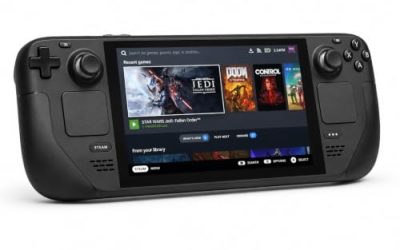
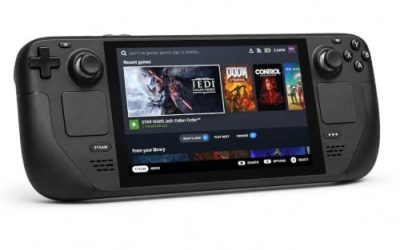
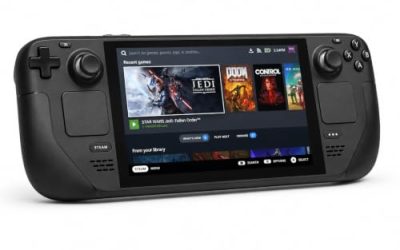
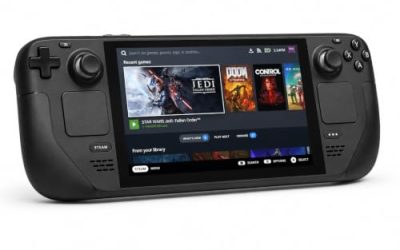
Steam Deck: Unsupported, on current paperwork
Valve’s compatibility record for this app, read through SteamDB’s republication of Valve’s compatibility data, rates the game Unsupported on Steam Deck, and SteamOS separately reads Unsupported as well. The paperwork was recorded on 3 March 2023 against build 3186359 — exactly the build the public branch still serves — so unlike many badges in this series, this one is current.
The recorded reason is a support ruling: the sheet’s test item states that SteamOS does not support the game. The same configuration block names the recommended runtime as native and expects gamepad input, which underlines the oddity — the refusal is not a performance finding. Set against the ProtonDB report of native-build control trouble on the handheld, the sheet and the player file tell a consistent story: the desktop port is real, and the handheld layer is the weak one. Because the verdict is Unsupported, the hardware section below is framed for the desktop.
The GOG edition
A GOG edition exists, and it lists Linux. GOG’s own catalogue searches return zero products for this title — the standing blind spot in that storefront’s search — so the ruling rests on GOG’s live product page, whose identity matches the Steam record’s game and whose works-on line names Windows, Linux and Mac OS X. Both storefronts sell the native build. The GOG copy carries none of Valve’s Deck paperwork: no Unsupported sheet follows it, and no compatibility testing stands behind it either.
Hardware for the desktop route
Keychron V3

The keyboard pick for desktop sessions: a tenkeyless board with QMK and VIA support lets you remap keys at the keyboard level, which keeps working across every Linux install you plug it into — handy for a dialogue-led, text-heavy adventure.
Specs
- Tenkeyless layout with rotary knob
- QMK and VIA remapping support
- Hot-swappable K Pro Brown switches
- Wired USB-C connection
- Maker-rated 1,000 Hz polling
8BitDo Ultimate 2 Bluetooth Controller

The desktop pad pick. Steam lists full controller support, and this pad covers the couch case with modern sticks, triggers and back buttons for the dialogue inputs a session repeats.
Specs
- Connectivity: Bluetooth wireless and USB-C wired
- Joysticks: TMR electromagnetic, anti-drift design
- Triggers: Hall effect, with mode switching
- Extras: two remappable back buttons, motion control
- In the box: charging dock included
Xbox Wireless Controller, Carbon Black

The safest guest pad in PC gaming: Steam Input support is universal, the glyphs match what most games display, and it pairs over Bluetooth or its own wireless standard — the no-fuss sofa option.
- Connectivity: Xbox Wireless and Bluetooth
- Port: USB-C for wired play
- Controls: hybrid D-pad, dedicated Share button
- Power: AA batteries or optional rechargeable pack
Logitech G502 HERO

The investigation scenes reward a precise pointer, and at a desk a wired mouse turns hotspot hunting and menu work into single clicks. Eleven programmable buttons cover the confirm, cancel and camera inputs a session repeats.
Specs
- HERO optical sensor, up to 25,600 DPI
- 11 programmable buttons
- Adjustable weight system
- Wired USB connection
- On-board memory profiles
Samsung T9 Portable SSD 2TB

For moving a Linux game library between machines, or keeping an offline backup of installers, a fast USB-C drive is the simple answer. The headline figure needs a Gen 2×2 host port; on a lesser port the drive runs at that ceiling.
Specs
- Capacity: 2 TB portable SSD
- Interface: USB 3.2 Gen 2×2, USB-C connector
- Maker-rated speeds: up to 2,000 MB per second read, 1,950 MB per second write
- Features: Dynamic Thermal Guard, maker-rated drop resistance
How to choose
Start with the machine, not the storefront. On a Linux desktop or laptop, buy from either store: Steam’s copy is the native build with the full published requirements behind it, and GOG’s edition lists the same three platforms. Between the two, Steam adds the Proton fallback — if the native build misbehaves on your distribution, the Windows build under Proton is one settings change away, and the player reports suggest that route is at least as stable.
On the input side, the game lists full controller support, so a pad is a legitimate primary control scheme at a desk or on a television; the mouse earns its place in the investigation scenes, where hotspots are small.
Who should skip
Steam Deck owners should skip this one, or buy it for a desktop instead: Valve’s sheet rates the game Unsupported on current paperwork, and the one detailed handheld report describes control trouble on the native build. Players who want a guaranteed-clean native experience should read the report file’s freeze complaints first — the port is real, but its stability record is mixed. And anyone shopping the family shelf for the soundtrack or artbook flags should ignore them; those flags describe audio and document files.
FAQ
Is State of Mind native on Linux?
Yes. Steam flags Linux on the game’s record, publishes a two-tier Linux requirements tab naming Ubuntu releases, and delivers a Linux binaries depot of 19.10 GiB alongside the Windows and macOS depots. GOG’s edition lists Linux too.
Why is a native game Unsupported on Steam Deck?
Valve’s compatibility sheet records a support ruling — its test item states that SteamOS does not support the game — rather than a performance failure. The paperwork was recorded in March 2023 against the build the store still serves.
What does ProtonDB say about State of Mind?
Its summary feed could not be read this session, so no tier is claimed. The game page classifies the game as Native, which agrees with Steam’s record, across 11 reports; those reports mix clean native completions with freeze complaints and one report of control trouble on Deck hardware.
Does State of Mind need an external account or extra DRM?
Steam’s record publishes neither a third-party DRM notice nor an external account notice for this app. That silence is a gap in the store paperwork rather than a guarantee; the game is single-player with no multiplayer categories.
Final verdict
State of Mind is one of the clearest splits in this series: a genuinely native Linux port, documented at every layer of the store record and mirrored by a GOG edition that lists Linux, paired with an Unsupported rating on the handheld. On a desktop, the answer is yes — install the native build and keep Proton in reserve. On Steam Deck, the answer is no, on current paperwork. Buy it for the machine it supports.
Product and ASIN Reference
| Product | ASIN |
|---|---|
| Keychron V3 | B0B2DMMMG2 |
| 8BitDo Ultimate 2 Bluetooth Controller | B0F194QFT2 |
| Xbox Wireless Controller, Carbon Black | B08DF248LD |
| Logitech G502 HERO | B07GBZ4Q68 |
| Samsung T9 Portable SSD 2TB | B0CHFS9K14 |