The RTX 5070 vs RTX 5080 for gaming debate comes down to one question: how much performance do you actually need? Both are Blackwell cards with DLSS 4, Multi Frame Generation, and GDDR7 memory on PCIe 5.0. The gap between them is real, but it is not the same size at every resolution.
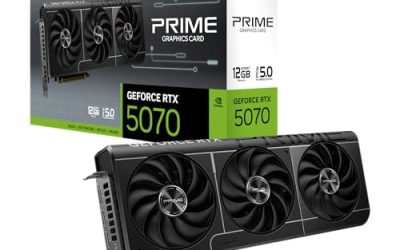
This comparison uses two concrete cards from the same maker: the MSI GeForce RTX 5070 12G Ventus 2X OC and the MSI GeForce RTX 5080 16G Ventus 3X OC Black. Both are factory-overclocked Ventus models, so the difference reflects the silicon, not the cooler or the brand.
The Short Answer
The RTX 5070 is the right card for high-refresh 1440p gaming. It delivers smooth frame rates in demanding titles at 1440p, handles ray tracing with DLSS, draws only 250 watts, and fits in compact cases. TechPowerUp calls it a strong 1440p card that needs upscaling help at 4K.
The RTX 5080 is the right card for 4K gaming and heavy creation work. It carries 75 percent more CUDA cores, 4 GB more VRAM, and about 43 percent more memory bandwidth. Aggregated game suites put it roughly 19 percent ahead at 1440p and roughly 31 percent ahead at 4K. It draws 360 watts and needs an 850-watt power supply, so it belongs in a larger build.
Specs Head to Head
The silicon gap is the whole story. The 5080 uses the GB203 chip with 10,752 CUDA cores against 6,144 on the 5070’s smaller GB205 chip, 75 percent more, and the rest of the specification sheet follows the same pattern.
| Specification | RTX 5070 | RTX 5080 |
|---|---|---|
| GPU | GB205 | GB203 |
| CUDA cores | 6,144 | 10,752 |
| VRAM | 12 GB GDDR7 | 16 GB GDDR7 |
| Memory bus | 192-bit | 256-bit |
| Memory speed | 28 Gbps | 30 Gbps |
| Memory bandwidth | 672 GB/s | 960 GB/s |
| Power draw | 250 W | 360 W |
| Recommended PSU | 650 W | 850 W |
| Architecture | Blackwell | Blackwell |
| Upscaling | DLSS 4 | DLSS 4 |
| Interface | PCIe 5.0 | PCIe 5.0 |
Memory bandwidth deserves attention. The 5080 moves data at 960 GB/s against 672 GB/s on the 5070, a gap of about 43 percent. Bandwidth matters most at 4K and with ray tracing, where large textures and ray data stream constantly.
The Two Cards in This Comparison

MSI GeForce RTX 5070 12G Ventus 2X OC. This compact dual-fan card boosts to 2542 MHz, or 2557 MHz in its Extreme Performance profile through MSI Center. It carries 12 GB of GDDR7 on a 192-bit bus, draws 250 watts through a single 16-pin connector, and measures 236 x 126 x 50 mm, fitting cases that reject longer triple-fan cards. Three DisplayPort 2.1b outputs and one HDMI 2.1b output cover multi-monitor setups, and Zero Frozr stops the fans at low load. ASIN: B0DYGDT9YD.
Specs
- GPU: NVIDIA GeForce RTX 5070; CUDA cores: 6,144; Memory: 12 GB GDDR7, 192-bit, 28 Gbps; Boost clock: 2542 MHz (2557 MHz Extreme Performance); Power: 250 W, 16-pin x 1, 650 W PSU recommended; Outputs: 3x DisplayPort 2.1b, 1x HDMI 2.1b; Dimensions: 236 x 126 x 50 mm; Weight: 774 g.
MSI GeForce RTX 5080 16G Ventus 3X OC Black. This triple-fan card boosts to 2640 MHz, or 2655 MHz in its Extreme Performance profile through MSI Center. It carries 16 GB of GDDR7 on a 256-bit bus, draws 360 watts through a single 16-pin connector, and measures 303 x 121 x 49 mm, needing a mid-tower case with real clearance. Outputs match the 5070, and the triple TORX Fan 5.0 cooler handles the higher power draw, with Zero Frozr keeping the fans still at idle. ASIN: B0GVGP3JG3.
Specs
- GPU: NVIDIA GeForce RTX 5080; CUDA cores: 10,752; Memory: 16 GB GDDR7, 256-bit, 30 Gbps; Boost clock: 2640 MHz (2655 MHz Extreme Performance); Power: 360 W, 16-pin x 1, 850 W PSU recommended; Outputs: 3x DisplayPort 2.1b, 1x HDMI 2.1b; Dimensions: 303 x 121 x 49 mm; Weight: 1084 g.
1440p Gaming Performance
At 1440p, the gap is noticeable but not dramatic. Technical.city aggregates a large set of games: 148 frames per second on average for the RTX 5080 at 1440p against 124 for the RTX 5070, about 19 percent. A second aggregate at maximum settings shows a wider split: 165 against 128 at 1440p Ultra, roughly 29 percent ahead. In Counter-Strike 2, both cards clear a 144 Hz ceiling easily, near 440 frames per second for the 5080 against 385 for the 5070.
PassMark’s synthetic data tells the same story. PassMark’s G3D Mark scores the RTX 5080 at 35,697 against 28,758 for the RTX 5070, a gap of about 24 percent. The 5080 costs substantially more for about a fifth more frames here, and PassMark-per-dollar analysis puts the 5070 at roughly 1.5 times the score per dollar of the 5080.
4K Gaming Performance
At 4K, the gap widens and the recommendation flips. Technical.city records 101 frames per second on average for the RTX 5080 at 4K against 77 for the RTX 5070, about 31 percent. The 5080 holds above 60 frames per second in demanding AAA titles at 4K Ultra, while the 5070 drops below that line in several of them without upscaling.
Ray tracing widens the gap further. Aggregated data for Cyberpunk 2077 at 4K Ultra with ray tracing and DLSS Performance shows about 95 frames per second for the 5080 against 68 for the 5070, roughly 40 percent ahead. In Alan Wake 2 at 4K Ultra with path tracing, the split reaches about 72 against 49, roughly 47 percent. Path tracing is the heaviest workload a consumer card faces, and it is where the 5080’s extra cores, bandwidth, and VRAM pay off most clearly.
DLSS changes the picture for both cards, but it does not erase the gap. DLSS Quality at 4K renders internally at 1440p, which lifts both cards, and Multi Frame Generation multiplies the displayed frame rate on both. The 5080 can run DLSS Quality where the 5070 needs DLSS Performance, which preserves more image detail.
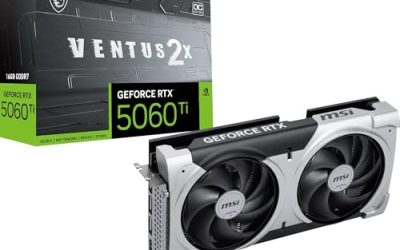
The 5070 Ti sits between these two cards. It shares the 5080’s GB203 silicon with fewer cores enabled and carries 16 GB of VRAM, closing much of the 4K gap at a lower price. Anyone torn between the two should weigh the middle option in this comparison of the RTX 5080 against the 5070 Ti: RTX 5080 vs 5070 Ti.
Ray Tracing, DLSS 4, and Frame Generation
Both cards render ray tracing with the same Blackwell cores, but the 5080 has far more of them. Without ray tracing, the gap stays near the 19 to 31 percent range shown above. With ray tracing enabled, it grows toward 40 percent and beyond in the heaviest titles.
DLSS 4 is available on both cards. Super Resolution reconstructs a higher-resolution image from a lower render resolution, and Multi Frame Generation inserts AI-generated frames between rendered frames. The practical difference is the base frame rate: the 5080 renders more real frames before generation begins, so the generated frames build on a stronger base, and input latency stays lower at the same output frame rate. Frame generation is not free performance, though. It cannot fix a card that renders too slowly for responsive play, so it shines most when the base frame rate is already healthy.
VRAM and Longevity
16 GB against 12 GB is the most durable difference in this comparison. Texture quality in new AAA games keeps rising, and 12 GB is already a constraint at 4K with ultra textures in some titles. The 5070 handles 1440p ultra textures comfortably today, but its 12 GB frame buffer leaves less room for future games. The 5080’s 16 GB gives it a longer useful life at 4K and at 1440p with maximum textures.
VRAM also matters outside gaming. Local AI models, 3D rendering, and video work all consume VRAM, and 16 GB clears thresholds that 12 GB cannot. Models that fit in 16 GB may not fit in 12 GB at all. The 5080’s wider 256-bit bus is part of why bandwidth differs by 43 percent.
Power, Size, and Power Supply
The 5080 demands more from the rest of the build. It draws 360 watts against 250 watts for the 5070, a difference of 110 watts under load, and MSI recommends an 850-watt power supply for the 5080 against 650 watts for the 5070. An upgrader may need a new PSU for the 5080, while the 5070 drops into far more existing systems. Both cards use a single 16-pin connector, and MSI recommends an ATX 3.1 supply for both, so the connector is the same; the wattage is not.
Size is the second hidden cost. The Ventus 2X OC 5070 measures 236 mm long and weighs 774 grams, which fits compact mid-towers and many small-form-factor cases. The Ventus 3X OC Black 5080 measures 303 mm long and weighs 1084 grams, which needs a case with real GPU clearance and a bracket or support for the extra weight.
Who Should Buy Which Card
Buy the RTX 5070 if the monitor is 1440p. At 1440p the 5070 delivers smooth AAA frame rates, high refresh rates in competitive games, and full ray tracing with DLSS. It fits small cases, runs on a 650-watt supply, and leaves budget for a better monitor or a faster CPU.
Buy the RTX 5070 if the build is compact or the PSU is modest. A 236 mm dual-fan card and a 650-watt recommendation make the 5070 the easy drop-in upgrade for small builds. The 5080 in the same case would demand a new PSU, a larger case, and better airflow.
Buy the RTX 5080 if the monitor is 4K. At 4K the 5080 holds above 60 frames per second where the 5070 falls below, and it does so with DLSS Quality rather than DLSS Performance. A 4K high-refresh monitor deserves a card that can feed it.
Buy the RTX 5080 for creation and AI work alongside gaming. The extra cores, bandwidth, and 16 GB of VRAM cut render times and let larger models load. In Tom’s Hardware professional mix of Blender, Stable Diffusion, MLPerf, and SPECworkstation, the 5080 lands about 34 percent ahead. A buyer who runs local AI daily should treat the 5080 as a work tool first.
Buy the RTX 5080 if the plan is to keep the card for five years or more. The 5080’s 16 GB buffer and larger core count give it more room as games grow heavier, while the 5070’s 12 GB will bind sooner. A buyer who upgrades rarely should pay for headroom now.
Verdict
For most players, the RTX 5070 is the smarter buy. It covers 1440p gaming completely, fits more cases, needs a smaller PSU, and delivers far more performance per dollar. The gap at 1440p is about one-fifth, not worth a large premium for a player whose monitor never shows it.
For 4K players and creators, the RTX 5080 is the right buy. The gap grows to about one-third at 4K and toward one-half with path tracing, and 16 GB of VRAM removes a constraint the 5070 will hit sooner. It costs more, but it plays at 4K without compromise.
The decision is the monitor, not the marketing. A 1440p monitor points to the 5070, a 4K monitor to the 5080, and a buyer between the two should look at the 5070 Ti. Match the card to the display, confirm the PSU and case clearance, and either choice will serve well for years.
FAQ
Is the RTX 5080 worth it over the RTX 5070 for 1440p gaming?
For most 1440p players, no. The 5080 leads by roughly 19 to 29 percent at 1440p, but the 5070 already clears high refresh rates in competitive games and smooth frame rates in AAA titles. The extra money buys headroom, not a different experience.
Can the RTX 5070 handle 4K gaming?
Yes, with help. The 5070 averages about 77 frames per second at 4K in aggregated suites, but it drops below 60 in demanding AAA titles at ultra settings without upscaling. DLSS Quality and frame generation make 4K playable.
How much power supply do the RTX 5070 and RTX 5080 need?
MSI recommends a 650-watt supply for the Ventus 2X OC 5070 and an 850-watt supply for the Ventus 3X OC Black 5080. The cards draw 250 and 360 watts respectively, and both use a single 16-pin connector.
Does the RTX 5080 have enough VRAM for future games?
The 5080 carries 16 GB of GDDR7, comfortable for 4K ultra textures today with room for future titles. The 5070 carries 12 GB, fine at 1440p but already tight at 4K with maximum textures in some games. For a card kept five years or more, the extra 4 GB is the most durable advantage here.
As an Amazon Associate we earn from qualifying purchases.