Sim racing loads a graphics card differently from most genres. A single 1440p screen asks for about 3.7 million pixels per frame, but a triple 1440p rig pushes roughly 11.1 million pixels — more than a single 4K display — and a VR headset renders two separate views while demanding a locked, high frame rate. The best GPU for sim racing therefore depends on three things: how many pixels your setup renders, how many display outputs you need, and how much VRAM headroom you want for dense grids, rain and night races in titles such as iRacing, Assetto Corsa Competizione and Le Mans Ultimate.
As an Amazon Associate we earn from qualifying purchases.
The five cards below are tiered by setup rather than by price. Each is a specific model sold on Amazon US, with memory, board power, recommended PSU wattage and display outputs listed — output count is a hard limit for triple-screen rigs, which need three connections for the screens alone, plus a fourth for a dash display.
What Sim Racing Actually Demands From a GPU
Three workload facts drive every pick in this guide:
- Pixel count scales brutally. Triple 1440p (7680 × 1440) exceeds 4K (3840 × 2160) in raw pixels, and triple 1080p sits between 1440p and 4K. A card that feels fast on one screen can run out of headroom on three.
- Frame rate stability beats peak frame rate. Sim racers typically target the refresh rate of their panels — 60 Hz at minimum, 120 Hz or 144 Hz on modern rigs — and VR stutter causes discomfort, so consistency matters more than a headline average.
- VRAM fills up with grids and weather. Large fields, high-resolution liveries, rain spray and night lighting all consume memory. This is why four of the five picks below carry 16GB: at triple-screen and VR resolutions, 12GB can become the limiting factor.
On relative performance, TechPowerUp’s GPU database and Tom’s Hardware’s GPU hierarchy place these chips in a consistent order: the RTX 5080 leads, the RTX 5070 Ti and RX 9070 XT trade places by title (the Radeon is strong in pure rasterised rendering, which most current sims use), the RTX 5070 follows, and the RTX 5060 Ti 16GB anchors the entry tier. For sim-specific expectations, the publishers’ own system requirements are the safest anchor — iRacing’s published minimums are modest, but its recommended tier and the demands of VR and triples sit far above that floor.
The Five Picks at a Glance
| GPU | VRAM | Board power | Recommended PSU | Outputs | Best for |
|---|---|---|---|---|---|
| MSI RTX 5060 Ti 16G Ventus 2X OC Plus | 16GB GDDR7 | 180 W | 600 W | 3× DP 2.1a, 1× HDMI 2.1b | Single 1440p |
| ASUS Prime RTX 5070 OC | 12GB GDDR7 | 250 W | 650 W | 3× DP 2.1b, 1× HDMI 2.1b | 1440p high refresh, 1080p triples |
| Sapphire Pulse RX 9070 XT | 16GB GDDR6 | 304 W | 750 W | 2× DP 2.1a, 2× HDMI 2.1b | 1440p triples, ultrawide |
| MSI RTX 5070 Ti 16G Ventus 3X OC | 16GB GDDR7 | 300 W | 750 W | 3× DP 2.1a, 1× HDMI 2.1b | Triples and VR |
| MSI RTX 5080 16G Ventus 3X OC Black | 16GB GDDR7 | 360 W | 850 W | 3× DP 2.1a, 1× HDMI 2.1b | 4K, high-end VR, triple 1440p |
PSU figures are the chip makers’ published system-power guidance, not measured results.
1. MSI GeForce RTX 5060 Ti 16G Ventus 2X OC Plus — Entry Point for a Single 1440p Screen

The 16GB version of the RTX 5060 Ti is the sensible floor for a modern sim rig. On a single 1440p monitor it covers iRacing, Assetto Corsa Competizione and Le Mans Ultimate at sensible settings, and the full 16GB buffer means textures do not need to be cut as grids grow.
Specs
- GPU: NVIDIA GeForce RTX 5060 Ti (Blackwell), 4,608 CUDA cores
- Memory: 16GB GDDR7, 128-bit bus
- Boost clock: 2,602 MHz (manufacturer figure for this model)
- Board power: 180 W, single 8-pin connector
- Recommended PSU: 600 W (NVIDIA guidance)
- Outputs: 3× DisplayPort 2.1a, 1× HDMI 2.1b — up to 4 displays
- Interface: PCIe 5.0 x8
See the MSI RTX 5060 Ti 16G Ventus 2X OC Plus on Amazon
2. ASUS Prime GeForce RTX 5070 OC — High-Refresh Single Screen and 1080p Triples

The RTX 5070 is the step up for racers who want a single 1440p panel at 144 Hz or higher, or triple 1080p screens without turning settings down as far. Its 12GB of memory is the one compromise here: fine for a single screen, tighter for triple 1440p in the heaviest titles. The Prime is a compact 2.5-slot card, suiting smaller rigs.
Specs
- GPU: NVIDIA GeForce RTX 5070 (Blackwell), 6,144 CUDA cores
- Memory: 12GB GDDR7, 192-bit bus
- Boost clock: 2,587 MHz in OC mode (manufacturer figure for this model)
- Board power: 250 W, single 16-pin connector
- Recommended PSU: 650 W (NVIDIA guidance)
- Outputs: 3× DisplayPort 2.1b, 1× HDMI 2.1b — up to 4 displays
- Interface: PCIe 5.0
See the ASUS Prime GeForce RTX 5070 OC on Amazon find alternatives
3. Sapphire Pulse Radeon RX 9070 XT — The Triple-1440p Value Tier

For pure rasterised rendering — still the norm across iRacing, ACC and LMU — the RX 9070 XT delivers performance that TechPowerUp and Tom’s Hardware place close to the RTX 5070 Ti, with 16GB of memory and a practical output layout for cockpit builds: two DisplayPort and two HDMI connections, so triples plus a dash display can mix connection types. It is the natural centre of this guide for a triple 1440p rig with no VR plans.
Specs
- GPU: AMD Radeon RX 9070 XT (RDNA 4), 4,096 stream processors
- Memory: 16GB GDDR6, 256-bit bus
- Boost clock: up to 2,970 MHz (manufacturer figure for this model)
- Board power: 304 W, 2× 8-pin connectors
- Recommended PSU: 750 W (Sapphire guidance)
- Outputs: 2× DisplayPort 2.1a, 2× HDMI 2.1b — up to 4 displays
- Interface: PCIe 5.0
See the Sapphire Pulse RX 9070 XT on Amazon
4. MSI GeForce RTX 5070 Ti 16G Ventus 3X OC — Triples and VR Sweet Spot
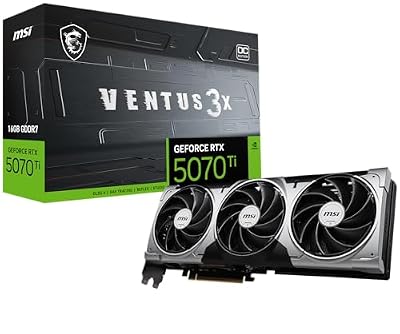
The RTX 5070 Ti is where triple 1440p and PC VR both become comfortable. Sixteen gigabytes of faster GDDR7, a clear step over the RTX 5070 in the TechPowerUp and Tom’s Hardware rankings, and NVIDIA’s mature VR and multi-monitor feature set (Surround for triples, plus single-pass stereo in titles that implement it, such as iRacing) make this the card most dedicated rigs should target.
Specs
- GPU: NVIDIA GeForce RTX 5070 Ti (Blackwell), 8,960 CUDA cores
- Memory: 16GB GDDR7, 256-bit bus
- Extreme Performance clock: 2,497 MHz (manufacturer figure for this model)
- Board power: 300 W, single 16-pin connector
- Recommended PSU: 750 W (NVIDIA guidance)
- Outputs: 3× DisplayPort 2.1a, 1× HDMI 2.1b — up to 4 displays
- Interface: PCIe 5.0
See the MSI RTX 5070 Ti 16G Ventus 3X OC on Amazon
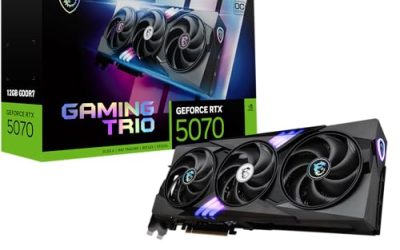
5. MSI GeForce RTX 5080 16G Ventus 3X OC Black — 4K and No-Compromise VR

The RTX 5080 is the pick for a single 4K screen, triple 1440p at high settings, or high-resolution VR headsets where the render target per eye is large and frame rate cannot dip. It is the fastest card here in both TechPowerUp’s relative rankings and Tom’s Hardware’s hierarchy, and it asks the most of the rest of the system: 360 W board power, an 850 W PSU recommendation, and a fast CPU.
Specs
- GPU: NVIDIA GeForce RTX 5080 (Blackwell), 10,752 CUDA cores
- Memory: 16GB GDDR7, 256-bit bus
- Boost clock: 2,640 MHz (manufacturer figure for this model)
- Board power: 360 W, single 16-pin connector
- Recommended PSU: 850 W (NVIDIA guidance)
- Outputs: 3× DisplayPort 2.1a, 1× HDMI 2.1b — up to 4 displays
- Interface: PCIe 5.0
See the MSI RTX 5080 16G Ventus 3X OC Black on Amazon
Triples, VR and the Rest of the Rig
A few practical checks before ordering:
- Count your cables, not just ports. All five cards expose four display outputs, covering three screens plus one auxiliary display. Triple setups run through NVIDIA Surround or AMD Eyefinity, and identical panels with matching refresh rates make configuration far simpler — screen choice matters as much as the card, so it is worth reading a dedicated guide to the best monitor for sim racing before committing to a panel size.
- Match the CPU to the card. Simulations are unusually CPU-sensitive, especially iRacing with large fields. A high-end GPU paired with an older processor will not deliver its ranked performance here.
- Check the power connector. The RTX 5070 and above use a 16-pin connector (adapter included with these models); the RX 9070 XT and RTX 5060 Ti use standard 8-pin connectors — relevant if your PSU is older.
- VR headsets use DisplayPort or USB-C. Wired PC VR headsets typically take one DisplayPort output, leaving the rest free; standalone headsets streamed over USB or Wi-Fi lean on the GPU’s video encoder, which all five cards provide.
Verdict: Which GPU Should You Buy?
- Single 1080p or 1440p screen, first dedicated rig: MSI RTX 5060 Ti 16G Ventus 2X OC Plus — enough memory and outputs to grow into 1080p triples later.
- Single 1440p at high refresh, or triple 1080p: ASUS Prime RTX 5070 OC — though its 12GB buffer makes it the wrong choice for triple 1440p.
- Triple 1440p on screens only: Sapphire Pulse RX 9070 XT — 16GB, four outputs, raster performance near the 5070 Ti class.
- Triple 1440p plus VR, one card for everything: MSI RTX 5070 Ti 16G Ventus 3X OC — the balanced recommendation for most serious rigs.
- 4K single screen or high-resolution VR: MSI RTX 5080 16G Ventus 3X OC Black, provided the PSU and CPU match it.
FAQ
How much VRAM does sim racing need?
For a single 1080p or 1440p screen, 12GB is workable today. For triple screens, VR, or maximum textures in Assetto Corsa Competizione and Le Mans Ultimate with full grids, 16GB is the safer capacity — which is why most picks here carry 16GB.
Can one GPU really run three monitors?
Yes. All five cards expose four display outputs and support NVIDIA Surround or AMD Eyefinity, which combine three screens into one wide display. Triple 1440p is more pixels than 4K, so choose the tier by total pixel count, not screen count.
Is the RX 9070 XT good for VR sim racing?
It has the raster performance and 16GB of memory for PC VR in titles such as iRacing and ACC. NVIDIA cards remain the more common VR recommendation because of broader feature support in sims (for example, single-pass stereo in iRacing), so VR-first buyers are usually steered to the RTX 5070 Ti tier.
What power supply do these cards need?
Follow the chip makers’ published guidance listed with each card: 600 W for the RTX 5060 Ti, 650 W for the RTX 5070, 750 W for the RX 9070 XT and RTX 5070 Ti, and 850 W for the RTX 5080. Leave headroom if the PC also runs a high-end CPU.
Product and ASIN Reference
| Product | ASIN |
|---|---|
| MSI GeForce RTX 5060 Ti 16G Ventus 2X OC Plus | B0F32NJG9T |
| ASUS Prime GeForce RTX 5070 OC Edition 12GB | B0DS6WPTLL |
| Sapphire Pulse AMD Radeon RX 9070 XT (11348-03-20G) | B0DTHMPWFR |
| MSI GeForce RTX 5070 Ti 16G Ventus 3X OC | B0DWHHSZH1 |
| MSI GeForce RTX 5080 16G Ventus 3X OC Black | B0GVGP3JG3 |