Post Void, the frantic first-person score-attack shooter YCJY Games released in August 2020, is one of the plainest records in this cluster. No port announcement to weigh, no stranded depot, no soundtrack app waving a false flag: Steam’s record says Windows only at every layer that delivers a build.


So the useful question is narrow: how good is the Proton route on desktop, what does Valve’s Steam Deck test sheet say, and is there a second storefront selling a different answer? This piece reads each layer separately: flags and fields, depot and package, the family sweep, the anti-cheat sources, the ProtonDB file, the Deck paperwork and the GOG ruling.
As an Amazon Associate, we earn from qualifying purchases.
Quick answer
Post Void is not native on Linux: Steam flags it Windows only, its Mac and Linux requirement fields are empty lists, and its single purchase package delivers the Windows build. The route is Proton: ProtonDB rates it Platinum across 66 reports, and Valve rates it Verified on Steam Deck. Buy the Steam copy.
The status at a glance
| Question | Answer from the record |
|---|---|
| Native Linux build | No — Steam flags read Windows only |
| Linux requirements tab | Absent — empty list |
| Add-on apps | None — no DLC array |
| ProtonDB record | Platinum headline, best and trending, 66 reports |
| Steam Deck verdict | Verified, tested April 2023, current build |
| GOG edition | None exists |
| Anti-cheat or launcher | None named by any source |
What Steam’s own record says
Steam’s appdetails record for Post Void (app 1285670) confirms the pinned identity: name matches, developer and publisher are both YCJY Games, release date 6 August 2020. The platform flags read Windows true, Mac false, Linux false. One build is on sale, and it is a Windows build.
The requirement fields match. The Windows field is genuinely populated at both tiers: the minimum asks for Windows 7 through 10, a Core i5-3210M class processor and Intel HD 4000 graphics, while the recommended tier steps up to an Intel i7 class processor and a GeForce GTX 760 class card. The Mac and Linux fields are the barest pattern this series tracks: not empty shells with headings over blank lists, but empty lists outright, so no Mac or Linux tab exists in any form. Nothing there could be mistaken for support. The record also carries the game’s content descriptors — Frequent Violence or Gore, General Mature Content — as classification facts.
The delivery layer: one depot, one package
Flags and fields are paperwork; the delivery layer is what an install pulls. SteamDB’s depot table lists exactly one content depot, depot 1285671, named Post Void Content, at 256.98 MiB, with no operating-system split. No Linux depot sits beside it, no Mac depot, no second Windows variant: one unsplit depot is the whole download.
The package layer agrees, and it is decisive. The record carries one purchase package, and Steam’s packagedetails record for it reads Windows true, Mac false, Linux false, granting the game app alone. A normal purchase delivers the Windows build by construction — the anti-stranded shape: unlike records where a full-size Linux depot sits on the app while every package excludes it, here no Linux artefact exists at any layer for a package to exclude. The public branch serves build 10891672, built 30 March 2023 — the build Valve tested. The app configuration lists a client icon, a client tga, an icon and a logo, and nothing else: no Linux client icon is registered, so the leftover-icon shape has no surface here either.
The family sweep: an empty room
The classic false signal in this cluster comes from the family: a soundtrack, art book or supporter pack flagging platforms the game does not ship. Post Void’s record carries no DLC array at all, and no soundtrack, art book, demo or supporter edition exists on the store surface to read. The sweep is an empty room, which is itself the finding: no family member’s flags can be mistaken for the game’s.
Anti-cheat and account layers
Three sources are checked separately for every title in this series, and for this single-player game all three come back quiet. Steam’s store record names no anti-cheat: no DRM notice, no external account notice, and the category list is the solo set — single-player, achievements, full controller support, leaderboards, Family Sharing. SteamDB’s detected-technologies list names the GameMaker Engine and nothing else. Are We Anti-Cheat Yet, searched by name and by app id across its full 1,167-game dataset, carries no entry for Post Void. No source describes a Linux block, and with no online mode there is no server-side layer to impose one.
The Proton file
ProtonDB’s summary record was read in full this session, and it is one of the cleanest files in the cluster. Headline tier Platinum, best-reported tier Platinum, trending tier Platinum, across 66 reports, at strong confidence.
Two limits ride with that read. First, the classification-heading check: ProtonDB’s pages head their requirements block with a native-support label, and this session the page extraction carried report text only while the raw page is a script shell, so the heading was not read and nothing is claimed about it either way; the tier evidence is a full summary read, so this is not a patch-pool case. Second, texture: at report weight, a minority of filings describe the game pausing itself under keyboard-and-mouse configurations, a fault the same filings say disappears under gamepad layouts, including the official one.
The Steam Deck sheet
Valve rates Post Void Verified on Steam Deck, the top category, and SteamOS separately Compatible. The verdict and its items were read from Valve’s own compatibility endpoint, which answered directly this session; the test paperwork detail comes through SteamDB’s republication of Valve’s record, the route disclosed here as this project requires.
All four Verified checks pass: default controller configuration fully functional, Deck controller icons shown, interface text legible, default graphics configuration performing well. The configuration block adds no friction: gamepad input, no manual keyboard invocation, no launcher navigation, no small-text flag, no internet required for setup or single-player. One note rides with the sheet, not a deduction: external controllers do not default for the primary player, and may need a manual switch through the Quick Access Menu — carried into the pad recommendations below.
The recommended runtime reads proton-stable: the badge certifies the Windows build under Proton, so Proton is the route, not a fallback. And the paperwork is current — the rarest thing in this batch. Valve’s test is dated 1 April 2023, on build 10891672, exactly the build the public branch still serves, because the branch has not moved since 30 March 2023. A 2023 date would normally make a sheet a supplement candidate; here tested build and shipping build are the same, so this file should not join that list.
The storefront ruling
There is no second copy to weigh. GOG’s embed search returns zero products for the game, its catalogue search surfaces only unrelated titles, and the game’s natural GOG address redirects to the general catalogue instead of resolving to a product page. No identity-verifiable GOG record exists, and no Dreamlist claim is asserted either way.
Gear that fits the record
The gear below follows the record’s shape: the handheld the Verified badge was written for, two pads for docked and desktop play, a mouse for desktop sessions, and library storage.
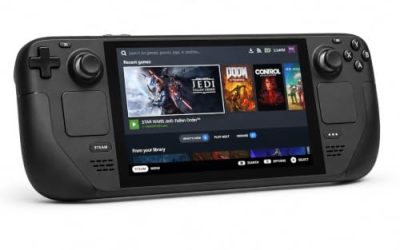
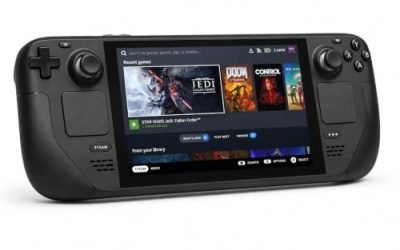
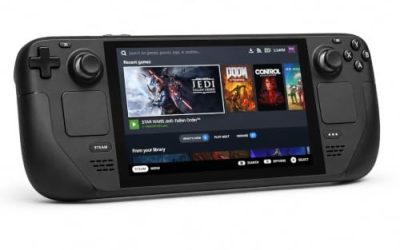
Valve Steam Deck OLED 512GB
The handheld the Verified badge was written for: tested against the exact build still on sale, all four checks pass.
Specs
- Display: 7.4-inch HDR OLED, 1280 by 800, up to 90 Hz
- Processor: AMD Zen 2 and RDNA 2 custom APU
- Memory: 16 GB LPDDR5
- Storage: 512 GB NVMe, plus a microSD slot
- Wireless: Wi-Fi 6E and Bluetooth
- Channel note: Valve sells the Deck mainly through its own store, so Amazon listings are third-party sellers
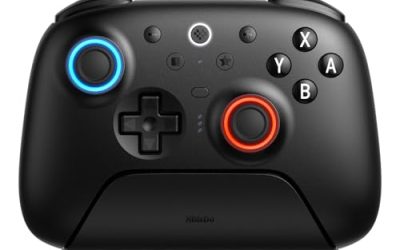
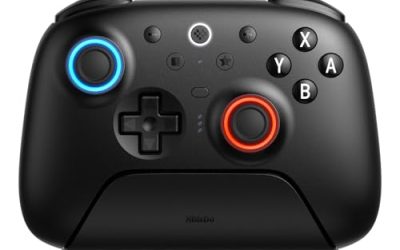
8BitDo Ultimate 2 Bluetooth Controller
The docked and desktop pad pick. Steam lists full controller support, and this pad covers the couch case with modern sticks and triggers plus back buttons.
Specs
- Connectivity: Bluetooth wireless and USB-C wired
- Joysticks: TMR electromagnetic, anti-drift design
- Triggers: Hall effect, with mode switching
- Extras: two remappable back buttons, motion control
- In the box: charging dock included
Xbox Wireless Controller, Carbon Black

The safest guest pad in PC gaming: Steam Input support is universal, the glyphs match what most games display, and it pairs over Bluetooth or its own wireless standard. On the handheld, the sheet’s note applies: an external pad may need a manual Quick Access Menu switch.
- Connectivity: Xbox Wireless and Bluetooth
- Port: USB-C for wired play
- Controls: hybrid D-pad, dedicated Share button
- Power: AA batteries or optional rechargeable pack
Logitech G502 HERO

For desktop players who aim with a mouse, the precise wired option: a high-ceiling sensor and eleven programmable buttons. If the self-pause wrinkle appears on a keyboard-and-mouse setup, a gamepad layout is the documented workaround.
Specs
- HERO optical sensor, up to 25,600 DPI
- 11 programmable buttons
- Adjustable weight system
- Wired USB connection
- On-board memory profiles
Samsung T9 Portable SSD 2TB

For moving a Linux game library between machines, or keeping an offline backup of installers, a fast USB-C drive is the simple answer. The headline figure needs a Gen 2×2 host port; on a lesser port the drive runs at that ceiling instead.
Specs
- Capacity: 2 TB portable SSD
- Interface: USB 3.2 Gen 2×2, USB-C connector
- Maker-rated speeds: up to 2,000 MB per second read, 1,950 MB per second write
- Features: Dynamic Thermal Guard, maker-rated drop resistance
How to choose
Choose the Steam copy, because it is the only PC edition on sale and the exact build both records describe. On desktop or laptop, install under Proton and leave the compatibility tool at its default; a unanimous Platinum file across 66 reports at strong confidence is the strongest signal this series records. If a keyboard-and-mouse session shows the self-pause behaviour a minority of filings describe, switch to a gamepad layout before changing anything else — that is the workaround those filings document.
Who should skip
Skip this one if you are shopping for a native Linux build on principle: Post Void has none, and no layer of its record suggests one is coming. Skip it if you want a DRM-free offline installer, because no GOG edition exists. Skip it if the store record’s mature content descriptors rule a title out for your library. And skip the external-pad plan if you are unwilling to make the one manual controller switch Valve’s notes describe.
FAQ
Is Post Void native on Linux?
No. Steam flags the game Windows only, the Linux requirements field is an empty list, and the sole purchase package reads Windows only on Steam’s own packagedetails record.
How well does Post Void run under Proton?
ProtonDB’s full summary record rates it Platinum on the headline, best-reported and trending tiers, across 66 reports at strong confidence. A minority of filings describe the game pausing itself under keyboard-and-mouse configurations and say a gamepad layout avoids it.
What does the Steam Deck Verified badge rest on?
Valve tested the game on 1 April 2023 against build 10891672, still the build the public branch serves, so the paperwork is current. All four Verified checks pass, and the recommended runtime is proton-stable.
Can I buy Post Void on GOG instead?
No. GOG’s searches return no product for the game and its natural GOG address redirects to the general catalogue. The Steam copy is the only PC edition sold.
Final verdict
Post Void is a Windows-only game whose surrounding records are as favourable as they get. The store record is unanimous and unusually empty of traps: false flags on two platforms, empty-list fields, one unsplit depot, one Windows-only package, no DLC array, no stray Linux icon. Against that plain negative, the Proton file is unanimously Platinum, and Valve’s Verified sheet was written against the very build still on sale. A Linux player is not getting a port; they are getting one of the best-documented Proton routes in this cluster.
Product and ASIN Reference
| Product | ASIN |
|---|---|
| Valve Steam Deck OLED 512GB | B0CQ3RWQQZ |
| 8BitDo Ultimate 2 Bluetooth Controller | B0F194QFT2 |
| Xbox Wireless Controller, Carbon Black | B08DF248LD |
| Logitech G502 HERO | B07GBZ4Q68 |
| Samsung T9 Portable SSD 2TB | B0CHFS9K14 |