Kopanito All-Stars Soccer, Merixgames’ arcade football game from November 2016, is one of the quiet native releases of its era. Steam’s record flags all three desktop platforms, the Linux requirements tab is written out in full, and the depot table carries a Linux build of real size. Nothing about the paperwork is a shell or a copied block: each platform’s field is written in its own terms, and the package a purchase delivers grants all three builds.
What the record does not carry is any modern testing. Valve has never published a Steam Deck verdict for the game, ProtonDB’s community file is a handful of reports deep, and the public branch has not moved since September 2017. So this piece reads the record layer by layer: flags and fields, depots and package, the absent add-on family, and the empty Deck sheet.
As an Amazon Associate, we earn from qualifying purchases.
Quick answer
Yes. Kopanito All-Stars Soccer is native on Linux: Steam flags all three platforms, the Linux tab names Ubuntu 12 or later with its own figures, and a full-size Linux depot sits inside the package a normal purchase delivers. There is no add-on family to misread. Valve has never Deck-tested the game, so no handheld verdict exists.
The status at a glance
| Question | Answer from the record |
|---|---|
| Native Linux build | Yes — flags, tab, depot and package agree |
| Linux requirements tab | Populated — Ubuntu 12 or later |
| Add-on apps | None — no DLC array at all |
| ProtonDB record | Page classifies it Native; summary API unreadable |
| Steam Deck verdict | None — Valve’s file is empty |
| GOG edition | None exists |
| Anti-cheat or launcher | None named by any of the three sources |
What Steam’s own record says
Steam’s appdetails record for Kopanito All-Stars Soccer (app 399820) names Merixgames as both developer and publisher, released 16 November 2016. The platform flags read Windows true, Mac true, Linux true. The genres are Action, Indie and Sports, and the categories describe an arcade multiplayer game: online and shared-screen PvP and co-op, full controller support, Steam Cloud and Remote Play Together.
The Linux requirements field is genuinely populated and platform-specific. Its minimum names Ubuntu 12 or later, a 2 GHz dual-core processor, 1 GB of memory, hardware-accelerated graphics with 256 MB of dedicated memory, and 500 MB of storage. The Windows field speaks of Vista and DirectX 9.0 and the Mac field names OS X 10.7, so the three texts were written separately rather than copied from one block. No platform carries a recommended tier — house style, not a Linux-side gap.
Two absences matter. The record carries no DRM notice and no external-account notice. And the app configuration registers a dedicated Linux client icon with its own file hash, distinct from the Mac icon’s — the genuine article, not the leftover-icon shape where one file serves every platform.
Depots and the package a purchase delivers
SteamDB’s depot table lists exactly three content depots: Windows at 307.26 MiB, macOS at 353.26 MiB, and Linux at 337.89 MiB. The Linux build is a full download in the same size class as its siblings, not a stub. Beside them sits only the shared Windows DirectX redistributable.
The package layer closes the question. Steam’s own packagedetails record for the single store package (sub 77463, granting the game app alone) reads Windows, Mac and Linux all true, so a normal purchase delivers the Linux depot: the anti-stranded shape. The public branch serves build 2152205, unchanged since 27 September 2017 — frozen, but frozen in the three-platform shape.
The family sweep is the shortest in this series: there is nothing to sweep. The record carries no DLC array at all, so no soundtrack, artbook, supporter pack or demo exists to wear a false Linux flag. The classic trap, in which a music app flags three platforms over empty fields, has no surface here.
Anti-cheat, in three separate sources
Steam’s record names no anti-cheat, and carries neither a DRM notice nor an external-account notice. SteamDB’s detection finds engine plumbing only: the Greenworks SDK, the NW.js SDK and Node.js — a web-technology wrapper, which also explains the near-identical depot sizes across platforms. The Are We Anti-Cheat Yet dataset, checked in full by name and by app id, carries no entry for this game. Three sources, kept separate, all negative.
ProtonDB: a Native heading that agrees, and a summary that would not load
ProtonDB’s summary API returned an error page on repeated attempts this session, so no tier split and no confidence figure are claimed here; what follows is page-level evidence only, with the failure stated rather than filled in. The game’s page classifies it Native, and its requirements block is headed “Natively Supports:” — for once the heading and Steam’s record agree on every layer, the clean-agreement counterpart to the stray-tag pattern this series usually documents.
The report pool is thin; the page header counts three reports. Their texture is worth more than a tier would be. The most detailed filing reports that the plain native launch did not boot the game, that Proton gave mixed results, and that selecting the Steam Linux Runtime in the compatibility tab — the container Valve provides for native games — made it run well; it also rates local multiplayer Excellent. A Steam Deck filing under Proton 7.0-3 calls the game a charm to play, with the small on-screen players as its only complaint. An older desktop report from Linux Mint carries a Platinum tier. Read together: the native build is real, one reporter needed the runtime container to launch it, and nobody reports the game broken.
Steam Deck: an empty file, honestly labelled
Valve’s own compatibility endpoint answered directly this session, and the answer is an empty file: the resolved category is 0, the item list is empty, and the SteamOS side reads the same. Category 0 means untested — Valve has never run this game through its Deck programme and published nothing, favourable or otherwise. ProtonDB’s mirror of the status reads Unknown, which matches. No verdict is claimed anywhere in this article.
That emptiness shapes the advice. The game’s demands are trivial next to the Deck’s hardware, its categories promise full controller support, and one community filing describes it running well on the handheld under Proton — but a single report is report-weight evidence, not a badge. Treat the Deck as an untested experiment here. Because no verdict exists, the gear list below uses the standard set.
Gear for the game
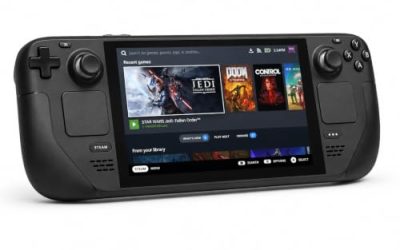
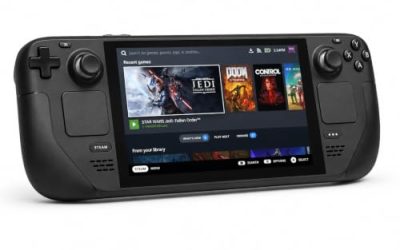
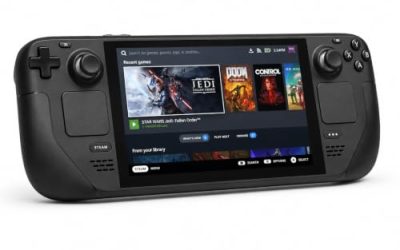
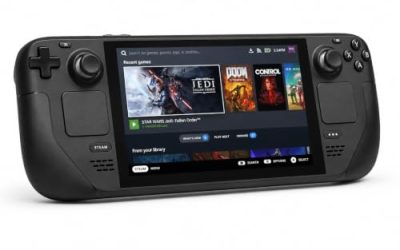
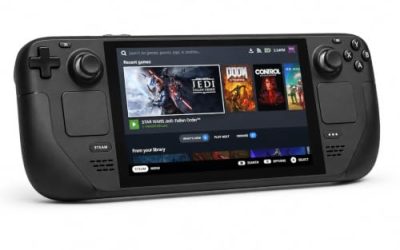
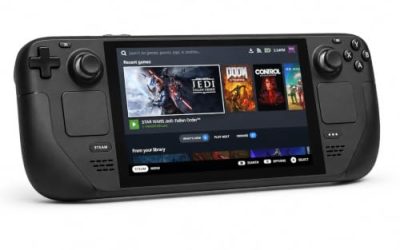
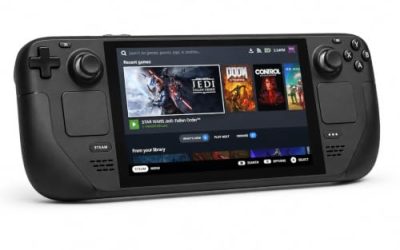
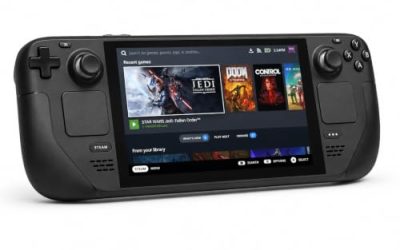
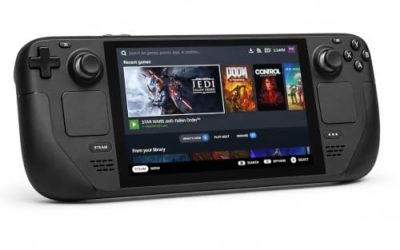
Valve Steam Deck OLED 512GB

The handheld Valve has never graded for this game. The published requirements are a rounding error next to the Deck’s APU and the one community filing from the device is positive, but no test sheet stands behind any of that — the experiment pick.
Specs
- Display: 7.4-inch HDR OLED, 1280 by 800, up to 90 Hz
- Processor: AMD Zen 2 and RDNA 2 custom APU
- Memory: 16 GB LPDDR5
- Storage: 512 GB NVMe, plus a microSD slot
- Wireless: Wi-Fi 6E and Bluetooth
- Channel note: Valve sells the Deck mainly through its own store, so Amazon listings are third-party sellers
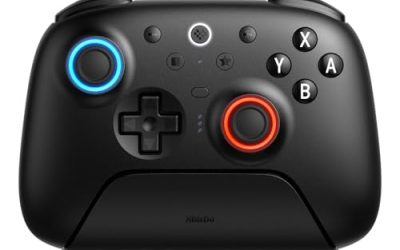
8BitDo Ultimate 2 Bluetooth Controller
The couch-multiplayer pick. The game’s whole shape is extra pads on one screen, and this pad covers the docked and desktop cases with modern sticks, triggers and back buttons.
Specs
- Connectivity: Bluetooth wireless and USB-C wired
- Joysticks: TMR electromagnetic, anti-drift design
- Triggers: Hall effect, with mode switching
- Extras: two remappable back buttons, motion control
- In the box: charging dock included
Xbox Wireless Controller, Carbon Black
The safest guest pad in PC gaming: Steam Input support is universal, the glyphs match what most games display, and it pairs over Bluetooth or its own wireless standard. For a game whose local multiplayer advice amounts to plugging in more controllers, a pile of these is the whole setup.
- Connectivity: Xbox Wireless and Bluetooth
- Port: USB-C for wired play
- Controls: hybrid D-pad, dedicated Share button
- Power: AA batteries or optional rechargeable pack
Logitech G502 HERO
The desktop alternative for menu trips. Kopanito is a pad game on the pitch, but at a desk a precise wired mouse makes team setup and option screens single clicks, and eleven programmable buttons cover the inputs a session repeats.
Specs
- HERO optical sensor, up to 25,600 DPI
- 11 programmable buttons
- Adjustable weight system
- Wired USB connection
- On-board memory profiles
Samsung T9 Portable SSD 2TB
For moving a Linux game library between machines, or keeping an offline backup of installers, a fast USB-C drive is the simple answer. The headline figure needs a Gen 2×2 host port; on a lesser port the drive runs at that ceiling.
Specs
- Capacity: 2 TB portable SSD
- Interface: USB 3.2 Gen 2×2, USB-C connector
- Maker-rated speeds: up to 2,000 MB per second read, 1,950 MB per second write
- Features: Dynamic Thermal Guard, maker-rated drop resistance
How to choose
Choose the Steam copy, because it is the only PC edition on sale and the only one carrying the Linux build. On desktop or laptop, launch the native build first; if the plain launch does not boot — one detailed report describes exactly that — select the Steam Linux Runtime in the compatibility tab, the fix that reporter documents, before reaching for Proton. For local multiplayer the requirement is controllers, plural: the record promises full controller support and the community file’s advice is simply to plug more pads in. Buy the Deck plan only as an experiment: Valve’s file is empty and the single handheld report, however warm, is one report.
Who should skip
Skip the certainty, not necessarily the game, if you buy only titles Valve has Deck-tested: this one’s file is empty and may stay that way for a 2016 release whose branch froze in 2017. Skip it if you want a DRM-free offline installer, because no GOG edition exists. Skip it if a three-report community file is too thin a basis for a purchase. And skip it if you need a living online scene: Steam lists the online categories, but no record here says who is playing today.
FAQ
Is Kopanito All-Stars Soccer native on Linux?
Yes. Steam flags all three platforms, the Linux tab is populated with Ubuntu 12 or later and its own hardware figures, a 337.89 MiB Linux depot sits on the depot table, and the single store package grants all three platforms. No DLC family exists to cast doubt on any of it.
Why does one ProtonDB report mention the Steam Linux Runtime?
Because the plain native launch did not boot on that reporter’s system. The Steam Linux Runtime is the container Valve ships for running native games in a consistent environment; selecting it is a native-route fix, not a switch to the Windows build. The same report rates the game as working great once set.
Is Kopanito All-Stars Soccer Steam Deck Verified?
No verdict exists. Valve’s compatibility record is empty — category 0, no items, nothing tested — and ProtonDB’s mirror of the status reads Unknown. One community report describes it running well on the handheld under Proton, which is encouraging and is not a badge.
Can I buy Kopanito All-Stars Soccer on GOG instead?
No. GOG’s product searches return nothing for the game, and its natural GOG address resolves to the general catalogue rather than a product page. The Steam copy is the only PC edition, and it carries the Linux build.
Final verdict
Kopanito All-Stars Soccer is a native Linux release with an unusually clean paper trail and an unusually empty modern one. Every delivery layer agrees: the flags, the written Ubuntu tab, the full-size Linux depot, the all-platform store package, even the dedicated Linux icon. The family cannot confuse the scan because there is no family. What is missing is testing, not support: Valve has never graded it for the Deck and ProtonDB’s file is three reports deep — yet those reports describe a game that runs, with the Steam Linux Runtime as the documented remedy when the plain launch stalls. Buy the Steam copy for desktop and laptop play; treat the handheld as an experiment rather than a promise.
Product and ASIN Reference
| Product | ASIN |
|---|---|
| Valve Steam Deck OLED 512GB | B0CQ3RWQQZ |
| 8BitDo Ultimate 2 Bluetooth Controller | B0F194QFT2 |
| Xbox Wireless Controller, Carbon Black | B08DF248LD |
| Logitech G502 HERO | B07GBZ4Q68 |
| Samsung T9 Portable SSD 2TB | B0CHFS9K14 |