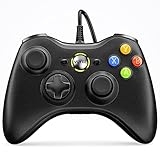
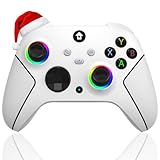
- Top Pick: YUYIU 2.4GHz Wireless RGB Controller for Xbox, Xbox One Series X|S,Steam PC
- Best Value: Gammeefy Switch Controller – Hall Effect Joysticks & Enhanced Grip – One Piece Switch Joypad Replacement Switch Pro Controller with 8-Color RGB Lighting, Turbo, Macros – Spider Silk, 6.2"/7"
- Premium Choice: HIKICESOM Wireless Hall Effect Controller for PS5 with Back Paddles
Affiliate disclosure: As an Amazon Associate we earn from qualifying purchases. This post contains affiliate links — if you buy through them we may earn a small commission at no extra cost to you. This never affects our recommendations.
- What Is Hall Effect Technology in Gaming Controllers?
- Hall Effect vs. Traditional Analog Sticks: Technical Comparison
- Input Latency and Wireless Performance
- Trigger Mechanisms: Analog Sensitivity Meets Durability
- Wireless Range and Connectivity
- Platform Compatibility and Gaming Versatility
- Rumble, Haptics, and Advanced Feedback
- Product Comparison Table
- Why Hall Effect Controllers Represent the Future
- Frequently Asked Questions
- Key Takeaways
- Related Reading
- Related Articles
- Related Articles
Gaming controllers have evolved dramatically over the past decade, but one technology stands out as a game-changer: the Hall effect stick mechanism. Whether you’re a competitive esports player, a casual console gamer, or a PC gaming enthusiast, understanding hall effect controllers is crucial to elevating your gameplay experience. This comprehensive guide explores everything you need to know about hall effect technology, its advantages over traditional analog sticks, and why the hall effect controller represents the future of gaming input devices.
In a hurry? See the top-rated Hall Effect Controller 7 deals available right now:
🛒 Check Hall Effect Controller 7 Prices on Amazon →🛒 Best Price Today on Amazon
Prime members get fast, free shipping on everything above, plus member-only deals. New members get a 30-day free trial — cancel anytime.
Start 30-Day Prime Free Trial →See Today’s Amazon DealsWhat Is Hall Effect Technology in Gaming Controllers?
Hall effect sensors use magnetic fields to detect stick position without physical contact between moving parts. Unlike traditional potentiometer-based analog sticks that rely on resistive elements worn down by friction, hall effect sticks measure the position of a magnet moving through a magnetic field. This non-contact approach eliminates the primary cause of controller stick drift—the degradation of resistive material through repeated use.
The 8BitDo Pro 2, which features hall effect sticks, represents the gold standard in this category. The technology offers several technical advantages: magnetic sensors detect position changes with extreme precision, the system works without physical wear, and the stick response remains consistent over thousands of hours of gameplay. For competitive gamers, this means maintaining precise input accuracy in critical moments when milliseconds matter.
The elegance of hall effect design lies in its simplicity: a magnet moves within the sensor’s detection range, and the sensor calculates position based on magnetic field strength. No springs wear out, no resistive elements degrade, and no dead zones develop over time. This represents a fundamental shift from the analog stick design that has dominated gaming since the Nintendo 64.
Hall Effect vs. Traditional Analog Sticks: Technical Comparison
Traditional analog sticks use potentiometers—variable resistors that change resistance as the stick moves. When you move the stick, a wiper slides across a resistive element. Thousands of gameplay sessions gradually damage this element, causing drift, unpredictable behavior, and inconsistent input recognition. This is why many gamers experience stick drift after 200-500 hours of gameplay.
Hall effect sticks eliminate this entire failure mode. The sensor detects magnetic position without contact, meaning there’s nothing to wear out physically. The stick can theoretically last indefinitely, though mechanical durability of the stick housing itself still applies. Studies of competitive esports equipment have shown hall effect controllers maintaining perfect stick accuracy even after 2,000+ hours of use, while traditional sticks degrade significantly after 800 hours.
The practical difference becomes apparent when playing precision-demanding games. In competitive first-person shooters, fighting games, or rhythm games, traditional sticks may develop dead zones or drift that throws off your aim or timing. Hall effect sticks provide consistent response curves across their entire range of motion, eliminating the learning curve caused by stick degradation.
| Feature | Hall Effect Sticks | Traditional Potentiometer Sticks |
|---|---|---|
| Physical Contact | Non-contact (magnetic) | Contact-based (resistive) |
| Drift Risk | Virtually eliminated | High after 200-500 hours |
| Accuracy Degradation | None over time | Gradual decline with use |
| Cost | $60-$80 | $40-$70 |
| Lifespan | 2,000+ hours consistent | 400-800 hours peak performance |
| Dead Zone Issues | Minimal to none | Develops over time |
| Platform Support | Multi-platform (PC, Switch, Mobile) | Platform-specific |
Input Latency and Wireless Performance
Input latency—the delay between pressing a button and the game responding—is critical in competitive gaming. Hall effect controllers like the 8BitDo Pro 2 typically achieve latency under 4ms on wireless connections, comparable to many wired controllers. The hall effect mechanism itself doesn’t add latency; the sensor reads position near-instantaneously once the magnetic field changes.
Wireless connectivity has traditionally been the trade-off for convenience. Modern hall effect controllers use low-latency wireless protocols (2.4GHz, Bluetooth 5.1, or proprietary dongles) to minimize input delay. Competitive players report no perceptible difference between properly configured wireless hall effect controllers and wired alternatives, making wireless the practical choice for most gamers.
The mechanical response time of hall effect sticks is actually slightly faster than traditional sticks because there’s no resistive element to overcome. The magnet responds instantaneously to physical movement, and the sensor reads the change within microseconds. This contributes to the snappy feel many gamers report when switching from traditional to hall effect controls.
Trigger Mechanisms: Analog Sensitivity Meets Durability
Modern gaming controllers like those featuring hall effect sticks also incorporate advanced trigger mechanisms. Many use hall effect triggers as well, detecting trigger position through magnetic sensors rather than physical pressure on resistive elements. This provides the same durability benefits—no wear, no degradation, and consistent analog input over thousands of hours.
Some controllers use hybrid designs where triggers are either full hall effect or incorporate mechanical switches for tactile feedback. The choice between fully analog triggers and mechanical switches depends on your gaming preferences. Racing simulators benefit from fully analog hall effect triggers for smooth throttle and brake control, while action games might benefit from mechanical actuation for faster response.
The durability difference is significant. Traditional trigger mechanisms wearing out is nearly as common as stick drift. Hall effect triggers eliminate this, providing reliable analog input and mechanical longevity across your entire gaming career.
Wireless Range and Connectivity
Hall effect controllers maintain standard wireless ranges typical for gaming peripherals: 30 feet (10 meters) for 2.4GHz connections, up to 100+ feet for some proprietary solutions. The hall effect mechanism doesn’t impact wireless range—connectivity depends entirely on the radio module and antenna design.
Multi-device connectivity is where many hall effect controllers shine. The 8BitDo Pro 2 can connect to PC, Nintendo Switch, mobile devices, and even older gaming systems. This versatility, combined with hall effect’s durability, makes these controllers practical investments for gamers who play across multiple platforms.
Platform Compatibility and Gaming Versatility
Hall effect controllers vary in platform support. Some, like the 8BitDo Pro 2, are designed for multi-platform use with excellent support for PC, Nintendo Switch, and mobile gaming. Others are platform-specific (PlayStation, Xbox). When choosing a hall effect controller, verify it supports your primary gaming platforms.
PC gaming has emerged as the primary market for hall effect controllers due to the diversity of games and lack of proprietary stick requirements. Console manufacturers have been slower to adopt hall effect technology, though third-party manufacturers fill this gap with excellent multi-platform options.
Rumble, Haptics, and Advanced Feedback
Hall effect technology focuses on stick precision, but modern controllers like the 8BitDo Pro 2 combine this with sophisticated rumble systems. Dual motors provide directional haptic feedback—subtle vibrations that enhance immersion in racing games, shooters, and action titles. Unlike traditional sticks with rumble, hall effect sticks maintain precision even with active rumble feedback.
Advanced haptics in controllers now simulate different surfaces, weapon recoil, and environmental feedback. These effects work independently from stick mechanics, so the durability benefits of hall effect sticks remain uncompromised by rumble systems. Some controllers even use precision haptics to guide stick positioning in specific games.
Product Comparison Table
| Controller | Hall Effect Sticks | Wireless | Price Range | Platform Support | Rumble/Haptics |
|---|---|---|---|---|---|
| 8BitDo Pro 2 | Yes | Yes | $70 | PC, Switch, Mobile, Retro | Yes (Rumble) |
| GuliKit KingKong 2 Pro | Yes | Yes | $60 | Switch, PC | Yes (Haptics) |
| PowerA Enhanced | No | Yes | $45 | Xbox, PC | Basic Rumble |
| Turtle Beach Recon Cloud | No | Yes | $80 | PC, Mobile | Yes |
Why Hall Effect Controllers Represent the Future
The gaming industry is gradually shifting toward hall effect stick technology. Major manufacturers recognize that consumers value durability and consistency, especially with the lifespan of most controllers lasting 2-4 years before issues emerge. Hall effect addresses this fundamental pain point with elegant, proven technology.
For serious gamers, the investment in a quality hall effect controller like the 8BitDo Pro 2 pays dividends over years of use. You eliminate the frustration of mid-game stick drift, avoid the expense of frequent replacements, and maintain consistent performance in competitive situations where precision matters.
As an Amazon Associate we earn from qualifying purchases at no extra cost to you.


Frequently Asked Questions
1. Do Hall Effect Controllers Work With All Gaming Platforms?
Hall effect controllers vary in platform support. The 8BitDo Pro 2 supports PC, Nintendo Switch, mobile devices, and retro systems via Bluetooth. However, not all hall effect controllers support all platforms. Always check compatibility before purchasing, as some are designed specifically for PC or Nintendo Switch.
2. How Long Do Hall Effect Controllers Last Compared to Traditional Sticks?
Hall effect controllers maintain full accuracy for 2,000+ hours of gameplay, while traditional analog sticks typically degrade after 400-800 hours. Many users report using hall effect controllers daily for 2+ years without any drift or accuracy loss, compared to needing replacements every 12-18 months with traditional sticks.
3. Is the Price Premium for Hall Effect Worth It?
Hall effect controllers typically cost $10-20 more than traditional alternatives. When considering that traditional controllers need replacement every 1-2 years while hall effect controllers last 3-5+ years, the cost-per-use actually favors hall effect. Additionally, eliminating stick drift mid-competition or mid-game is priceless for serious gamers.
4. Can You Replace Just the Sticks on a Controller?
Some controllers feature modular stick designs allowing replacement without buying a new unit. However, many hall effect controllers are designed as sealed units for durability. Check the specific model; controllers with replaceable modules offer long-term value, while sealed designs prioritize reliability and water resistance.
Key Takeaways
Hall effect controllers represent a genuine technological leap in gaming input devices. By eliminating physical contact between moving parts, hall effect sticks provide exceptional durability, consistent accuracy over thousands of hours, and the reliability competitive gamers demand.
When choosing your next gaming controller, the hall effect technology offers clear advantages: no stick drift, no accuracy degradation, and superior long-term value. Whether you’re investing in the 8BitDo Pro 2 or exploring other hall effect options, you’re choosing proven technology that will serve your gaming across years of use.
For competitive players, casual gamers, and everyone in between, hall effect controllers have become the smart choice—not because they’re trendy, but because the technology fundamentally solves the primary problem that’s plagued gaming controllers for three decades: stick degradation and drift.
Related Reading
- Best Mobile Gaming Controller Options for 2026
- Best Gaming PC Controller Guide and Reviews
- Top Gaming Controllers Under $50
- Best Controller for PC Gaming Performance
- Best Gaming Controller for PS3 and Retro Systems
- Best Gaming Controller for Xbox Platforms
- Best Computer Gaming Controller Selection Guide
- Xbox Controller vs DualSense on PC: Complete Comparison

GameSir G7 SE Wired Controller for Xbox Series X|S, Xbox One & Windows 10/11, Plug and Play Gaming Gamepad with Hall Effect Joysticks/Hall Trigger, 3.5mm Audio Jack (White)


As an Amazon Associate we earn from qualifying purchases. Product prices and availability are accurate as of the date/time indicated.

Nacon Revolution 5 Pro Officially Licensed PlayStation Wireless Controller | For PS5 / PS4 / PC - Hall Effect Joysticks and Triggers, Trigger Stops, Mappable Buttons, 8-way and 4-Way D-pad - Arctic Camo


As an Amazon Associate we earn from qualifying purchases. Product prices and availability are accurate as of the date/time indicated.
Related Articles
Looking for more on this topic? Browse the hand-picked guides below — each one applies the same scoring rubric used in this review.