- Top Pick: Streonor S6 Mini Stream Controller, 6-Key LCD Control Deck, Black
- Best Value: TreasLin Stream Controller Deck with12 Customizable Macro Keypad to Trigger Actions in OBS Twitch YouTube for Content Creators Stream Dock Compatible with PC & Mac N3 Black Macro Keypad
- Premium Choice: GameSir X5 Lite Mobile Gaming Controller for Android,Hall Effect Joystick
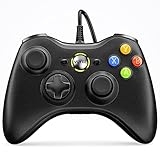
Controller support on Linux has come a long way. Between the kernel’s xpad driver and Valve’s Steam Input, most modern gamepads now work plug-and-play on Ubuntu, Fedora, Bazzite, and the Steam Deck. But not every controller is equal — some pair instantly, others need a quick tweak. Here are the best controllers for Linux and Steam Deck gaming in 2026, plus how to get them working.
- How Controller Support Works on Linux
- What to Look For
- Choosing the Right Controller for Your Linux Setup
- Our Top Controller Picks for Linux & Steam Deck
- Wired vs. Wireless on Linux
- Troubleshooting Controllers on Linux and SteamOS
- Getting Your Controller Working on Linux
- Related Guides
- Frequently Asked Questions
- Related Articles
- Related Guides
Disclosure: As an Amazon Associate we earn from qualifying purchases, at no extra cost to you.
As an Amazon Associate we earn from qualifying purchases at no extra cost to you.


🛒 Best Price Today on Amazon
Prime members get fast, free shipping on everything above, plus member-only deals. New members get a 30-day free trial — cancel anytime.
How Controller Support Works on Linux
The Linux kernel natively supports Xbox controllers via xpad, while Steam Input (built into Steam) adds configurable support for PlayStation, Switch Pro, and many third-party pads. On the Steam Deck and SteamOS, this is all handled automatically. For desktop Linux, plugging in an Xbox controller usually ‘just works’; Bluetooth pads pair through your desktop’s Bluetooth settings. The key thing to understand is that there are two layers at play: the kernel driver that exposes the controller to the system, and Steam Input, which remaps and standardizes that input for games. When a game is launched through Steam, Steam Input can make almost any pad behave like a standard controller.
What to Look For
- Xbox-layout controllers have the best out-of-the-box Linux support.
- Wired connections are the most reliable; Bluetooth/2.4GHz dongles add convenience.
- Steam Input compatibility means full remapping even for non-Xbox pads.
- Build quality & battery life matter for long sessions on a Deck or HTPC.
Choosing the Right Controller for Your Linux Setup
Your ideal pad depends on how you play. If you’re gaming at a desk or on an HTPC and want zero hassle, an Xbox-layout wired controller is the safest choice — it’s recognized by the kernel immediately and needs no configuration in or out of Steam. If you play on the couch with a Steam Deck docked to a TV, a low-latency wireless pad with a 2.4GHz dongle or solid Bluetooth is worth the small premium for freedom of movement. Competitive players who want extra buttons should look at pads with rear paddles, since Steam Input can bind those to any action.
Battery life and grip comfort matter more the longer your sessions run. A controller that feels great for a 30-minute test can become tiring over a three-hour session, so weigh ergonomics and weight alongside raw compatibility. For handheld-to-TV players, also consider whether the pad supports gyro aiming, which Steam Input exposes on many modern controllers for finer aim in shooters.
Our Top Controller Picks for Linux & Steam Deck
These are all popular, highly-rated controllers that play nicely with Linux and the Steam Deck. Check the latest prices below:


Wired vs. Wireless on Linux
Wired controllers are the gold standard for reliability on desktop Linux — plug in, and the kernel handles the rest with essentially zero latency and no pairing to lose. Wireless adds convenience but introduces two considerations: pairing method and latency. A dedicated 2.4GHz dongle typically delivers lower, more consistent latency than Bluetooth and pairs more predictably across distributions, which is why many Deck players prefer a dongle for docked play. Bluetooth is the most flexible since it needs no extra port, but occasional pairing quirks can appear on desktop Linux depending on your Bluetooth stack. When in doubt, a wired connection is the fastest way to rule out driver or pairing problems.
Troubleshooting Controllers on Linux and SteamOS
Most controller problems on Linux come down to a handful of causes, and they’re usually quick to fix. If a pad isn’t detected at all, switch to a wired connection first — this instantly rules out Bluetooth pairing issues and confirms whether the controller itself is recognized by the kernel. If a controller works on the desktop but not in a specific game, the culprit is often that the game bypasses Steam Input; launching it through Steam (adding it as a non-Steam game if needed) lets Steam translate the inputs. On the Steam Deck, if a paired Bluetooth controller acts erratically, re-pairing it from Settings → Bluetooth and keeping it close to the Deck resolves most dropouts. For desktop Linux, occasional Bluetooth quirks trace back to the system’s Bluetooth stack rather than the controller, so a 2.4GHz dongle is the more reliable wireless option when you need consistency. Finally, keep Steam and your distribution updated, since controller compatibility improvements land regularly in both.
Getting Your Controller Working on Linux
For Steam games, just enable the controller in Steam Settings → Controller and Steam Input handles the rest, including remapping and profiles you can save per game. For non-Steam games, an Xbox-layout pad is the safest bet because it’s recognized directly by the kernel without Steam in the loop. On the Steam Deck, external controllers pair via Settings → Bluetooth for big-screen/docked play. If a pad isn’t detected, a wired connection almost always resolves it — and if you need a non-Xbox controller to work outside Steam, launching the game through Steam as a “non-Steam game” lets Steam Input translate the inputs for you.
Frequently Asked Questions
Do Xbox controllers work on Linux?
Yes — they’re natively supported via the kernel’s xpad driver and work plug-and-play in most games, whether you launch them through Steam or not. This makes an Xbox-layout pad the most hassle-free choice for desktop Linux, since there’s nothing to configure before it starts working.
Does the PS5 DualSense work on Linux and Steam Deck?
Yes, through Steam Input, including gyro and most features when used with Steam. Outside of Steam, support varies by game and distribution, so the most reliable path is to launch your games through Steam so Steam Input can standardize the DualSense’s buttons, triggers, and motion controls.
Wired or wireless for Linux gaming?
Wired is the most trouble-free, offering the lowest latency and no pairing to manage. Bluetooth and 2.4GHz dongles work well too and add freedom of movement, with a dedicated dongle generally providing steadier latency than Bluetooth. If you hit detection issues with a wireless pad, temporarily switching to wired usually confirms whether the problem is pairing or the game itself.
Do I need to install drivers for controllers on Linux?
In most cases no — modern distributions ship with the kernel drivers needed for Xbox-style pads, and Steam Input covers the rest for PlayStation and Switch controllers. You typically only need extra tools for niche or older third-party pads, and even then Steam’s built-in controller support handles the majority of gamepads without manual driver installation.
Can I use rear paddles and extra buttons on Linux?
Yes, provided the controller exposes those inputs and you configure them through Steam Input. Steam lets you bind paddles, back buttons, and gyro to any action on a per-game basis, so a pad with extra controls becomes far more capable once you set up a profile. Outside of Steam, extra-button support depends on the specific controller and game.
As an Amazon Associate we earn from qualifying purchases.
Related: Best 4K Gaming PC & TV Setup to Stream the 2026 World Cup
Related reading: Bazzite Linux review.