First Class Trouble is the social-deduction party game from Invisible Walls, released on 1 November 2021 after an Early Access start the previous April: passengers cooperate to keep a luxury space liner running while disguised Personoids sabotage the trip and pick the humans off. It lives on proximity voice chat and bluffing, with online PvP, online co-op and cross-platform multiplayer. The question here is narrower: does any of that exist as a native Linux build, and if not, what do the compatibility records offer instead?
The short answer is that there is no native Linux build, and unusually for this cluster, nothing on the record pretends otherwise. Steam flags the game Windows only, the delivery layers agree, and all fourteen cosmetic packs repeat the same flags. What Linux players get is a Proton route with a Silver community file and a Steam Deck verdict of Unsupported resting on paperwork from February 2022.
As an Amazon Associate, we earn from qualifying purchases.
Quick answer
First Class Trouble has no native Linux build. Steam’s record for app 953880 flags Windows only, its single content depot is a Windows depot, and the one purchase package delivers Windows only; all fourteen DLC packs repeat those flags. Desktop Linux play runs through Proton, where the community file reads Silver across 23 reports. Valve rates the game Unsupported on Steam Deck, on test paperwork from February 2022.
What Steam’s record actually sells
Start with the flags. Steam’s own record for app 953880 reads windows true, mac false, linux false. The Windows requirements are genuinely written out at both tiers: a Core i3 or Ryzen 3 with 4 GB of memory and a GTX 650 Ti class card at minimum, rising to a Core i5 or Ryzen 5 with 8 GB and a GTX 970 class card recommended, with 20 GB of storage and a microphone noted. The Mac and Linux requirements fields, by contrast, are empty shells: the Minimum and Recommended headings sit over empty lists. The field exists and says nothing.
The depot table settles what a download contains. SteamDB lists exactly one content depot, depot 953881, configured for Windows at 10.89 GiB; beside it sit only the shared Windows redistributables. There is no Linux or Mac depot in any form, and no stranded extra depot. The app configuration registers no Linux client icon, so even the leftover-artwork trap that marks several games in this cluster has no surface here. The package layer, the decisive one, agrees: the single purchase package, sub 311087, reads windows true, mac false, linux false on packagedetails, so a normal purchase delivers the Windows build by construction. Nor is the shape a fossil: the public branch moved to a new build in August 2026.
The family sweep: fourteen packs, one answer
The game’s DLC array is long for a title of its size: fourteen apps, all cosmetic packs, each read individually on its own record: the Sci-Fi Noir, Easter, Working Heroes, Lunar New Year, Supporter, Keep Warm, Runway, New Years, Vruumba, Christmas, Winter, Wedding and Pajama Party packs, plus The Lost and Found Collection. Every one flags windows true, mac false, linux false, the same shape as the base game.
That unanimity matters because the family is where this cluster’s false signals usually live: a soundtrack flagging Linux over audio files, an art book populating a Linux tab. None of that exists here: no soundtrack app, no art book, no demo and no separate server app, making this one of the cleanest Windows-only files in the cluster.
Anti-cheat and the online layer, source by source
First Class Trouble is an online-first title, so the anti-cheat question deserves care, and the three sources say three narrower things that should not be merged into one claim.
Steam’s store record names no anti-cheat at all: there is no DRM notice and no external account notice on the game’s record. SteamDB’s detected-technology list names the plumbing instead: Unreal Engine, the Epic Online Services SDK, the Discord SDK and the Vivox voice SDK. Epic Online Services is the networking layer behind the cross-platform multiplayer the store page advertises; SteamDB detects no anti-cheat technology in the build. Are We Anti-Cheat Yet, searched by name and by app id across its full dataset, carries no entry for this title at all, so that dataset records no ruling of any kind.
Read together, the honest summary is documented silence rather than a verdict. The practical evidence lives in the ProtonDB reports instead, where online multiplayer is repeatedly rated Excellent under Proton today: report-level evidence, not a developer statement.
Proton on desktop: a Silver file with a voice-chat history
ProtonDB’s summary endpoint returned an error page for this title in this session, so the figures here are read from the game’s ProtonDB page directly, at page level: a Silver tier across 23 reports, with the page also displaying the Deck status as Unsupported, matching Valve. One page element needs naming: the page heads its requirements block with the words Natively Supports, a label Steam’s Windows-only record contradicts at every layer. It is a page template artifact, not a build; this article follows Steam.
The reports tell a story with a clear before and after. The oldest filings, from the Proton 6 era, return to one fault: the in-game voice chat, the heart of a social-deduction game, did not work, and several rate online play Awful or Weak for that reason. Filings from the Proton 7 era onward report the voice problem fixed. The most recent reports, on Proton 10.0-3 and on a forced Proton 9.0-3, rate online multiplayer Excellent with microphone and audio working. Against that sit smaller notes: settings that do not always save, occasional freezes, and one Experimental filing that failed to open the game. A Silver headline across a small 23-report file fits that texture: playable, much improved, not spotless.
Steam Deck: Unsupported, on old paperwork
Valve’s own compatibility endpoint answered directly for this game, and its record is blunt: resolved category 1, Unsupported, with the single result token stating that SteamOS does not support the game; the SteamOS category reads the same. That verdict is why the gear section below is framed for a desktop rather than a handheld.
The paperwork behind the badge comes via SteamDB’s republication of Valve’s test data: the test timestamp is 23 February 2022, against tested build 7816021, while the public branch now serves a build from August 2026. The grade was measured against a much older version than the one a buyer downloads today. That does not overturn it, but it places this file on the supplement-candidate list. The sheet’s configuration notes record gamepad input alongside flags for manual keyboard invocation, non-Deck glyphs and small text, with proton-stable as the recommended runtime. Read the verdict as a closed door with an old date on it.
Gear for a desktop-only game
Valve’s Unsupported verdict takes the handheld out of the frame, so this set is built around a Linux desk: keyboard, couch pads and movable storage.
Keychron V3
The keyboard pick for desktop sessions: a tenkeyless board with QMK and VIA support lets you remap keys at the keyboard level, across every Linux install you plug it into.
Specs
- Tenkeyless layout with rotary knob
- QMK and VIA remapping support
- Hot-swappable K Pro Brown switches
- Wired USB-C connection
- Maker-rated 1,000 Hz polling
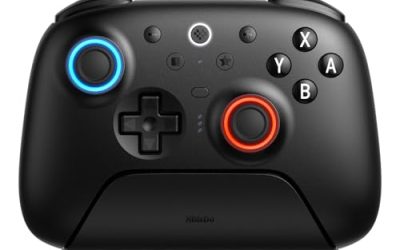
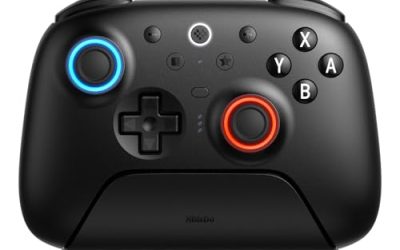
8BitDo Ultimate 2 Bluetooth Controller

The desktop pad pick. Steam lists full controller support for the game, and this pad covers the couch case with modern sticks and triggers plus back buttons.
Specs
- Connectivity: Bluetooth wireless and USB-C wired
- Joysticks: TMR electromagnetic, anti-drift design
- Triggers: Hall effect, with mode switching
- Extras: two remappable back buttons, motion control
- In the box: charging dock included
Xbox Wireless Controller, Carbon Black
The safest guest pad in PC gaming: Steam Input support is universal, the glyphs match what most games display, and it pairs over Bluetooth or its own wireless standard. For a party game, a familiar pad earns its drawer space.
- Connectivity: Xbox Wireless and Bluetooth
- Port: USB-C for wired play
- Controls: hybrid D-pad, dedicated Share button
- Power: AA batteries or optional rechargeable pack
Logitech G502 HERO
A social-deduction round is menus, voting screens and quick clicks between accusations, and a wired mouse turns those into single clicks. Eleven programmable buttons cover the confirm and cancel inputs a long session repeats.
Specs
- HERO optical sensor, up to 25,600 DPI
- 11 programmable buttons
- Adjustable weight system
- Wired USB connection
- On-board memory profiles
Samsung T9 Portable SSD 2TB
For moving a Linux game library between machines, or keeping an offline backup of installers, a fast USB-C drive is the simple answer. The headline figure needs a Gen 2×2 host port; on a lesser port the drive runs at that ceiling.
Specs
- Capacity: 2 TB portable SSD
- Interface: USB 3.2 Gen 2×2, USB-C connector
- Maker-rated speeds: up to 2,000 MB per second read, 1,950 MB per second write
- Features: Dynamic Thermal Guard, maker-rated drop resistance
How to choose
Choose the Proton route with current expectations. Recent reports run the game on Proton 10.0-3 out of the box, and one filer solved trouble by forcing Proton 9.0-3, so keeping two Proton versions installed is the practical setup. Voice chat is the feature to verify first in a private lobby; recent reports say it works. Buy the base game alone: the fourteen packs are cosmetic and none changes the Linux picture. The gear that matters most is what the store page itself lists, a microphone and headphones, plus a pad for each couch player.
Who should skip
Skip this one if a Steam Deck is your only gaming machine: Valve’s verdict is Unsupported, and no newer test has replaced the old paperwork. Skip it if you need a native build on principle, because none exists. Skip it if your group will not use voice chat, since the deduction loop depends on talking, and skip it if an empty anti-cheat paper trail makes you cautious about online titles: the working-multiplayer evidence is community reports, not a developer commitment. Players who want social deduction offline or single-player should look elsewhere; the record lists no single-player category at all.
FAQ
Is First Class Trouble native on Linux?
No. Steam’s record for app 953880 flags Windows only, the Linux requirements field is an empty shell, the single content depot is a Windows depot, and the purchase package delivers Windows only. All fourteen DLC packs repeat the same flags.
How well does First Class Trouble run under Proton?
ProtonDB’s page reads Silver across 23 reports, read at page level after the summary endpoint failed. Recent filings on current Proton versions rate online multiplayer Excellent with voice chat working; the oldest reports describe broken voice chat, a fault later reports say was fixed.
Is First Class Trouble Steam Deck Verified?
No, it is rated Unsupported. Valve’s record gives the game its lowest category, tested in February 2022 against a build the public branch has long since replaced. The grade still stands as published, but the paperwork is old enough to make the file a supplement candidate.
Can I buy First Class Trouble on GOG instead?
No. GOG carries no edition of the game: its searches surface no product for it, and the game’s natural GOG address redirects to the general catalogue. The Steam copy is the only PC edition.
Final verdict
First Class Trouble is a Windows-only release with an unusually tidy paper trail: a false Linux flag backed by an empty field, a single Windows depot, a Windows-only package, and a fourteen-pack family that agrees at every point. Desktop players get a workable Proton route whose Silver file hides an encouraging trend, with voice chat reported fixed and online play rated Excellent in recent filings. The hard limit is the handheld: Valve’s Unsupported verdict closes the Steam Deck door, on paperwork old enough to deserve a retest but still the standing grade. Buy it for a Linux desk with a microphone, not for a Deck.
Product and ASIN Reference
| Product | ASIN |
|---|---|
| Keychron V3 | B0B2DMMMG2 |
| 8BitDo Ultimate 2 Bluetooth Controller | B0F194QFT2 |
| Xbox Wireless Controller, Carbon Black | B08DF248LD |
| Logitech G502 HERO | B07GBZ4Q68 |
| Samsung T9 Portable SSD 2TB | B0CHFS9K14 |