🛒 Best Price Today on Amazon
Prime members get fast, free shipping on everything above, plus member-only deals. New members get a 30-day free trial — cancel anytime.
Top Console Gaming Which Better Next Picks for 2026
Here are our current top console gaming which better next picks, compared on real Amazon owner reviews, price, and features. Live prices update below.
As an Amazon Associate we earn from qualifying purchases at no extra cost to you.

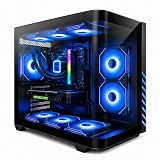
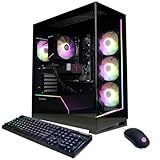


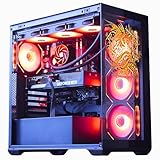


The console versus PC gaming debate has been bouncing around message boards and dinner tables since the original PlayStation launched in 1995, and every console generation people declare the argument finally settled. It never is. Heading into the back half of the 2020s, the question has gotten sharper and the answers more honest, because the gap between a high-end home console and a mid-range gaming PC has narrowed in some places and widened in others. We have spent the past eighteen months living with a PlayStation 5 Pro, an Xbox Series X, and a self-built mid-range PC side by side in the same living room, swapping between them on the same television, the same monitor, the same controllers, and the same headset. We are not here to tell you one platform is universally better. We are here to tell you exactly which one wins for which use case in 2026, and we are not afraid to commit to a verdict.
The short version: if you can afford a thousand-dollar PC build and you are even slightly comfortable opening a case, you will get more out of the PC for the next five years. If you cannot, or you mostly play AAA single-player blockbusters on a 4K television from your couch, the PlayStation 5 Pro is the most refined gaming experience money can buy at its price. Both platforms can coexist in the same household and many households should run both. What follows is the long version, broken into eight rounds that we benched, played, and lived with the hard way.
TL;DR At-a-Glance Comparison
| Spec / Category | PS5 Pro / Xbox Series X (Console) | $1000 Mid-Range PC Build | Round Winner |
|---|---|---|---|
| Upfront hardware cost | Roughly $500-$700 | Around $1000-$1100 self-built | Console |
| Library size | Closed ecosystem, exclusives | Steam, GOG, Epic, emulation, mods | PC |
| Frame rate ceiling | Locked at 60-120 FPS in optimized titles | Uncapped, 144-240 FPS competitive | PC |
| Customization | Plug-and-play, sealed | Modding, peripherals, internals | PC |
| Online subscription | PS+ or GamePass required | Free online, optional services | PC |
| Resale and upgrade path | Trade in whole unit | Swap GPU/CPU, retain platform | PC |
| Multitasking and productivity | Gaming only | Work, stream, browse, create | PC |
| 5-year total cost of ownership | Lower upfront, higher subscription | Higher upfront, lower recurring | Roughly even |
Round-by-Round Breakdown
Round 1: Upfront Cost and What That Money Actually Buys
Sticker price is where consoles look most appealing and where the conversation usually stops on PC subreddits when they get defensive. A PlayStation 5 Pro sits around $700 at retail, the Xbox Series X around $500, and you can walk out of the store with everything you need to play that day except for a second controller and maybe a charge stand. A respectable thousand-dollar PC build adds at least three hundred dollars to that bill, plus a monitor if you do not already have one, plus a keyboard and mouse if you are starting from scratch. For someone whose only goal is to play this year’s biggest releases on the family television, that math looks brutal in the console’s favor and we will not pretend otherwise. The console buyer hands over five hundred to seven hundred dollars, takes home a single box, plugs it in, and is gaming inside half an hour.
But the per-dollar question gets more interesting once you start asking what each machine actually does for that money. The Xbox Series X gets you a custom AMD Zen 2 CPU and an RDNA 2 GPU equivalent to a low-end discrete card, with 16GB of shared GDDR6 memory and a fast custom SSD. The PS5 Pro stretches that to roughly RDNA 3 levels of GPU compute and adds Sony’s PSSR upscaling pipeline. A $1000 PC build in 2026 buys you a Ryzen 7 class chip, a discrete GPU in the RTX 5060 Ti or RX 9060 XT range, 32GB of DDR5-6400, a 2TB NVMe drive, a quality 750W power supply, a mid-tower case with good airflow, and the ability to swap any of those parts in three years. That is roughly two to two-and-a-half times the GPU compute of the Xbox Series X, plus separable upgrade paths that consoles structurally cannot offer.
The unseen cost on the console side is the peripherals you may need beyond the box. A second DualSense controller runs roughly $75 and most households need one for couch co-op. A charge dock adds another thirty. A decent pair of wireless headphones for late-night sessions adds fifty to a hundred and fifty. If you do not already own a 4K HDR television, that is a several-hundred-dollar add. Console marketing prices the unit; the actual gaming setup costs more. The PC builder accounts for these costs upfront because they are picking every component, so the thousand-dollar PC budget usually includes the keyboard, mouse, and headset that would be add-ons on the console side. Round 1 goes to the console on raw out-the-door cost, but it is a narrower win than the price tags suggest. Winner: Console.
Round 2: Library Size, Exclusives, and Backward Compatibility
The library debate used to favor consoles because exclusives drove the conversation, but in 2026 the math has shifted in the PC’s favor in ways that are not obvious until you actually count. Sony has been porting first-party titles to PC on a rolling two-to-three-year delay for several years now, so the exclusivity window has shrunk from forever to a long pause. Microsoft, meanwhile, has effectively given up on console exclusivity and ships its biggest games on PC day-and-date through both Steam and the Microsoft Store. That leaves a small handful of genuine PS5-only games as the actual exclusivity wedge, and for many buyers those titles alone are not enough to justify a console purchase.
On the PC side, you get every Steam game ever released, GOG’s preservation library, Epic Games Store’s rolling free giveaways, itch.io’s indie scene, EA’s catalog through their launcher, Ubisoft’s catalog through theirs, the entire emulation library for every retro console up through the Wii U and PS3, and the modding ecosystems that have kept games like Skyrim and Minecraft alive for over a decade. The console gives you a curated, often beautifully optimized list of titles that mostly run well out of the box. The PC gives you the entire history of digital gaming with the trade-off of occasionally having to fiddle. Winner: PC.
Round 3: Frame Rate Ceiling and Competitive Performance
Console manufacturers love to advertise their machines as 120 FPS capable, and in a handful of well-optimized titles they actually hit that number, usually at reduced resolution and detail. The PS5 Pro’s performance mode in marquee titles like Spider-Man 2 and Gran Turismo 7 holds 60 FPS reliably and pushes toward 120 FPS in select esports-oriented modes. The Xbox Series X behaves similarly. For couch-based, controller-driven, 4K-television gaming, these numbers are objectively excellent and most players will struggle to tell the difference between a console at 60 and a PC at 90 in a slower-paced game.
Where the gap opens up is competitive shooters, racing sims, and rhythm-based titles where every additional frame buys you a measurable input advantage. A mid-range PC paired with a 240Hz monitor can run Counter-Strike 2, Valorant, Apex Legends, and Overwatch 2 at three to four times the frame rate of any console, and serious players will tell you that the difference is the difference between platinum and diamond rank. Consoles cannot get there. The architecture caps them. Round 3 is decisive: if you care about competitive frame rates, you must own a PC. Winner: PC.
Round 4: Customization, Modding, and Personalization
This is the round where the gap is widest and the console has no meaningful answer. PC customization is a category that does not exist on console in any practical sense. You can change your dashboard wallpaper on a PlayStation 5 and you can buy themed controllers, but you cannot install custom shaders, swap your shell, replace your storage with whatever NVMe drive is on sale this week, paint your case, mount three monitors, run a controller in your left hand and a flight stick in your right, or rebind every system-level shortcut to your liking.
The mod ecosystem alone justifies the PC for many players. Bethesda’s RPGs, Minecraft, Cities Skylines, Stardew Valley, the Total War series, Baldur’s Gate 3, and dozens of others have communities that produce entire alternate games of free content that you simply cannot access on console. Modded Skyrim plays nothing like vanilla Skyrim. Modded Minecraft is its own genre. Console players watch from outside the window. Winner: PC, decisively.
Round 5: Online Subscription Costs and Game Ownership
Here is where consoles quietly extract money over the long haul in ways that do not show up on the sticker price. Playing online multiplayer on PlayStation 5 or Xbox Series X requires an active subscription to PlayStation Plus or Xbox Live Gold, which run roughly $80-$130 per year depending on tier. GamePass adds another tier if you want the Netflix-style library. Over five years of ownership that adds up to several hundred dollars of subscription costs that you simply do not pay on PC.
PC online play is free for nearly every multiplayer game ever made. Steam takes no cut from you for matchmaking. Dedicated servers exist for many titles. Discord handles voice chat. The only optional service worth paying for is something like Xbox PC Game Pass if you want a rotating library, but that is opt-in rather than required. Game ownership also favors PC, where your Steam library is yours forever subject to Valve’s continued operation, versus consoles where digital licenses are increasingly tied to active accounts and active subscriptions. Winner: PC.
Round 6: Resale Value and Upgrade Path
A console is a single sealed unit, and when you decide it is too slow you sell the whole thing on the secondhand market for somewhere between thirty and fifty percent of what you paid, then buy a whole new unit. The transaction is simple and the resale market is liquid. That is the upside. The downside is that every generation forces a complete platform replacement and your accessories may or may not carry over, and the resale value of a 2026 PS5 Pro in 2031 will be substantially lower than what it is today.
The PC upgrade path is fundamentally different and, over a five-to-eight year ownership window, dramatically more economical. You buy a thousand-dollar PC in 2026. In 2029 you upgrade the GPU for four hundred dollars and reclaim three years of additional graphical headroom. In 2032 you upgrade the CPU and motherboard for another five hundred dollars and reclaim another three years. The case, power supply, fans, storage, and peripherals all carry forward. The total spend over those eight years is roughly $2000 distributed across two refresh cycles, versus two full console purchases at $700 each plus $500-$1000 in subscriptions over the same window. The PC also opens upgrade-paired possibilities such as our $1500 prebuilt gaming PC writeup if you want to skip the building step but keep the upgrade path. Winner: PC.
Round 7: Multitasking, Productivity, and Streaming
A gaming console is for gaming. The PlayStation 5 will not let you write a college essay, edit a video, compile code, run a Discord server, or hold a Zoom call. You can stream movies on it and browse the web in a limited way, but it is fundamentally a single-purpose machine that excels at one thing. For households that already own a laptop or a desktop for work, that single-purpose focus is actually a feature: the console does not pretend to be anything other than what it is, and it does that one thing extremely well. The lack of background processes also means the gaming experience itself is more consistent because nothing is competing for system resources behind the scenes.
A gaming PC is a general-purpose computer that happens to game. You can run your office suite, your photo editor, your video editor, your code compiler, your accounting software, your Plex media server, your home automation hub, and your gaming library on the same machine. For students, freelancers, content creators, and anyone whose hobbies extend beyond gaming, the PC absorbs the cost of three other devices you would otherwise buy. A college student in 2026 who would otherwise need a laptop for schoolwork can use a single gaming PC for both purposes and save the cost of the laptop. A freelancer who edits photos or video can use the same GPU that powers their game library to accelerate Adobe Premiere or DaVinci Resolve.
Streaming sits in its own category. Setting up OBS on a PC with scene transitions, multiple capture sources, custom overlays, alert integration, and chat embedding is a one-evening project that yields broadcast-quality output for free. Console-native streaming exists but is feature-limited and most serious console streamers route their console output through a capture card into a separate PC running OBS anyway. If you stream at all or want the option to, the PC is the natural choice and the console adds friction rather than removing it. Round 7 is not even close. Winner: PC.
Round 8: 5-Year Total Cost of Ownership Math
Let’s add it all up over a sixty-month ownership window. Console buyer: $700 for a PS5 Pro, $100 per year in PlayStation Plus, $130 per year for an Ultimate-tier subscription if they want a rotating library, two new full-price games per year averaging $70 each, and the assumption that they will replace the console with a successor at the five-year mark. Total roughly $700 + $500 + $650 + $700 + $700 = $3250 over five years before they sell the original console for maybe $200.
PC buyer: $1000 build, $0 in mandatory subscriptions, two new games per year purchased on Steam discounts averaging $40 each, one GPU refresh at the three-year mark for $400. Total roughly $1000 + $0 + $400 + $400 = $1800 over five years with no need to sell anything at the end, plus the PC still has a healthy resale floor of $400 or more. The five-year math favors the PC by a wide margin once you account for subscriptions and game purchasing patterns. Winner: PC on lifetime cost.
Use-Case Recommendations
Buy the PS5 Pro if: You play mostly AAA single-player titles on a 4K television from your couch. You value the polish of first-party Sony exclusives and have no interest in modding, emulation, or productivity work. You have a partner or roommate who shares the household television and you want a machine that wakes from sleep instantly and just works without troubleshooting. You already own a laptop or work computer that handles your non-gaming needs and you want a gaming device that does not double as another open browser tab.
Buy the Xbox Series X if: The above applies but you prefer the GamePass ecosystem and Microsoft’s first-party slate of Halo, Forza, and Gears titles. The Series X is also the better choice if you have a 4K HDR television with VRR support and you care about the wider VRR window and Dolby Vision support that Xbox handles slightly better than PlayStation.
Build the PC if: You play competitive shooters, racing sims, or rhythm games where high refresh rates matter. You want access to mods, emulation, indie titles, or your own retro library. You do any kind of content creation, productivity work, or schoolwork. You have a four-to-eight-year upgrade horizon and you want the lowest total cost of ownership. You enjoy tinkering or want to learn the platform that powers every other meaningful computing device in your life. For build inspiration matching this budget tier, check our $2000 prebuilt deep dive.
Buy both if: You can afford to and your life supports it. Many households genuinely benefit from a PS5 Pro in the living room for couch co-op and AAA single-player blockbusters paired with a gaming PC in the bedroom or office for competitive multiplayer, productivity, and mods. The two platforms complement each other and there is no rule that says you must pick one.
Frequently Asked Questions
Is the PS5 Pro worth the extra money over the standard PS5 in 2026?
Only if you have a 4K HDR display that can actually showcase the upscaling improvements and you play graphically demanding titles where the performance mode improvements move you from 30 FPS to 60 FPS or from 60 FPS to a more stable 60. For 1080p or basic 4K TV owners, the standard PS5 remains the better value purchase.
Can a $1000 PC really beat a PS5 Pro in graphics quality?
Roughly equal in raw rendering power, but the PC pulls ahead in flexibility. The PS5 Pro has Sony’s PSSR upscaling and tight first-party optimization that lets it punch above the equivalent PC hardware in select titles. The PC catches up and surpasses in titles that benefit from DLSS 4 or FSR 4, in modded games, and in anything pushing past 60 FPS at higher resolutions.
What about cloud gaming, does that change the math?
It changes the entry-level math but not the enthusiast math. Cloud services like GeForce Now and Xbox Cloud Gaming have improved dramatically but still require strong wired or excellent WiFi connections, introduce input latency for competitive titles, and depend on monthly subscriptions of their own. For casual play they can replace either platform. For serious play they cannot.
How long until the next console generation forces another upgrade decision?
Historical pattern suggests a PS6 and Xbox successor in the 2027-2028 window, so anyone buying a current console today should expect a four-to-six-year useful life before being incentivized to upgrade. A PC built today with a quality power supply and motherboard has a useful life closer to eight years with one GPU upgrade in the middle.
Final Verdict
We picked the PC. For most readers of this site, who are by definition interested enough in PC hardware to seek out a head-to-head comparison article, the PC wins on every round that matters long-term: library breadth, frame rate ceiling, customization, online cost, upgrade path, multitasking, and five-year total cost of ownership. The console only wins decisively on day-one sticker price and on the specific use case of plug-and-play couch gaming.
If you are a casual gamer whose only goal is to play this year’s biggest releases on a 4K television and you have no interest in tinkering, the PS5 Pro is still our recommendation and we will not try to talk you out of it. For everyone else, build the PC. You will save money over the long haul, you will have access to an order-of-magnitude larger library, you will get higher frame rates for competitive play, and you will own a machine that does ten things instead of one. Overall Winner: PC for enthusiasts; Console for couch-only casual buyers.
For more on the parts that go into a build like this, see our trending graphics cards deep comparison, our trending gaming CPUs coverage, our trending gaming monitors roundup, our trending gaming keyboards picks, our trending wireless gaming mice shootout, and our trending gaming RAM guide for kit recommendations. Pair those with the $1500 prebuilt alternative if you want the PC experience without the building step.