- Top Pick: Oranfit Dried Lime Slices 3oz/85g (50 to 80 slices)
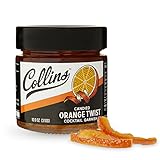
- Best Value: Collins Candied Fruit Orange Peel Twist in Syrup, Popular Cocktail Garnish for Skinny Margarita, Martini, Mojito, Orange Peel for Old Fashioned Drinks, Baking, Desserts, Salad, 10.9 oz
- Premium Choice: Utama Dehydrated Citrus – 55+ Piece Dried Lemon, Lime, Orange, & Grapefruit
Cocktail Garnish Guide: Citrus, Herbs & Rims
A reliable cocktail garnish guide starts with three rules: cut citrus just before service, measure the garnish so it supports rather than overwhelms the drink, and store every prepared component in a labeled airtight container with the correct humidity.
The Basic Garnish Kit
You do not need professional bar equipment, but a few tools make clean, repeatable cuts much easier:
As an Amazon Associate we earn from qualifying purchases at no extra cost to you.



- Y-peeler: best for long, thin citrus twists with minimal white pith.
- Paring knife: for trimming peels, cutting wedges, and removing pith.
- Channel knife: for narrow decorative citrus strips.
- Fine-mesh strainer: for keeping pulp and loose herbs out of a rim mixture.
- Small digital scale: useful when batching salt, sugar, or spice blends.
- Shallow airtight containers: reduce crushing and slow moisture loss.
- Clean kitchen towel: for drying herbs and wiping excess juice from rims.
Wash citrus under cool running water and dry it before peeling. Even when the peel will not be eaten, a wet surface produces a weak aroma and causes salt or sugar to clump.
Citrus Twists and Peels: Exact Cuts
Classic expressed twist
- Use a firm lemon, lime, or orange with an unblemished skin.
- Pull a Y-peeler from one end of the fruit to the other, creating a strip approximately 60–75 mm long and 10–15 mm wide.
- Trim the ends into a neat oval. If the strip has more than about 1 mm of white pith, scrape some away with a paring knife.
- Hold the peel skin-side down over the drink, about 5–8 cm above the surface.
- Flex it sharply over the cocktail to release the oils, then rub the colored side around the rim and place it on the drink or discard it.
The colored outer layer contains the aromatic oils. The white pith adds bitterness but little fragrance, so a thin peel is usually more effective than a thick one.
Long spiral twist
For an Old Fashioned, Manhattan, or Boulevardier, cut a strip about 100–125 mm long and 12–18 mm wide. Wrap it around a bar spoon handle or chopstick for five seconds, release it, and place it across the rim. Orange suits bourbon and rye; lemon is sharper with rye, gin, and aged rum.
Wedges and wheels
- Lime wedge: cut the lime lengthwise into quarters, then halve each quarter for wedges about 30–35 mm long. Make a shallow slit in the center so it sits securely on the rim.
- Lemon wedge: use eighths for tall drinks and sixths for larger rocks glasses. Remove seeds and excess central membrane.
- Citrus wheel: slice crosswise at 3–4 mm thick. Thinner slices dry quickly; thicker slices look substantial but can shed juice into the drink.
- Half-wheel: cut a wheel through the center. It is usually easier to balance on a Collins glass than a full wheel.
| Drink or spirit | Best citrus | Recommended garnish | Target size |
|---|---|---|---|
| Gin and tonic | Lime, lemon, grapefruit | Half-wheel or expressed peel | 3–4 mm wheel; 60–75 mm peel |
| Whiskey Old Fashioned | Orange | Expressed orange twist | 60–75 mm × 10–15 mm |
| Dry Martini | Lemon | Thin lemon twist | 60 mm × 8–12 mm |
| Margarita | Lime | Lime wheel or wedge | 3–4 mm wheel or 30–35 mm wedge |
| Dark rum drinks | Orange, lime | Orange peel or lime wedge | 75 mm peel or 30–35 mm wedge |
Herb Garnishes That Stay Fresh
Herbs should look lively, smell fresh, and remain proportional to the glass. A small sprig is usually more effective than a dense bouquet that blocks the aroma of the drink.
Mint
Use a 75–100 mm sprig with six to ten healthy leaves. Do not muddle the garnish mint unless the recipe specifically calls for it; bruising creates a bitter, vegetal aroma. Tap the sprig once against your palm, trim the stem, and place it beside the straw or near the rim so the nose reaches it before the drink.
Mint pairs with white rum, bourbon, tequila, gin, and sparkling drinks. Store it upright in a jar containing 10–15 mm of water, cover the leaves loosely with a bag, and refrigerate. Replace the water daily. Avoid sealing wet mint in a flat container, where trapped condensation quickly turns the leaves dark.
Rosemary and thyme
Use one rosemary sprig measuring 50–75 mm or two thyme sprigs measuring 50–60 mm. Rosemary works with gin, bourbon, tequila, and smoky whisky; thyme suits gin, vodka, dry vermouth, and sparkling wine. Keep both herbs dry in a paper towel-lined airtight container. If they begin to wilt, place the stems in shallow water for 20–30 minutes, then dry them thoroughly before service.
Basil, sage, and cilantro
- Basil: use three to five leaves or one small top sprig with gin, vodka, tequila, or light rum. Clap the sprig gently rather than crushing it.
- Sage: use one leaf or a 40–50 mm sprig with bourbon, apple brandy, dark rum, and pear flavors. Its flavor is powerful, so start small.
- Cilantro: use a 30–40 mm sprig with tequila, mezcal, lime, cucumber, and chili. Keep it away from delicate Martini-style drinks.
How to Build a Salt, Sugar, or Spice Rim
- Choose a rim style. A half-rim gives the drinker a clean side and allows control over salt or sweetness; a full rim gives a stronger seasoning effect.
- Put the seasoning in a shallow dish at least 10 mm wider than the glass rim.
- Moisten only the outside edge with a citrus wedge, simple syrup, or agave. Running the wet fruit around the inside can cause seasoning to fall into the drink.
- Dip or roll the rim lightly, then lift the glass and tap it once to remove loose grains.
- Let the coating set for 30–60 seconds before adding ice and liquid.
For a balanced standard mixture, combine 30 g kosher salt with 10 g finely grated lime zest for approximately five to six Margarita rims. For a sweet rim, use 40 g superfine sugar with 10 g orange zest for about six coupe or Nick and Nora glasses. Zest adds aroma but also moisture, so use these mixtures the same day.
| Rim mixture | Ratio by weight | Best pairings | Storage limit |
|---|---|---|---|
| Classic salt | 100% kosher salt | Tequila, mezcal, savory vodka drinks | 2–3 months dry |
| Lime salt | 3 parts salt to 1 part lime zest | Margaritas, Palomas, ranch water | Same day preferred |
| Spiced sugar | 8 parts sugar to 1 part cinnamon or chili | Rum, bourbon, apple brandy | 1 month airtight |
| Chili-salt blend | 4 parts salt to 1 part chili powder | Tequila, mezcal, tomato-based cocktails | 1–2 months dry |
Storage: A Simple Service Calculation
Planning for a small gathering is easier when garnish quantities are calculated instead of guessed. If 12 guests will each receive two drinks, plan for 24 garnishes. Add a 25% preparation reserve for damaged fruit, uneven cuts, and second choices:
24 drinks × 1.25 = 30 garnish portions.
For a mixed menu of half Old Fashioneds and half Margaritas, prepare 15 orange twists and 15 lime wedges. Use one medium orange for approximately 10–12 thin twists and one lime for about eight usable wedges, so prepare two oranges and two limes. Keep the twists in a sealed container lined with a barely damp paper towel, and keep lime wedges cut-side down in a separate container. Use cut citrus within 24 hours for the best aroma and texture.
Quick Pairing Decisions
- Choose orange when the drink is rich, barrel-aged, or bitter: bourbon, rye, dark rum, and amaro.
- Choose lemon when the drink is dry, herbal, or gin-led: Martinis, Tom Collins, whiskey sours, and vodka highballs.
- Choose lime when the drink is tropical, agave-based, or sharply refreshing: Margaritas, Daiquiris, Mojitos, and Dark ’n’ Stormy-style drinks.
- Choose grapefruit for tequila, mezcal, gin, and lightly bitter highballs.
- Choose mint or basil for fresh, bright drinks; choose rosemary, sage, or thyme when the drink has smoke, oak, spice, or winter fruit.
The best garnish is precise but restrained: one clearly chosen aroma, a clean cut, and enough surface area for the drinker to smell it without turning the glass into a decoration display.