The best 12V ride-on toys are the ones whose speed, runtime, weight limit, and safety controls match your child’s age and your outdoor surface—not necessarily the fastest or most expensive model.
For most families, a 12V two-seat ride-on with a parent-controlled low-speed mode, a 66–110 lb combined weight limit, rubberized tires, and a 6–8 hour charge time is the most versatile choice. Smaller 12V jeeps and cars suit younger children on flat pavement, while larger 12V UTV-style toys handle grass and light gravel more effectively but usually need a heavier, slower charge cycle.
As an Amazon Associate we earn from qualifying purchases at no extra cost to you.
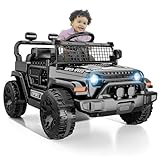

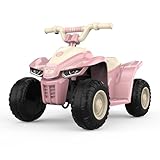

Quick comparison of the best 12V ride-on toys
| Ride-on type | Typical speed settings | Usable runtime | Typical weight limit | Best surface | Assembly difficulty |
|---|---|---|---|---|---|
| Compact 12V car | 2–3 mph low, 3–5 mph high | 45–75 minutes | 55–66 lb | Flat pavement and hard-packed paths | Moderate; 45–90 minutes |
| 12V licensed jeep or SUV | 2–3 mph low, 4–5 mph high | 45–90 minutes | 65–88 lb | Pavement, patios, short grass | Moderate; 60–120 minutes |
| 12V two-seat ride-on | 2–3 mph low, 3–5 mph high | 35–70 minutes under load | 88–110 lb combined | Hard surfaces and level lawns | Moderate to difficult; 90–150 minutes |
| 12V UTV-style ride-on | 2–3 mph low, 4–5 mph high | 40–80 minutes | 88–132 lb | Grass, packed dirt, light gravel | Difficult; 90–180 minutes |
These are useful buying ranges rather than guarantees. Runtime falls when two children ride together, the terrain slopes, tires lose pressure, or the battery is cold. Always use the manufacturer’s stated age, height, weight, and surface restrictions as the final authority.
Best choices by child and terrain
Best for a first-time driver: compact 12V car
A compact car is the easiest starting point for a child around 2–4 years old who is learning steering and pedal control. Its shorter body is easier to turn in a driveway, and its lower weight reduces the chance of a difficult recovery if it stops against a curb.
Look for a two-position speed selector rather than a continuously adjustable throttle. A low setting around 2–3 mph gives a beginner time to release the pedal and correct direction. A remote emergency stop is especially valuable when the child cannot yet judge distance.
Compact cars are a poor choice for thick grass. Their small wheels and modest ground clearance can make the motors stall, increasing battery drain and heat. Use them on level concrete, asphalt, pavers, or smooth indoor-outdoor flooring.
Best all-rounder: 12V jeep or SUV
A 12V jeep-style toy, including familiar licensed formats such as the Power Wheels Jeep Wrangler, is usually the best compromise for one child who wants a longer useful life from the toy. The upright seat, wider track, and larger tires provide more stability than a narrow sports car, while the low-speed setting remains suitable for beginners.
Choose a model with a seat belt, parent remote, power-disconnect switch, reverse lockout, and a physical high/low selector. Some models advertise four-wheel drive, but this does not automatically make them suitable for steep hills. A 12V motor can still overheat when climbing a slope or pulling through wet grass.
A jeep is suitable for short grass when the lawn is dry and reasonably level. It will generally perform better than a compact car, but it is not an all-terrain vehicle.
Best for siblings: 12V two-seat ride-on
A two-seat ride-on makes sense when the combined passenger weight stays comfortably below the limit. If the listed maximum is 110 lb, two children weighing 45 lb each leave only 20 lb of capacity for clothing, bags, and uneven-load margin. That is workable; two children weighing 55 lb each are already at the limit and will reduce acceleration and runtime.
Check whether the stated capacity is “per child” or “total.” Most two-seat toys use a combined limit. A center divider, two separate lap belts, and footwells that prevent feet from reaching the wheels are more important than extra speakers or lights.
Two-seat models are often wider than expected. Measure the narrowest gate and allow at least 2 inches of clearance on both sides. A toy that fits through the gate but cannot turn around at the end of a path will be frustrating to use.
Best for grass and packed dirt: 12V UTV-style toy
A UTV-style model is the strongest option among typical 12V categories for grass, packed soil, and very light gravel. Its larger tires and higher clearance reduce scraping, but traction remains limited by the tire tread and motor output.
Use low speed on uneven ground. High speed over bumps can make the rear wheels lose contact, causing a sudden loss of steering control. Avoid mud, deep sand, standing water, and slopes where the child cannot safely walk beside the vehicle.
Many UTV-style toys require more assembly because the chassis, roll cage, seats, steering hardware, and drive components arrive separately. Allow extra time to route wiring away from moving parts and to tighten every wheel and steering fastener.
Battery runtime: a practical calculation
Battery capacity is commonly listed as voltage and amp-hours. For example, a 12V, 7Ah battery has a nominal energy rating of:
12 volts × 7 amp-hours = 84 watt-hours.
If the motors and electronics draw an average of 70 watts while moving, the theoretical runtime is:
84Wh ÷ 70W = 1.2 hours, or about 72 minutes.
That is not a realistic promise of 72 minutes of driving. Lead-acid ride-on batteries should not be fully drained, and real driving includes starts, stops, slopes, grass resistance, and steering losses. Applying a practical 60–75% usable-energy factor gives roughly 43–54 minutes in this example.
Two children, soft grass, or repeated hill starts can reduce that result further. If daily use matters, buying a second manufacturer-approved battery is safer than installing a higher-voltage battery. Do not replace a 12V system with a 24V battery unless the entire vehicle is designed for it; the motors, wiring, controller, and charger may not tolerate the change.
Safety features that matter most
- Parent remote control: Lets an adult stop, steer, or override the throttle while a child is learning.
- Low-speed lockout: Prevents access to the faster setting until the child has demonstrated control.
- Seat belts: Essential on faster, taller, and two-seat models. They should be used every ride.
- Soft-start acceleration: Reduces the lurch that can surprise a small child.
- Reverse lockout: Helps prevent accidental direction changes while the toy is moving.
- Covered drive components: Keeps fingers, clothing, and loose shoelaces away from gears and axles.
- Thermal protection: Helps shut down the motor or controller if a heavy load causes overheating.
- Battery fuse and secure connector: Reduces electrical risk and prevents the battery from moving during use.
Lights, music, Bluetooth, and a working horn are useful visibility and communication features, but they should not compensate for weak braking, poor steering geometry, or the absence of a remote override.
Charging time and battery care
Most 12V ride-ons need approximately 6–12 hours to recharge, depending on battery size and charger output. A charger light changing from red to green usually indicates the programmed charging cycle has finished, but the manual’s instructions take priority.
- Charge in a dry, ventilated area away from children and flammable materials.
- Use only the supplied or manufacturer-approved charger.
- Do not operate the toy while it is connected to the charger.
- Recharge after use rather than storing the battery completely empty.
- For seasonal storage, follow the manual’s guidance; many lead-acid batteries need periodic recharging.
- Stop using the battery if it swells, leaks, smells unusual, or becomes excessively hot.
Assembly checklist before the first ride
Set aside a clear work area and inspect the parts before beginning. Assembly usually involves attaching wheels, steering components, the seat, body panels, battery leads, and sometimes a roll cage or windshield.
- Install the steering shaft and confirm that the front wheels turn freely without binding.
- Attach the drive wheels and verify that retaining clips or axle nuts are fully seated.
- Connect the battery only after the wiring harness is positioned away from the wheels and pedals.
- Test the accelerator with the drive wheels lifted safely off the floor, if the instructions permit it.
- Test forward, reverse, low speed, high speed, brake behavior, horn, and remote shutdown before carrying a child.
- Retighten wheel, seat, and steering fasteners after the first short ride.
Never improvise missing structural hardware with ordinary household screws. If a steering or wheel component is damaged or missing, contact the manufacturer before use.
Decision guide: which 12V ride-on should you buy?
| Your situation | Best match | Why |
|---|---|---|
| Child is learning and rides on a driveway | Compact car with low-speed lockout | Easy steering, lower center of gravity, simpler control |
| One child, mixed pavement and short grass | 12V jeep or SUV | Better clearance and stability without excessive size |
| Two children regularly ride together | Two-seat model with at least 20% weight margin | Preserves acceleration, braking, and battery life |
| Mostly level lawn or packed dirt | UTV-style model with larger tires | More clearance and traction than a small car |
| Small storage area or narrow gate | Compact single-seat car | Lower width and easier lifting or maneuvering |
The best 12V ride-on toys are therefore the models with an appropriate speed ceiling, a meaningful weight margin, reliable adult override, and tires suited to the actual route. Measure the riding area, check the combined passenger weight, and prioritize controllability over cosmetic features before choosing.
Ready to decide? Our #1 pick for 2026 is the Compact 12V car.
Live price & availability on Amazon.