A video doorbell earns its place in a work-from-home setup as much as at a front door. When you are deep in a game, on a call, or focused at your desk, a doorbell that sends a live feed and a two-way talk window to your phone or smart display means you never guess who is outside or miss a delivery. The budget end of the market is crowded with capable models from Ring, Blink, Wyze, and TP-Link’s Tapo line, and the real differences are ecosystem, power source, and storage rather than raw picture quality.
As an Amazon Associate we earn from qualifying purchases.
This guide compares four video doorbells currently sold on Amazon US that sit under the budget in the title, covering each one’s ecosystem, connection, power source, hub or app requirements, and storage. If you are building out the rest of a home and desk setup on a similar budget, our guide to the best monitors under 100 covers the screen side.
Quick Comparison
| Product | Power source | Ecosystem (as documented) | Storage | Hub / app requirement |
|---|---|---|---|---|
| Ring Battery Doorbell (2024 release) | Built-in rechargeable battery, USB-C charging | Alexa | Cloud recording with a Ring Home subscription | Ring app, no hub required |
| Blink Video Doorbell (newest model), System | Battery, wired or wire-free install | Alexa | Cloud clips with an optional Blink plan | Sync Module Core (included), Blink app |
| Wyze Video Doorbell v2 | Wired, existing doorbell wiring required | Alexa and Google Assistant | Local microSD recording, optional cloud plan | Wyze app, no hub required |
| Tapo D205 (TP-Link Tapo) | Rechargeable battery | Alexa and Google Assistant | Local microSD or optional cloud | Tapo app, no hub required |
How We Compared These Doorbells
- Ecosystem fit. A doorbell that announces visitors on the smart speakers and displays you already own beats one that only buzzes a phone. Alexa support is common at this level; Google Assistant support is less universal, and Apple HomeKit support is rare in this tier, so check listing wording carefully.
- Power source. Battery models install almost anywhere and suit renters, but need periodic recharging and usually record clips rather than continuous footage. Wired models draw constant power from existing wiring, never need charging, and are the ones that can support continuous local recording.
- Connection. All four picks connect over Wi-Fi. Where a maker documents the supported bands, we note it below — a 2.4 GHz-only doorbell needs decent 2.4 GHz coverage at the front door, a weak spot if your router sits at the back of the house.
- Privacy and storage. Local storage on a microSD card keeps footage in your home and avoids a subscription; cloud storage keeps clips safe if the doorbell itself is stolen but ties your history to a paid plan.
- Hub and app requirements. One pick below needs a plug-in module indoors to work at all; the others talk straight to your router. Every pick needs its maker’s app for setup, alerts, and live view.
The Picks
Ring Battery Doorbell (2024 release)

Ring’s entry-level battery doorbell is the natural pick for an Alexa household. Its listing highlights Head-to-Toe Video, which Ring says delivers 66% more vertical coverage than the previous Video Doorbell (2nd Gen), so packages on the step stay in frame alongside a visitor’s face. The battery is built in rather than removable: when it runs low, you detach the doorbell and recharge it via the USB-C port with the included cable. Live View, two-way talk, and real-time motion alerts run through the Ring app, and no hub is required.
The Alexa integration is the deepest here. Ring documents that you can hear custom notifications from an Echo Dot and launch doorbell video on an Echo Show, which suits a home office or gaming corner with an Echo device on the desk. The trade-off is storage: recording history requires a Ring Home subscription (sold separately), person and package smart alerts are subscription features, and there is no local storage option. If avoiding a monthly plan matters more, look at the Wyze or Tapo picks below.
Blink Video Doorbell (newest model) — System with Sync Module Core

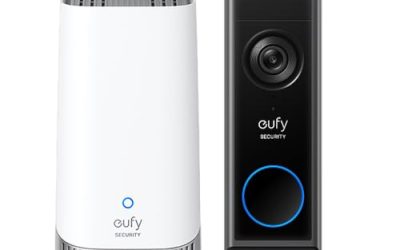
Blink, Amazon’s other smart-home brand, bundles the doorbell with the Sync Module Core, the small indoor hub the doorbell needs in order to work. In exchange for keeping that module plugged in, Blink documents a two-year battery life, by far the longest claim in this guide, which suits a door you would rather not take down to recharge several times a year. The listing describes a head-to-toe HD view and simple setup, and the Blink Video Doorbell line supports both wired and wire-free installation.
Ecosystem support is Alexa-only, as documented in the listing: Echo speakers and displays can announce the door and show the feed, but there is no documented Google Assistant or HomeKit support. Alerts and two-way talk run through the Blink app, and video clips are handled through Blink’s optional subscription plan, so factor that in if you want a browsable history rather than live view and alerts alone. The practical win is maintenance: this is a doorbell you can essentially forget about.
Wyze Video Doorbell v2

The Wyze Video Doorbell v2 is the wired specialist of this group, with the strongest privacy and storage story. Its Amazon listing is explicit that existing doorbell wiring is required: it is a corded-electric model that hardwires to your existing transformer (the listing’s compatibility notes discuss chime and transformer limitations), and in return it never needs charging. The listing documents 2K video, color night vision, two-way audio, and a package monitor feature, plus support for continuous local recording to a microSD card — unusual at this level, where battery models typically capture short clips only. Local recording keeps footage on the card rather than depending on a cloud plan, though Wyze also offers an optional cloud service.
Connectivity is the one firm constraint: the listing states 2.4 GHz Wi-Fi and notes it is not 5G (5 GHz) compatible, so confirm your router’s 2.4 GHz signal reaches the front door. Ecosystem support is broader than the Ring and Blink picks — the listing says it works with Alexa and Google Assistant, so it can announce on either family’s speakers and displays. Setup runs through the Wyze app, no hub is needed, and the listing notes it can work with your existing in-house chime.
Tapo D205 — TP-Link Tapo 2K Video Doorbell

The Tapo D205 is the flexible middle ground: a battery doorbell with the wide view and local storage that budget shoppers usually have to choose between. The Amazon listing documents 2K video with a 160° ultra-wide view, two-way talk, night vision, and free AI person detection, so the smarter alerts some rivals reserve for a subscription are included here. Power comes from a rechargeable battery — the listing describes a 6400mAh cell, with up to 180 days of battery life in the product title — which keeps installation renter-friendly: mount it, connect it to Wi-Fi through the Tapo app, and you are done, with no hub required.
Storage is the headline privacy feature: the listing offers subscription-free local storage on a microSD card, with optional cloud storage if you prefer off-site copies. Ecosystem support covers both major voice platforms — the listing states compatibility with Alexa and Google Assistant — so the D205 can announce visitors on Echo or Google speakers and show its feed on a smart display beside a desk. The listing also specifies IP54 water and dust resistance. If you want one doorbell locked into neither a single ecosystem nor a single storage model, this is the most adaptable pick here.
Which One Fits Your Home and Work Corner?
Pick the Ring Battery Doorbell for the deepest Alexa experience, if a subscription for recording history is acceptable. Pick the Blink Video Doorbell system for the longest documented battery life and lowest maintenance, if Alexa-only support is fine. Pick the Wyze Video Doorbell v2 if you have existing wiring and want continuous local recording plus Google Assistant alongside Alexa. Pick the Tapo D205 for battery convenience plus local storage, free person detection, and both Alexa and Google Assistant in one device. Whichever you choose, think about where the alert lands during your day: a doorbell that speaks through the smart speaker in your work corner gets answered faster than one that only vibrates a phone in your pocket.
FAQ
Do any of these doorbells work with Apple HomeKit?
None of the four listings documents HomeKit support. Ring and Blink document Alexa support; the Wyze and Tapo listings document Alexa and Google Assistant.
Can I use a video doorbell without a subscription?
Yes, but what you give up varies. The Wyze Video Doorbell v2 and Tapo D205 record locally to a microSD card, so a usable history needs no plan. On the Ring Battery Doorbell, recording history and person and package smart alerts require a Ring Home subscription, and Blink’s clip history is tied to its optional plan — both still provide live view and alerts without one.
Do I need a hub for any of these doorbells?
Only the Blink system requires one: the Sync Module Core is included in this bundle and must stay plugged in indoors. The Ring, Wyze, and Tapo models connect to Wi-Fi directly and are managed through their apps. Note that the Wyze listing also discusses in-house chime compatibility for homes with existing wiring, including cases where a chime may not be compatible.
Conclusion
Under this budget, there is no single best video doorbell — there is a best match for your wiring, your ecosystem, and your feelings about subscriptions. Ring offers the deepest Alexa experience, Blink the longest documented battery life, Wyze wired continuous local recording with Alexa and Google Assistant support, and Tapo the most flexible mix of battery power, local storage, and dual-ecosystem compatibility. Match the doorbell to the speakers and displays already in your home and work corner, and confirm your Wi-Fi reaches the door before you mount anything.