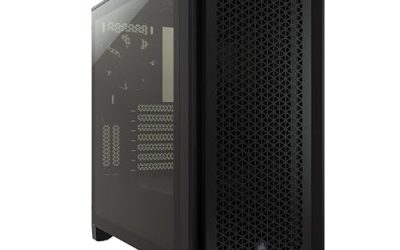
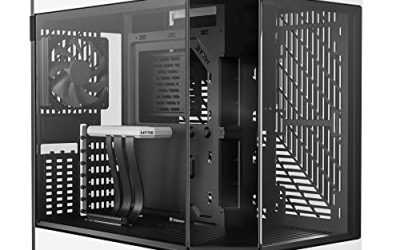
Wood PC cases solve a placement problem before they solve a cooling problem. A steel tower with a real wood front, wood slats or wood trim can sit on a desk, shelf or media unit without clashing with furniture, while the internal layout still follows standard motherboard, power supply and fan-mount rules. The important distinction is how the wood is used. A slatted front panel can double as the intake path, a solid front section is mainly decorative, and trim strips over mesh leave airflow almost unchanged. This guide groups five wood-panel cases by form factor, from Mini-ITX to ATX, so the size decision comes first and the finish second. All dimensions below are manufacturer-published figures for planning, not independent measurements, so confirm graphics card length, cooler height and radiator thickness against your own parts before ordering.
As an Amazon Associate we earn from qualifying purchases.
How wood construction affects your build
Begin with motherboard size, because it decides which of these cases can work at all. Mini-ITX cases need a Mini-ITX board and usually a small-form-factor power supply. Micro-ATX cases accept Micro-ATX and Mini-ITX boards. ATX mid-towers accept ATX, Micro-ATX and Mini-ITX boards, and some also accept wider E-ATX boards. Next, check graphics card clearance with your cooling plan in place, since a front radiator reduces usable card length on many designs. CPU cooler height, power supply length and front I/O headers matter just as much: a USB Type-C port on the case needs a matching header on the motherboard, and pre-installed fans need PWM headers or a hub. Warranty terms vary by brand and seller, so keep the invoice and confirm coverage on the product page. Wood grain and tone also vary between units, which is normal for a natural material.
Fractal Design Terra Jade — Mini-ITX
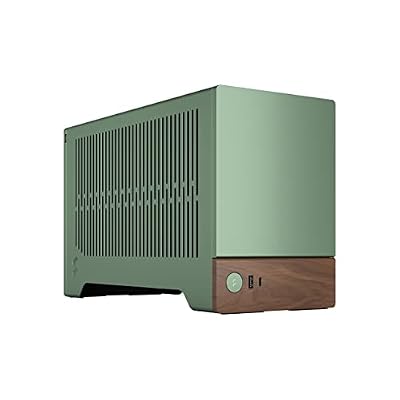
The Fractal Design Terra Jade is the small-desk option, built around anodized aluminum panels with a front-facing panel cut from solid walnut. Fractal lists a 10.4-liter volume, exterior dimensions of 343 x 153 x 218 mm, Mini-ITX motherboard support and room for a graphics card up to 322 mm long, with a PCIe 4.0 riser cable included. Front I/O includes USB Type-C. Because the internal wall slides, cooler height and card thickness trade against each other, so check both figures together rather than in isolation. Choose the Terra when the PC must fit a compact desk or shelf and a Mini-ITX build is acceptable.
GAMDIAS Athena M4M Wood — Micro-ATX

The GAMDIAS Athena M4M Wood is a compact micro-tower with a real walnut front panel and a tempered glass side panel. The listing states support for Micro-ATX and Mini-ITX motherboards, three pre-installed 120 mm fans, dual 360 mm radiator support, front USB 3.0 ports plus USB Type-C, and a front-mounted power supply layout. A front-mounted power supply changes cable routing and usable length, so confirm power supply dimensions and cable reach on the product page before ordering. Pick this model when you want a smaller footprint than an ATX tower but still need Micro-ATX board options and liquid-cooling mounts.
Fractal Design North Charcoal Black — ATX

The Fractal Design North Charcoal Black pairs a genuine walnut wood front with mesh side panels and two included 140 mm Aspect PWM fans. Fractal lists support for ATX, Micro-ATX and Mini-ITX motherboards and USB Type-C on the front panel. Published figures for this family list graphics cards up to 355 mm, or up to 300 mm with a 360 mm front radiator installed, so the radiator decision directly changes card choice. The open front with fine-patterned mesh is designed to feed the front fans while keeping the wood slats visible. Choose the North for a furniture-friendly ATX build where a single graphics card fits within the published limit.
Lian Li LANCOOL 217 Black — ATX
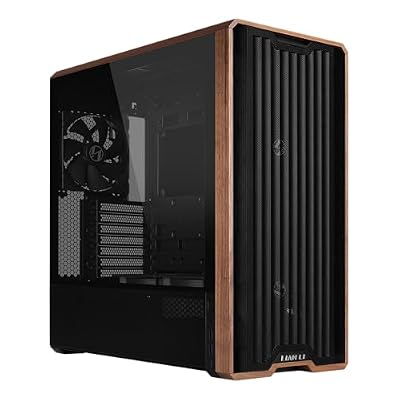
The Lian Li LANCOOL 217 Black uses genuine walnut wood accents over a mesh front, with steel and tempered glass in the material list. The Amazon listing states five pre-installed PWM fans: two 170 mm fans, two 120 mm fans and one 140 mm fan. That included fan count is the main practical difference from the North, since fewer extra fans are needed to complete the build. Flexible power supply and cable installation options are also listed, so confirm power supply length for the orientation you plan to use. Pick the LANCOOL 217 when included fans and a wood-accented mesh front matter more than a fully slatted wood face.
CORSAIR Frame 4000D Wood RS — ATX

The CORSAIR Frame 4000D Wood RS is a modular mid-tower with a walnut or oak wood front panel, depending on version, and four included RS120 PWM fans. Corsair lists the InfiniRail fan mount system, reverse graphics card anti-sag support and reverse-connector motherboard support. Modular fan rails make fan and radiator placement more flexible, but they also mean published clearances depend on rail position, so read the exact configuration table on the product page before ordering a long card or thick radiator. Choose this case when you want a wood front with a modular interior and plan to adjust fan placement during the build.
Choosing by size and panel type
For a compact desk build, the Terra is the only Mini-ITX option here, with the tightest space planning. For Micro-ATX, the Athena M4M Wood keeps the footprint small while listing dual 360 mm radiator support. Among the ATX towers, the North emphasizes a prominent walnut slat front with two included fans, the LANCOOL 217 emphasizes five included fans behind a mesh front with wood accents, and the Frame 4000D Wood RS emphasizes modular mounting with four included fans. If you are still deciding between a wood front and an all-metal design, our broader comparison of PC cases compared side by side can help settle the layout first.
Final checks
Measure your graphics card from bracket to end, add fan or radiator thickness where relevant, and compare that total with the maker limit for the exact configuration you plan. Confirm cooler height against side-panel clearance, power supply length against drive cages and cable space, and front-panel cables against motherboard headers. Care for wood panels with a dry cloth and keep liquids away from the surface. With size, clearance and headers confirmed, any of these five can anchor a build that looks at home outside a dedicated gaming room.