- Top Pick: Apple 2026 MacBook Air 13-inch Laptop with M5 chip: Built for AI, 13.6-inch Liquid Retina Display, 24GB Unified Memory, 1TB SSD, 12MP Center Stage Camera, Touch ID, Wi-Fi 7; Starlight
- Best Value: Apple 2026 MacBook Pro Laptop with Apple M5 Max chip with 18-core CPU and 40-core GPU: Built for AI, 16.2-inch Liquid Retina XDR Display, 48GB Unified Memory, 2TB SSD, Wi-Fi 7; Silver
- Premium Choice: Apple 2026 MacBook Air 13-inch Laptop with M5 chip: Built for AI, 13.6-inch Liquid Retina Display, 16GB Unified Memory, 512GB SSD, 12MP Center Stage Camera, Touch ID, Wi-Fi 7; Midnight
AI work puts a very particular kind of pressure on storage. Datasets run to tens or hundreds of gigabytes, model weights are huge files that must be read into memory quickly, and training or inference pipelines stream data off disk constantly. That makes two attributes decisive for an AI-focused SSD: capacity, to hold sprawling datasets and multiple model checkpoints, and fast read speed, so loading a dataset or a multi-gigabyte model into memory does not become the bottleneck. This guide rounds up the best SSDs for AI in 2026 across the choices that matter: high-speed internal NVMe drives for active datasets and model loading, and large portable drives for moving datasets and checkpoints between machines.
- Best SSDs for AI at a Glance
- 1. WD_BLACK SN850X 4TB NVMe SSD M.2 2280 (up to 7,300MB/s read)
- 2. Samsung 980 PRO SSD 2TB PCIe NVMe Gen 4 M.2 Internal SSD
- 3. SAMSUNG 970 EVO Plus SSD 2TB NVMe M.2 Internal SSD (V-NAND)
- 4. SANDISK 4TB Extreme PRO Portable SSD (up to 2000MB/s, USB 3.2 Gen 2×2)
- 5. SANDISK 4TB Extreme Portable SSD (Old Model) USB-C, USB 3.2 Gen 2
- 6. Samsung T7 Portable SSD 2TB External (up to 1,050MB/s)
- How to Choose an SSD for AI
- Frequently Asked Questions
- Related Guides
- Related Articles
Our picks were chosen on what genuinely serves an AI workflow: read performance for loading data and weights, capacity for datasets and model stores, the interface (NVMe or USB) and its real-world fit, and value. We have spread the list from a fast 2TB NVMe drive up to 4TB of capacity, with prices from around $365 to around $600, because AI rigs typically pair a very fast active drive with roomy storage for the data lake. We do not quote invented benchmark numbers; instead we describe each drive’s read strengths, interface and fit. Below is an at-a-glance comparison of all six, then a closer look at each and a buyer’s guide built around capacity, read speed and interface — the criteria that actually matter when you feed data to a model.
As an Amazon Associate we earn from qualifying purchases at no extra cost to you.



🛒 Best Price Today on Amazon
Prime members get fast, free shipping on everything above, plus member-only deals. New members get a 30-day free trial — cancel anytime.
Best SSDs for AI at a Glance
| SSD | Best For | Standout Spec | Approx Price |
|---|---|---|---|
| WD_BLACK SN850X 4TB NVMe | Fast 4TB active dataset drive | NVMe Gen 4, up to 7,300MB/s read | around $600 |
| Samsung 980 PRO 2TB NVMe Gen 4 | High-speed model loading | NVMe Gen 4, 2TB | around $482 |
| Samsung 970 EVO Plus 2TB NVMe | Value NVMe for datasets | NVMe Gen 3, 2TB | around $365 |
| SanDisk 4TB Extreme PRO Portable | Fastest portable dataset transfer | Up to 2000MB/s USB 3.2 Gen 2×2 | around $589 |
| SanDisk 4TB Extreme Portable | Large portable data storage | 4TB, USB-C up to 1050MB/s | around $450 |
| Samsung T7 2TB Portable | Compact portable model store | 2TB, USB up to 1,050MB/s | around $389 |
1. WD_BLACK SN850X 4TB NVMe SSD M.2 2280 (up to 7,300MB/s read)

WD_BLACK SN850X 4TB NVMe SSD - M.2 2280, Up to 7,300 MB/s Read speeds, Up to 6,300 MB/s write speeds, Gaming Expansion, High Performance Internal Solid State Drive - WDS400T2X0E


As an Amazon Associate we earn from qualifying purchases. Product prices and availability are accurate as of the date/time indicated.
The WD_BLACK SN850X 4TB is the standout active drive for AI work. As a PCIe Gen 4 NVMe drive rated up to 7,300MB/s read, it combines blistering read performance with a large 4TB capacity — exactly the pairing that loads big datasets and multi-gigabyte model weights into memory fast while holding a lot of them at once. At around $600 it is the premium pick here, and for AI’s read-heavy demands it earns the price.
For AI the intent could not be clearer: reading data and model checkpoints off disk quickly is the difference between a pipeline that flies and one that stalls, and the SN850X’s Gen 4 read speed directly targets that. The 4TB capacity is enough to keep several datasets and a stack of model versions on one fast volume, the M.2 2280 form factor drops into modern motherboards, and WD_BLACK’s pedigree means consistent performance under sustained access. If you want the fastest, roomiest active drive for loading datasets and weights, the SN850X is the obvious top pick.
Pros: Very fast Gen 4 NVMe reads, huge 4TB capacity, ideal for datasets and model loading.
Cons: Premium price; needs an M.2 NVMe Gen 4 slot to reach full read speed.
2. Samsung 980 PRO SSD 2TB PCIe NVMe Gen 4 M.2 Internal SSD

Samsung 980 PRO SSD 2TB PCIe NVMe Gen 4 Gaming M.2 Internal Solid State Drive Memory Card, Maximum Speed, Thermal Control MZ-V8P2T0B/AM


As an Amazon Associate we earn from qualifying purchases. Product prices and availability are accurate as of the date/time indicated.
The Samsung 980 PRO 2TB is the high-speed model-loading pick. It is a PCIe Gen 4 NVMe drive built for fast, responsive access, pairing Samsung’s proven controller and V-NAND with a 2TB capacity well suited to active model stores and working datasets. At around $482 it is a premium Gen 4 drive with a strong reputation for consistent performance.
For AI this is an excellent active drive when 2TB is enough room. The Gen 4 NVMe read speed loads multi-gigabyte model weights and dataset shards into memory quickly, which keeps training and inference pipelines fed, and Samsung’s endurance reputation matters when a drive is read and written constantly. The 2TB capacity comfortably holds a working dataset plus several model checkpoints. If you want a fast, dependable Gen 4 NVMe drive for model loading and active data without stepping up to 4TB, the 980 PRO is a first-rate choice.
Pros: Fast Gen 4 NVMe reads, dependable Samsung controller, 2TB for active model stores.
Cons: 2TB fills quickly with large datasets; needs an M.2 Gen 4 slot for full speed.
3. SAMSUNG 970 EVO Plus SSD 2TB NVMe M.2 Internal SSD (V-NAND)

SAMSUNG (MZ-V7E500BW) 970 EVO SSD 500GB - M.2 NVMe Interface Internal Solid State Drive with V-NAND Technology, Black/Red


As an Amazon Associate we earn from qualifying purchases. Product prices and availability are accurate as of the date/time indicated.
The Samsung 970 EVO Plus 2TB is the value NVMe pick for AI datasets. As a well-regarded NVMe M.2 Gen 3 drive on Samsung V-NAND, it delivers genuinely fast reads and a roomy 2TB capacity at a lower price than the Gen 4 options above. At around $365 it is the sensible choice for loading datasets and models quickly without paying a Gen 4 premium.
For AI work this drive hits a strong value-to-performance balance. Its Gen 3 NVMe read speed is far quicker than any SATA drive and loads datasets and model weights into memory rapidly, the 2TB capacity holds a working dataset and several checkpoints, and Samsung’s reputation for endurance suits the constant access AI pipelines generate. It is a Gen 3 drive, so its peak read speed sits below the Gen 4 SN850X and 980 PRO, but for many workflows it is more than fast enough. As an affordable, dependable NVMe drive for AI, the 970 EVO Plus is a smart pick.
Pros: Fast Gen 3 NVMe reads, roomy 2TB, proven V-NAND endurance, strong value.
Cons: Gen 3 peak read trails Gen 4 drives; needs an M.2 NVMe slot.
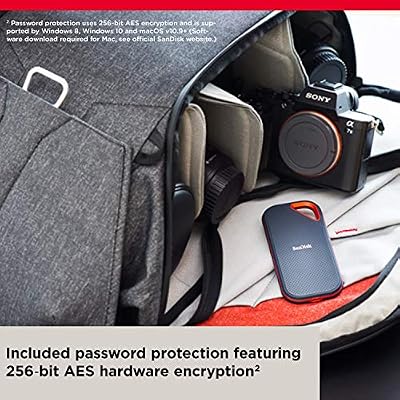
4. SANDISK 4TB Extreme PRO Portable SSD (up to 2000MB/s, USB 3.2 Gen 2×2)

Sandisk 4TB Extreme PRO Portable SSD, Up to 2000MB/s, USB-C, USB 3.2 Gen 2x2, IP65 Water and Dust Resistance, Updated Firmware, External Solid State Drive, Black, SDSSDE81-4T00-G25


As an Amazon Associate we earn from qualifying purchases. Product prices and availability are accurate as of the date/time indicated.
The SanDisk 4TB Extreme PRO is the fastest portable pick for AI data. It combines a generous 4TB capacity with USB 3.2 Gen 2×2 connectivity rated up to 2000MB/s — roughly double a standard USB SSD — so it moves enormous datasets and model archives between machines far quicker than ordinary portable drives. At around $589 it is a premium external drive, and the high USB speed is the reason.
For AI teams the use-case is moving big data fast: shifting a multi-hundred-gigabyte dataset to another workstation, archiving model checkpoints, or carrying a data lake between sites. The 4TB capacity swallows large collections, the rugged build survives transport, and the up-to-2000MB/s transfer speed dramatically cuts the wait when copying huge files — provided your host supports USB 3.2 Gen 2×2. As external storage it is a fast transfer and archive drive rather than the disk you run training from, but for that role it is the standout.
Pros: Very fast up-to-2000MB/s transfers, large 4TB capacity, rugged portable design.
Cons: Needs a USB 3.2 Gen 2×2 host for full speed; external drive, not for live training.
5. SANDISK 4TB Extreme Portable SSD (Old Model) USB-C, USB 3.2 Gen 2

SANDISK 4TB Extreme Portable SSD, Up to 2000MB/s Transfer Speeds-New Model | External Solid State Drive, IP65 Water & Dust Resistant, Up to 3M Drop Protection, 256-bit AES Encryption, USB-C 3.2 Gen 2







As an Amazon Associate we earn from qualifying purchases. Product prices and availability are accurate as of the date/time indicated.
The SanDisk 4TB Extreme Portable is the large-capacity portable storage pick. It offers a full 4TB in a rugged, pocketable shell connecting over USB-C (USB 3.2 Gen 2) at up to 1050MB/s, making it a roomy home for datasets, model archives and project backups you want to keep off your fast internal drive. At around $450 it is a capacious, dependable external store.
For AI this is the drive for your portable data lake — the place to keep datasets and checkpoints you are not actively training on, and to move them between machines. The 4TB capacity holds a great deal, the rugged design travels well, and single-cable USB-C keeps it simple. Its up-to-1050MB/s speed is solid for an external drive but below both the Extreme PRO’s 2000MB/s and any internal NVMe drive, so use it for storage and transfer rather than as your active read drive. In that role, the 4TB Extreme is excellent value for the capacity.
Pros: Roomy 4TB portable capacity, rugged build, dependable USB-C storage and transfer.
Cons: USB speed below the Extreme PRO and internal NVMe; for storage, not live training.
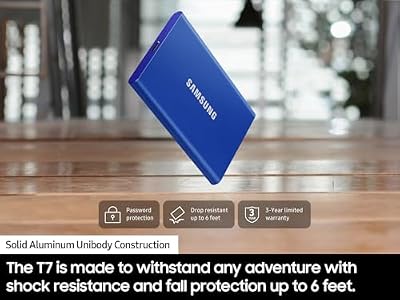
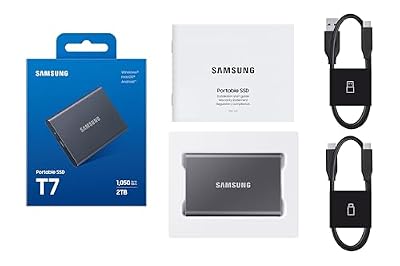
6. Samsung T7 Portable SSD 2TB External (up to 1,050MB/s)

Samsung T7 Portable SSD 2TB Titan Gray, USB 3.2 Gen 2, Up to 1,050MB/s | Reliable External Solid State Drive Storage for Gaming, Students, Professionals (MU-PC2T0T/AM)


As an Amazon Associate we earn from qualifying purchases. Product prices and availability are accurate as of the date/time indicated.
Rounding out the list is the Samsung T7 2TB, the compact portable pick. It is a slim, lightweight external SSD offering 2TB of capacity with USB transfer speeds up to 1,050MB/s, ideal for carrying a model store or a working dataset in a pocket. At around $389 it is a polished, portable companion drive from a trusted maker.
For AI work the T7 is the grab-and-go drive: a tidy way to move a dataset to a colleague, carry a set of model checkpoints to another machine, or back up results away from the desk. The 2TB capacity is enough for a substantial working set, the up-to-1,050MB/s USB speed makes transfers reasonably quick, and the compact, durable shell slips easily into a bag. Like all USB drives it is a transfer and storage companion rather than your active training disk, but for portable AI data on the move, the slim T7 is a dependable, well-priced choice.
Pros: Compact 2TB portable, up-to-1,050MB/s USB speed, slim and durable, trusted Samsung.
Cons: 2TB modest for big data lakes; USB drive, not a live training disk.
How to Choose an SSD for AI
Choosing storage for AI starts with read speed, because loading is where disk performance is felt most. Datasets and model weights are large files that must be pulled into memory before work begins, and a fast drive turns that from a bottleneck into a non-event. NVMe drives are the answer here: a Gen 4 drive like the WD_BLACK SN850X (up to 7,300MB/s read) or the Samsung 980 PRO loads data and weights dramatically faster than SATA, and even a Gen 3 NVMe drive like the 970 EVO Plus is far quicker than any SATA disk. Prioritise read performance on whatever drive holds your active data.
Capacity is the second pillar, because AI data is voluminous. A single dataset can run to hundreds of gigabytes, model checkpoints stack up across training runs, and you often want several datasets available at once. A 2TB NVMe drive like the 980 PRO or 970 EVO Plus is a good active size, but if you work with large collections, a 4TB drive such as the SN850X gives real headroom and saves constant shuffling. Size your active drive for the data you actually load, and plan separate capacity for the rest.
Interface is the honest decision that shapes the whole setup: NVMe for the work, USB for moving and storing. Internal NVMe drives belong on your active volume where datasets and models are read; their speed is what keeps a pipeline fed. Portable USB drives like the SanDisk Extreme line and the Samsung T7 are transfer and storage companions — superb for shifting huge datasets between machines or archiving checkpoints, but not where you run live training. Note the USB tiers too: the Extreme PRO’s USB 3.2 Gen 2×2 (up to 2000MB/s) needs a matching host to hit full speed, while up-to-1050MB/s drives are widely compatible. None are SATA here, and that is deliberate — SATA is too slow for AI’s read demands.
Finally, think in terms of a tiered setup rather than one drive, and match each tier to its job. A capable AI rig pairs a very fast internal NVMe drive for active datasets and model loading with large portable storage for the data lake and for collaboration. Decide how much active data you load at once, buy the read speed and capacity to match on your NVMe drive, and add a roomy portable drive — a fast Extreme PRO for big transfers or a capacious 4TB Extreme for storage — to move and keep everything else. Build storage around how the data flows, and the model spends its time computing rather than waiting on the disk.
Frequently Asked Questions
What matters most in an SSD for AI work — speed or capacity?
Both, in their place. Read speed matters most on your active drive, because loading large datasets and multi-gigabyte model weights into memory is where disk performance is felt — a Gen 4 NVMe drive like the WD_BLACK SN850X or Samsung 980 PRO loads them fast. Capacity matters because datasets and checkpoints are huge; a 4TB drive gives headroom while 2TB suits smaller working sets. Prioritise read speed on the active drive and plan capacity for the data lake.
Do I need NVMe, or will a SATA SSD work for AI?
Use NVMe for AI. Loading datasets and model weights is read-intensive, and NVMe drives — whether Gen 4 like the SN850X and 980 PRO or Gen 3 like the 970 EVO Plus — are dramatically faster than SATA, which tops out around 545MB/s. That is why this guide includes no internal SATA drives: SATA simply cannot feed data fast enough to keep an AI pipeline from waiting on storage.
How much SSD capacity do I need for AI datasets?
It depends on the size of your data, but plan generously. A single dataset can reach hundreds of gigabytes and checkpoints accumulate across runs, so a 2TB NVMe like the 980 PRO or 970 EVO Plus suits smaller working sets while a 4TB drive like the SN850X gives real room for several datasets and model versions at once. Pair your active NVMe drive with large portable storage for the rest of the data.
Can I use a portable SSD for AI work?
Yes, for the right job. Portable drives like the SanDisk Extreme line and the Samsung T7 are excellent for moving large datasets between machines and archiving model checkpoints, and the Extreme PRO’s up-to-2000MB/s USB speed makes big transfers quick on a compatible host. They are transfer and storage companions, though — for live training and model loading you want a fast internal NVMe drive.
Related Guides
- Best NVMe SSDs
- Best Portable SSDs
- Best SSDs for Game Development
- Best RAM for Workstations
- Best PCs for AI and Gaming
- Best External Hard Drives
Affiliate Disclosure: As an Amazon Associate, we earn from qualifying purchases. If you click a link and make a purchase, we may earn a small commission at no extra cost to you. Prices and availability are accurate as of publication and may change.