- Top Pick: Samsung 65-Inch Class Crystal UHD U8000H Series Samsung Vision AI Smart TV (2026 Model, 65U8000H) Processor 4K, Endless Free Content, Motion Xcelerator, Color Booster, Alexa Built-in
- Best Value: Samsung 65-Inch Class M70H Series, Mini LED, 4K, Smart TV, 2026 Model
- Premium Choice: Samsung 65-Inch Class QLED Q7F Series Samsung Vision AI Smart TV (2025 Model, 65Q7F) Quantum HDR, Object Tracking Sound Lite, Q4 AI Gen1 Processor, 4K upscaling, Gaming Hub, Alexa Built-in
The Samsung 65-inch Crystal UHD U8000F is Samsung’s 2025 entry-tier 4K smart TV — Crystal UHD rather than QLED, but bringing Samsung’s Vision AI processing, Tizen smart platform and Q-Symphony audio to a mainstream price point. It targets the buyer who wants the Samsung name, ecosystem and software polish without stepping up to a QLED price. This Samsung U8000F 65-inch review covers panel, gaming, HDR and the Tizen platform.
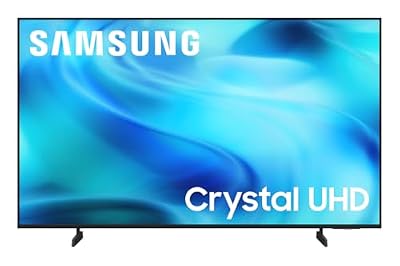
Samsung 65-Inch Class Crystal UHD U8000H Series Samsung Vision AI Smart TV (2026 Model, 65U8000H) Processor 4K, Endless Free Content, Motion Xcelerator, Color Booster, Alexa Built-in


As an Amazon Associate we earn from qualifying purchases. Product prices and availability are accurate as of the date/time indicated.
🛒 Best Price Today on Amazon
Prime members get fast, free shipping on everything above, plus member-only deals. New members get a 30-day free trial — cancel anytime.
Samsung U8000F 65″ at a Glance
| Specification | Detail |
|---|---|
| Panel type | Crystal UHD LED (no quantum dots) |
| Resolution | 4K UHD (3840 x 2160) |
| Native refresh | 60 Hz |
| HDMI 2.1 ports | 0 (HDMI 2.0) |
| VRR / G-Sync / FreeSync | Not supported |
| HDR support | HDR10+, HDR10, HLG (no Dolby Vision) |
| Smart platform | Samsung Tizen with Vision AI |
| Audio output | 20 W (2.0 channel) with Q-Symphony |
| Approx price | around $549 |
Picture Quality & Panel Tech
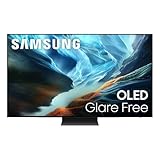
The U8000F uses Samsung’s Crystal UHD panel technology — a standard LED LCD without the quantum-dot layer that defines Samsung’s QLED line. The Crystal UHD label refers to Samsung’s colour-tuning approach and the Crystal Processor 4K, which delivers competent 4K upscaling and motion handling. Picture quality is honest mid-tier: bright, clean and natural for everyday viewing, with average black levels typical of a non-QLED, non-Mini-LED LED set. For deeper contrast and wider colour, the QLED Q7F reviewed below is the next step. For Mini LED, see the best Mini LED gaming TVs guide. Samsung’s Crystal Processor 4K applies AI-assisted upscaling to 1080p and lower sources, a tangible benefit for older streaming content and broadcast TV — the panel looks notably sharper on standard-definition material than a similarly priced non-Samsung set. Viewing angles favour a head-on position, with some contrast loss off-axis typical of the VA-class LCD construction.
As an Amazon Associate we earn from qualifying purchases at no extra cost to you.


Check Price on Amazon →

Gaming Performance — Input Lag & Refresh
The U8000F is a 60 Hz panel with HDMI 2.0 inputs, capping at 4K 60 frames per second from a PS5 or Xbox Series X. Input lag in game mode is reasonable, and Samsung’s Game Bar overlay (where present in Tizen) gives quick access to picture and aspect settings. It is not a competitive gaming TV — there is no 120 Hz or VRR — but for story-driven and casual console gaming on a brand-trusted set, it is fit for purpose. Competitive gamers should compare options in our best 4K 120Hz gaming TVs guide. Samsung’s reflex-tested game-mode pipeline keeps input lag low even with HDR active, which not every mid-tier TV manages well. For racing simulators and single-player adventure titles on PS5 and Series X, the panel is genuinely competent within its 60 Hz ceiling. Samsung’s Game Bar overlay in Tizen — where present in the U8000F’s firmware — provides quick access to picture and refresh-rate settings without leaving the active game. Console owners should set the TV to Game picture mode for the lowest input lag; ALLM-style auto-switching is supported via CEC when a recognised console is detected, which simplifies day-to-day use across PS5, Xbox Series X and Nintendo Switch.
HDMI 2.1 Features — VRR / Auto Low Latency
The U8000F ships with HDMI 2.0 inputs and does not implement the HDMI 2.1 gaming feature set — no VRR, no 4K 120 Hz, no FreeSync. PS5 and Xbox Series X will work at 4K 60 Hz HDR but will not unlock high-frame-rate or variable-refresh modes. For full HDMI 2.1, step up to the Samsung Q7F QLED or see our best HDMI 2.1 gaming TVs guide. The HDMI 2.0 ports support 4K HDR at 60 Hz, eARC for soundbar pass-through, and CEC for unified remote control. Samsung’s Q-Symphony technology synchronises the TV speakers with a compatible Samsung soundbar for combined output, a useful upgrade path for buyers already in the Samsung ecosystem.
HDR / Dolby Vision Support
HDR support is HDR10+ (Samsung’s dynamic-metadata format), HDR10 and HLG. There is no Dolby Vision — Samsung does not support Dolby Vision on any of its TVs, including the QLED and Neo QLED lines. HDR10+ content from Amazon Prime Video and some other services will display with dynamic metadata; Dolby Vision content from Netflix and Disney+ will fall back to HDR10. Peak brightness is modest given the non-QLED panel, but the panel handles HDR cleanly. See also our best HDR gaming TVs guide. HDR10+ auto-switches when content is detected from Prime Video and other supported services, with dynamic metadata driving scene-by-scene tone mapping. Samsung’s Filmmaker Mode disables motion smoothing and other processing for accurate cinema-like presentation on movie content.
Smart TV Platform & UI
The U8000F runs Samsung Tizen with Vision AI — Samsung’s 2025 smart-TV platform with AI-driven content recommendations, upscaling enhancements and integration with the SmartThings ecosystem. Tizen is fast, polished and app-rich, with all major streaming services. Bixby voice support is built in, and Samsung’s continuing software updates are a real long-term value point. For users invested in the Samsung ecosystem — Galaxy phones, SmartThings devices — the integration is genuinely useful. Samsung’s Universal Guide aggregates content from installed streaming services into a unified browsing experience, which simplifies the increasingly fragmented streaming landscape. Apple AirPlay 2 is supported alongside SmartThings, giving iPhone and Galaxy households equal first-class casting options. Wall mounting uses standard VESA hardware, and the panel is light enough for solo installation. The Solar Cell Remote charges from ambient room light and never needs battery replacements across the TV’s lifetime, a small but genuinely useful long-term feature. SmartThings integration ties the TV into broader smart-home control — lighting, climate and security cameras can be monitored and adjusted from the TV interface without leaving the couch. Samsung’s continuing Tizen feature updates extend the platform’s useful life well beyond launch, and Bixby voice support is included alongside Alexa via paired Echo devices.
Verdict
At around $549 the Samsung U8000F 65-inch is a sensible mid-tier 4K TV for the Samsung-ecosystem buyer who does not need QLED contrast or HDMI 2.1 gaming. It delivers solid picture quality, the latest Tizen with Vision AI, and Samsung’s long-term software support at a fair price for a 65-inch screen. The catch is the lack of Dolby Vision (Samsung-wide policy) and no HDMI 2.1. For QLED panel quality at a still-reasonable price, the Q7F review below is the natural next step. For OLED, see our best OLED gaming TVs guide. SmartThings integration handles smart-home control from the TV interface — lighting, climate and security cameras can be monitored and adjusted without leaving the couch. The Solar Cell Remote charges from ambient room light and never needs battery replacements over the TV’s lifetime.
Frequently Asked Questions
Does the Samsung U8000F support Dolby Vision?
No. Samsung does not support Dolby Vision on any of its TVs — HDR10+ is Samsung’s chosen dynamic-metadata format. Dolby Vision content falls back to HDR10.
Is the U8000F a QLED?
No. The U8000F is Crystal UHD — a standard LED LCD without quantum dots. The Q7F reviewed separately is Samsung’s entry QLED with the quantum-dot layer.
Does the U8000F support 4K 120 Hz gaming?
No. It is a 60 Hz panel with HDMI 2.0 inputs. For 4K 120 Hz step up to the Samsung Q7F or LG OLED reviewed in this batch.
What is Vision AI on Tizen?
Vision AI is Samsung’s 2025 AI layer in Tizen, used for content recommendations, picture-upscaling enhancements and tighter integration with the SmartThings ecosystem.
More Gaming TV Reviews
- Samsung 70″ Crystal UHD U8000F Review: 2026 Big-Screen 4K
- Samsung The Frame 65″ QLED Review: Art-Mode 4K TV
- Samsung 55″ QLED Q7F Vision AI Review: 4K 120Hz QLED
- Samsung 65″ QLED Q7F Vision AI Review: Big-Screen 4K 120Hz
- LG 65″ G5 OLED evo Review: One Wall Design MLA 4K
- LG 65″ OLED evo C4 Review: 4K 120Hz Gaming OLED
- TCL 55″ QM6K Mini LED Review: 144Hz QLED Gaming TV
- INSIGNIA 55″ F50 4K UHD Fire TV Review: Budget 4K HDR
Affiliate Disclosure: As an Amazon Associate, we earn from qualifying purchases. If you click a link and make a purchase, we may earn a small commission at no extra cost to you. Prices and availability are accurate as of publication and may change.