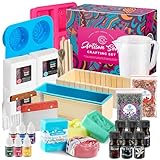
- Top Pick: Soap Making Kit with Melt & Pour Base, Cutting Box, Molds, Fragrances – for Adults & Kids by Prime Creations.
- Best Value: Illumive Deluxe Soap Making Kit – Soap Kit Includes All Soap Making Supplies. DIY Soap Making Kit.
- Premium Choice: CraftZee Large 𝗣𝗥𝗘𝗠𝗜𝗨𝗠 Deluxe Soap Making Kit – All-in-One Soap Making Supplies with Soap Base, Soap Cutter Box, Silicone Loaf Molds, Fragrances & More – Homemade Melt & Pour DIY Craft Kits
The best soap making kits for beginners are glycerin melt-and-pour kits with pre-made bases, silicone molds, and no lye handling, while the best kits for pros and hobbyists who want full control are cold process kits with oils, lye, and curing racks.
- Best Soap Making Kits at a Glance: Methods and Ingredients
- How to Choose: Decision Matrix for Your Situation
- Mold Sizes and What They Mean for Yield
- Safety Equipment: What Should Be Included vs. What You Supply
- Customization Options That Actually Matter
- Refill Value: A Worked Calculation
- What to Avoid in Cheap Kits
- Final Recommendation
- FAQ
As an Amazon Associate we earn from qualifying purchases at no extra cost to you.


Best Soap Making Kits at a Glance: Methods and Ingredients
Your choice comes down to method first, ingredients second. Melt-and-pour and cold process produce very different soap, workflows, and safety requirements. This comparison focuses on what is actually included in current kits, not marketing claims.
| Kit Type | Base Ingredients Included | Method Time | Cure Time Before Use | Typical Yield Per Kit | Skill Level |
|---|---|---|---|---|---|
| Glycerin Melt-and-Pour (Beginner) | 2-4 lbs shea butter, goat’s milk, or glycerin base, fragrance oils, liquid dyes | 45-90 minutes | 2-4 hours (cool and unmold) | 6-10 bars (4 oz each) | Beginner |
| Cold Process (Advanced) | Olive oil, coconut oil, palm or shea butter, sodium hydroxide (lye), essential oils | 2-3 hours + monitoring | 4-6 weeks | 8-12 bars (4.5 oz each) | Intermediate to Pro |
| Hot Process (Advanced) | Similar oils to cold process, lye, additives like oatmeal or clay | 3-4 hours with cook phase | 1-7 days | 8-10 bars | Pro |
| Kids / STEM Melt-and-Pour | 1-2 lbs clear glycerin base, pre-measured scents, pellet dyes | 30-60 minutes | 2-3 hours | 4-6 small bars | Beginner (supervised) |
Melt-and-pour kits dominate the best soap making kits lists for 2026 because they remove the chemical risk. The base is already saponified, so you are melting, scenting, coloring, and molding. Cold and hot process kits include raw lye and require you to perform saponification yourself, which gives you control over every fat and additive but demands safety gear and a curing period.
How to Choose: Decision Matrix for Your Situation
Use this matrix to match your goals to the right kit class without overspending on features you will not use.
| Your Situation | Choose This Kit Type | Why |
|---|---|---|
| You have never made soap and want gifts in one afternoon | Melt-and-pour, 2 lb base + 6-cavity silicone mold | Fastest success, no lye, bars ready same day |
| You want all-natural, palm-free, or vegan formulas | Cold process kit with olive/coconut/castor oils | You control the exact oil blend and avoid synthetic bases |
| You have kids or want a low-mess activity | Kids melt-and-pour with pre-measured dyes and small molds | Smaller batches, simpler steps, minimal handling |
| You want to start a small shop or sell at markets | Cold process or large melt-and-pour (4 lb base, loaf mold) | Loaf molds give uniform 1-inch bars and better cost per bar |
| You want heavy customization (swirls, layers, exfoliants) | Melt-and-pour with clear and white bases + separate pigment set | Two bases allow transparent layers and opaque swirls |
Mold Sizes and What They Mean for Yield
Mold size directly determines bar size, appearance, and how many gifts or products you get from one kit.
- Individual cavity molds (6 cavities, 4 oz each): Standard in most beginner kits. Each cavity is roughly 3 x 2.5 x 1 inch. Easiest to unmold and gives consistent bars without cutting. Best for first-timers.
- Loaf molds (42 oz / 2.6 lb capacity): Common in pro-oriented melt-and-pour and cold process kits. You pour one large block and slice into 8-10 bars. Allows swirls and layers but requires a straight cut. Look for silicone loaf molds with a wooden support box to prevent bowing.
- Small novelty molds (1-2 oz cavities, 6-12 count): Found in kids kits or add-on sets. Good for test batches and embeds, but not efficient for full-size bars.
If a kit lists only “4 lbs of base” without mold capacity, check the math. 4 lbs (64 oz) of melt-and-pour base will fill a 42 oz loaf mold with about 22 oz left over, or roughly 16 individual 4 oz cavities. Kits that pair a 2 lb base with a 6-cavity 4 oz mold are balanced with no waste. Kits that pair a 1 lb base with a large loaf mold will leave you half-empty.
Safety Equipment: What Should Be Included vs. What You Supply
This is the clearest divider between beginner and pro kits.
Melt-and-Pour Kits
Should include nitrile gloves and may include a disposable apron. No goggles or lye handling needed. You still need to supply a microwave-safe pouring container or double boiler, and handle hot liquid (base melts at 140-160°F) carefully. Keep white vinegar on hand to clean dye spills, not for chemical neutralization.
Cold and Hot Process Kits
A legitimate kit must include chemical splash goggles, nitrile gloves rated for lye, and a dedicated silicone spatula and thermometer. Lye (sodium hydroxide) is caustic before it reacts with oils. The safest kits include pre-weighed lye in sealed packets with clear safety instructions, a lye pitcher with a lid, and pH test strips. You must supply your own well-ventilated area, long sleeves, and vinegar is not a lye antidote — flush with water per instructions. If a cold process kit does not list goggles and gloves in the contents, do not buy it.
Customization Options That Actually Matter
Fragrance and color variety looks impressive on the box, but usable customization is narrower.
- Fragrance: Synthetic fragrance oils give stronger, longer-lasting scent at 3-6% load. Essential oils (lavender, peppermint, eucalyptus) are natural but fade faster and require higher amounts. Pro kits often include 4-6 essential oils; beginner kits include 3-4 fragrance oils. Check if scent is skin-safe and soap-stable, not candle-only.
- Colorants: Liquid dyes are easiest for beginners but can bleed. Mica powders and oxide pigments give matte, swirl-stable colors and are standard in pro kits. Avoid food coloring — it fades and can stain.
- Additives: Oatmeal, dried lavender, activated charcoal, and clays add texture and visual appeal. Mellower kits include 2-3 additives with usage rates on the label (typically 1-2 tablespoons per pound of base for exfoliants).
- Base variety: The most versatile beginner kits include both clear glycerin and white shea or goat’s milk bases (1 lb each). This lets you create transparent, opaque, and layered bars without buying two kits.
Refill Value: A Worked Calculation
A kit is only a good value if the refills do not cost more than buying bulk. Do a quick cost-per-bar calculation before you buy.
Example: A melt-and-pour kit usually costs $30–$50 and includes 2 lbs (32 oz) of base. It makes 8 bars at 4 oz each. That is $3.75–$6.25 per bar on the first run, with molds and tools included.
To make the next 8 bars, you only need base and scent. A 2 lb bag of bulk glycerin base usually costs $12–$18, and a 1 oz fragrance oil bottle ($6–$10) scents about 2 lbs at 3% load (0.96 oz per 32 oz). Your refill cost is roughly $18–$28 for 8 bars, or $2.25–$3.50 per bar. If a brand’s proprietary refill base costs $25–$35 for 2 lbs, you are paying a 40-60% premium for the same material. Kits that use standard 1 lb glycerin blocks are the cheapest to refill; kits with custom-shaped bases lock you into their refills.
For cold process, calculate oil cost instead. A kit with 32 oz olive oil, 16 oz coconut oil, and 6 oz lye makes about 10 bars. Bulk refill of those oils usually runs $18–$25 total, or $1.80–$2.50 per bar, making cold process the lowest long-term cost per bar if you are willing to handle lye and wait for cure time.
What to Avoid in Cheap Kits
- Kits that do not list base weight in pounds or ounces. “Makes 10 bars” without weight means the bars may be 1.5 oz mini bars.
- Melt-and-pour bases that list no ingredients. Look for glycerin, propylene glycol, sodium stearate, sorbitol, and shea butter or goat’s milk — not just “soap base.”
- Cold process kits that ship lye loose in a bag instead of sealed, labeled packets.
- Thin plastic molds instead of silicone. Plastic requires lining or freezing to release and cracks after 2-3 uses.
Final Recommendation
For most beginners in 2026, the best value is a melt-and-pour kit with 2 lbs of split bases (one clear, one white), a 6-cavity silicone mold, 3-4 soap-stable fragrances, mica-based colors, and gloves. It balances ease, safety, customization, and refill value.
Move to a cold process kit with pre-measured oils, sealed lye, goggles, a thermometer, and a silicone loaf mold only when you want to formulate your own recipes and can dedicate space for safe lye handling and 4-6 weeks of curing. That path costs more upfront, usually $50–$80, but produces fully custom soap at the lowest cost per bar over time.
FAQ
Do I need a double boiler for melt-and-pour?
No. A microwave in 30-second bursts with stirring works, or a heat-safe glass measuring cup in a pot of simmering water. Never boil the base — it will bubble, lose moisture, and create a rubbery bar.
How much fragrance should I add?
For melt-and-pour, 0.15 to 0.3 oz per pound of base (1-2% load) for light scent, up to 0.5 oz (3%) for strong scent. Exceeding 3% can cause sweating or skin irritation. Cold process can take 0.7 to 1 oz per pound (4-6%) because some scent evaporates during cure.
Why is my melt-and-pour soap sweating?
Glycerin draws moisture from humid air. Unmolded bars left uncovered will form droplets. Wrap bars tightly in cling film within a few hours of unmolding and store in a cool, dry place.
Ready to decide? Our #1 pick for 2026 is the Glycerin Melt-and-Pour (Beginner).
Live price & availability on Amazon.