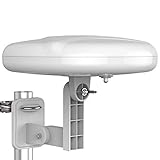
- Top Pick: Upgrade Version Loop Antenna MLA-30+ Plus 0.5-30MHz Rainproof Ring Active Receive Antenna Low Noise Medium Short Wave
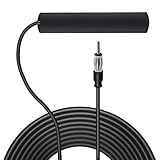
- Best Value: GA800 Loop Antenna, GOOZEEZOO Active Shortwave Radio Antenna with BNC Cable 10KHz-159MHz HF LW MW SW FM Air V Band Portable Receiving Antenna for Ham Radio(Free of Tuning)
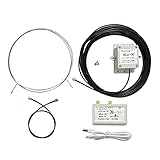
- Premium Choice: GOOZEEZOO K-180WLA Active Loop Antenna 0.1-180MHz Shortwave Radio Antenna | LW/MW/SW/FM/Air/VHF/UHF Coverage, 20dBi, 2750mAh Battery, Full Band Shortwave Receiving Antenna with 10m Feeder
Anyone who has tried to hear a distant shortwave broadcast from an apartment knows the real enemy is noise: switching power supplies, LED lighting, and Wi-Fi routers bury weak signals. A small magnetic loop antenna responds mainly to the magnetic part of a signal, which makes it less sensitive to local electrical hash than a long wire. That is why hobbyists with a software-defined radio or a general-coverage receiver reach for loops when a rooftop or yard is not available.
This guide is for receive-only listeners: shortwave fans, ham operators scanning bands, and SDR owners who want a compact antenna for a balcony, window, or attic. Nine loops are compared from their listed specs only. Two broad families appear: powered active loops with an amplifier and a battery or bias supply, and passive loops with no amplifier at all. As 2026 begins, the choice depends mostly on which frequencies you want to hear and how much noise surrounds you.
Quick Picks
As an Amazon Associate we earn from qualifying purchases at no extra cost to you.


| Product | Best for | Key spec from the title |
|---|---|---|
| GutView MLA-30+ Plus | Rooftop shortwave listening | 0.5-30MHz active, rainproof ring |
| GOOZEEZOO GA800 | Tuning-free portable use | 10kHz-159MHz, BNC cable |
| GOOZEEZOO K-180WLA | Wide coverage with battery | 0.1-180MHz, 20dBi, 2750mAh, 10m feeder |
| GOOZEEZOO HFDY | Broad band reception | 50kHz-500MHz, 17dB gain |
| DmgicPro K-480WLA | Widest listed span | 0.5MHz-500MHz, 30dBi, 1800mAh |
| NWANSI YouLoop Kit | SDR owners with mixed ports | Passive, SMA/BNC/3.5mm connectors |
| DmgicPro MLA-30+ | Balcony DIY builds | 0.5-30MHz, 10m feeder, built-in amplifier |
| NWANSI SMA Loop | Passive SDR listening | 10kHz-30MHz HF, SMA male, balun |
| WSOLDMA YouLoop | Simple passive loop | BNC male, HF and VHF |
How to Choose
Active versus passive
Active loops include a low-noise amplifier and need power from a battery, USB, or a bias tee. They boost weak signals and usually cover medium and shortwave well. Passive loops, like the YouLoop style, have no amplifier, so they need no power and add no electronic noise, but they give less signal and work best with a sensitive SDR. Neither family is built for transmitting, and the passive listings here state a 250mW maximum.
Frequency range and what you actually want
Match the stated range to your interests. Medium wave and shortwave broadcasting sit between roughly 0.5 and 30MHz. FM, air band, and VHF are far higher. A wide figure like 500MHz sounds impressive, but one antenna rarely excels across the whole span, so prioritize the band you will use most.
Connectors, feedline, and placement
Check the connector: BNC, SMA, or 3.5mm must match your receiver or adapter. A 10-meter feeder lets you place the loop away from the noise in your house, which often helps more than any spec. Rainproof construction matters for balconies and rooftops. Ignore gain figures stated in dBi for a receiving loop, since they are not comparable across brands.
Power and noise handling
Battery models list milliamp-hours, such as 1800mAh or 2750mAh, which indicates endurance before recharging. Very strong local stations can overload an amplifier, so look for built-in filters. Budget models cut corners on shielding and documentation, so expect to experiment with distance and orientation.
The 9 Best Options
GutView MLA-30+ Plus
This upgraded MLA-30+ covers 0.5 to 30MHz as an active, rainproof ring antenna with a low-noise amplifier, aimed at medium and shortwave listening. The ring design is intended for outdoor placement, and the focused range suits listeners who care mainly about broadcast and amateur HF bands rather than VHF.
- Strength: A focused 0.5 to 30MHz range matches common shortwave interests.
- Strength: Rainproof construction suits rooftops and balconies.
- Trade-off: It does not cover FM or VHF bands.
Skip it if you want airband or FM reception from the same antenna, or if you need to know the length of the feed cable before buying. The title does not state a feeder length or battery capacity.
GOOZEEZOO GA800
The GA800 is an active shortwave antenna with a BNC cable and a stated span of 10kHz to 159MHz, covering HF, LW, MW, SW, FM, and air V band. The listing calls it free of tuning, meaning you do not adjust a capacitor to find a signal, and it is described as portable. That makes it a sensible companion for a travel receiver, a hotel window, or a quick set-up in a park, where fiddling with a tuning knob would be a nuisance.
- Strength: No tuning keeps day-to-day use simple.
- Strength: Coverage reaches from long wave to air band.
- Trade-off: The title gives no gain or battery figure to compare.
Skip it if you want published battery details or a defined gain figure, since the title gives neither and leaves those questions for the product page.
GOOZEEZOO K-180WLA
The K-180WLA is an active loop with 0.1 to 180MHz coverage across LW, MW, SW, FM, air, VHF, and UHF, with a 20dBi claim, a 2750mAh battery, and a 10-meter feeder. It is a broad-coverage option for listeners who want one antenna for several services, from evening broadcast stations to aircraft chatter, without swapping hardware each time.
- Strength: A 10-meter feeder lets you place the loop away from noise.
- Strength: The 2750mAh battery is the largest listed in this group.
- Trade-off: Very wide coverage can mean compromises on any single band.
Skip it if you only listen on HF, because a narrower design may serve those bands with fewer compromises and a simpler setup.
GOOZEEZOO HFDY
The HFDY is an active magnetic loop with a stated range of 50kHz to 500MHz across HF, AM, FM, VHF, and UHF, a low-noise amplifier, and a 17dB gain claim. The title mentions an improved amplifier, a revision aimed at cleaner performance. As a result, it reads as a general-purpose desk antenna for scanning everything from AM broadcasts to UHF services in one sitting.
- Strength: The 500MHz upper limit reaches into UHF.
- Strength: A stated 17dB gain gives a concrete spec to compare.
- Trade-off: Feeder length and battery details are not in the title.
Skip it if you need a rainproof outdoor design, since the title makes no weather claim, or if you want a published feeder length.
DmgicPro K-480WLA
This portable active loop lists 0.5MHz to 500MHz, a 30dBi claim, a built-in filter, a 1800mAh battery, and a 10-meter feed. Coverage spans LW, MW, SW, FM, VHF, HF, and air bands, and the title mentions SDR and ham radio use. The 6-meter wording in the listing hints at ham-band interest, though the feeder is the stated 10 meters.
- Strength: A built-in filter helps manage strong signals.
- Strength: The span reaches 500MHz with a 10-meter feed.
- Trade-off: A 1800mAh battery is smaller than some alternatives.
Skip it if you prefer a passive design with no battery to recharge, or if the 30dBi claim makes you wary of marketing numbers.
NWANSI YouLoop Kit
This passive YouLoop kit is sold with SMA, BNC, and 3.5mm connectors. It lists HF reception from 10kHz to 30MHz and VHF up to 300MHz, with a 250mW maximum. Because it has no amplifier, it needs no power and adds no electronic noise. That simplicity appeals to people who already own a quiet, sensitive SDR and prefer fewer parts to troubleshoot.
- Strength: Three connector types fit many receivers.
- Strength: Being passive, it needs no battery or bias supply.
- Trade-off: Passive loops produce weaker signals than amplified ones.
Skip it if your receiver is not sensitive, or if weak stations are your main goal, because an amplified loop will pull more signal into the radio.
DmgicPro MLA-30+
The MLA-30+ is a 0.5 to 30MHz active receiving antenna, rainproof, with a 10-meter feeder and a built-in low-noise amplifier. It is described as a DIY kit for rooftops and balconies, aimed at short and medium wave listeners and SDR users. It is the same basic family as the GutView ring, so the main difference to weigh is the kit approach and the stated feeder length.
- Strength: Rainproof construction and a long feeder suit outdoor placement.
- Strength: A focused HF range keeps the design simple.
- Trade-off: DIY assembly adds setup time.
Skip it if you want a plug-in finished product, or if you are not comfortable with light assembly work on a balcony or roof.
NWANSI SMA Loop
This passive magnetic loop lists HF reception from 10kHz to 30MHz, VHF up to 300MHz, an SMA male connector, a low-loss balun, and a 250mW QRP maximum. It is no-tuning and made for SDR dongles with SMA ports. Because the loop is passive, it stays quiet on a desk and is a natural match for a compact USB receiver.
- Strength: A low-loss balun is a thoughtful design detail.
- Strength: SMA output connects directly to many SDR dongles.
- Trade-off: It is passive, so signal strength is modest.
Skip it if you need a BNC connector, or if a powered, amplified loop is the better fit for your noisy location.
WSOLDMA YouLoop
This passive YouLoop uses a BNC male connector and is described as a portable loop for HF and VHF. The listing is short, so most details beyond the connector and the passive design are unspecified. Buyers who like to compare numbers will find little to work with here, so it suits experimenters comfortable with trial and error.
- Strength: A BNC connector suits receivers with BNC inputs.
- Strength: A passive design needs no power.
- Trade-off: The title lists no frequency range or power figure.
Skip it if you want confirmed specifications, a defined frequency range, or a documented power limit before committing.
Which One Fits Your Situation
Apartment dweller fighting noise
The DmgicPro MLA-30+ or GutView MLA-30+ Plus puts a rainproof active loop outside, away from household interference. Run the long feeder through a window gap and keep the receiver end clear of chargers.
SDR owner who wants simplicity
The NWANSI YouLoop Kit offers three connectors and a passive design with no power needed, so it moves easily between a laptop, a handheld, and a desktop SDR.
Listener who wants VHF and UHF too
The DmgicPro K-480WLA or GOOZEEZOO HFDY extends reception toward 500MHz, which brings in air, VHF, and UHF activity alongside the usual shortwave bands.
Traveler with a small bag
The GOOZEEZOO GA800 is portable, tuning-free, and has a BNC cable, so it packs flat and works the moment you reach a new location.
Common Mistakes
- Assuming a loop is a transmitting antenna.
- Buying the widest range instead of the band you listen to.
- Placing the loop next to routers and chargers.
- Ignoring connector type until the package arrives.
- Expecting a passive loop to match the gain of an amplified one.
Related guides
- Battery Operated Smoke And Carbon Monoxide Detectors
- Combination Smoke And Carbon Monoxide Detectors
- Aio Liquid Coolers For High Performance Gaming
Frequently Asked Questions
Can I transmit with these loops?
No. The listings describe receiving antennas. Passive models state a 250mW maximum, which is far below typical transmit levels.
Do I need power for a loop?
Active loops need a battery or bias supply; passive loops like the YouLoop do not.
Why do loops reduce noise?
They respond mainly to the magnetic field, which is less affected by nearby electrical interference. That is why a small loop on a balcony can sound quieter than a much longer wire strung near household electronics.
Where should I mount it?
As high and as far from electronics as practical, ideally using a long feeder. Even a few extra meters from a router or monitor can lower the noise floor noticeably, and rotating the loop can null a stubborn interference source.