

- Top Pick: HP 17 inch Business Laptop Computer • 2026 Edition • Latest AMD Ryzen 5 CPU • 16GB RAM • 512GB SSD • 17.3" FHD Display • Numeric Keypad • Long Battery Life • Windows 11 with Office 365 for The Web
- Best Value: Leuniay 15.6 Inch Lap Top,2026 Laptop Computer Windaw 11 Pro, 4GB RAM 128GB SSD Trational PC Notebook with Offise 365 for Business, School, Work, Student, Kids
- Premium Choice: SAGAWHALE 2026 Window 11 Pro Traditional Laptop Computer, 16GB RAM 256GB SSD for Business Student School College, 15.6" FHD IPS Display, Lightweight Portable, 4H Battery, 3.5 lbs
Business school laptops live a different life from gaming rigs. They sit open through case discussions, carry a dozen browser tabs, a spreadsheet model and a video call at once, then get dragged to a lecture hall in a backpack. The deciding factors are memory, storage that will not fill up by midterms, a screen you can read for hours and a weight you will tolerate across campus.
This guide is for MBA and undergraduate business students who want a Windows laptop for coursework, group projects and recruiting season in 2026, without paying for gaming hardware they will never use. Eight options are compared strictly on what their titles say, in plain terms a student can check against a syllabus checklist: processor, RAM, storage, screen size and software bundles. Where a title leaves out something important, such as battery hours, we say so instead of guessing.
Quick Picks
As an Amazon Associate we earn from qualifying purchases at no extra cost to you.


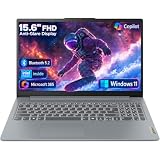


| Product | Best for | Key spec from the title |
|---|---|---|
| HP 17-inch Business Laptop | Spreadsheet-heavy work | Ryzen 5, 16GB RAM, 512GB SSD, numeric keypad |
| Leuniay 15.6-inch | Light note-taking only | 4GB RAM, 128GB SSD |
| SAGAWHALE 15.6-inch | Carrying between classes | 16GB RAM, 256GB SSD, 3.5 lbs |
| NIAKUN 17.3-inch | Storage-hungry users | 16GB RAM, 1TB SSD, Core i5-7Y57 |
| Lenovo Business 15.6-inch | Modern ports and Wi-Fi | 8GB DDR5, WiFi 6, USB-C |
| HP 14-inch (628GB) | Basic portable use | 4GB DDR5, 128GB UFS plus 500GB extra |
| Dell Latitude 5420 | Business-grade build | Core i5-1145G7, 16GB DDR4, 256GB SSD, renewed |
| HP 14-inch (N150) | Lightest workloads | N150, 4GB RAM, Windows 11 S |
How to Choose
RAM and processor first
Business coursework means Excel models, browser tabs and video calls together. Eight gigabytes is a workable floor; 16GB gives breathing room through a two-year program. A 4GB machine will strain once you add a call and a spreadsheet. For processors, a quad-core Intel i5 of the 11th generation or a Ryzen 5 is a reasonable baseline, while low-power chips suit email and documents only. Recruiting season adds a webcam, a quiet fan and a working microphone to the list, since interviews and virtual networking events happen on this machine too.
Storage type and size
An SSD of 256GB is the practical minimum; 512GB or 1TB keeps course files, recordings and software from crowding the drive. Be careful with titles that add up storage from a small onboard drive plus a memory card or extension. A UFS module plus an SD card is slower and less convenient than a single SSD, and an SD card can be lost in a backpack. Cloud storage is a fine backup, not a replacement for a drive that is big enough.
Screen size and carry weight
A 14-inch screen is easy to carry; 15.6 inches is the common middle ground; 17.3 inches gives a numeric keypad and more room for spreadsheets but is heavy. FHD resolution is the floor for side-by-side windows. Where a title lists weight or battery hours, such as 3.5 lbs and a four-hour figure, use it; where it says only long battery life, ask for a number. Leave room for a sleeve, a charger brick and a notebook in the bag weight, since a laptop that is fine on a scale can still feel heavy by afternoon.
Windows edition and software bundles
Windows 11 Pro helps with domain joins and encryption some schools require. Windows 11 S limits you to the Microsoft Store, which can block software your program needs. Office 365 listings vary between full desktop apps, a one-year term and the web version, so read the wording carefully. Ignore AI buzzwords and earphone add-ons when comparing the core specs, and treat the Pro label as a software edition, not a promise of faster hardware.
The 8 Best Options
HP 17-inch Business Laptop (Ryzen 5)
The spec-sheet leader for students who live in spreadsheets and want a big screen at a desk, a library table or a study-group room.
- Strength: AMD Ryzen 5 with 16GB RAM and a 512GB SSD, a balanced mix for case work and group projects.
- Strength: a 17.3-inch FHD display and a numeric keypad make data entry and model building comfortable.
- Trade-off: a 17-inch body is bulky for daily carrying, and the title lists Office 365 for the web rather than desktop apps.
Skip it if you commute by bus or train and want the lightest bag possible. Anyone who mostly reads and writes can also get by with a smaller screen.
Leuniay 15.6-inch Laptop
A basic Windows 11 Pro machine that names Office 365 and speaks to business, school, work and kids all at once, so it is a generalist rather than a specialist.
- Strength: Windows 11 Pro on a 15.6-inch screen, a familiar middle size.
- Strength: Office 365 is named in the title, which saves a shopping step.
- Trade-off: 4GB RAM and a 128GB SSD sit below the comfort zone for MBA-style multitasking.
Skip it if you plan to run a spreadsheet, a browser and a video call at the same time. It fits notes, email and web research better than anything heavier.
SAGAWHALE 15.6-inch Laptop
A 15.6-inch FHD IPS laptop with figures a student can actually plan around, including weight and a battery-hours number.
- Strength: 16GB RAM and a 256GB SSD under Windows 11 Pro, a solid core for coursework.
- Strength: the title lists 3.5 lbs and a four-hour battery, so expectations are clear.
- Trade-off: four hours will not carry a full day of back-to-back classes without a charger.
Skip it if you need all-day unplugged use or a lot of local file storage. A cloud drive or external SSD would help fill the gap.
NIAKUN 17.3-inch Laptop
A big-screen model that pairs 16GB of RAM with a full terabyte of SSD storage, for students who hoard course files and recordings.
- Strength: 16GB RAM, a 1TB SSD and a 17.3-inch FHD display are a generous trio.
- Strength: WiFi 5, Bluetooth 5.0 and Office 365 are listed alongside Windows 11 Pro.
- Trade-off: the Core i5-7Y57 processor name points to an older low-power chip family, so heavy models may feel slow.
Skip it if you want current-generation processing power or a light laptop. A 17.3-inch chassis is also a poor match for tiny lecture-hall desks.
Lenovo Business 15.6-inch Laptop
A modern-connectivity pick for students who dock with a monitor, share screens in class or charge from a single USB-C cable.
- Strength: 8GB of DDR5 memory, WiFi 6 and a USB-C port are all named.
- Strength: an anti-glare screen helps in bright lecture halls and libraries.
- Trade-off: only 128GB of storage, and the title says just Intel processor without naming a model.
Skip it if you store large datasets or videos locally. Pair it with an external drive if you pick it anyway, because 128GB goes fast.
HP 14-inch Laptop (628GB)
A compact 14-inch model with a student-and-productivity pitch, MS Office on the list and Copilot AI called out in the title.
- Strength: an Intel 4-core CPU, Windows 11 Pro and WiFi 6.
- Strength: the 14-inch size is easy to carry between buildings and fits a standard backpack sleeve.
- Trade-off: 4GB of DDR5 memory, with the storage total made of 128GB UFS plus a 500GB external piece.
Skip it if you want a single internal SSD and more memory for multitasking. The split storage plan is the detail most likely to frustrate over a full semester.
Dell Latitude 5420
A business-line 14-inch laptop with a spec sheet that holds up well against the budget models here, sold renewed.
- Strength: a quad-core Core i5-1145G7, 16GB DDR4 and a 256GB SSD.
- Strength: a camera, HDMI and Windows 11 Pro cover presentations and interviews.
- Trade-off: it is a renewed unit, so inspect the return terms and the battery condition.
Skip it if you only buy brand-new devices. Buyers who accept renewed gear should still look for a clear return window.
HP 14-inch LED Laptop (N150)
A student-oriented 14-inch that bundles a one-year Office 365 term and earphones, aimed at lighter workloads.
- Strength: an Intel quad-core N150 processor and a one-year Office 365 term.
- Strength: a compact 14-inch body that slips into a backpack.
- Trade-off: 4GB of RAM, Windows 11 S, and storage split between 128GB UFS and a 512GB card.
Skip it if you need to install software from outside the Microsoft Store. Students who want to install a stats package or a browser extension suite should look elsewhere.
Which One Fits Your Situation
You live in Excel and need room to work
The HP 17-inch Business Laptop pairs 16GB RAM with a numeric keypad, which suits financial modeling and large datasets. Pair it with an external mouse and it works as a desk replacement during finance and analytics terms.
You carry the laptop every day
The SAGAWHALE 15.6-inch lists 3.5 lbs, and the Dell Latitude 5420 gives a 14-inch business build with 16GB of RAM. Both keep the weight manageable for walking between buildings.
You want future-ready connections
The Lenovo Business 15.6-inch lists WiFi 6, USB-C and DDR5 memory, which helps with docks and campus networks. One cable to a monitor at home turns it into a tidy study station.
You only need email and documents
The HP 14-inch N150 or the Leuniay 15.6-inch handle light tasks, but expect to close apps often and to store files in the cloud. Neither is a good fit for heavy modeling courses, so students in finance or analytics tracks should step up to a 16GB model.
Common Mistakes
- Accepting 4GB of RAM for a program built around spreadsheets, group video calls and a browser with many tabs open.
- Adding up storage from a card slot and calling it an SSD.
- Ignoring Windows 11 S, which restricts software installs and can block the stats or finance tools your classes expect.
- Buying a 17-inch laptop without checking the weight against your commute and the size of a lecture-hall desk.
- Trusting the phrase long battery life when no hours are listed, then hunting for an outlet during every lecture.
Related guides
- Combination Smoke And Carbon Monoxide Detectors
- Aio Liquid Coolers For High Performance Gaming
- Graphics Cards For Low Wattage Power Supplies
Frequently Asked Questions
How much RAM do I need for business school?
Eight gigabytes is the minimum for smooth multitasking, and 16GB is safer for large spreadsheets, calls and many tabs. Four gigabytes works only if you close everything between tasks.
Is a renewed laptop a good idea?
It can be, especially with a business model like the Dell Latitude 5420. Confirm the return window and battery condition first, and look for a seller that states the grade of the refurbishment.
Do I need Windows 11 Pro?
Pro adds encryption and domain-join options some schools use. Windows 11 S is more limited and tied to one app store, so check your program’s software list before you buy, since a locked-down edition can block a required tool.
Is 128GB of storage enough?
Only for light use such as email, notes and web research. Recordings, slides and software add up quickly, so aim for 256GB or more, and 512GB if you keep recorded lectures or large project files on the machine.









