Black Friday is one of the few times of year when MacBook Pro discounts actually move past token amounts. Apple doesn’t do flash sales, so the real action happens at retailers like Amazon, Best Buy, and Costco, where you’ll typically see $150-$300 off depending on configuration and how much old inventory they’re trying to clear. Here’s what’s worth buying, what to skip, and where the real savings tend to show up.
What the discounts actually look like
Don’t expect MacBook Pros to get Black Friday treatment like the budget Windows laptops do. Apple controls pricing tightly, so most of the deal activity happens on current and previous-generation M-series models rather than the newest release. If a new chip launched in October or November, that model usually stays close to full price through the holiday, while the prior generation drops the most.
The pattern that repeats every year: 14-inch base configs see modest cuts, 16-inch models with upgraded memory or storage see the biggest dollar savings (because the markup on those upgrades is steep), and refurbished or open-box units from Apple’s own store or Amazon Warehouse can beat every “new” discount if you’re not picky about a cosmetic scuff.
Which configuration actually makes sense
The base 14-inch MacBook Pro with the entry chip and 16GB of RAM is fine for writing, browsing, spreadsheets, and light photo editing. It’s not fine for anyone doing serious video editing, large Xcode builds, or running local LLMs, where 16GB becomes a real bottleneck because macOS and your apps are fighting over the same pool of unified memory with no way to add more later.
If your work involves video, 3D, or heavy multitasking, the mid-tier Pro chip with 32GB is the sweet spot. It’s a meaningful jump in both GPU cores and memory bandwidth, and it’s usually where Black Friday discounts are proportionally best because retailers use it as the “step-up” model to upsell against the base config.
The Max chip and 64GB+ configs are for people who already know they need them: colorists, ML engineers running local models, people exporting 4K timelines daily. If you’re not sure you need it, you don’t need it yet, and that’s an expensive way to find out.
| Buyer type | Recommended config | Why |
|---|---|---|
| Writing, browsing, office work | 14-inch, base chip, 16GB RAM | Fast enough for years, no reason to overpay for power you won’t use |
| Developers, designers, photo editing | 14-inch, Pro chip, 32GB RAM | Handles larger projects and multitasking without memory pressure |
| Video editors, 3D artists | 16-inch, Pro/Max chip, 32-48GB | Bigger screen for timelines, more GPU cores for exports |
| ML/local AI, heavy color work | 16-inch, Max chip, 64GB+ | Memory bandwidth and unified memory capacity actually get used |
If gaming is part of the decision
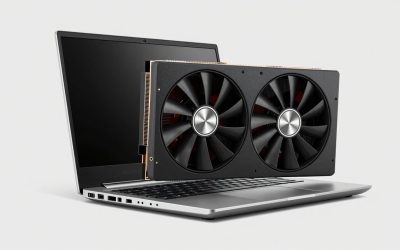
Be honest with yourself here: MacBook Pros are not gaming laptops, and no Black Friday price changes that. macOS has a shrinking library of native AAA titles, and while Apple’s GPU cores are genuinely strong for creative workloads, game support and driver optimization lag far behind what you get on Windows. If gaming is a real priority alongside work, you’re better served looking at gaming laptops with dedicated RTX graphics, which will run modern titles at far better frame rates for similar money. The MacBook Pro’s strengths are battery life, build quality, and performance-per-watt for professional software, not frame rates.
New, refurbished, or last year’s model
Apple-certified refurbished units show up on Apple’s own refurb store with a full warranty, and they’re routinely 10-15% cheaper than new. During Black Friday week, third-party discounts can close that gap or even beat it on new units, so it’s worth comparing both before assuming refurbished is automatically the better deal.
Buying the previous generation on purpose is also a legitimate move. The chip-to-chip gains between consecutive M-series generations are usually incremental, not transformative, so if last year’s model is discounted 20% and this year’s is discounted 5%, the older one is often the better value unless you specifically need a feature tied to the newer silicon.
If you’re cross-shopping and want a general sense of what’s moving at a discount across brands, browsing MacBook Pro deals directly during the sale window is more useful than relying on “up to X% off” banner claims, which often apply to only one SKU buried in the lineup.
What’s not worth paying extra for
Storage upgrades from Apple are overpriced relative to what the actual NAND costs, and MacBook Pros don’t have user-replaceable SSDs, so you’re stuck with Apple’s markup if you buy direct. If a Black Friday deal specifically discounts a higher-storage config, that’s often the better time to buy it rather than paying full price later. If storage isn’t discounted, you’re generally better off buying the base storage and using an external SSD for bulk files; it’s a fraction of the cost and loses almost nothing in daily use unless your workflow requires constant random access to huge files, like scrubbing through RAW video.
AppleCare+ bundled into a “deal” isn’t really a discount, it’s just AppleCare+ at its normal price wrapped into a bigger number. Price it separately before deciding if the bundle is actually saving you anything.
FAQ
Will MacBook Pro prices drop further after Black Friday?
Usually not by much. Some retailers extend similar pricing through Cyber Monday, and occasionally into early December, but after that the next real discount window is typically back-to-school season or whenever the next chip generation launches and pushes current stock down.
Is 16GB of RAM really not enough?
For most everyday work, 16GB is fine. It becomes a problem specifically with heavy multitasking across memory-hungry apps, large development environments, or video editing with multiple high-res tracks. If your current laptop already feels sluggish with several apps open, assume 16GB won’t fix that.
Should I buy the 14-inch or 16-inch model?
The 14-inch is lighter and easier to travel with, and performance between the two is nearly identical at the same chip tier. The 16-inch mainly earns its size with a bigger, higher-resolution display and slightly better sustained cooling under heavy load, which matters more for video work than for most other tasks.
Is a refurbished MacBook Pro a safe buy?
Apple-certified refurbished units come with the same one-year warranty as new ones and go through a real inspection and battery check, so they’re a safe buy. Third-party “refurbished” listings from unknown sellers are a different story, so stick to Apple’s own refurb store or clearly certified listings if you go this route.