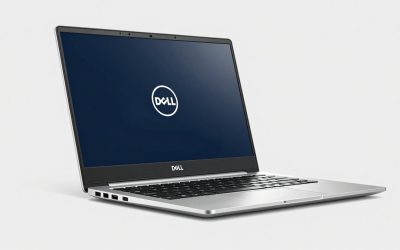
Developers have a weird set of needs that don’t map cleanly onto “gaming laptop” or “business laptop” marketing. You care about RAM more than most gamers do, you don’t need a top-tier GPU unless you’re doing ML work, and you probably care more about keyboard feel and screen quality than someone buying a laptop for spreadsheets. Here’s how to actually think about the purchase.
What actually matters for dev work
RAM and storage speed matter more than CPU benchmarks for most day-to-day coding. Docker containers, multiple browser tabs, an IDE indexing a large repo, and a Slack client running in the background will eat memory fast. 16GB is the realistic floor in 2024, and 32GB removes a whole category of “why is everything slow” problems if you run VMs, containers, or large monorepos. Storage should be at least a 512GB SSD, and NVMe over SATA if you have the choice, since it noticeably speeds up builds and repo cloning.
CPU matters less than people think unless you’re compiling large C++ projects, running Android emulators, or doing local ML training. A mid-range modern chip handles TypeScript, Python, Ruby, Go, or Java workloads fine. Where it does matter: if you’re compiling Rust or C++ regularly, more cores shortens build times in a way you’ll feel every single day.
Screen quality is underrated. You’re staring at text for 8+ hours. A dim or low-contrast panel causes eye strain faster than people expect, and a low-resolution screen makes code harder to read at a comfortable zoom level. Aim for at least 1920×1200 and decent brightness if you’ll ever work near a window.
Mac, Windows, or Linux laptop?
This is partly a tooling question, not just hardware. If your team ships to iOS, or you’re doing web/backend work and want long battery life with a quiet fan, a MacBook is the path of least resistance, and Apple Silicon chips are genuinely fast for compiling and running containers. The trade-off is cost and limited upgradeability — RAM and storage are soldered, so buy more than you think you need up front.
If you’re on Windows, WSL2 has made it a legitimately good dev environment, and you get access to a much wider range of hardware at every price point, including machines with discrete GPUs if you also want to game or do GPU-accelerated ML work. The trade-off is more variability in build quality and battery life across models.
Linux-first laptops (or Windows laptops you’ll wipe and reinstall) are a smaller niche but worth it if you want a native Linux environment without WSL’s occasional driver and filesystem quirks. Expect to spend time troubleshooting Wi-Fi or sleep/wake issues on less common hardware, especially outside of a few well-supported brands.
Picks by use case
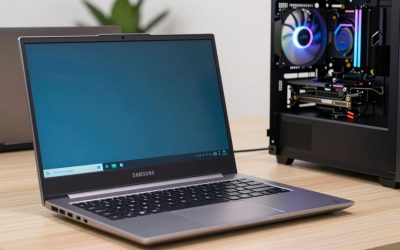
For most web, backend, or mobile development, you don’t need a gaming laptop’s GPU horsepower, but you do want strong single-core performance and at least 16GB of RAM, ideally 32GB. A good starting point is browsing developer laptops with 16GB or more of RAM and filtering by screen resolution and battery life for your workflow.
If you also want to play games on the same machine, a mid-range gaming laptop covers both jobs well, since the CPUs in gaming laptops are usually strong performers for compiling and running containers too. The downside is weight, fan noise under load, and worse battery life than a thin-and-light. Look at gaming laptops with 32GB of RAM if you want headroom for both heavy IDEs and games at the same time.
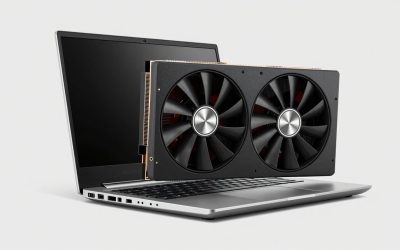
If you’re doing local machine learning work, training small models, or running local LLMs, GPU VRAM becomes a real constraint, not just a nice-to-have. A laptop with a discrete GPU and plenty of VRAM will let you run and fine-tune larger models locally before you need to reach for cloud compute. It’s worth looking at RTX laptops suited for machine learning work, since VRAM capacity varies a lot even within the same GPU model name across different laptops.
Quick comparison by priority
| Priority | What to prioritize | What you can skimp on | Common failure mode |
|---|---|---|---|
| Web/backend dev | RAM (16-32GB), SSD speed, screen quality | GPU, raw CPU core count | Buying a flashy gaming laptop but only 16GB RAM soldered in, hitting swap under Docker |
| Mobile dev (iOS/Android) | CPU speed, RAM for emulators, battery life | GPU unless also gaming | Android emulator plus Android Studio plus Chrome eats 16GB alone; underbuying RAM |
| Dev + gaming | Discrete GPU, cooling, display refresh rate | Ultra-portability | Buying thin-and-light for portability, then being disappointed by thermal throttling under sustained load |
| Local ML/LLM work | GPU VRAM, RAM, storage capacity | Build quality, portability | Picking a GPU by name without checking VRAM, hitting out-of-memory errors on larger models |
When the cheaper option is actually fine
If you’re a student or doing mostly scripting, lightweight web work, or coursework, you don’t need a $2,000 machine. A mid-range laptop with 16GB of RAM and a decent SSD will handle VS Code, a browser, and most coursework or bootcamp projects without issue. Spend the savings on an external monitor instead — a bigger second screen improves day-to-day productivity more than a CPU upgrade in that price bracket. Where cheap laptops actually fail you: thermal throttling under sustained compiles, loud fans, and mediocre trackpads and keyboards that make 8-hour days unpleasant. If the base specs are right, a budget laptop is a reasonable choice; it’s the surrounding build quality that tends to be the real trade-off, not raw speed.
FAQ
Do I need a discrete GPU as a developer?
Only if you’re doing local ML/AI work, game development with 3D rendering, or you also want to game on the same machine. Web, backend, and most mobile development run fine on integrated graphics.
Is 16GB of RAM enough in 2024?
It’s workable for most single-stack web or scripting work, but tight if you run Docker, multiple VMs, Android Studio, or several large browser-based apps at once. If you can afford it and won’t be able to upgrade later, 32GB is the safer buy.
MacBook or Windows laptop for coding?
Both work well. MacBooks are the easiest choice if you build for iOS or want long battery life with minimal fuss. Windows gives you more hardware variety and native gaming support, and WSL2 has closed most of the gap for Linux-style development.
Will a gaming laptop work fine for programming?
Yes, generally. Gaming laptops tend to have strong CPUs and good RAM capacity, which helps with compiling and containers. The trade-offs are weight, fan noise, and shorter battery life compared to laptops built specifically for portability.