

The best heavy duty sewing machines for denim and leather are the Sailrite Ultrafeed LSZ-1 for thick leather and multiple layers, the Juki TL-2010Q for powerful straight stitching, and the Janome HD3000 or Singer Heavy Duty 4452 for affordable denim, canvas, and occasional leather work.
- Quick comparison: which machine fits your project?
- Best overall for thick leather: Sailrite Ultrafeed LSZ-1
- Best straight-stitch machine: Juki TL-2010Q
- Best value for denim: Janome HD3000
- Best budget choice: Singer Heavy Duty 4452
- What motor power really tells you
- Presser-foot lift and frame durability
- Decision matrix for denim and leather
- Related Guides
As an Amazon Associate we earn from qualifying purchases at no extra cost to you.
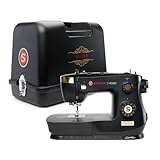

Quick answer: For most people in 2026, the best heavy duty sewing machines for denim and leather is the Sailrite Ultrafeed LSZ-1 — our #1 rated choice. See the full ranked comparison, alternatives and buying advice below.
Quick comparison: which machine fits your project?
| Machine | Best use | Motor / speed | Frame and feeding | Typical market range |
|---|---|---|---|---|
| Sailrite Ultrafeed LSZ-1 | Leather, marine vinyl, webbing, multiple thick layers | 120V motor; adjustable speed control | Metal construction; compound walking foot; zigzag | Usually $900–$1,300 |
| Juki TL-2010Q | Fast, strong straight seams in denim and canvas | 1,500 stitches per minute maximum | Aluminum body; industrial-style presser foot and feed system | Usually $700–$1,000 |
| Janome HD3000 | Jeans, home décor, canvas, light leather | 860 stitches per minute maximum | Aluminum body; standard feed dogs | Usually $350–$500 |
| Singer Heavy Duty 4452 | Budget denim and medium-weight utility sewing | 1,100 stitches per minute maximum | Metal interior frame; standard feed system | Usually $250–$400 |
| Brother ST371HD | Mixed fabrics and occasional heavy material | 850 stitches per minute maximum | Metal needle plate; lighter domestic chassis | Usually $200–$300 |
Best overall for thick leather: Sailrite Ultrafeed LSZ-1
The Ultrafeed LSZ-1 is the strongest choice when “heavy duty” means several layers of leather, marine canvas, upholstery vinyl, or webbing rather than just hemming a pair of jeans. Its compound walking foot moves the upper material in coordination with the lower feed dogs. That prevents the top layer from creeping ahead while the bottom layer stays in place, a common cause of uneven leather seams.
It also provides zigzag stitching, which is useful for repairs, binding, and sails. The machine’s slower, controllable operation matters as much as its motor: leather rewards steady needle placement, not maximum speed. The trade-off is cost, weight, noise, and a narrower range of delicate dressmaking stitches.
Choose it if:
- You regularly sew leather thicker than about 2 mm or several layers of upholstery material.
- You need a walking foot rather than a basic presser foot.
- You make bags, tool rolls, boat covers, tack, or outdoor gear.
Best straight-stitch machine: Juki TL-2010Q
The Juki TL-2010Q is a strong option for denim, canvas, quilts, and long straight seams. It uses an aluminum body and an industrial-style layout, including a knee lift and a high presser-foot lift. The knee lever lets you raise the foot without removing your hands from the project, which is useful when turning bulky corners or aligning a leather edge.
This is a straight-stitch machine, so it is not a universal replacement for a zigzag household machine. It is best when seam strength, control, and consistency matter more than decorative stitches. The high maximum speed is useful for long canvas seams, but thick leather should normally be sewn much slower.
For a workshop that already owns a general-purpose machine, the Juki is a capable second machine. For one-machine ownership, its straight-stitch limitation deserves careful consideration.
Best value for denim: Janome HD3000
The Janome HD3000 is a sensible middle ground for jeans, denim repairs, canvas bags, and home projects. Its aluminum body gives it more stability than lightweight plastic machines, while its controls remain familiar to a beginner. The extra-high presser-foot position helps when placing folded denim under the foot.
It is not a true walking-foot leather machine. It can handle light leather and thin vinyl with the correct needle, foot, and settings, but forcing thick leather through it can produce skipped stitches, needle deflection, or timing problems. Think of it as a robust domestic machine, not an upholstery or saddlery machine.
Best budget choice: Singer Heavy Duty 4452
The Singer Heavy Duty 4452 is attractive when the main job is denim and the budget is limited. It has a metal interior frame, a top speed of 1,100 stitches per minute, and a useful selection of utility stitches. Its strong point is general-purpose home sewing with occasional bulky layers.
The included even-feed-style foot can help with some materials, but it should not be confused with a compound walking-foot system. For leather, use a roller or Teflon-style foot and test on scraps first. The 4452 is suitable for light leather projects such as thin wallet leather, patches, and simple panels, but it is not the best choice for thick belts or several layers of upholstery leather.
What motor power really tells you
Motor wattage is useful, but it is not a direct measurement of sewing force. Gear reduction, needle-bar design, handwheel size, belt efficiency, feed mechanism, and speed control all affect how a machine behaves under load.
For example, a nominal 105-watt motor connected to a 120-volt supply draws approximately:
105 watts ÷ 120 volts = 0.875 amps
That is an electrical input estimate, not the power delivered to the needle. Some energy becomes heat, sound, and mechanical loss. A machine with a lower published wattage can sometimes punch material more smoothly if its gearing and feed mechanism are better suited to thick work.
For leather, prioritize a walking foot, controllable low speed, needle penetration, and a rigid frame before comparing motor numbers alone.
Presser-foot lift and frame durability
Presser-foot lift determines how easily you can place material under the foot. A high lift is particularly valuable for folded jean hems, bag seams, foam-backed vinyl, and stacked leather. It does not automatically mean the machine can sew that thickness; the needle, clearance, and feed system must also cope with it.
A metal frame reduces vibration and helps maintain needle alignment when the project resists the feed dogs. Look for an aluminum or metal internal chassis rather than judging by a metal-colored exterior shell. A rigid frame improves control, but it cannot compensate for an unsuitable standard presser foot on slippery leather.
Decision matrix for denim and leather
| Your situation | Best fit | Why | Important limitation |
|---|---|---|---|
| Mostly jeans, hems, and repairs | Janome HD3000 or Singer 4452 | Stable domestic frames and useful utility stitches | Not intended for thick stacked leather |
| Denim, canvas, and long straight seams | Juki TL-2010Q | Fast straight stitching, high foot lift, strong control | No zigzag or broad stitch selection |
| Thin leather and occasional vinyl | Janome HD3000 or Singer 4452 | Affordable and versatile with the right foot | Requires careful thickness limits and scrap testing |
| Several leather layers or upholstery work | Sailrite Ultrafeed LSZ-1 | Compound walking foot and controlled heavy-material feeding | Higher price and less convenient for fine apparel sewing |
| One machine for mixed househ Ready to decide? Our #1 pick for 2026 is the Sailrite Ultrafeed LSZ-1. Live price & availability on Amazon. Explore Our Guides & Free Tools Best Wireless Gaming Earbuds in 2026: Complete Buyer’s GuideThe complete 2026 buyer's guide to wireless gaming earbuds — five criteria, six-step checklist, and the mistakes to avoid.  Best Wireless Gaming Mice in 2026: Complete Buyer’s GuideThe complete 2026 buyer's guide to wireless gaming mice — five criteria, six-step checklist, and the mistakes to avoid.  Wheat Beer Styles and Best Recommendations GuideThe best wheat beer styles and best recommendations depend on whether you...  Spindrift Flavors Ranked: Best to Worst ListSpindrift flavors ranked from best to worst: Raspberry Lime takes the top...  Thanksgiving Dessert Recipes: Pies, Cakes & BarsThese thanksgiving dessert recipes are built for a make-ahead holiday table: classic...  Green Tea Recipes: Iced Lattes, Desserts & MoreThe best green tea recipes use cooler water, shorter steep times, and...  Peach Pie Filling Recipe: Fresh & Freezer TipsPeach Pie Filling Recipe: Fresh & Freezer Tips For a reliable peach...  Cocktail Garnish Guide: Citrus, Herbs & RimsCocktail Garnish Guide: Citrus, Herbs & Rims A reliable cocktail garnish guide...  Tequila vs Mezcal: Key Differences ExplainedTequila and mezcal are both Mexican agave spirits, but tequila is usually...  Best Workbenches for a Home GarageBest Workbenches for a Home Garage The best workbench for a home...  Best Wall Mounted Wine Glass RacksBest Wall Mounted Wine Glass Racks The best wall mounted wine glass...  Best Transfer Benches for Safe BathingThe best transfer benches are the ones that let you sit outside... Top pickBest value on Amazon
Check Price →1  5 Best 4K Gaming PCs & TV Setup to Stream the 2026 World Cup Best Power Supplies: Top Picks Reviewed and Compared (2026) Best Graphics Cards: Top Picks Reviewed and Compared (2026) How to Choose a Graphics Card: Complete Buying Guide (2026) Best Platforms for Buying Used Gaming Gear 2026 Used Razer and Logitech Gaming Mouse Buying Guide 2026: Refurbished Flagship Picks |