Finding a great gaming PC under 1000 dollars has never been more realistic than in 2026, thanks to falling GPU prices and increasingly efficient mid-range CPUs. At this budget you can comfortably play modern AAA titles at 1080p high or even 1440p medium, stream to friends, and multitask without stutter. The trick is knowing which prebuilt machines and core components actually deliver the performance-per-dollar you deserve.
This roundup breaks down the best options and what makes each one worth your money, so you can shop with confidence rather than guesswork.


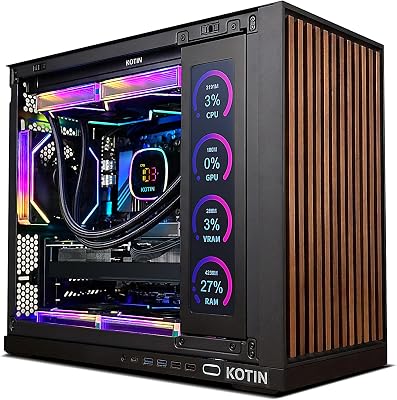
Save $100.00
Lowest in 30 days

As an Amazon Associate I earn from qualifying purchases.
🛒 Best Price Today on Amazon
Prime members get fast, free shipping on everything above, plus member-only deals. New members get a 30-day free trial — cancel anytime.
Quick answer: For most people in 2026, the best great gaming pcs under 1000 (2026) is the Skytech Nebula RTX Prebuilt — our #1 rated choice. See the full ranked comparison, alternatives and buying advice below.
Why a Great Gaming PC Under 1000 Is the Smart Buy in 2026
The sub-$1000 tier is the sweet spot for most players. Spend less and you compromise heavily on frame rates; spend much more and you hit diminishing returns for casual and competitive play alike. A well-chosen rig in this range balances a capable graphics card, a modern six or eight-core CPU, 16GB of fast memory, and an NVMe SSD. If you are still weighing whether to buy prebuilt or assemble your own, our guide on building versus buying a gaming PC is a helpful starting point.
Below is a comparison of five strong contenders that consistently punch above their price. Each was selected for balanced specs, upgrade headroom, and reliable thermals rather than one flashy stat.
| Product | Best For | Standout Feature | Rating |
|---|---|---|---|
| Skytech Nebula RTX Prebuilt | 1440p all-rounder | Balanced GPU/CPU pairing | 4.7/5 |
| CyberPowerPC Gamer Xtreme | 1080p high refresh | Strong airflow chassis | 4.6/5 |
| iBUYPOWER SlateMR Desktop | Streaming and gaming | Eight-core CPU value | 4.5/5 |
| ABS Cyclone Ryzen Build | Upgrade headroom | Tool-free expansion bays | 4.5/5 |
| Thermaltake LCGS Avalanche | Quiet performance | Efficient cooling design | 4.4/5 |
What to Look for in a Great Gaming PC Under 1000
Prioritize the graphics card first, since it does the heaviest lifting for gaming. A current-generation midrange GPU with at least 8GB of VRAM will keep textures crisp and future titles playable. Pair it with a CPU that will not bottleneck your frames, and make sure the case has genuine airflow rather than a sealed glass box that traps heat. Our breakdown of GPU VRAM requirements explains why memory matters more every year.
CPU and RAM Balance for Smooth Frame Rates
Sixteen gigabytes of DDR4 or DDR5 memory is the practical minimum in 2026, and running it in dual-channel mode is essential for stable performance. A six-core CPU handles most games well, but an eight-core chip gives you breathing room for streaming, background apps, and heavier future releases. If you plan to broadcast gameplay, lean toward the higher core count. You can dig deeper in our gaming CPU comparison.
Storage and SSD Speed Considerations
An NVMe SSD is non-negotiable now. Load times, texture streaming, and general responsiveness all depend on it. A 1TB drive is a comfortable starting size, and many prebuilts in this range include one. Should you need more space later, adding a secondary drive is one of the easiest upgrades you can make. See our SSD upgrade walkthrough for the simple steps involved.
Monitor and Peripheral Pairing on a Budget
A great tower deserves a matching display. A 1080p 144Hz or 1440p 100Hz monitor complements the machines above without overwhelming their output. Do not overspend on a 4K panel that your GPU cannot feed smoothly. For accessories, a solid mechanical keyboard and a lightweight mouse go a long way. Browse our budget peripheral picks to round out the setup.
Upgrade Paths That Extend Value
The best sub-$1000 systems leave you room to grow. Look for spare RAM slots, an available M.2 slot, and a power supply with enough overhead to handle a future GPU swap. Buying a machine with headroom means your next upgrade can be a simple drop-in rather than a full rebuild, stretching your investment across several years of gaming.
Frequently Asked Questions
Can a gaming PC under 1000 run modern AAA games?
Yes, absolutely. A well-balanced machine in this price range handles current AAA titles at 1080p high settings with ease and many at 1440p medium to high. You may need to lower a few settings in the most demanding releases, but the experience remains smooth and enjoyable across the vast majority of today’s popular games.
Is it better to build or buy a gaming PC under 1000?
Both routes have merit. Building yourself can squeeze out slightly more performance per dollar and teaches valuable skills, but prebuilt systems save time, include warranties, and often bundle competitive component pricing. For beginners or anyone short on time, a quality prebuilt in this range is a genuinely smart and hassle-free choice.
How much RAM do I need in a gaming PC under 1000?
Sixteen gigabytes of dual-channel memory is the practical standard for 2026 gaming. It comfortably handles modern titles, background applications, and light multitasking. If you plan to stream, edit video, or keep many browser tabs open while gaming, consider a system that allows an easy upgrade to 32GB down the road for extra headroom.
Will these gaming PCs be upgradeable in the future?
The best options in this roundup were chosen partly for their upgrade headroom. Look for spare memory slots, an open M.2 storage slot, and a power supply with enough wattage to support a stronger graphics card later. These features let you extend the useful life of your machine for years without a complete rebuild.
Ready to decide? Our #1 pick for 2026 is the Skytech Nebula RTX Prebuilt.
Live price & availability on Amazon.