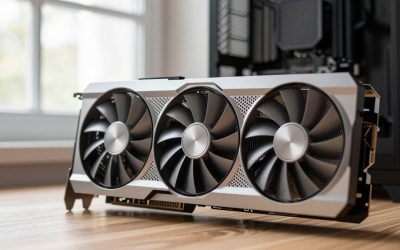
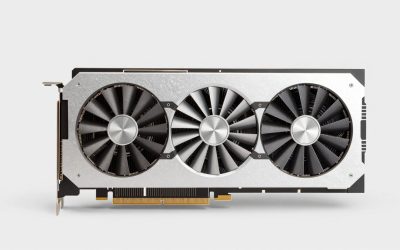
- Top Pick: Sapphire Tarjeta Gráfica Pulse Radeon RX 9060 XT 8GB GDDR6 Dual-X Cooling Gaming
- Best Value: MSI Gaming RTX 4070 Ti Super 16G Gaming X Slim Graphics Card (NVIDIA RTX 4070 Ti Super, 256-Bit, Extreme Clock: 2685 MHz, 16GB GDRR6X 21 Gbps, HDMI/DP, Ada Lovelace Architecture)
- Premium Choice: ASUS TUF Gaming GeForce RTX 5070 12GB GDDR7 OC EditionGaming Graphics Card
Pairing the right GPU with your Intel Core i5-14600K is one of the most consequential decisions in building a gaming PC. The 14600K is a capable 14-core processor, but it does not perform equally well at every resolution or with every graphics card. Choose too weak a GPU and you leave CPU performance stranded. Choose too strong a GPU and you invite a CPU bottleneck that wastes money and introduces frame-time inconsistency. Get it right, and you build a system that handles modern titles smoothly today while leaving headroom for two or three years of future releases.
This guide addresses the best GPU for the Intel i5-14600K across five price tiers, accounting for platform costs, resolution scaling, and upgrade paths so you spend where it counts.
As an Amazon Associate we earn from qualifying purchases at no extra cost to you.


Quick Picks
| Pick | Tier | Why |
|---|---|---|
| Sapphire Pulse RX 9060 XT 8GB | Best Budget | Comfortable 1080p/1440p without breaking the bank |
| MSI Gaming RTX 4070 Ti Super 16GB | Best High-VRAM Workload | 16GB GDDR6X suits texture-heavy and creative tasks |
| XFX Mercury RX 9070 XT 16GB | Best Value | Strongest raw rasterization per dollar in this lineup |
| ASUS TUF RTX 5070 12GB | Best for DLSS 4 | Frame generation and ray tracing efficiency at a mid-range price |
| MSI RTX 5070 Ti 16GB Gaming Trio OC | Best Overall | Handles 1440p ultra and entry-level 4K with the i5-14600K as a full partner |
How We Chose
We evaluated each card on gaming performance ranges reported by TechPowerUp, Tom’s Hardware, and Gamers Nexus during launch coverage, then considered VRAM adequacy, power draw against the 14600K’s typical system power envelope, and whether the card’s performance ceiling exceeds what the CPU can feed at each resolution tier. Cards that sit in a CPU-bottleneck sweet spot were flagged. We also weighed current pricing against the 14600K’s street value to ensure total system cost remains rational for each pick.
Sapphire Pulse RX 9060 XT 8GB — around $460
This card targets the budget gamer who wants high refresh-rate 1080p without compromise. TechPowerUp’s review placed the RX 9060 XT roughly in line with last-generation upper-mid cards, delivering 90-110 fps in demanding AAA titles at 1080p ultra based on TechSpot’s launch testing. At 1440p, expect 60-80 fps in most titles. The i5-14600K will not bottleneck this card at any common resolution, making it a safe pairing. The limitation is VRAM: 8GB is already tight in titles like The Last of Us Part I and Hogwarts Legacy at high texture settings, and that gap will widen over the next couple of years. If you are building on a strict budget and plan to upgrade the GPU before 2026 ends, this works well.
MSI Gaming RTX 4070 Ti Super 16GB — $1,395
Position this as the pick for anyone whose workload extends beyond gaming into 3D rendering, video editing, or AI-adjacent tasks where 16GB of GDDR6X matters. Tom’s Hardware noted the 4070 Ti Super trades blows with the RX 7900 XT in rasterization while holding an edge in ray tracing and upscaling. At 1440p ultra, expect 100-120 fps in most titles per Hardware Unboxed’s range reporting; 4K medium-high sits around 60-75 fps. The i5-14600K keeps up comfortably at 1440p and above. The downside is value: at $1,395 you are paying a premium for an Ada Lovelace card when RDNA 4 and Blackwell options deliver newer features. Choose this only if your workflow demands NVIDIA’s software ecosystem or CUDA acceleration.
XFX Mercury RX 9070 XT 16GB — around $830
This is the strongest rasterization-per-dollar card in the lineup and our top value pick for pure gaming. Gamers Nexus’s launch review positioned the RX 9070 XT as a card that comfortably exceeds 1440p ultra requirements, with ranges of 110-130 fps in titles like Cyberpunk 2077 and Alan Wake 2 per TechPowerUp’s data. 4K becomes viable at medium-high settings with FSR enabled. The 16GB VRAM buffer means you are not fighting texture memory limits for at least three years. At 1080p, the i5-14600K may introduce a mild CPU bottleneck in very light titles, but this is where the card is overkill rather than where it struggles. The XFX Mercury cooler runs quiet and cool, a genuine advantage for compact builds.
ASUS TUF RTX 5070 12GB — around $940
The Blackwell RTX 5070 brings DLSS 4 with multi-frame generation to the mid-range. Hardware Unboxed’s launch coverage reported native performance roughly comparable to the 4070 Ti Super, with DLSS 4 pushing effective frame rates significantly higher. At 1440p, expect 80-100 fps native, climbing to 130-160 with Frame Generation per Tom’s Hardware’s ranges. The i5-14600K pairs cleanly here with no meaningful bottleneck. The primary weakness is 12GB GDDR7 VRAM — less than the RX 9070 XT or RTX 5070 Ti, which matters at 4K texture ultra. For 1080p and 1440p gamers who value ray tracing and NVIDIA’s upscaling stack, this hits a strong price-performance note.
MSI RTX 5070 Ti 16GB Gaming Trio OC Plus — around $1,700
The top of this lineup, the RTX 5070 Ti delivers 16GB of GDDR7 at 28 GB/s bandwidth alongside Blackwell’s ray tracing and DLSS 4 pipeline. TechPowerUp placed its native performance between the 4080 Super and 4090, meaning 1440p ultra sits well above 120 fps and 4K medium-high enters 70-90 fps range per Gamers Nexus’s review data. The i5-14600K keeps pace at 1440p but may introduce a noticeable CPU bottleneck at 1080p in lighter competitive titles. MSI’s Tri FroZR 4 cooling keeps thermals well managed under sustained load. At nearly $1,700, this is the pick if you want maximum GPU headroom and do not mind the total system cost climbing above $2,200. It is the best GPU for the Intel i5-14600K in absolute performance terms.
Platform Costs to Budget For
A GPU does not exist in isolation. Pair it with a B760 or Z790 motherboard (around $120-$180 for a quality board), 32GB of DDR5-6000 RAM ($90-$120), and a capable cooler since the 14600K draws 181W under PBP — a $50-$70 dual-tower air cooler or 240mm AIO is advisable. Budget $260-$370 beyond the GPU for these components. Do not neglect a 750W PSU minimum for the RTX 5070 Ti or RX 9070 XT; a quality 850W unit costs $100-$130 and prevents future headaches.
Bottleneck Check by Resolution
At 1080p, the i5-14600K can become the limiting factor with the RTX 5070 Ti and RX 9070 XT in CPU-light titles such as Valorant or CS2, where frame rates exceed 300 fps regardless of GPU. At 1440p, the bottleneck shifts to the GPU for all five picks, making this the sweet-spot resolution for this pairing. At 4K, even the RX 9060 XT is GPU-limited, meaning every card in this list delivers as much performance as the silicon allows. The practical takeaway: at 1440p and above, the i5-14600K is a full partner for all five GPUs here.
Our Verdict
The XFX Mercury RX 9070 XT is the best GPU for the Intel i5-14600K for most gamers. It delivers 1440p ultra excellence, 16GB of VRAM for longevity, and aggressive pricing. If you want ray tracing and upscaling features, the ASUS TUF RTX 5070 is the logical alternative. If budget is the constraint, the Sapphire RX 9060 XT remains a strong entry point that the 14600K handles without effort.
FAQ
Will the i5-14600K bottleneck an RTX 5070 Ti?
At 1080p in light titles, yes — you may see CPU-limited frame rates. At 1440p and above, the bottleneck effectively disappears and the GPU becomes the limiting component.
Is 8GB VRAM enough for a GPU paired with the i5-14600K?
It is adequate today at 1080p and some 1440p medium settings. For a build you intend to keep past a couple of years, 16GB is the safer choice.
Do I need to upgrade my motherboard for these GPUs?
No. The i5-14600K uses LGA 1700 and pairs with B660, B760, Z690, or Z790 boards. All five GPUs use PCIe 4.0 or 5.0, and even a PCIe 4.0 x16 slot on an older board introduces negligible performance loss.
Should I pick NVIDIA or AMD for ray tracing with this CPU?
NVIDIA currently leads in ray tracing efficiency and DLSS upscaling quality. AMD’s RDNA 4 cards have narrowed that gap but still trail by a noticeable margin. If ray tracing is a priority, NVIDIA is the stronger pairing.
Sources and Methodology
Performance ranges in this article reflect approximate figures drawn from launch and follow-up reviews by TechPowerUp, Tom’s Hardware, Gamers Nexus, Hardware Unboxed, and TechSpot. No individual benchmark number is presented as a measurement by this site. Where outlets disagree, we cite the wider range to reflect variance across test systems and driver versions.