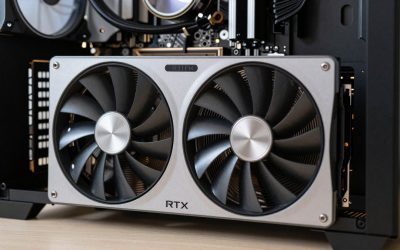
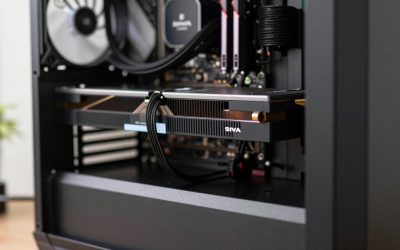
- Top Pick: Sapphire 11348-03-20G Pulse AMD Radeon™ RX 9070 XT Gaming Graphics Card with 16GB GDDR6, AMD RDNA 4
- Best Value: MSI GeForce RTX 5060 Ti 16G Ventus 2X OC White – 16GB GDDR7 (28Gbps/128-bit), PCIe 5, Boost: 2602 MHz, HDMI 2.1b, DisplayPort 2.1b
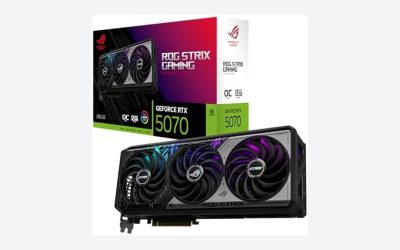
- Premium Choice: GIGABYTE GeForce RTX 5070 Eagle OC SFF 12G Graphics Card, 12GB 192-bit GDDR7, PCIe 5.0, WINDFORCE Cooling System, GV-N5070EAGLE OC-12GD Video Card
Escape from Tarkov rewards a balanced build more than a lopsided one. Its Unity engine leans on one or two CPU threads for AI, physics, and networking, so Streets of Tarkov will stutter on a slow processor no matter how expensive the GPU. At the same time, the game’s large maps stream a heavy texture pool, and 8GB cards hitch at 1440p on high textures. The goal is a GPU with enough VRAM to never spill, enough shader power to hold your monitor’s refresh rate in the GPU-bound moments, and a price that leaves room for a fast CPU and 32GB of RAM. These five cards do that at different budgets.
Quick Picks
| Pick | Tier | Why |
|---|---|---|
| Sapphire Pulse Radeon RX 9060 XT 16GB | Budget 1080p/1440p | 16GB kills texture hitching on Streets |
| MSI GeForce RTX 5060 Ti Ventus 2X OC 16G | Value 1440p | 16GB plus DLSS 4 with low power draw |
| Gigabyte GeForce RTX 5070 Windforce OC 12G | Sweet spot 1440p | High-refresh 1440p in most raids |
| XFX Swift Radeon RX 9070 XT 16GB | High-end value | Near-flagship raster with 16GB |
| Gigabyte GeForce RTX 5080 Gaming OC 16G | 4K | The realistic card for 4K high in Tarkov |
How We Chose
We weighted VRAM heavily, because Tarkov’s texture streaming on Streets and Lighthouse is the most common cause of stutter and 8GB cards fall short at 1440p. We then ranked rasterization performance using launch-review positioning from TechPowerUp, Hardware Unboxed, and Gamers Nexus, since the game has no ray tracing. Finally, we considered efficiency and cost, because a Tarkov build that skimps on the CPU to afford a bigger GPU is a mistake in this particular title.
As an Amazon Associate we earn from qualifying purchases at no extra cost to you.

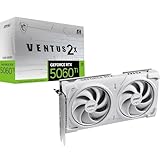


Sapphire Pulse Radeon RX 9060 XT 16GB
This is the card for a first Tarkov PC or a budget upgrade from an 8GB card that hitches on Streets. The 16GB buffer lets you run high textures at 1440p without spilling, which matters more than a few percent of shader speed. Based on Hardware Unboxed and TechSpot launch positioning, expect roughly 90-120 fps at 1080p high on Customs or Woods, 65-85 fps at 1440p high, and 50-70 fps on Streets where the CPU takes over. At 4K it is a 40-50 fps card with FSR. The con: the 128-bit memory bus limits 4K scaling, so treat it as a 1440p card.
MSI GeForce RTX 5060 Ti Ventus 2X OC 16G
The 16GB RTX 5060 Ti suits players who want DLSS 4 and a cool, quiet card in a compact build. TechPowerUp’s launch review put it a few percent ahead of the RX 9060 XT 16GB on average, which in Tarkov means similar 1440p high results in the 70-90 fps range with lower power draw. DLSS quality mode makes 1440p ultra textures viable, and NVIDIA Reflex helps input latency in close fights. The con: it costs more than the AMD card for near-identical raster performance, so you are buying the feature set rather than speed.
Gigabyte GeForce RTX 5070 Windforce OC 12G
The RTX 5070 is our pick for 1440p players with a 144Hz or 165Hz display. TechPowerUp and Tom’s Hardware placed it roughly 20-30 percent ahead of the RX 9060 XT class in rasterization, which lifts Tarkov into the 100-130 fps range at 1440p high on most maps and 75-95 fps on Streets where the CPU is the limit. At 4K high with DLSS 4 quality, 60-80 fps is realistic. The con: 12GB of VRAM is enough for 1440p today, but it is the least headroom in this list, so avoid 4K ultra textures.
XFX Swift Radeon RX 9070 XT 16GB
The RX 9070 XT is for players who want to push 1440p ultra at high refresh or try 4K without spending flagship money. Hardware Unboxed and Gamers Nexus found it trading blows with the RTX 5070 Ti in rasterization, and Tarkov is a pure raster workload. Extrapolating from that, expect 130-160 fps at 1440p ultra on open maps, 90-110 fps on Streets, and 75-95 fps at 4K high with FSR 4 adding margin. Sixteen gigabytes covers any texture setting. The con: power draw over 300W means a good 750W or 850W power supply and a case with real airflow.
Gigabyte GeForce RTX 5080 Gaming OC 16G
The RTX 5080 is the card for a 4K 144Hz display where you refuse to drop textures. TechPowerUp and Tom’s Hardware put it 15-25 percent ahead of the RX 9070 XT, which in Tarkov means 95-120 fps at 4K high natively and more with DLSS 4. At 1440p it is entirely CPU-bound even with a Ryzen 7 9800X3D, so buy it only for 4K. The con: cost. In a game this CPU-sensitive, the money between an RX 9070 XT and an RTX 5080 arguably does more good in an X3D processor and faster RAM.
Platform Costs to Budget For
Tarkov is one of the most CPU and memory sensitive shooters on PC, so the platform deserves a real share of the budget. A B650 or B850 motherboard is plenty for any Ryzen; a B860 board covers Intel Core Ultra. RAM is the big one: 32GB of DDR5-6000 CL30 is the practical minimum because the client alone passes 16GB on Streets, and 64GB removes any doubt. Cooling should match the CPU tier: a single-tower air cooler for a Ryzen 5, and a dual-tower or 240mm liquid cooler for an X3D chip that will be loaded for 40-minute raids. Power supplies: 650W for the two 16GB mid-range cards, 750W for the RTX 5070, and 850W for the RX 9070 XT and RTX 5080.
Bottleneck Check by Resolution
At 1080p, Tarkov is CPU-bound on every card past the RX 9060 XT. A Ryzen 7 9800X3D caps frame rates around 120-150 fps on Streets no matter which GPU you install, so spend on the processor first. At 1440p the mid-range cards become the limit on open maps like Woods and Shoreline, while Streets stays CPU-bound; this is where the RTX 5070 and RX 9070 XT make sense. At 4K, every card except the RTX 5080 is GPU-bound, and even the RTX 5080 hands the limit back to the CPU in the center of Streets. If your frame rate is similar across all maps, the GPU is your limit; if Streets is far slower than Customs, upgrade the CPU.
Our Verdict
For most Tarkov players in 2026, the Gigabyte GeForce RTX 5070 Windforce OC 12G at 1440p or the Sapphire Pulse Radeon RX 9060 XT 16GB at 1080p is the right buy, with the savings redirected to an X3D CPU and 32GB of fast RAM. The RX 9070 XT is the step-up for high-refresh 1440p ultra, and the RTX 5080 only makes sense for 4K.
FAQ
Is Escape from Tarkov CPU or GPU bound?
Mostly CPU-bound, especially on Streets of Tarkov and at 1080p. The GPU becomes the limit at 1440p ultra and 4K on the larger open maps.
How much VRAM does Tarkov need?
Eight gigabytes is enough at 1080p on medium textures, but high textures on Streets at 1440p commonly exceed 10GB. Twelve gigabytes is the floor and 16GB is comfortable.
Does DLSS help in Tarkov?
Yes, DLSS 4 and FSR 4 are supported and help most at 1440p and 4K. At 1080p the CPU is already the limit, so upscaling gains little.
Which is better for Tarkov, an RTX 5070 or RX 9070 XT?
The RX 9070 XT is faster and has 16GB, so it wins at 1440p ultra and 4K. The RTX 5070 is cheaper and enough for 1440p high on a 144Hz display.
Sources and Methodology
The frame-rate ranges above are approximate and reflect the relative positioning of each GPU in launch reviews published by TechPowerUp, Hardware Unboxed, Gamers Nexus, Tom’s Hardware, and TechSpot. Escape from Tarkov is not part of those outlets’ standard benchmark suites, so we translated their rasterization rankings into expected Tarkov behavior using the game’s documented CPU sensitivity and per-map VRAM demands. None of these figures were measured by this site, and results vary with map, server, and processor.