

Machine learning pushes a workstation harder than inference or generation alone, because training is where the real demand lives. Iterating on models, running training loops, and processing large datasets reward maximum GPU VRAM and CUDA cores to hold and crunch through batches, a high-core CPU to feed data pipelines and handle preprocessing, and abundant system RAM so large datasets and data loaders never starve the GPU. A high-end gaming PC, fitted to the task, can be a remarkably effective ML rig for an individual practitioner or student. This guide rounds up the best gaming PCs for machine learning in 2026, ranked by the VRAM, CUDA throughput, cores and memory that training workloads demand.
- Best Gaming PCs for Machine Learning at a Glance
- 1. CLX Horus Gaming PC, AMD Ryzen 9 9950X3D, GeForce RTX 5080, 360mm Tryx AIO
- 2. ZOTAC MEK Gaming PC, NVIDIA GeForce RTX 5090 32GB GDDR7, AMD Ryzen 7 9700
- 3. ZOTAC MEK Gaming PC, NVIDIA GeForce RTX 5080 16GB GDDR7, AMD Ryzen 7 9800
- 4. Skytech Gaming Archangel 5, Intel i7-14700F, NVIDIA RTX 5070 12GB
- 5. Skytech Gaming O11 Vision, AMD Ryzen 7 7700X, NVIDIA RTX 5070 12GB
- 6. Skytech Gaming Archangel 5, AMD Ryzen 7 7700X, NVIDIA RTX 5070
- How to Choose a Gaming PC for Machine Learning (Honestly)
- Frequently Asked Questions
- Related Guides
- Related Articles
We will be straight about scope: these are gaming desktops, not multi-GPU cluster nodes for training foundation models. But for learning ML, building and training your own models, fine-tuning, and serious experimentation, a single powerful NVIDIA GPU with maximum VRAM, paired with a high-core CPU and plenty of RAM, covers an enormous amount of ground — and far more affordably than renting endless cloud time. Our picks lead with maximum VRAM and CUDA, then CPU cores and RAM headroom, with prices from around $1,899 to around $5,499. Below is an at-a-glance comparison of all six, then a closer look at each and an honest buyer’s guide for ML intent.
🛒 Best Price Today on Amazon
Prime members get fast, free shipping on everything above, plus member-only deals. New members get a 30-day free trial — cancel anytime.
Quick answer: For most people in 2026, the best gaming pcs for machine learning is the CLX Horus (Ryzen 9 9950X3D / RTX 5080) — our #1 rated choice. See the full ranked comparison, alternatives and buying advice below.
Best Gaming PCs for Machine Learning at a Glance
| Gaming PC | Best For | Standout Spec | Approx Price |
|---|---|---|---|
| CLX Horus (Ryzen 9 9950X3D / RTX 5080) | Max cores + GPU for training | Ryzen 9 9950X3D, RTX 5080, 360mm AIO | around $5,499 |
| ZOTAC MEK (RTX 5090 32GB / Ryzen 7 9700) | Maximum single-GPU VRAM | RTX 5090 32GB GDDR7 | around $4,999 |
| ZOTAC MEK (RTX 5080 16GB / Ryzen 7 9800) | Strong mid-VRAM ML box | RTX 5080 16GB GDDR7 | around $3,148 |
| Skytech Archangel 5 (i7 14700F / RTX 5070) | High-core value ML | Intel i7-14700F, RTX 5070 12GB | around $1,999 |
| Skytech O11 Vision (7700X / RTX 5070) | Balanced entry ML | Ryzen 7 7700X, RTX 5070 12GB | around $1,999 |
| Skytech Archangel 5 (7700X / RTX 5070) | Value ML starter | Ryzen 7 7700X, RTX 5070 | around $1,899 |
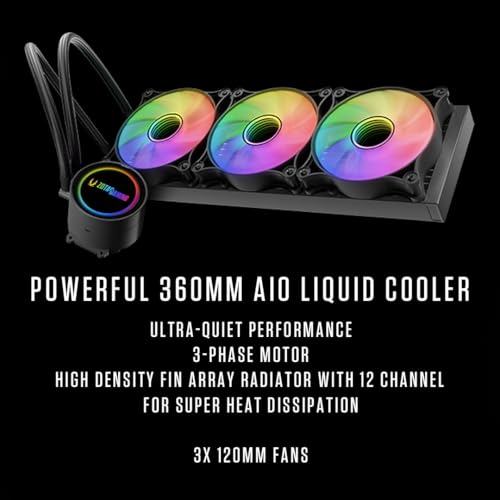
1. CLX Horus Gaming PC, AMD Ryzen 9 9950X3D, GeForce RTX 5080, 360mm Tryx AIO

CLX Horus Gaming PC - AMD Ryzen 9 9950X3D 4.3GHz, GeForce RTX 5080, 360mm Tryx AIO, 96GB DDR5 RGB Memory, 4TB 990 EVO M.2, WiFi, Win 11 Home, Black, AI-Accelerated


As an Amazon Associate we earn from qualifying purchases. Product prices and availability are accurate as of the date/time indicated.
The CLX Horus leads our machine-learning list because it pairs maximum CPU cores with a strong GPU and the cooling to sustain them. The Ryzen 9 9950X3D brings sixteen high-performance cores — a major asset for ML, where data preprocessing, augmentation, data-loader workers and feature pipelines all scale across threads and feed the GPU. Combined with an RTX 5080 for CUDA-accelerated training and a 360mm AIO to keep everything cool under sustained load, at around $5,499 it is the most complete ML machine here.
This is the build for the practitioner whose workloads are both CPU- and GPU-intensive — heavy data pipelines feeding training runs that last hours. The sixteen-core 9950X3D keeps the data pipeline from bottlenecking the GPU, the RTX 5080’s CUDA cores and 16GB of VRAM handle real training and fine-tuning, and the 360mm liquid cooler matters precisely because ML pushes hardware hard for long stretches. Pair it with abundant RAM, and as a balanced, sustained-load ML rig built on a gaming chassis, the Horus stands at the top.
Pros: Sixteen-core Ryzen 9 9950X3D for data pipelines, RTX 5080 CUDA training, 360mm AIO for sustained load.
Cons: Most expensive here; 16GB VRAM is strong but below the 5090’s 32GB.
2. ZOTAC MEK Gaming PC, NVIDIA GeForce RTX 5090 32GB GDDR7, AMD Ryzen 7 9700

ZOTAC MEK Gaming PC Desktop, GeForce RTX 5080 16GB, AMD Ryzen 7 9800X3D




As an Amazon Associate we earn from qualifying purchases. Product prices and availability are accurate as of the date/time indicated.
The ZOTAC MEK with an RTX 5090 is the maximum single-GPU VRAM pick, and for machine learning that is decisive. Its 32GB of GDDR7 lets you train and fine-tune larger models, use bigger batch sizes for more stable and faster training, and hold larger datasets and activations in memory — all things that smaller cards cannot do. With the RTX 5090’s enormous CUDA core count and a capable Ryzen 7 to feed it, at around $4,999 it is the VRAM leader of this list.
This is the build for the ML practitioner whose primary constraint is GPU memory — anyone who has hit out-of-memory errors and wished for bigger batches or larger models. The 32GB of VRAM removes that ceiling further than any other single card here, the massive CUDA throughput accelerates training and experimentation, and you will want generous system RAM behind it. It is a gaming desktop rather than a multi-GPU server, but for single-GPU ML work the RTX 5090’s VRAM is unmatched on this list.
Pros: 32GB GDDR7 VRAM for larger models and bigger batches, huge CUDA throughput, top single-GPU ML capacity.
Cons: Single GPU rather than a multi-GPU node; fewer CPU cores than the CLX Horus.
3. ZOTAC MEK Gaming PC, NVIDIA GeForce RTX 5080 16GB GDDR7, AMD Ryzen 7 9800
ZOTAC MEK Gaming PC Desktop, GeForce RTX 5080 16GB, AMD Ryzen 7 9800X3D
As an Amazon Associate we earn from qualifying purchases. Product prices and availability are accurate as of the date/time indicated.
The ZOTAC MEK with an RTX 5080 is the strong mid-VRAM ML box. Its 16GB of fast GDDR7 VRAM and substantial CUDA core count handle a great deal of real machine learning: training and fine-tuning many model architectures, experimenting with sensible batch sizes, and processing meaningful datasets. Backed by a capable Ryzen 7 9800-series CPU, at around $3,148 it offers serious ML capability for well under the 5090 build.
This is the build for the practitioner who wants strong CUDA training performance and a generous-but-balanced VRAM budget. The 16GB of VRAM supports the training and fine-tuning most individuals and students actually do, the RTX 5080’s CUDA cores push through training loops briskly, and the strong CPU feeds data pipelines well. You will manage batch sizes more carefully than on the 32GB 5090, but for the mainstream of personal ML work this is an excellent, more affordable choice on a capable gaming chassis.
Pros: 16GB GDDR7 VRAM and strong CUDA for training and fine-tuning, capable CPU, strong value.
Cons: 16GB requires managing batch sizes; below the 5090’s VRAM for the largest models.
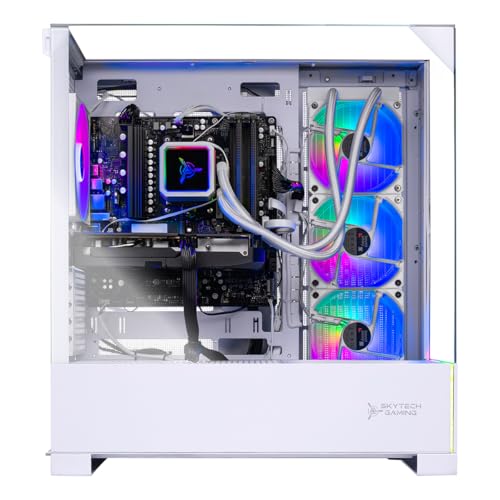
4. Skytech Gaming Archangel 5, Intel i7-14700F, NVIDIA RTX 5070 12GB

Skytech Gaming Archangel 5 Gaming PC, Intel i7 14700F 2.1GHz, NVIDIA RTX 5070 12GB, 1TB Gen4 NVMe SSD, 32GB DDR5 RAM 6000, 750W Gold PSU, 360 ARGB AIO, Wi-Fi, Win 11, Desktop


As an Amazon Associate we earn from qualifying purchases. Product prices and availability are accurate as of the date/time indicated.
The Skytech Archangel 5 with the Intel i7-14700F and RTX 5070 is the high-core value ML pick. The i7-14700F brings a high core-and-thread count — excellent for the CPU-bound side of ML, where data preprocessing, augmentation and data-loader workers run in parallel to keep the GPU fed. Paired with a 12GB RTX 5070 for CUDA training of smaller models, at around $1,999 it offers a lot of compute per dollar.
This is the build for the practitioner whose pipelines are CPU-heavy and whose models are moderate in size. The many-threaded i7-14700F powers fast data preparation and parallel loading so the GPU rarely starves, while the 12GB RTX 5070 with CUDA handles training and fine-tuning of smaller models and plenty of experimentation. Be honest about the VRAM ceiling — 12GB constrains large models and big batches — but for data-pipeline-bound, value-focused ML, this high-core build is a clever, affordable choice.
Pros: Many-threaded i7-14700F for data pipelines, RTX 5070 12GB CUDA, strong compute value.
Cons: 12GB VRAM limits larger models and batch sizes; best for moderate-scale ML.
5. Skytech Gaming O11 Vision, AMD Ryzen 7 7700X, NVIDIA RTX 5070 12GB
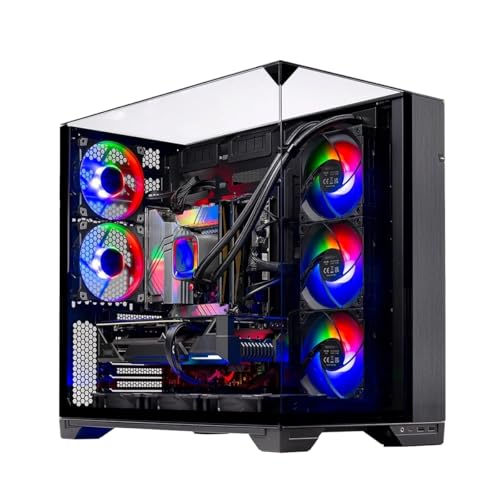
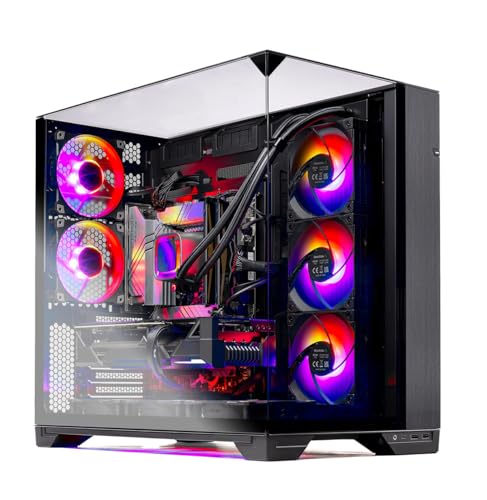
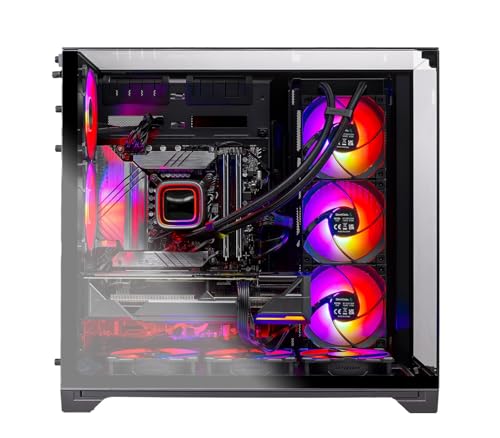
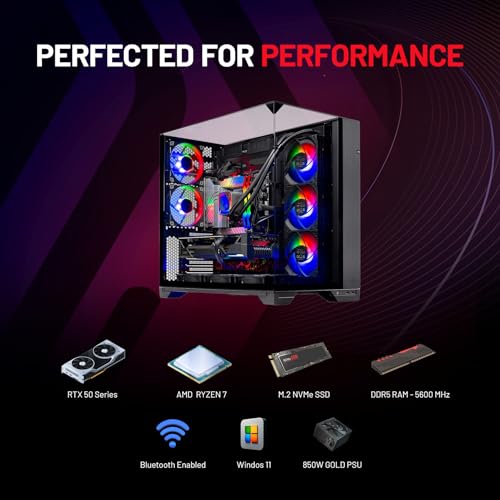
Skytech Gaming O11 Vision Gaming PC, AMD Ryzen 7 7700X 4.5GHz, NVIDIA RTX 5070 12GB, X670 Board, 1TB Gen4 NVMe SSD, 32GB DDR5 RAM 5600, 850W Gold ATX 3 PSU, 360 ARGB AIO, Wi-Fi, Win 11, Desktop





As an Amazon Associate we earn from qualifying purchases. Product prices and availability are accurate as of the date/time indicated.
The Skytech O11 Vision with the Ryzen 7 7700X and RTX 5070 is the balanced entry-ML pick. Its 12GB RTX 5070 with full CUDA support lets you train smaller models, fine-tune, and learn the ML workflow, while the capable eight-core 7700X handles data preparation and general compute. At around $1,999, in a striking O11 chassis, it is a well-rounded way into machine learning.
This is the build for the student or newcomer building ML skills without a flagship budget. The 12GB of VRAM and CUDA support mean the entire ML software stack — frameworks, libraries and tooling — works smoothly, you simply train smaller models and manage batch sizes accordingly, and the eight-core 7700X keeps data loading and preprocessing moving. It will not train large models like the high-VRAM picks, but as a balanced, attractive entry ML machine that also games superbly, it represents strong value.
Pros: 12GB CUDA RTX 5070 to learn and train smaller models, capable 7700X, attractive balanced build.
Cons: 12GB VRAM caps model and batch size; an entry rather than a heavy-training rig.
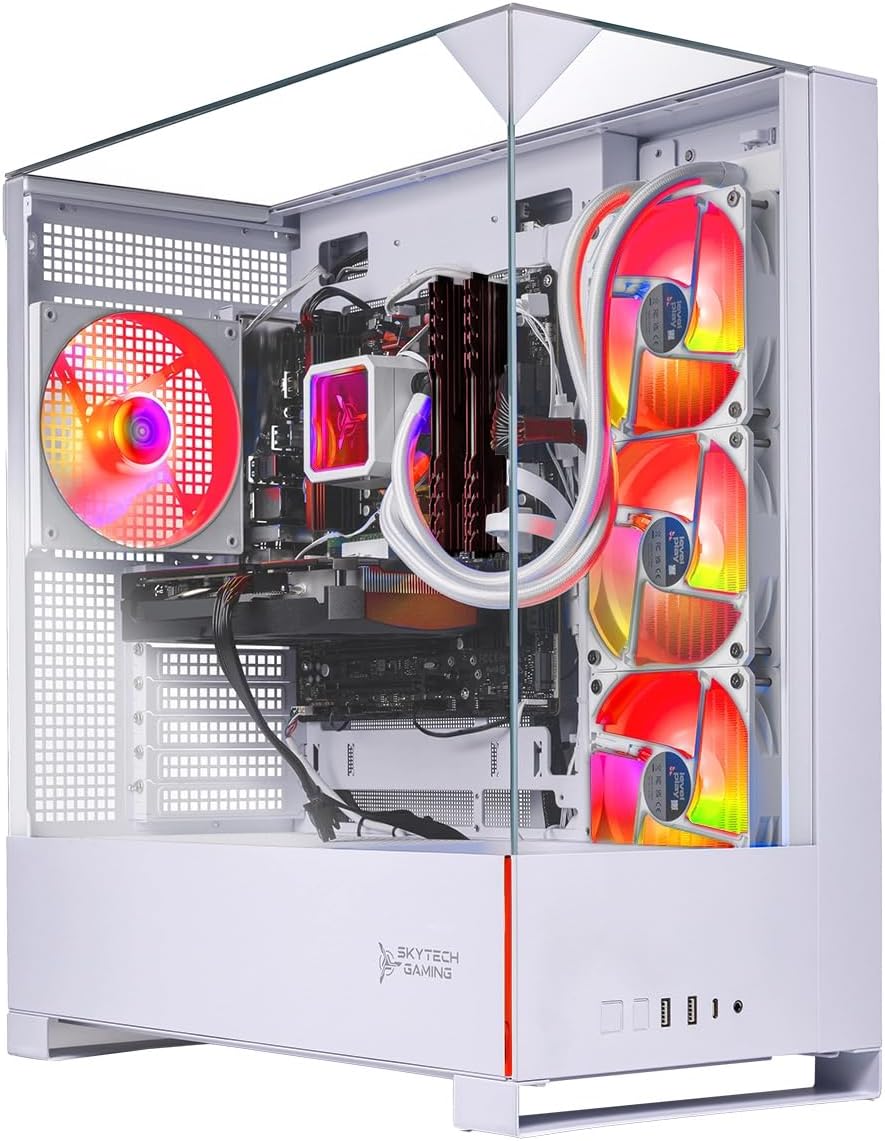
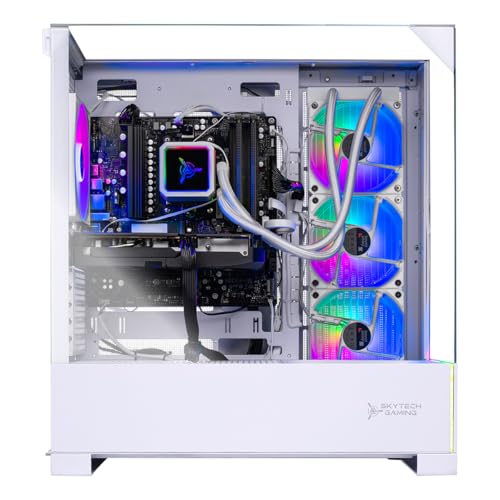
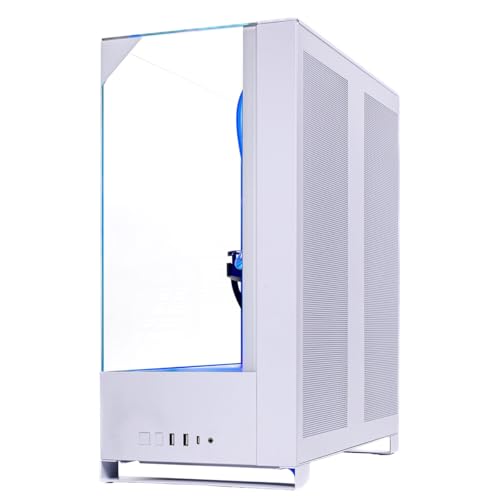
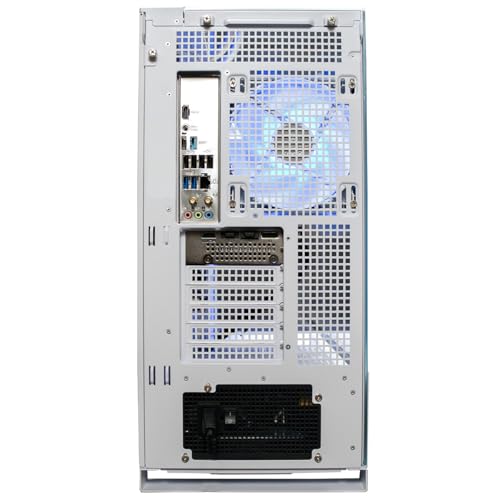
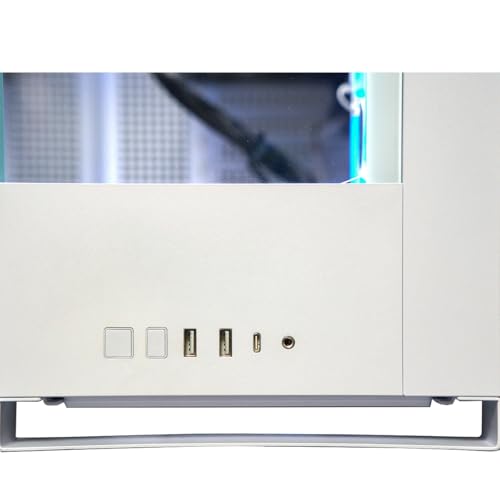
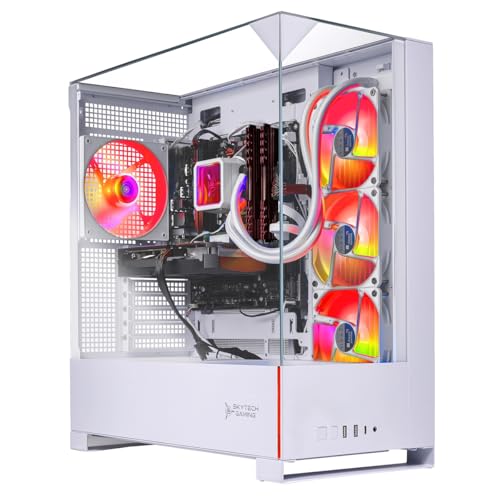
6. Skytech Gaming Archangel 5, AMD Ryzen 7 7700X, NVIDIA RTX 5070
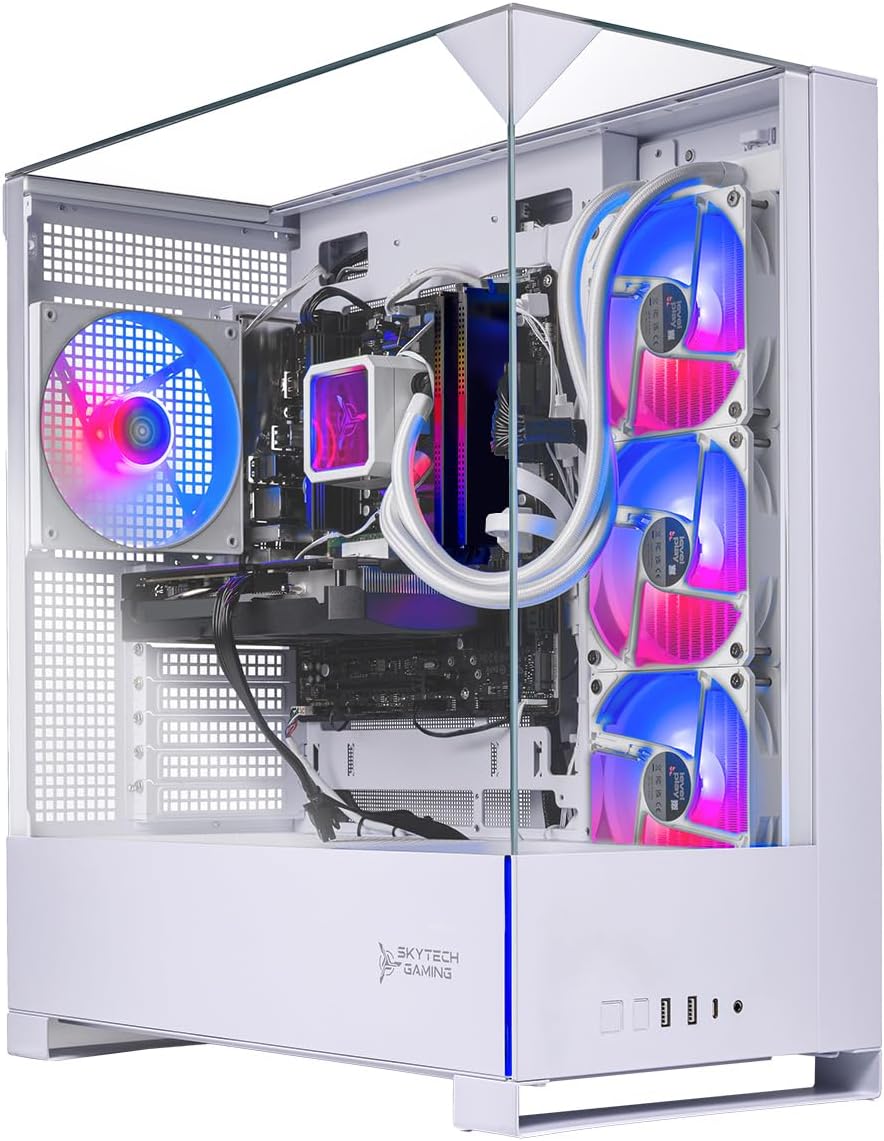
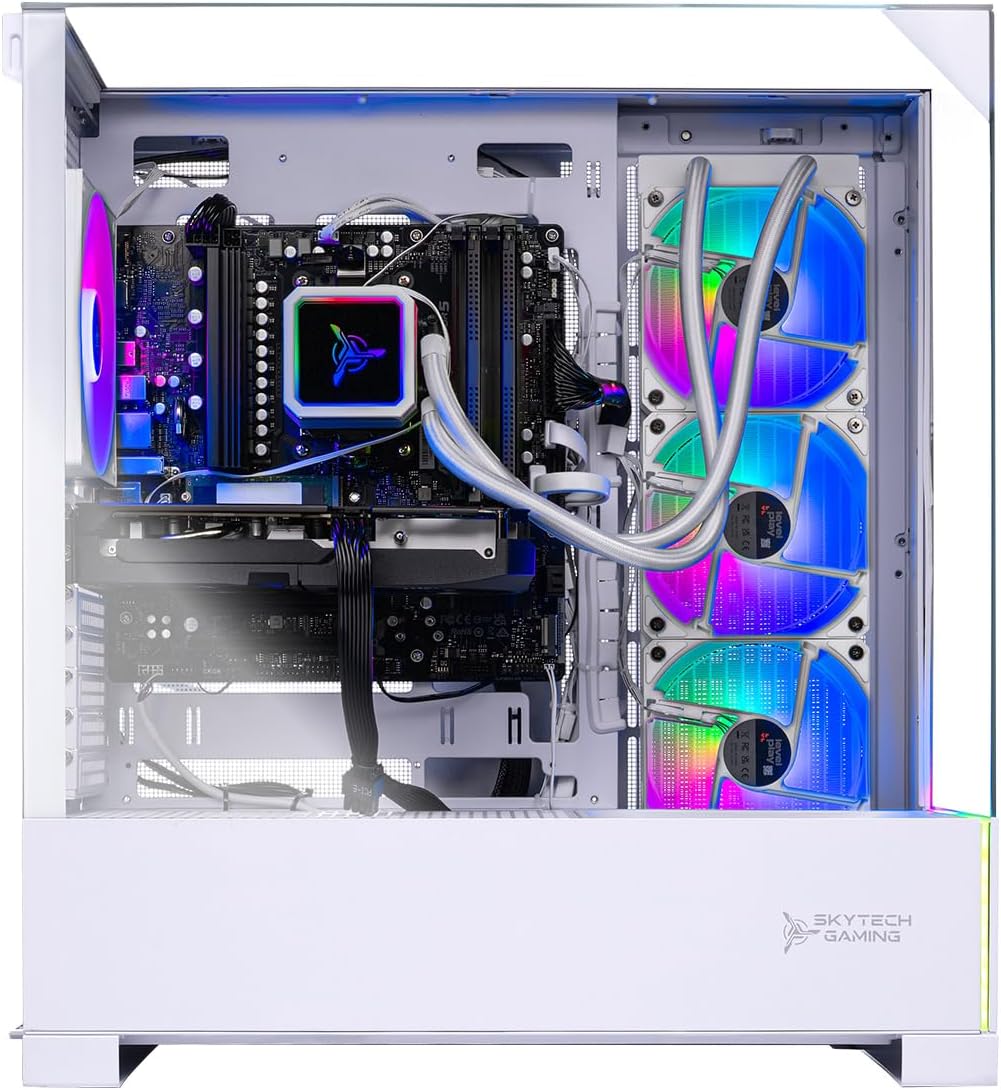
Skytech Gaming Archangel 5 Gaming PC, AMD Ryzen 7 7700X 4.5GHz, NVIDIA RTX 5070 12GB, 1TB Gen4 NVMe SSD, 32GB DDR5 RAM 6000, 750W Gold PSU, 360 ARGB AIO, Wi-Fi, Win 11, Desktop





As an Amazon Associate we earn from qualifying purchases. Product prices and availability are accurate as of the date/time indicated.
Rounding out the machine-learning list is the Skytech Archangel 5 with the Ryzen 7 7700X and RTX 5070 — the value ML starter. It packages the same eight-core 7700X and CUDA-capable RTX 5070 as the O11 Vision pick into a more cost-focused chassis, bringing the price to around $1,899. For getting into ML for the least money while keeping current hardware, it is the budget standout.
This is the build for the absolute value seeker who wants a real, CUDA-capable ML starting point. The RTX 5070 and full CUDA support run the frameworks and let you train smaller models and fine-tune, the eight-core 7700X feeds data pipelines and handles preprocessing, and the savings versus pricier builds can go toward more RAM — genuinely useful for ML data loaders. It carries the same honest caveat as the entry picks — limited VRAM caps model size — but as an affordable ML starter on a great gaming desktop, the Archangel 5 closes the list well.
Pros: Eight-core 7700X and CUDA RTX 5070 at a lower price, savings toward RAM for data loaders.
Cons: Limited VRAM constrains model and batch size; a starter, not a training powerhouse.
How to Choose a Gaming PC for Machine Learning (Honestly)
For machine learning, GPU VRAM and CUDA throughput sit at the top of the priority list, even above gaming concerns. VRAM determines the size of model you can train, the batch sizes you can use — which directly affects training speed and stability — and how much data you can hold on the GPU at once. That is why this list leads with VRAM: the RTX 5090’s 32GB removes memory ceilings the furthest, 16GB on the RTX 5080 handles a great deal of real training, and 12GB on the RTX 5070 builds suits learning and smaller models. CUDA cores then determine how fast the training math actually runs.
The CPU matters more for ML than many people expect, which is why core count earns real weight here. Machine learning pipelines do substantial work on the CPU — loading and decoding data, augmentation, feature engineering and feeding batches to the GPU through data-loader workers. If the CPU cannot keep up, the expensive GPU sits idle waiting for data. A high-core chip like the sixteen-core Ryzen 9 9950X3D in the CLX Horus or the many-threaded i7-14700F keeps the pipeline saturated so the GPU stays busy. Match CPU cores to how data-heavy your workloads are.
System RAM is the third pillar and is easy to under-spec. Large datasets, in-memory data loaders, caching and preprocessing all consume system memory, and running short forces slow disk swapping that throttles training. Abundant RAM lets you cache more data in memory and run bigger pipelines without bottlenecks. Pair maximum VRAM and a high-core CPU with generous RAM, and consider it a primary upgrade target if a build’s stock memory looks tight for your datasets — it pays off directly in throughput.
Finally, be honest about scope, and factor in cooling and storage. These are powerful single-GPU gaming desktops fitted to ML — superb for learning, building and training your own models, fine-tuning and experimentation, but not multi-GPU cluster nodes for training foundation models from scratch. For individual practitioners and students that is exactly the right, cost-effective tool. Training runs hardware hard for hours, so robust cooling like the Horus’s 360mm AIO and fast, roomy NVMe storage for datasets both matter. Set your budget, lead with VRAM, CUDA and cores, back them with RAM, and pick the ML machine here that matches the models you intend to train.
Frequently Asked Questions
Can a gaming PC be used for machine learning?
Yes, very effectively for individual work. A high-end gaming PC with maximum NVIDIA VRAM, strong CUDA throughput, a high-core CPU and abundant RAM handles learning ML, building and training your own models, fine-tuning and serious experimentation. Be honest about scope, though: these are single-GPU gaming desktops fitted to the task, not multi-GPU cluster nodes for training foundation models from scratch.
How much VRAM do I need for machine learning?
As much as your training allows — VRAM caps model and batch size. Around 12GB, as on the RTX 5070 builds, suits learning and training smaller models; 16GB on the RTX 5080 handles a great deal of real training and fine-tuning; and the RTX 5090’s 32GB lets you train larger models and use bigger, more stable batches. If you keep hitting out-of-memory errors, more VRAM is the upgrade that matters most.
Does the CPU matter for machine learning, or just the GPU?
The CPU matters more than people expect. ML pipelines load and decode data, run augmentation and feature engineering, and feed batches to the GPU via data-loader workers — all on the CPU. If it cannot keep up, the GPU sits idle waiting for data. High-core chips like the sixteen-core Ryzen 9 9950X3D or the many-threaded i7-14700F here keep data pipelines saturated so the GPU stays busy.
Should I buy a gaming PC or use cloud GPUs for ML?
It depends on how much you train. For frequent, ongoing work, a capable gaming PC with a high-VRAM NVIDIA GPU pays for itself versus renting endless cloud time, and you get a superb gaming machine too. The cloud still wins for occasional huge multi-GPU training jobs these single-GPU desktops are not built for. For most individual practitioners and students, owning a strong local machine is the more economical choice.
Related Guides
- Best Gaming PCs
- Best GPUs for Your Build
- Best CPUs for Your Build
- Best RAM for Your Build
- Best NVMe SSDs
- Best CPU Coolers
Affiliate Disclosure: As an Amazon Associate, we earn from qualifying purchases. If you click a link and make a purchase, we may earn a small commission at no extra cost to you. Prices and availability are accurate as of publication and may change.
Ready to decide? Our #1 pick for 2026 is the CLX Horus (Ryzen 9 9950X3D / RTX 5080).
Live price & availability on Amazon.


