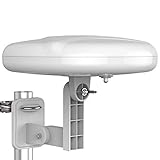
- Top Pick: Antop High Gain Indoor Radio Antenna, Multi-Directional Amplified AM FM Antenna 50 Miles with Amplifier Signal Booster and 4G Filter for Stereo Radio Audio Signals, Perfect for Home/RV/Mobile Use
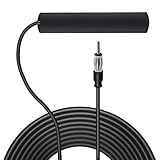
- Best Value: Bingfu FM Radio Dipole Antenna for Stereo Receiver Indoor Pioneer Onkyo Yamaha Marantz Bose Wave Music System Home FM Radio AV Audio Video Home Theater Receiver
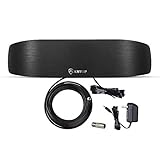
- Premium Choice: FM Antenna for Stereo Receiver, Magnetic Base, 16ft Cable, 75 Ohm
The thin wire that came taped to the back of your receiver is rarely the problem you think it is. Hiss between stations, a favorite jazz channel that drops out when a truck passes, and an HD radio that keeps flipping to analog usually trace back to the antenna and its connector, not the amplifier. The question behind “best FM antennas for home stereo” is which style gets a cleaner signal into your particular receiver: a simple dipole, a longer magnetic-base wire, or an amplified indoor unit.
This guide is for anyone with a stereo receiver, AV receiver or tabletop music system who wants better FM reception without running cable through a wall. It covers nine options built around two connection types, the 75 ohm coaxial F-type input and the 300 ohm two-wire terminals, and it is written as a 2026 shopping reference based on the product titles, not on any claimed listening session. Several kits bundle an AM loop as well, which matters if your receiver has both inputs.
Quick Picks
As an Amazon Associate we earn from qualifying purchases at no extra cost to you.


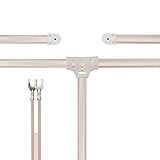


| Product | Best for | Key spec from the title |
|---|---|---|
| Antop Indoor Amplified AM FM | Weak signal areas | Amplifier plus 4G filter, 50 miles listed |
| Bingfu FM Dipole (stereo receiver) | Simple replacement | Indoor dipole for named receiver brands |
| CHHLIUT Magnetic Base FM | Placing the antenna away from the receiver | 16 ft cable, 75 ohm |
| AEDIKO Adhesive FM Dipole | Wall or shelf mounting | Adhesive mounting |
| AEDIKO FM + AM Loop Kit | Receivers with both inputs | 75 ohm, 3 connectors |
| Bingfu 300 Ohm Dipole | Two-pin bare wire terminals | 300 ohm twin lead |
| Bingfu 75 Ohm FM + AM Loop | Pioneer, Onkyo, Yamaha, Marantz receivers | 75 ohm FM and AM loop |
| GROVDDNT Telescopic Magnetic | Mixed connector situations | 10 ft, 2 baluns, 3 adapters |
| JSZAAHZ Magnetic Base | Adapter variety | 5 adapters, 9.84 ft coax |
How to Choose
Match the connector on the back of the receiver
Look at the antenna terminals before ordering. Modern receivers typically have a threaded 75 ohm F-type jack for FM and a pair of spring clips or screw terminals for an AM loop. Older stereos and some tabletop systems use two bare-wire terminals labeled 300 ohm. A product built for the wrong input will either not connect or need a small transformer called a balun. Kits that bundle baluns or several adapters reduce that risk.
Decide between a dipole, a wire and an amplified antenna
A dipole is the classic T-shaped wire you stretch along a wall, and it does well when the receiver sits near a window and the station is strong. A longer magnetic-base wire lets you place the element higher or farther from electronics that cause interference. An amplified indoor antenna adds a booster for weak or distant stations, which helps in basements and apartments but can overload on strong local signals if the gain is too high.
Think about cable length and placement
Listed lengths of about 10 feet or 16 feet decide where the antenna can go. Longer cable lets you move the element toward a window or up the wall, which is often the single biggest improvement. Keep the cable away from power cords and routers, and avoid coiling the extra length behind the stereo.
What to ignore and where corners get cut
Ignore range claims that have no context. A figure such as 50 miles depends on terrain, building materials and transmitter power, so treat it as a ceiling. Budget antennas often skimp on connector quality and shielding, so look for named connectors, stated impedance, and a clear description of what comes in the box. A listing that names the receiver brands it fits, or lists adapters by count, is easier to trust than one that only says “universal”.
The 9 Best Options
Antop High Gain Indoor Amplified AM FM Antenna
This multi-directional indoor unit adds an amplifier signal booster and a 4G filter, and the title lists a 50-mile range along with use in a home, RV or mobile setup. It is the listing aimed at buyers fighting weak stations in a basement or interior room.
- Strength: the amplifier and 4G filter are both named in the title.
- Strength: covers AM as well as FM from one unit.
- Trade-off: an amplifier can overload on strong local stations, so more gain is not always better.
Skip it if your reception is already clean and you only need a simple wire replacement.
Bingfu FM Radio Dipole Antenna for Stereo Receiver
A plain indoor dipole whose title lists compatibility with Pioneer, Onkyo, Yamaha, Marantz and Bose Wave systems, along with AV receivers and home theater units. It is the no-frills swap for a lost or broken stock wire.
- Strength: the brand compatibility line shows who it is intended for.
- Strength: a dipole is simple to hang along a wall or window frame.
- Trade-off: no amplifier or extended cable is mentioned, so placement is limited by its length.
Skip it if your receiver is far from a window or sits in a signal-poor room.
CHHLIUT FM Antenna, Magnetic Base, 16 ft
The title is short and specific: magnetic base, a 16 ft cable and 75 ohm. The long lead lets you mount the base on a metal surface, such as a shelf bracket or filing cabinet, well away from the stereo.
- Strength: the longest cable in this guide at 16 ft.
- Strength: a magnetic base needs no adhesive or drilling.
- Trade-off: it only helps if a metal surface is available where you want the antenna.
Skip it if you have no metal surface nearby or your receiver uses a 300 ohm input.
AEDIKO FM Radio Antenna, Adhesive Mounting
An FM dipole built around adhesive mounting for indoor music systems and stereo receivers. That mounting style is useful on a painted wall or a window frame where a magnet has nothing to grip.
- Strength: the adhesive mount places the dipole where you choose.
- Strength: it is described for stereo receivers, AV audio and home theater use.
- Trade-off: adhesive is less forgiving when you want to try several positions.
Skip it if you plan to move the antenna around while hunting for the cleanest spot.
AEDIKO FM Antenna and AM Loop, 75 Ohm
This kit pairs a 75 ohm FM coax antenna with an AM loop and lists three connectors in the title. It is aimed at owners whose receivers have both FM and AM inputs and who want to fill both at once.
- Strength: FM and AM are covered in a single kit.
- Strength: three connectors give flexibility across receiver types.
- Trade-off: the AM loop is useless if your receiver has no AM terminals.
Skip it if you listen to FM only.
Bingfu FM Dipole 300 Ohm, Two-Pin Bare Wire
A dipole with two-pin bare wire twin lead for 300 ohm inputs. The title points to table-top FM radios, HD radio and AV receivers that use the older two-terminal style.
- Strength: matches the 300 ohm two-wire input directly, with no balun needed.
- Strength: HD radio is named among the intended uses.
- Trade-off: it will not fit a 75 ohm F-type jack without a converter.
Skip it if your receiver has a threaded coax jack.
Bingfu 75 Ohm FM Antenna and AM Loop
The title lists Pioneer, Onkyo, Yamaha and Marantz alongside HD radio and Bluetooth home stereo receivers. It combines a 75 ohm FM antenna and an AM loop in one purchase.
- Strength: a named list of compatible brands.
- Strength: FM and AM together for receivers that need both.
- Trade-off: no cable length is listed in the title.
Skip it if you want a magnetic base or amplifier.
GROVDDNT 10 ft Telescopic Magnetic FM Antenna
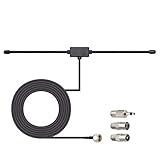
A 10 foot, 75 ohm antenna with a telescopic element and magnetic base. The box also lists two 300 ohm baluns and three adapters, which is the most connector flexibility in the group.
- Strength: baluns and adapters cover both 75 ohm and 300 ohm situations.
- Strength: the telescopic element can be adjusted by length.
- Trade-off: more parts means more connections to keep track of.
Skip it if you want a single clean plug-and-play piece.
JSZAAHZ FM Antenna, Magnetic Base, 5 Adapters
This magnetic base antenna uses a 75 ohm F male screw connector and a 9.84 ft coaxial cable, with five adapters included. It is built for buyers who are not sure what input their AV receiver has.
- Strength: five adapters improve the odds of a good fit.
- Strength: a coax lead just under 10 feet allows flexible placement.
- Trade-off: the title does not describe the antenna element in detail.
Skip it if you want a dipole or an AM loop included.
Which One Fits Your Situation
You live in an apartment with weak reception
Start with the Antop amplified unit. It is the only option here with a signal booster and a 4G filter, though it works best when you can place it near a window. Because it also handles AM, it doubles as a fix for a receiver that has no outdoor option, and the multi-directional design means you do not need to aim it precisely at one tower.
You have a vintage receiver with bare-wire terminals
The Bingfu 300 ohm dipole connects directly to those terminals. The GROVDDNT kit also includes 300 ohm baluns if you want a longer lead, which makes it a sensible choice when you are not certain what the old receiver expects. Loosen the terminal screws, slip the bare wires underneath and tighten them again.
You need both FM and AM
Choose the Bingfu 75 ohm FM and AM loop kit or the AEDIKO FM and AM loop kit. Check which connectors your receiver uses before choosing between them.
You want the antenna far from the stereo
The CHHLIUT 16 ft model and the JSZAAHZ 9.84 ft model both use magnetic bases, which makes it easy to park the element on a metal surface across the room. Moving the element away from the stereo, speakers and any wall adapters reduces the electrical noise that tends to creep into FM, and the long cable makes that realistic.
Common Mistakes
- Ordering before checking whether the receiver has a 75 ohm F-type jack or 300 ohm terminals.
- Coiling excess cable behind the stereo, which picks up noise from the power supply.
- Trusting a mileage claim instead of thinking about walls, terrain and distance to the transmitter.
- Adding an amplified antenna in a strong signal area, which can make reception worse.
- Leaving the antenna against metal or electronics instead of trying a few placements near a window.
Related guides
- Combination Smoke And Carbon Monoxide Detectors
- Aio Liquid Coolers For High Performance Gaming
- Graphics Cards For Low Wattage Power Supplies
Frequently Asked Questions
Do I need an amplified FM antenna?
Only if stations are weak or distant. In strong signal areas a plain dipole or wire is usually enough, and an amplifier can introduce distortion.
What is the difference between 75 ohm and 300 ohm?
These are the two common antenna impedances. 75 ohm uses a coaxial F-type connector, while 300 ohm uses two bare wires. A balun converts between them.
Where should I put an indoor FM antenna?
Near a window and away from routers, power cords and other electronics is a good starting point. Try a few spots and watch the signal indicator on the receiver.
Will a better antenna fix a noisy HD radio?
It can help if the problem is a weak or inconsistent signal. It will not fix interference created inside the room, so placement matters as much as the product.