- Top Pick: Pioneer F-Series TS-F1634R 6.5" 2-Way Coaxial Car Speakers 200W Max | Great Factory Speaker Replacement, Balanced Sound + Smooth Treble, High-Efficiency Speaker Designed for OEM Power
- Best Value: PIONEER F-Series TS-F6935R 6" x 9" 3-Way Coaxial Car Speakers 230W Max | Great Factory Speaker Replacement, Balanced Sound + Smooth Treble, High-Efficiency Speaker Designed for OEM Power
- Premium Choice: BOSS Audio Systems CH6530 6.5 Inch Car Speakers, 300 Watts Per Pair, 3 Way
Factory door speakers are usually the first thing to hold a car stereo back. They muddy vocals, fade out on the highs and give up when the volume climbs. The decision behind “best car speakers” is therefore a swap decision: which opening in your doors or rear deck are you filling, and how far do you want to go beyond stock without rewiring the whole car? A speaker that looks wonderful on a spec sheet is no help if it is a 6×8 and your door takes 6.5 inches.
This guide is built for daily drivers, commuters and truck owners who want a straightforward replacement that bolts into the existing location and runs from a factory or aftermarket head unit. It covers ten coaxial options across 4-inch, 6.5-inch, 6×8 and 6×9 sizes from Pioneer, BOSS, Kenwood, JBL, Rockford Fosgate and Kicker. Everything below is judged from the listed specs, as a 2026 buying reference rather than a claim of listening sessions.
Quick Picks
As an Amazon Associate we earn from qualifying purchases at no extra cost to you.




| Product | Best for | Key spec from the title |
|---|---|---|
| Pioneer TS-F1634R | Simple door replacement | 6.5″ 2-way, 200W max |
| Pioneer TS-F6935R | Rear deck or 6×9 openings | 6×9 3-way, 230W max |
| BOSS Audio CH6530 | Basic 6.5-inch 3-way swap | 3-way, 300 watts per pair |
| Kenwood KFC-1666S | Added clarity from a 2-way | 6.5″ 2-way, Sound Field Enhancer |
| JBL GTO629 | Premium 6.5-inch upgrade | 6.5″ co-axial, set of 2 |
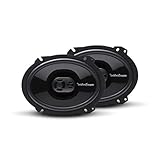
| Rockford Fosgate P1683 Punch | Cars with 6×8 openings | 6×8 3-way full range |
| Pioneer TS-A1681F | Bigger factory upgrade | 6.5″ 4-way, 350W max |
| Pioneer TS-A6971F | Bass-forward 6×9 swap | 6×9 4-way, 600W max |
| Pioneer TS-F1035R | Small 4-inch locations | 4″ 2-way, 150W max |
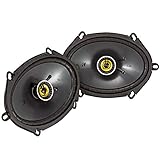
| Kicker CSC68 | Trucks and SUVs with 6×8 doors | 6×8, 2 pack, direct-fit |
How to Choose
Confirm the opening size first
Car speakers come in a handful of sizes: 4 inch, 5.25 inch, 6.5 inch, 6×8 and 6×9. Your vehicle’s manual or a fitment lookup will name the sizes for the front doors and the rear deck. A 6.5-inch speaker will not fill a 6×8 opening and vice versa, so match the size on the box to the one your car uses before you compare anything else.
Read “max power” for what it is
Figures such as 200W max, 350W max or 600W max describe peak power handling, not what the speaker will draw in normal listening. The number that matters on a factory head unit is sensitivity, which tells you how loud a speaker plays from a modest amplifier. If a listing says it is designed for OEM power, it is aimed at the low output of a stock radio. Larger max numbers help if you plan to add an amplifier later.
Choose the driver layout
A 2-way coaxial pairs a woofer with a tweeter. 3-way and 4-way versions add extra elements, usually a mid or super tweeter, to widen the frequency range. More elements do not guarantee better sound, but they can add detail to the top end when the design is competent. For the simplest drop-in swap, a 2-way is easy to live with; for a fuller front stage, a 4-way coaxial is the ambitious option.
Look for installation help and where corners get cut
Mounting adaptors, direct-fit shaping and a pair rather than a single speaker all make a swap easier. Entry-level sets tend to compromise on cone material, tweeter quality and mounting depth, so check that the listing says pair or set of 2 and confirm clearance for your window track. Ignore flashy power numbers when two competing listings are close; fitment, layout and included parts are the better tiebreakers.
The 10 Best Options
Pioneer F-Series TS-F1634R
A 6.5-inch 2-way coaxial pair listed at 200W max and described as a factory replacement with balanced sound and smooth treble. It is the straightforward pick for a commuter whose worn door speakers need a clean, uncomplicated refresh, and the 2-way layout keeps the swap simple.
- Strength: designed for OEM-level power, so a stock head unit can drive it.
- Strength: the 2-way layout and common 6.5-inch size make fitment easy.
- Trade-off: its max power is the lowest of the 6.5-inch Pioneer options listed here.
Skip it if you want deeper bass or plan to add an amplifier soon.
Pioneer F-Series TS-F6935R
This 6×9 3-way coaxial carries a 230W max figure and the same factory-replacement positioning as its smaller sibling. It targets rear shelf locations and cars with oval openings, giving those spots a third driver for a fuller sound than a basic 2-way.
- Strength: 3-way design in the 6×9 format for a wider range.
- Strength: engineered for OEM power, which suits a stock radio.
- Trade-off: it only fits 6×9 openings, which many modern doors do not offer.
Skip it if your car uses round openings or you need front-door speakers.
BOSS Audio CH6530
A 6.5-inch 3-way speaker listed at 300 watts per pair. The title keeps things plain, giving size, layout and power with no extra feature callouts, which makes it the minimalist choice for a buyer who only wants a third driver in a standard door opening.
- Strength: 3-way design in the most common car speaker size.
- Strength: a clear power figure stated per pair, so you know how it is measured.
- Trade-off: the listing offers little detail about materials, sensitivity or mounting.
Skip it if you want included installation parts or a name tied to premium audio.
Kenwood KFC-1666S
A 6.5-inch 2-way coaxial pair listed at 300 watts, with a Sound Field Enhancer named in the title. It suits a driver who wants a recognized audio brand while staying with the simple 2-way format that most door openings accept without fuss.
- Strength: the Sound Field Enhancer is a named feature, not a vague adjective.
- Strength: sold as a pair for the standard 6.5-inch location.
- Trade-off: the title gives no sensitivity or cone material details.
Skip it if you would rather have a 3-way or 4-way layout.
JBL GTO629
A premium 6.5-inch co-axial speaker sold as a set of 2. JBL positions it as a step up for drivers unhappy with stock door speakers who are willing to choose a name-brand audio line, though the title leaves the numbers out.
- Strength: a set of two for a complete front-door swap.
- Strength: labeled premium within the JBL line.
- Trade-off: the title offers no peak power figure or driver count to compare.
Skip it if you like to compare specs line by line before choosing.
Rockford Fosgate P1683 Punch
A 6×8 3-way coaxial full-range pair from the Punch series. The 6×8 size is found in a limited set of vehicles, so this is a fitment-driven pick for owners whose doors take that oblong shape and who want a 3-way layout in it.
- Strength: 3-way full-range design in an uncommon size.
- Strength: sold as a pair from a car-audio specialist.
- Trade-off: the 6×8 size only suits specific vehicles, so confirm fitment first.
Skip it if your doors take round 6.5-inch speakers.
Pioneer A-Series Plus TS-A1681F
A 6.5-inch 4-way coaxial pair listed at 350W max, framed as a factory upgrade with enhanced bass. The listing says installation adaptors are included, so a first-time installer gets a bit of help matching the new speaker to the old mounting holes.
- Strength: 4-way layout with a stated focus on enhanced bass.
- Strength: installation adaptors are in the box.
- Trade-off: the higher power figure benefits most from an added amplifier.
Skip it if you want the simplest, lowest-power replacement.
Pioneer A-Series Plus TS-A6971F
The 6×9 member of the A-Series Plus line, with a 4-way layout and a 600W max figure. It carries the same enhanced-bass and installation-adaptor language as the 6.5-inch version, aimed at rear decks and larger oval openings.
- Strength: the highest max power figure in this guide.
- Strength: adaptors are included for a smoother install.
- Trade-off: the size limits it to 6×9 locations.
Skip it if your rear deck or doors are another size, or if you run a stock radio only.
Pioneer F-Series TS-F1035R
A compact 4-inch 2-way coaxial at 150W max. It is for small openings in dashboards, older cars and tight door positions where larger drivers cannot go, and it keeps the factory-replacement approach of the F-Series family.
- Strength: fits small locations that other speakers in this list cannot.
- Strength: a factory-replacement design aimed at OEM power.
- Trade-off: a 4-inch cone limits low-end output by size alone.
Skip it if strong bass is the goal.
Kicker CS Series CSC68
A 6×8 pair described as a direct-fit door upgrade for trucks and SUVs, with clear full-range output and an easy install. The two-pack covers both front doors, which suits pickup and utility owners replacing tired factory cones.
- Strength: direct-fit positioning built around trucks and SUVs.
- Strength: a two-pack for both doors in one order.
- Trade-off: no driver count or power figure appears in the title.
Skip it if your vehicle has round openings.
Which One Fits Your Situation
You drive a truck or SUV with 6×8 doors
The Kicker CSC68 is aimed squarely at that fitment, while the Rockford Fosgate Punch is the other 6×8 option for people who want a 3-way layout. Measure the opening before choosing between them, because depth matters as much as width.
You have a stock radio and want a clean upgrade
The Pioneer TS-F1634R is built around OEM power and keeps the install easy. The TS-F6935R plays the same role for 6×9 openings, and the TS-F1035R covers the small 4-inch spots that larger speakers cannot reach.
You plan to add an amplifier
The Pioneer TS-A1681F and TS-A6971F carry the larger max power numbers and include adaptors, making them better matches for an amplified system. Pair either with a modest amplifier rather than leaning on a head unit alone.
You want a recognizable name on a 6.5-inch swap
The JBL GTO629 and the Kenwood KFC-1666S are the brand-led choices, with Kenwood offering the more specific feature in its title. The BOSS CH6530 is the plain 3-way alternative if you simply want an extra driver.
Common Mistakes
- Ordering by the number of “ways” without confirming the opening size.
- Reading max power as continuous output and expecting a stock radio to reach it.
- Forgetting window-track clearance and mounting depth, which can stop a deep magnet from fitting.
- Skipping adaptors and wiring harnesses, then discovering the plug does not match the factory connector.
- Replacing one door speaker only, leaving the left and right sides mismatched in tone.
Related guides
- Combination Smoke And Carbon Monoxide Detectors
- Aio Liquid Coolers For High Performance Gaming
- Graphics Cards For Low Wattage Power Supplies
Frequently Asked Questions
Do I need an amplifier for new car speakers?
Not always. Factory-replacement models are designed to run from a stock head unit. An amplifier helps higher-power speakers reach their potential and keeps the sound clean at higher volume.
Is a 4-way speaker better than a 2-way?
Not automatically. More drivers can add range, but a well-designed 2-way can beat a poorly executed 4-way. Fitment and system power matter more than the driver count on the box.
What does coaxial mean?
The tweeter sits in front of the woofer in one unit, so you install a single speaker per location instead of a separate component set. That is why coaxial models are the easy swap for most cars.
Can I install them myself?
Most coaxial swaps are a screwdriver job with a wiring adaptor. Check that mounting adaptors are included, and read the door panel removal steps for your model first so no clips are broken.