Our Short List of 3

All 3 Picks at a Glance
| Product | Specs | Action |
|---|---|---|
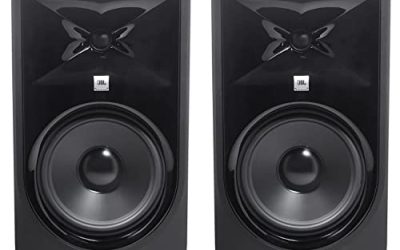
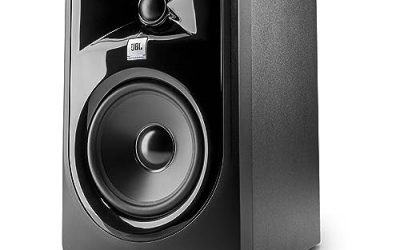
| JBL Professional 306P MkII 6.5-Inch 2-Way Powered Studio Monitor | Check price on Amazon | |
 Kali Audio LP-6 V2 6.5-Inch Powered Studio Monitor | Check price on Amazon | |
 PreSonus Eris E7 XT 2-Way Active Studio Monitor | Check price on Amazon |
The best 6.5-inch powered studio monitors for desktop mixing step up from compact 5-inch designs with deeper bass, higher clean output and a larger sweet spot. The extra woofer area moves more air, so low frequencies arrive with more weight and less strain, which matters when you are judging kick drums, bass guitar and synth lines at moderate volume. On a desk, a 6.5-inch monitor is still a near-field tool, but it behaves more like a small main monitor than a satellite.
That added low end changes how a room responds. A 6.5-inch monitor reaches further down the frequency range, so placement and boundary control matter even more: a monitor pushed into a corner will sound boomy, while the same monitor pulled a few inches from the wall will sound tighter. All three models below include rear-panel tuning controls to address exactly that, and each one is a two-way powered design with balanced inputs and its own built-in amplification.
What to Look For
Low-end extension is the main reason to choose this size. Look for a listed frequency response that reaches into the low 40 Hz range, and check whether the figure is measured at minus 3 dB or minus 10 dB, since the looser measurement flatters the number. A front port is more forgiving near a wall, while a rear port usually needs clearance behind the cabinet.
Amplifier power and headroom decide how clean the monitor stays at working volume. A 6.5-inch design typically carries 80 to 130 watts of bi-amplified power, with separate amplifiers for the woofer and tweeter.
Voicing should stay neutral. A monitor tuned for mixing keeps the midrange honest so vocal and instrument balances translate to other systems. Waveguides around the tweeter widen the listening window, which helps on a desk where you shift position between a keyboard, a mouse and a notepad.
Connectivity should match your interface. Balanced XLR and quarter-inch TRS inputs are the standard for studio gear and reject interference over longer runs. RCA inputs add flexibility for a second source, but keep unbalanced cable runs short.
Finally, measure before ordering. A 6.5-inch monitor is typically 8 to 9 inches wide and 12 to 14 inches tall, and it weighs noticeably more than a 5-inch model. Check desk depth, stand height and weight limits, and remember that these monitors are usually sold singly, so a stereo pair means two units.
The 3 Best 6.5-Inch Powered Studio Monitors for Desktop Mixing
JBL Professional 306P MkII 6.5-Inch 2-Way Powered Studio Monitor
The JBL 306P MkII pairs a 6.5-inch woofer with a 1-inch tweeter, driven by 112 watts of Class D amplification. JBL lists a frequency response of 47 Hz to 20 kHz, and the Image Control Waveguide is designed to hold the stereo image steady across a wide listening area. Balanced XLR and quarter-inch TRS inputs sit on the rear panel beside high-frequency trim and boundary EQ controls, and a front slot port keeps the low end consistent when the cabinet sits close to a wall.
This monitor suits producers who want the familiar JBL near-field sound with more bass weight than the 5-inch version. The front port and boundary EQ make it one of the easier 6.5-inch monitors to place on a crowded desk, and the 112-watt amplifier keeps dynamics clean at typical mixing levels. One consideration is that the listing covers a single monitor, so a stereo setup needs two units plus balanced cables.
Kali Audio LP-6 V2 6.5-Inch Powered Studio Monitor
The Kali Audio LP-6 V2 uses a 6.5-inch woofer and a 1-inch soft-dome tweeter with 80 watts of low-noise bi-amplified Class D power. Kali lists a frequency range of 47 Hz to 21 kHz within 3 dB, with response extending to 39 Hz at minus 10 dB, and a maximum SPL of 115 dB. The 3-D Imaging Waveguide is designed for a wide, detailed stereo image, and the rear panel carries DIP switches for boundary EQ plus low-frequency and high-frequency trims. Inputs cover balanced XLR and TRS plus unbalanced RCA, and the front port is shaped to reduce port noise at higher volumes.
This monitor suits mixers working at a desk against a wall, where the boundary EQ settings and front port earn their keep. Its flat voicing and low-noise amplifier design make it a strong choice for critical listening in small rooms, and the printed boundary EQ guide on the cabinet simplifies setup. One consideration is size and weight: the LP-6 V2 is a substantial cabinet, so confirm desk space and use sturdy stands or isolation pads.
PreSonus Eris E7 XT 2-Way Active Studio Monitor
The PreSonus Eris E7 XT combines a 6.5-inch woven composite woofer with a 1.25-inch silk-dome tweeter, powered by 130 watts of Class AB bi-amplification. Its listed frequency response runs from 42 Hz to 22 kHz, the deepest low end in this guide, and the elliptical EBM waveguide is designed to widen the sweet spot. Inputs include balanced XLR, balanced quarter-inch TRS and unbalanced RCA, while the rear panel provides acoustic tuning for gain, low cutoff, mid frequency, high frequency and acoustic space. A front-firing port supports placement near a wall.
This monitor suits desktop mixers who want the deepest bass and the highest amplifier power in this size class without adding a subwoofer. The mid-frequency tuning control is particularly useful for taming room resonances in the vocal range. One consideration is heat and weight: the Class AB amplifier and larger cabinet run warmer and heavier than Class D rivals, and the listing is for a single monitor.
Comparison Table
| Product | Woofer | Tweeter | Amplification | Frequency Response | Inputs | Sold As |
|---|---|---|---|---|---|---|
| JBL 306P MkII | 6.5-inch | 1-inch dome | 112 watts Class D | 47 Hz to 20 kHz | XLR, TRS | Single |
| Kali Audio LP-6 V2 | 6.5-inch | 1-inch soft dome | 80 watts Class D | 47 Hz to 21 kHz | XLR, TRS, RCA | Single |
| PreSonus Eris E7 XT | 6.5-inch woven composite | 1.25-inch silk dome | 130 watts Class AB | 42 Hz to 22 kHz | XLR, TRS, RCA | Single |
FAQ
Is a 6.5-inch monitor too big for a desk?
Not usually, but it needs more room than a 5-inch model. Allow roughly 9 inches of width and 13 inches of height per monitor, plus clearance behind a rear-ported cabinet. On a shallow desk, monitor stands or wall mounts free up surface space and get the tweeters to ear level.
Do I need a subwoofer with 6.5-inch monitors?
Most mixers do not. These monitors reach into the low 40 Hz range, which covers nearly all musical bass. A subwoofer only becomes necessary for sub-bass heavy electronic music, film sound design or checking content below 40 Hz.
Why do these monitors have tuning switches on the back?
The switches compensate for room placement. A monitor near a wall or in a corner gets a bass boost from the boundary, and the boundary EQ and low-frequency trim let you pull that back. High-frequency trim adjusts for a bright or dull sounding room.
Can I use one monitor on its own?
A single monitor works for mono checking and casual listening, but stereo mixing needs a pair. The models in this guide are sold singly, so order two identical units for a matched stereo setup.
Conclusion
The best 6.5-inch powered studio monitors for desktop mixing give a small room deeper bass and more headroom than compact models without demanding a large studio. The JBL 306P MkII is the straightforward all-rounder, the Kali LP-6 V2 is the strongest pick for a desk against a wall, and the PreSonus Eris E7 XT brings the deepest low end and the most amplifier power. Match the choice to your desk depth and your room.
Disclosure: As an Amazon Associate, we earn from qualifying purchases.