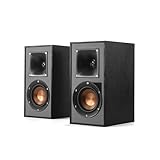
- Top Pick: Klipsch R-15M Bookshelf Speaker (Pair)
- Best Value: Klipsch R-41M Reference Bookshelf Speakers (Pair), Black
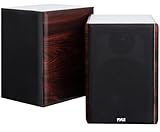
- Premium Choice: Pyle 6.5" Home Audio Speakers, 2-Way Passive Bookshelf, 240W Max Power, 1" Silk Dome Tweeter, Composite Woofer, Gold Plated 5 Way Binding Post, Rubber Surrounds, Beautiful Wood Grain Finish – Pair
Shopping for bookshelf speakers under 200 dollars means choosing between two very different paths, and the wrong pick wastes a weekend. One path is a passive pair that needs a receiver or stereo amplifier to make any sound. The other is a powered pair that plugs into a wall outlet and takes input straight from a TV, PC, or turntable. The listings below include both, and the whole decision turns on which one matches the gear already sitting on your desk or entertainment stand.
This guide is for people building a first real stereo setup in 2026, upgrading from laptop or monitor speakers, or adding a pair to a spare amplifier. It reads the listing titles closely, sorts the pairs by what the spec sheet actually states, and flags the places where a title leaves questions open. Wattage figures printed on budget speakers are peak marketing numbers more often than continuous ones, so the sections below lean on driver size, connection type, and cabinet design instead.
Quick Picks
As an Amazon Associate we earn from qualifying purchases at no extra cost to you.



| Product | Best for | Key spec from the title |
|---|---|---|
| Klipsch R-15M | Brand-name passive pair for an existing amp | Bookshelf speaker, sold as a pair |
| Klipsch R-41M | Stepping up within the Klipsch line | Reference bookshelf pair, black |
| Pyle 6.5″ Wood Grain | Larger woofer on a short list | 6.5″ woofer, 1″ silk dome tweeter, 240W max |
| Pyle 4″ Mini Cube | Tight desks and small rooms | 4″ paper cone driver, 8 ohm, video shielding |
| SAMTRONIC 200W | Bright, detailed highs | Ribbon tweeter, 5.25″ shielded woofer, 60Hz bass |
| Elimavi 4″ | Buyers who want cables in the box | 4″ woofer, 1″ silk horn tweeter, cables included |
| LONPOO LP-42M | No-receiver, plug-and-play setups | Active, Bluetooth, optical, RCA, USB, AUX input |
How to Choose
Passive or active comes first
A passive pair has no amplifier inside. The Klipsch, Pyle, SAMTRONIC, and Elimavi listings all fall in this group, and the SAMTRONIC and Elimavi titles say outright that an amplifier or receiver is required. If you do not already own one, a small stereo amp becomes a second purchase that has to fit under your cap too. An active pair like the LONPOO builds the amp into the cabinet and exposes inputs, which keeps the shopping list to one box.
Driver size and bass expectations
Woofer diameter sets the floor for low-end weight. A 4-inch woofer suits a desktop at arm’s length, a 5.25-inch design gives more midrange body, and a 6.5-inch cone is the one to look at if the pair will sit on shelves in a living room. None of the cabinets in this budget tier will rattle the floor, so treat a stated low-frequency figure such as 60Hz as the claimed lower limit rather than a promise of deep, tight bass.
Impedance and power matching
Passive speakers should be paired with an amplifier that handles their impedance. An 8 ohm spec, which the Pyle mini cube lists, works with the widest range of receivers. Watt numbers labelled max power describe what a driver might survive in a short burst, not what it plays comfortably. Choose an amp whose continuous output lands near the middle of the speaker range, and keep the volume knob out of the last quarter.
Connections and shielding
Binding posts, such as the gold plated five-way posts on the 6.5-inch Pyle, accept bare wire, pins, or banana plugs and are easier to live with than spring clips. On a powered pair, count the inputs: Bluetooth for a phone, optical for a TV, RCA for a turntable or mixer, USB and AUX for a PC. Magnetic shielding, mentioned on two listings, matters when speakers sit close to an older CRT or a monitor you move around often.
The 7 Best Options
Klipsch R-15M
The R-15M listing is short on detail, and that tells you something: this one is for buyers who already trust the Klipsch name and have an amplifier ready. The title confirms a bookshelf speaker sold as a pair, with nothing else claimed. Anyone comparing specs line by line will need to open the product page for driver sizes, sensitivity, and cabinet dimensions before deciding, and should confirm the pair fits their budget cap.
- Strength: a recognized speaker brand rather than a generic label.
- Strength: sold as a matched pair, so there is nothing extra to order.
- Trade-off: the title gives no driver or connection details, and an amplifier is still needed.
Skip it if you want a self-contained desktop system with a Bluetooth link.
Klipsch R-41M
The R-41M carries the Reference label in its title and comes as a black pair. It sits in the same family as the R-15M, so shoppers who liked the idea of a Klipsch passive bookshelf design can compare the two side by side and decide whether the step up in the lineup is justified by a bigger room.
- Strength: named Reference series bookshelf pair, a clear step in the product line.
- Strength: finished in black, which blends into most media cabinets.
- Trade-off: as with its sibling, the title leaves out dimensions and driver details, and the pair must be driven by a separate amp.
Skip it if your amplifier is a low-power desktop model, or if you need a TV-ready pair.
Pyle 6.5″ Home Audio Speakers
This is the biggest woofer on the list, a 6.5-inch composite cone with rubber surrounds, paired with a 1-inch silk dome tweeter in a two-way design. The wood grain finish suits a living room better than the plain black boxes around it, and the five-way gold plated binding posts handle thick speaker wire.
- Strength: 6.5″ woofer gives it the most cone area among the passive pairs here.
- Strength: gold plated five-way binding posts accept several connector styles.
- Trade-off: the 240W max figure is a peak claim, and you will need an amplifier of your own.
Skip it if shelf depth is tight or the speakers must sit beside a monitor, since the listing mentions no shielding.
Pyle Home 4″ Mini Cube
Small is the point. The 4-inch paper cone driver, 8 ohm impedance, and video shielding make this pair a candidate for a cramped workstation or a second room where a full-size cabinet would dominate. The listing frames it for home theater and stereo duty, so it is a flexible add-on for a receiver you already have.
- Strength: video shielding listed, helpful beside a display.
- Strength: the 8 ohm spec is easy for most receivers to drive.
- Trade-off: a 4-inch paper cone will not move much air, so low bass is limited.
Skip it if you want full-range music in a large room.
SAMTRONIC 200W Passive Bookshelf
The SAMTRONIC pair puts a ribbon tweeter above a 5.25-inch magnetically shielded woofer and quotes 60Hz bass, which positions it between the mini cubes and the 6.5-inch cabinets. The title explicitly says it needs an amplifier to operate and names home, office, and theater as uses.
- Strength: ribbon tweeter, an uncommon feature at this tier, aimed at crisp treble and fine detail in vocals and acoustic guitar.
- Strength: magnetic shielding on the woofer for placement near screens.
- Trade-off: no built-in amplifier and no inputs, so it is a two-part purchase.
Skip it if bright treble tires your ears or you want Bluetooth.
Elimavi Passive Bookshelf
Elimavi pairs a 4-inch woofer with a 1-inch silk horn tweeter in a two-way box and says the cables are included, which spares a trip for speaker wire. The title is upfront that a receiver or amplifier is required, and it points toward home theater surround use as well as stereo.
- Strength: cables are included, so setup starts right away.
- Strength: two-way layout with a silk horn tweeter in a compact black cabinet.
- Trade-off: a 4-inch woofer limits low-end depth in bigger spaces, so it fits small rooms better.
Skip it if you do not own an amplifier and refuse to buy one, or if you want wireless input without extra hardware.
LONPOO LP-42M Active Bookshelf
This is the only powered pair in the group, and it shows in the input list: Bluetooth, optical, RCA, USB, and AUX. A 4-inch aluminum woofer and 1-inch silk dome tweeter sit in a 12MM cabinet, with DSP tech and 100W stated for the system. The title names TV, PC, and turntable as sources.
- Strength: built-in amplification and five input types remove the need for a receiver.
- Strength: an optical port gives a clean digital link from a TV.
- Trade-off: the 100W claim covers the whole system, a lower figure than the passive pairs print, and you cannot swap in a better amp later.
Skip it if you plan to build around a separate stereo amplifier.
Which One Fits Your Situation
You own an old receiver and want a name brand
The Klipsch R-15M is the straightforward pick, with the R-41M as the alternative if the room is larger. Both rely on your amplifier, so match its output to the speaker impedance and power spec first.
You have a desk, a PC, and no amplifier
The LONPOO LP-42M is built for exactly this. Plug in via USB or AUX, or pair a phone over Bluetooth, and there is nothing else to buy.
You want the most cone area for a living room shelf
The Pyle 6.5″ pair gives the largest woofer here, and its binding posts make cabling flexible. Allow room on the shelf, because the cabinets are larger than the mini cubes.
You need something small near a screen
The Pyle 4″ mini cube lists video shielding, and the SAMTRONIC lists a magnetically shielded woofer. Choose the cube for the smallest footprint and the SAMTRONIC for a bit more body.
Common Mistakes
- Buying a passive pair without an amplifier, then finding the speakers cannot connect to a TV or laptop directly.
- Reading a peak watt figure as a continuous figure and pairing the speakers with an amp that clips.
- Ignoring impedance, which can stress a receiver that is only stable with 8 ohm loads.
- Putting bookshelf cabinets directly on a desk surface instead of angling them toward the listening seat.
- Treating outdoor or ceiling mount boxes as bookshelf speakers; they are voiced and built for a different job.
Related guides
- Combination Smoke And Carbon Monoxide Detectors
- Aio Liquid Coolers For High Performance Gaming
- Graphics Cards For Low Wattage Power Supplies
Frequently Asked Questions
Do I need a subwoofer with these?
Not to start. The 6.5-inch and 5.25-inch pairs reach lower than the 4-inch designs, and a subwoofer can be added later through the amplifier if bass feels thin.
Can passive speakers connect through Bluetooth?
Not by themselves. They need an amplifier or receiver, and that device must have Bluetooth if you want wireless input. An active pair like the LONPOO has it built in.
Which speaker wire works with binding posts?
Stranded two-conductor copper wire in a medium gauge is a safe default for short runs. Strip a little insulation, twist the strands, and tighten the post firmly, keeping positive and negative marked consistently.
Why are outdoor and ceiling mount boxes missing?
Models built as enclosed outdoor or wall and ceiling mount boxes were left out, since they are meant for patios or in-wall placement rather than shelves. A true bookshelf cabinet suits stereo listening better.