- Top Pick: TP-Link BE6500 Dual-Band WiFi 7 Router (BE400)
- Best Value: TP-Link Dual-Band BE3600 Wi-Fi 7 Router, Archer BE230
- Premium Choice: TP-Link Tri-Band BE9300 WiFi 7 Router (Archer BE550)
Let us be upfront before anything else, because honesty matters more than a sale: ‘BE’ in networking is shorthand for 802.11be, the technical name for WiFi 7. None of the routers in this guide are actually WiFi 7 devices. They are all popular, well-reviewed, widely-bought routers — but five of them are WiFi 6 (the 802.11ax standard, marketed as ‘AX’), one is WiFi 6E, and one is an older WiFi 5 (802.11ac) model. We are listing them because they are the routers shoppers most often land on when searching this term, and many people who type ‘BE router’ really want a fast, reliable modern router rather than the very latest silicon. We will tell you exactly what each one is so you can decide with your eyes open.
- Best BE Routers at a Glance (with Honest Standard Labels)
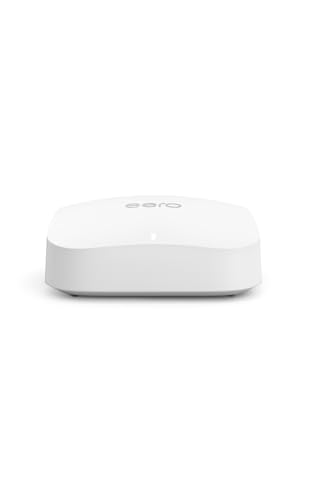
- 1. Amazon eero Pro 6E Mesh WiFi Router (Supports plans up to 2.5 Gbps)
- 2. TP-Link Festa FR365 AX3000 WiFi 6 VPN Router (5 Gigabit WAN + USB 3.0)
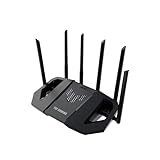
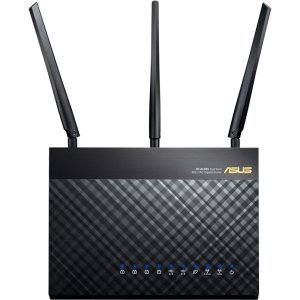
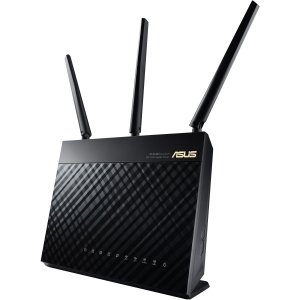
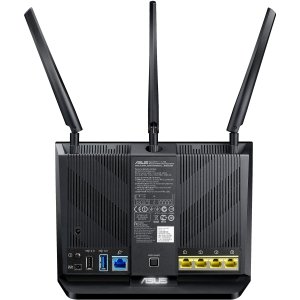
- 3. ASUS RT-AX3000 Ultra-Fast Dual Band Gigabit Wireless Router (Next Gen WiFi 6)
- 4. TP-Link AX1800 WiFi 6 Router (Archer AX21 V5), Dual Band
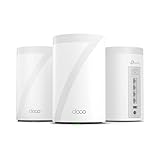
- 5. TP-Link Deco WiFi 6 Mesh System (Deco X20) — Covers up to 2200 Sq.Ft
- 6. TP-Link AC1200 Gigabit WiFi Router (Archer A6), Dual Band MU-MIMO
- How to Choose a ‘BE’ Router — and What BE Actually Means
- Related Guides
- Frequently Asked Questions
- Related Guides
- Related Articles
If you specifically need true 802.11be / WiFi 7 — for multi-gig internet, dense smart homes, or future-proofing — none of these are it, and we say so in every entry below. But if your goal is a dependable router that delivers strong real-world speeds today at a sensible price, WiFi 6 and WiFi 6E are excellent, mature standards, and the picks here are some of the best-value examples you can buy. Prices span from around $40 to around $200. Below is an at-a-glance comparison — note the ‘Actual Standard’ column, which is the most important one on this page — followed by a closer look at each router and a buyer’s guide that explains the difference between WiFi 6, 6E and genuine BE / WiFi 7.
As an Amazon Associate we earn from qualifying purchases at no extra cost to you.



🛒 Best Price Today on Amazon
Prime members get fast, free shipping on everything above, plus member-only deals. New members get a 30-day free trial — cancel anytime.
Best BE Routers at a Glance (with Honest Standard Labels)
| Router | Actual Standard (NOT WiFi 7) | Best For | Approx Price |
|---|---|---|---|
| Amazon eero Pro 6E mesh router | WiFi 6E (closest here, still not BE) | Whole-home mesh, 2.5Gbps plan | around $200 |
| TP-Link Festa FR365 AX3000 VPN Router | WiFi 6 (AX3000) | Small-office VPN + multi-WAN | around $99 |
| ASUS RT-AX3000 Dual Band | WiFi 6 (AX3000) | Feature-rich single-unit WiFi 6 | around $128 |
| TP-Link Archer AX21 (AX1800) V5 | WiFi 6 (AX1800) | Budget WiFi 6 starter | around $52 |
| TP-Link Deco X20 Mesh System | WiFi 6 (AX1800-class mesh) | Affordable whole-home coverage | around $70 |
| TP-Link Archer A6 (AC1200) | WiFi 5 (802.11ac) — oldest here | Bargain basic router | around $40 |
1. Amazon eero Pro 6E Mesh WiFi Router (Supports plans up to 2.5 Gbps)

13
Prime
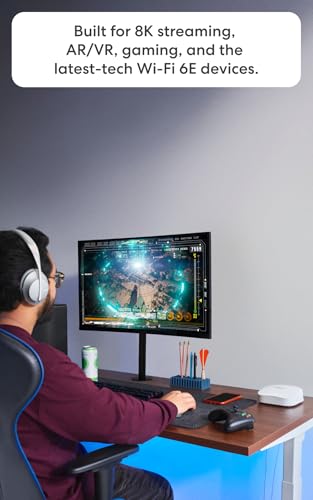
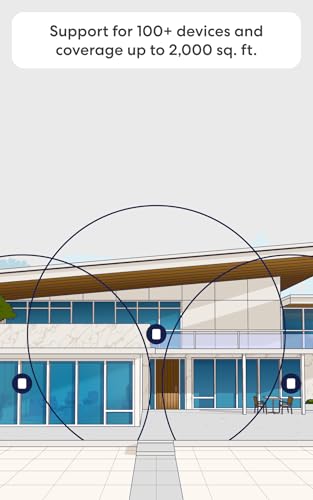
Amazon eero Pro 6E mesh wifi router – Supports internet plans up to 2.5 Gbps, Coverage up to 2,000 sq. ft., Connect 100+ devices, 1-pack
In Stock




As an Amazon Associate we earn from qualifying purchases. Product prices and availability are accurate as of the date/time indicated.
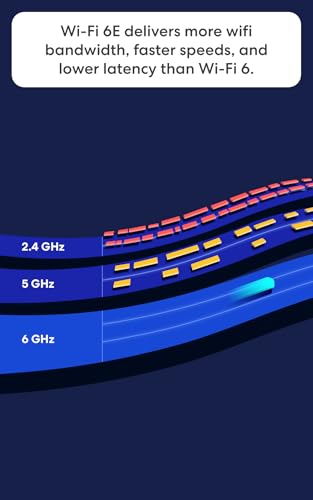
Honesty first: the eero Pro 6E is WiFi 6E, not WiFi 7 / 802.11be. That said, it is the closest router on this list to a genuine next-gen experience, which is why we lead with it for anyone drawn to the ‘BE’ search term but unwilling to wait. WiFi 6E adds the clean, congestion-free 6GHz band on top of the usual 2.4 and 5GHz, which is the single biggest practical step toward what WiFi 7 later refined. At around $200 it is the premium pick here.
This is the router for a whole home that wants tidy mesh coverage and supports internet plans up to 2.5 Gbps. The eero system is famous for its set-and-forget simplicity, automatic updates, and easy expansion — add more eeros to blanket a larger house. If you want the most modern, future-leaning option in this guide and value effortless mesh networking, the Pro 6E is the standout, just understand you are buying WiFi 6E, not true BE WiFi 7.
Pros: WiFi 6E adds the 6GHz band, simple mesh, supports up to 2.5Gbps plans, easy expansion.
Cons: NOT WiFi 7 despite the ‘BE’ search; premium price; subscription needed for some advanced features.
2. TP-Link Festa FR365 AX3000 WiFi 6 VPN Router (5 Gigabit WAN + USB 3.0)

22
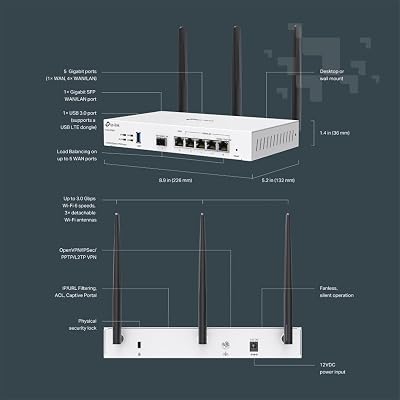
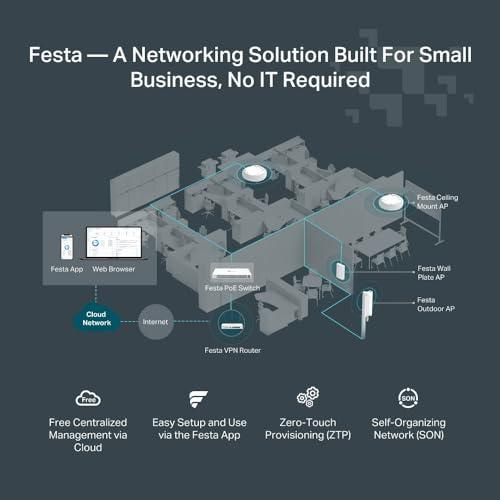
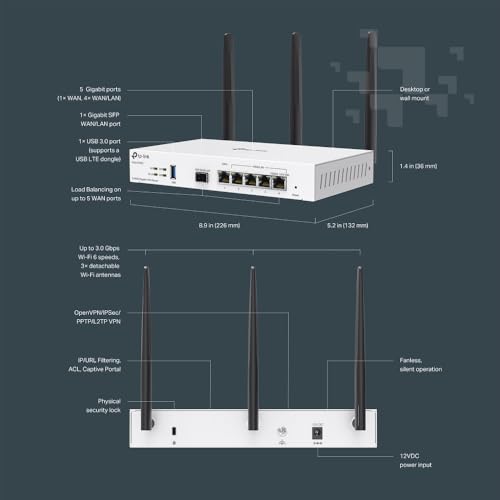
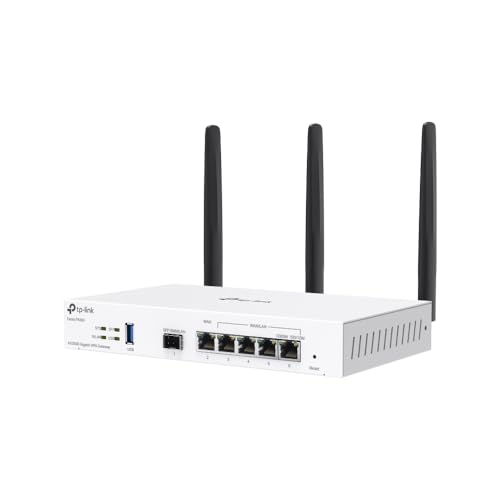
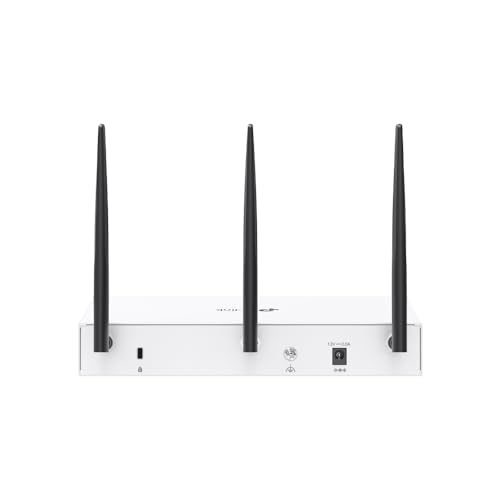
TP-Link Festa FR365, AX3000 WiFi 6 VPN Router, Up to 5 Gigabit WAN + 1 USB 3.0 WAN + 1 SFP, Self-Organizing Network, Free Cloud, Load Balance, Mesh, Seamless Roaming, Does not Work with Omada
In Stock




As an Amazon Associate we earn from qualifying purchases. Product prices and availability are accurate as of the date/time indicated.
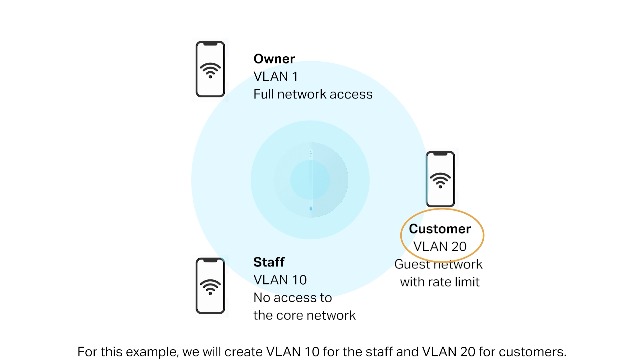
To be clear, the Festa FR365 is a WiFi 6 (AX3000) router, not WiFi 7 / 802.11be. Where it earns its place is capability rather than the very latest standard: it is a small-business-flavoured router with built-in VPN support, multiple Gigabit WAN options for load balancing or failover, and a USB 3.0 port. At around $99 it is aimed at users who need more control than a typical home router offers.
This is the router for a home office or small workplace that wants secure remote access via VPN, link aggregation or dual-WAN resilience, and the AX3000 WiFi 6 speeds that comfortably saturate a gigabit connection. It is overkill for a simple apartment but ideal if features like VPN and multi-WAN matter to you. Just remember the wireless is WiFi 6, so it does not deliver 802.11be / WiFi 7 throughput — you are paying for the management features, not BE radios.
Pros: AX3000 WiFi 6, built-in VPN, multi-WAN / load balancing, USB 3.0, business-grade control.
Cons: NOT WiFi 7; feature set is overkill for basic home use; setup is more involved.
3. ASUS RT-AX3000 Ultra-Fast Dual Band Gigabit Wireless Router (Next Gen WiFi 6)
![ASUS AC1900 Wireless Dual Band (5GHz + 2.4GHz) Gigabit Wi-Fi Router [RT-AC68U] Ultra-Fast 802.11ac 1900 Mbps Speed, 5X Gigabit LAN Ports, Broadcam TurboQAM Wi-Fi Acceleration, AiProtection Security](https://m.media-amazon.com/images/I/81dk5sWS8+L._AC_SL400_.jpg)
12
ASUS AC1900 Wireless Dual Band (5GHz + 2.4GHz) Gigabit Wi-Fi Router [RT-AC68U] Ultra-Fast 802.11ac 1900 Mbps Speed, 5X Gigabit LAN Ports, Broadcam TurboQAM Wi-Fi Acceleration, AiProtection Security
In Stock


As an Amazon Associate we earn from qualifying purchases. Product prices and availability are accurate as of the date/time indicated.
For transparency, ASUS markets this as ‘Next Gen WiFi 6’ — it is an AX3000 WiFi 6 router, not WiFi 7 / 802.11be. It is, however, one of the most feature-rich single units here, with the renowned ASUSWRT firmware, AiProtection security, robust QoS, and excellent range from a dual-band design. At around $128 it is the enthusiast’s standalone WiFi 6 pick.
This is the router for the power user who wants deep control over a single, capable access point rather than a mesh kit: granular QoS to prioritise gaming or streaming, strong parental controls, VPN client/server support, and a tinker-friendly interface. The AX3000 WiFi 6 radios deliver fast, reliable speeds across a typical home. If you love configuring your network and want ASUS’s mature software, this is the pick — with the honest caveat that it is WiFi 6, so it will not provide genuine BE / WiFi 7 performance.
Pros: AX3000 WiFi 6, powerful ASUSWRT firmware, strong QoS and security, great single-unit range.
Cons: NOT WiFi 7; single unit may need extenders for large homes; firmware depth can overwhelm beginners.
4. TP-Link AX1800 WiFi 6 Router (Archer AX21 V5), Dual Band
Plainly stated, the Archer AX21 is a WiFi 6 (AX1800) router — not WiFi 7 / 802.11be. What it is, is arguably the best-value entry point into WiFi 6: an enormously popular, dependable dual-band router that brings the efficiency benefits of 802.11ax to a budget price of around $52. For most homes upgrading from an old WiFi 5 box, this is a genuinely worthwhile step up.
This is the router for the budget-conscious shopper who wants modern WiFi 6 without overspending. AX1800 speeds are plenty for typical households with a gigabit-or-below connection, OFDMA and MU-MIMO help it handle many devices efficiently, and TP-Link’s app makes setup painless. It is the sensible default upgrade for everyday browsing, streaming and gaming — provided you accept that it is WiFi 6, not the WiFi 7 the ‘BE’ term implies.
Pros: Excellent-value WiFi 6, efficient with many devices, easy app setup, very affordable.
Cons: NOT WiFi 7; entry-level AX1800 throughput; single unit, no 6GHz band.
5. TP-Link Deco WiFi 6 Mesh System (Deco X20) — Covers up to 2200 Sq.Ft

21
Prime
TP-Link Deco WiFi 6 Mesh WiFi System(Deco X20) – Covers up to 2200 Sq.Ft, Replaces Wireless Internet Routers and Extenders, 1-Pack
In Stock








As an Amazon Associate we earn from qualifying purchases. Product prices and availability are accurate as of the date/time indicated.
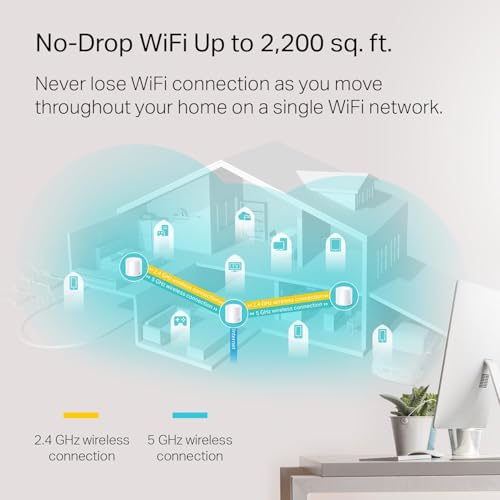
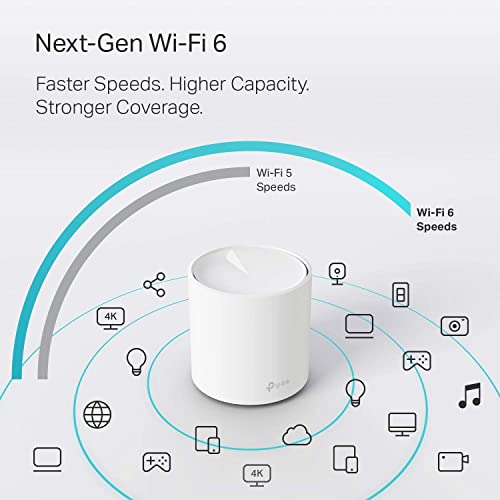
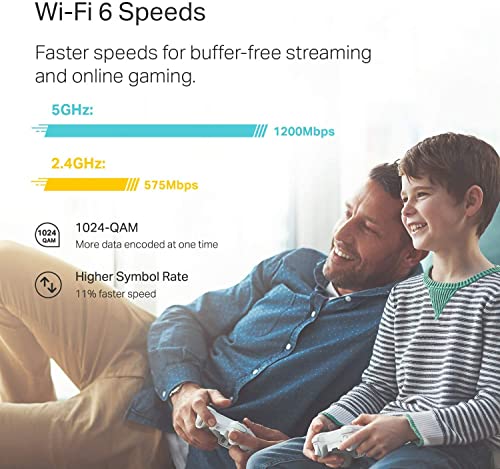
For clarity, the Deco X20 is a WiFi 6 mesh system (AX1800-class), not WiFi 7 / 802.11be. Its strength is whole-home coverage at an affordable price: a multi-unit mesh kit that blankets up to 2,200 sq ft with seamless WiFi 6, letting you roam the house on one network name. At around $70 it is the budget mesh pick here.
This is the router system for a medium home with dead spots where a single router cannot reach, and where simplicity matters more than top-end speed. The Deco app guides setup in minutes, the units hand devices off smoothly as you move around, and WiFi 6 keeps things efficient with lots of connected gadgets. For affordable, fuss-free coverage it is hard to beat — just note, once more, that this is WiFi 6 mesh, not genuine BE / WiFi 7 mesh.
Pros: Affordable WiFi 6 mesh, covers up to 2200 sq ft, seamless roaming, simple app setup.
Cons: NOT WiFi 7; AX1800-class speeds; no dedicated 6GHz backhaul like pricier mesh kits.
6. TP-Link AC1200 Gigabit WiFi Router (Archer A6), Dual Band MU-MIMO

21
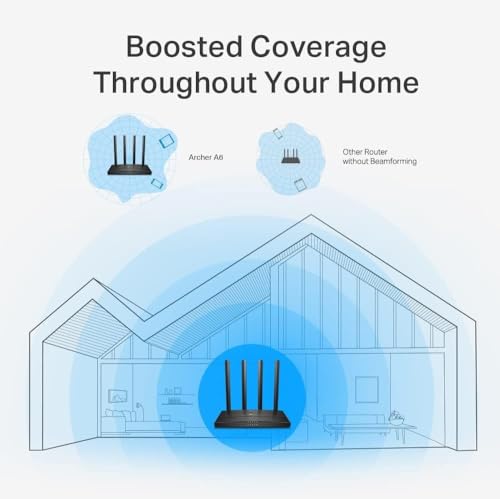
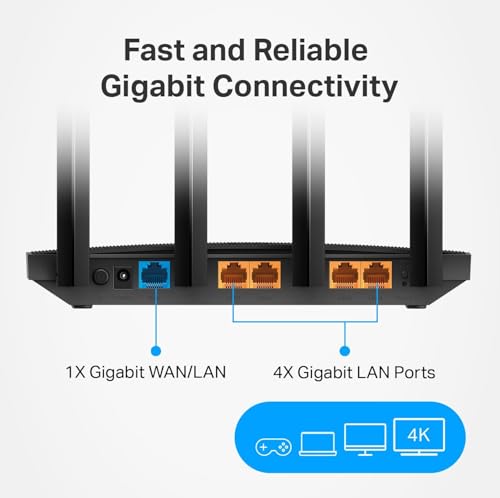
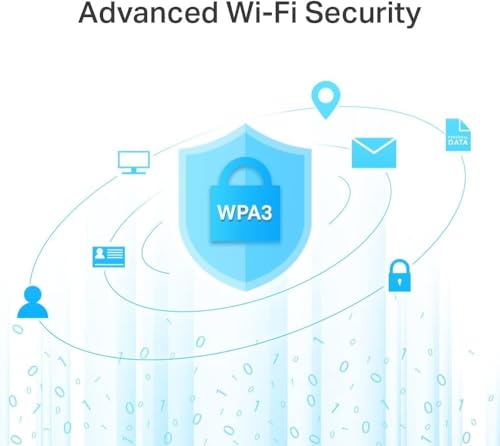
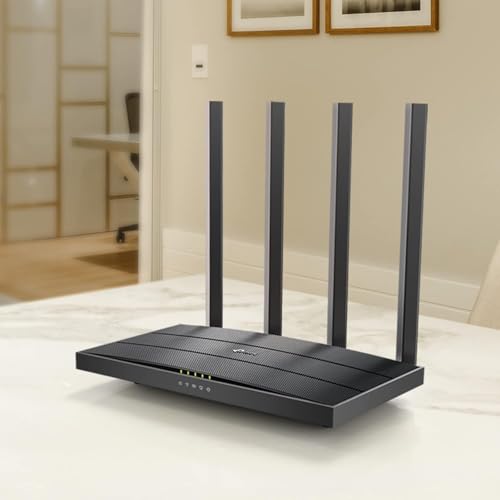
TP-Link AC1200 Gigabit WiFi Router (Archer A6) – Dual Band MU-MIMO Wireless Internet Router, 4 x Antennas, OneMesh and AP Mode, Long Range Coverage
In Stock


As an Amazon Associate we earn from qualifying purchases. Product prices and availability are accurate as of the date/time indicated.
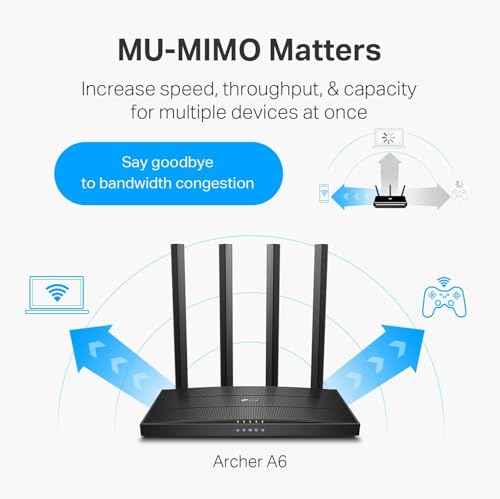
Full transparency, and this one is the most important to flag: the Archer A6 is a WiFi 5 (802.11ac, AC1200) router. It is not WiFi 7 / 802.11be, and unlike the others here it is not even WiFi 6 — it is a generation older still. We include it only because it appears in searches and is a genuinely fine bargain router, but it is the furthest of all from the ‘BE’ standard.
This is the router for the tightest budget or a light-use situation — a small apartment, a guest network, or a backup unit — where around $40 buys reliable dual-band WiFi 5 with MU-MIMO and gigabit wired ports. It will serve basic browsing and streaming perfectly well. But if you care about WiFi 6 efficiency or anything resembling BE / WiFi 7, look elsewhere on this list: this is the oldest standard here and we would not pretend otherwise.
Pros: Very cheap, reliable WiFi 5 with MU-MIMO, gigabit wired ports, fine for light use.
Cons: NOT WiFi 7 AND not even WiFi 6 — this is older WiFi 5 (AC1200); least future-proof pick here.
How to Choose a ‘BE’ Router — and What BE Actually Means
Start with the single most important fact on this page: ‘BE’ stands for 802.11be, which is WiFi 7. A true BE router has WiFi 7 radios, supports the 6GHz band with very wide 320MHz channels, and uses features like Multi-Link Operation to combine bands. None of the routers in this guide meet that definition — they are WiFi 6, WiFi 6E or, in one case, WiFi 5. We have flagged this in every entry because buying a WiFi 6 router believing it is WiFi 7 would leave you disappointed, and that is the opposite of helpful.
So who should still buy from this list? The honest answer is: most people. WiFi 6 (802.11ax) is a mature, fast, efficient standard that handles modern homes full of phones, laptops, TVs and smart devices with ease, and for any internet plan up to roughly a gigabit it is rarely the bottleneck. If you are upgrading from an aging WiFi 5 box, a good WiFi 6 router like the Archer AX21 or ASUS RT-AX3000 is a clear, affordable improvement you will feel immediately. WiFi 7’s headline speeds matter most on multi-gig connections that few homes actually have yet.
If you want to get as close to next-gen as this list allows, the eero Pro 6E is the pick because WiFi 6E adds the clean 6GHz band — the same band WiFi 7 builds on — giving you congestion-free airtime for your newest devices. For coverage rather than peak speed, a mesh system like the Deco X20 or the eero beats a single powerful router every time, since blanketing a house in solid signal matters more than a high number on the box you can only hit standing next to it.
Finally, decide honestly whether you need to wait. If you have a 2Gbps+ connection, a dense smart home, or you simply refuse to buy anything but the latest standard, do not buy from this list — shop for a router whose box explicitly says ‘WiFi 7’ or ‘802.11be’, because nothing here qualifies. But if you want strong, reliable WiFi today at a fair price, pick the WiFi 6 or 6E model above that matches your home size and budget, and enjoy a real upgrade without paying the early-adopter premium for BE silicon you may not yet need.
Frequently Asked Questions
Are any of these actually WiFi 7 (802.11be / BE) routers?
No. We want to be completely honest: none of the routers in this guide are true WiFi 7. Five are WiFi 6 (802.11ax), the eero Pro 6E is WiFi 6E, and the TP-Link Archer A6 is actually older WiFi 5 (802.11ac). They are popular, well-reviewed routers that show up under this search, but if you specifically need genuine 802.11be hardware, you should buy a router whose specifications explicitly state WiFi 7.
What is the difference between WiFi 6, WiFi 6E, and WiFi 7 (BE)?
WiFi 6 (802.11ax) improves efficiency and speed on the 2.4 and 5GHz bands. WiFi 6E adds a third, congestion-free 6GHz band — the eero Pro 6E here is an example. WiFi 7 (802.11be, the ‘BE’ in this search) builds further on 6GHz with wider 320MHz channels and Multi-Link Operation for higher throughput and lower latency. Each is a step up, and only WiFi 7 is true ‘BE’.
If none are WiFi 7, is it still worth buying one of these routers?
For most people, yes. WiFi 6 is a mature, fast standard that easily handles a typical home and any internet plan up to about a gigabit. Upgrading from old WiFi 5 to a WiFi 6 router like the Archer AX21 or ASUS RT-AX3000 is a real, noticeable improvement at a sensible price. WiFi 7’s biggest benefits show up mainly on multi-gig connections that most households do not yet have.
Which router here is closest to a true BE / WiFi 7 experience?
The Amazon eero Pro 6E, because WiFi 6E adds the clean 6GHz band that WiFi 7 also relies on. It is still not WiFi 7, but among these picks it is the most future-leaning thanks to that extra band, plus simple whole-home mesh and support for internet plans up to 2.5 Gbps. If you want the nearest thing to next-gen on this list, it is the one to choose.
Related Guides
- Best WiFi Routers
- Best Mesh WiFi Systems
- Best Gaming Routers
- Best Network Switches
- Best Powerline Adapters
- Best Gaming PC Builds
Affiliate Disclosure: As an Amazon Associate, we earn from qualifying purchases. If you click a link and make a purchase, we may earn a small commission at no extra cost to you. Prices and availability are accurate as of publication and may change.