- Top Pick: Pioneer F-Series TS-F1634R 6.5" 2-Way Coaxial Car Speakers 200W Max | Great Factory Speaker Replacement, Balanced Sound + Smooth Treble, High-Efficiency Speaker Designed for OEM Power
- Best Value: JVC CS-J620 300W 6.5" CS Series 2-Way Coaxial Car Speakers, Set of 2, 6.5" Mica Cone Woofer & 1" PEI Tweeter, Hybrid Surround, Easy Installation
- Premium Choice: Kenwood KFC-1666R Road Series Car Speakers (Pair) – 6.5" 2-Way Car Coaxial Speakers, 300W, 4-Ohm Impedance, Cloth Woofer & Balanced Dome Tweeter, Heavy Duty Magnet Design
Pop off a door panel in most compact cars, sedans, and light trucks and the factory speaker you find is often a 6.5-inch paper-cone unit chosen to keep the build sheet short, not to impress anyone. That is why 6.5-inch is the most common upgrade size in car audio: the opening, the screw pattern, and the wiring are usually already there, so a swap becomes an afternoon job instead of a custom fabrication project.
This guide is for drivers who want clearer vocals and tighter bass without replacing the head unit or adding an amplifier. It compares ten 6.5-inch coaxial and multi-way sets using only what their listings state: wattage figures, driver layout, impedance, and materials. The main decision is how you plan to power them, and whether you want a like-for-like factory replacement or a bolder step up in output as you plan your 2026 audio refresh.
Quick Picks
As an Amazon Associate we earn from qualifying purchases at no extra cost to you.


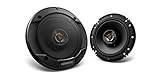


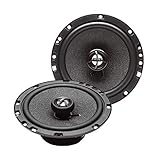

| Product | Best for | Key spec from the title |
|---|---|---|
| Pioneer TS-F1634R | Stock-power factory swap | 2-way coaxial, 200W max, designed for OEM power |
| JVC CS-J620 | Straightforward install | 300W, mica cone woofer, 1″ PEI tweeter |
| Kenwood KFC-1666R | Sturdy motor structure | 300W, 4-ohm, cloth woofer, heavy duty magnet |
| BOSS CH6530 | Simple 3-way step up | 3-way, 300 watts per pair |
| KICKER 46CSC654 | Front and rear in one order | Two pairs, 4-ohm, 160mm |
| Pioneer TS-A1681F | Bass-leaning upgrade | 4-way coaxial, 350W max, adaptors included |
| Kenwood KFC-1666S | Plain 2-way replacement | 6-1/2″ 2-way, easy installation |
| Rockford Fosgate R165X3 | Multi-speaker quantity | 3-way coaxial, 180W |
| Skar Audio RPX65 | Simple 2-way pair | 200W, 2-way coaxial |
| KICKER DSC650 | Drop-in OEM size | 4-ohm pair, 160-165mm |
How to Choose
Match the speaker to your power source
A factory head unit typically delivers modest power per channel, so a speaker described as designed for OEM power is the safest match. Higher wattage figures only make sense when an aftermarket receiver or amplifier is driving them. Titles quote “max” or “per pair” numbers, which are peak figures; continuous (RMS) power matters more, so look at the full spec sheet before pairing a set with an amp. As a rough rule, buyers keep the amp output close to the speaker’s continuous handling.
Understand 2-way, 3-way, and 4-way
A 2-way coaxial pairs a woofer with a tweeter on the same axis. Three- and four-way models add extra small drivers for midrange or upper treble. More drivers can widen the frequency range on paper, but a well-made 2-way often sounds cleaner than a crowded design with thin parts. Treat the extra elements as a bonus, not a guarantee, and weigh them against the materials named in the listing.
Check impedance, size, and fit
Most car stereos expect a 4-ohm load, and several listings here state it directly. Confirm your opening takes a 6.5-inch (about 160mm) driver, and measure mounting depth behind the panel; window tracks can limit how deep a magnet may be. Models that mention installation adaptors or a direct factory replacement size are easier if your car has an odd bracket. A vehicle-fit lookup takes a minute and prevents a return.
Know where budget sets cut corners
Entry-level coaxials often use thin surrounds and small magnets, which limits how loud they can play before distorting. Look for named materials such as mica, cloth, or hybrid surrounds, and for a stated magnet design. Ignore headline wattage when it is the only spec offered, and remember that tweeter size, not driver count, usually decides how smooth the top end sounds.
One more habit helps: compare sets by the same yardstick. Line up driver layout, stated impedance, and named materials side by side, then decide whether a missing detail is a dealbreaker for your build. A short spec list with confirmed numbers is usually safer than a long list of marketing adjectives, especially when you cannot audition the speakers before they arrive.
The 10 Best Options
Pioneer F-Series TS-F1634R
This 2-way coaxial is pitched as a factory speaker replacement made for OEM power, so it suits owners who keep the stock radio and just want fresher sound from the doors. The listing highlights balanced sound, smooth treble, and a high-efficiency design, all aimed at modest source power.
- Built to run on factory-level power without an amp
- Familiar 6.5-inch 2-way layout, so fitment is simple
- Trade-off: the 200W max figure is modest, so it will not suit a high-powered system
Skip it if you plan to add an amplifier and want plenty of headroom.
JVC CS-J620
JVC lists a mica cone woofer, a 1-inch PEI tweeter, and a hybrid surround, which gives a clear materials story for a 2-way coaxial. It ships as a set of 2 and is described as easy to install, making it a natural fit for first-time swappers working in a driveway.
- Named cone and tweeter materials
- Hybrid surround and a 300W figure for light upgrades
- Trade-off: the title gives no impedance figure, so confirm 4-ohm compatibility
Skip it if you need a complete spec sheet before buying.
Kenwood KFC-1666R Road Series
The Road Series pair is a 2-way coaxial with a 300W figure, 4-ohm impedance, a cloth woofer, and a balanced dome tweeter. The heavy duty magnet design suggests a sturdier motor than bare-bones options, which matters if the speakers will see long daily drives.
- Stated 4-ohm load matches most head units
- Cloth woofer and dome tweeter detailed in the title
- Trade-off: a plain 2-way, with no extra midrange or super-tweeter driver
Skip it if you want a multi-way layout for a fuller top end.
BOSS Audio Systems CH6530
BOSS markets this as a 3-way 6.5-inch set at 300 watts per pair. The third driver gives it more spec-sheet range than a typical 2-way, which suits listeners who want a livelier step up from paper cones without moving to a component system.
- 3-way configuration in a straightforward package
- Clear per-pair wattage that is easy to compare
- Trade-off: the title shares no materials, impedance, or sensitivity details
Skip it if you want to verify construction details first.
KICKER 46CSC654
This is a bundle of two pairs of CS-Series CSC65 coaxials, 4-ohm, in the 160mm size. That covers front and rear doors in a single order, which keeps the tonal balance consistent across the cabin and saves matching speakers from separate sources.
- Four speakers cover a full set of doors
- Stated 4-ohm load and exact 160mm size
- Trade-off: you get four, which is wasted if only the fronts need replacing
Skip it if your car has just two 6.5-inch openings.
Pioneer A-Series Plus TS-A1681F
The most elaborate design here is a 4-way coaxial with a 350W max figure. The listing mentions enhanced bass, smooth treble, a factory-upgrade role, and included installation adaptors, which is useful when the stock bracket does not line up cleanly.
- 4-way layout with the highest wattage figure in the group
- Adaptors included for awkward mounting setups
- Trade-off: more drivers on one axis can mean a tighter fit behind the grille
Skip it if your door cavity is shallow or you prefer a basic design.
Kenwood KFC-1666S
A 6-1/2-inch 2-way pitched on easy installation and stronger sound than the stock paper cones. The title is sparse on specs, so it works as a no-fuss replacement rather than a technical upgrade, and it pairs conveniently with the Road Series model in the same brand.
- Familiar 2-way layout with straightforward fitment
- Listing stresses simple installation
- Trade-off: no wattage, impedance, or material data in the title
Skip it if you compare speakers by their numbers.
Rockford Fosgate R165X3
This listing is a 3-way coaxial at 180W and begins with a quantity of 4, so verify exactly what is in the box before you order. The 3-way layout gives it a different voicing approach than the 2-way models above and suits a full-door refresh.
- 3-way layout in a coaxial form
- Quantity noted in the title may cover multiple doors
- Trade-off: the 180W figure is the lowest in this list
Skip it if the unclear quantity wording bothers you.
Skar Audio RPX65
A pair of 6.5-inch 2-way coaxials with a 200W figure. The formula is simple: two speakers, one axis each, and a layout that works with the majority of aftermarket and factory radios when the match in power is sensible.
- Plain pair packaging that is easy to understand
- 2-way design pairs well with most head units
- Trade-off: the title lacks materials or impedance information
Skip it if you want detailed construction notes up front.
KICKER DSC650
This pair stresses a direct factory replacement size, 4-ohm impedance, and an easy panel install. The wording promises smooth highs and punchy mids, a sensible target for daily driving, and the 160-165mm range indicates flexibility across stock openings.
- Sized to drop into stock openings
- 4-ohm load stated clearly
- Trade-off: no wattage figure appears in the title
Skip it if you shop by power numbers alone.
Which One Fits Your Situation
You keep the stock radio
Choose the Pioneer TS-F1634R. It is the only listing explicitly built around OEM power, which makes it the least likely to leave you short on output when the radio is the limiting factor.
You are adding an amplifier
The Pioneer TS-A1681F, with its 350W max figure and 4-way design, has the most headroom on paper. The Kenwood KFC-1666R is the calmer choice, with a stated 4-ohm load and a heavy duty magnet.
You want every door done at once
The KICKER 46CSC654 delivers two pairs together, so front and rear speakers share the same voicing and you only deal with one set of specs.
You want an easy weekend install
Go with the KICKER DSC650 or the JVC CS-J620. Both lean on easy-install wording and standard sizing, so you can finish before dinner.
Common Mistakes
- Assuming a higher peak wattage means louder sound with a factory radio.
- Ignoring mounting depth and discovering the magnet hits the window track.
- Buying a 3-way or 4-way purely for the driver count.
- Forgetting that some listings ship one pair while others ship two.
- Skipping a wiring harness or adaptor bracket, then struggling with a nonstandard plug that forces you to cut factory wires.
- Leaving the old door panel loose after the swap, which lets vibration muddy the bass no matter which set you pick.
Related guides
- Combination Smoke And Carbon Monoxide Detectors
- Aio Liquid Coolers For High Performance Gaming
- Graphics Cards For Low Wattage Power Supplies
Frequently Asked Questions
Do I need an amplifier for these?
Not necessarily. Several are described as suited to factory power, and the others will still play from a stock radio. An amp helps with the higher-wattage sets but is optional, and it should be matched to the speaker’s continuous handling.
Are coaxial speakers good enough?
For a simple door swap, yes. Coaxial designs combine woofer and tweeter in one unit, so you avoid separate crossovers and tweeter mounting. Component sets can offer more tuning, but they demand more installation work.
What does 4-ohm mean?
It is the electrical load the speaker presents to the radio or amplifier. Most car stereos are designed around 4 ohms, so a matching figure keeps things simple and avoids mismatches.
Will these fit my car?
If your door opening is a standard 6.5-inch, usually yes, though depth and bolt patterns vary by vehicle. Check a vehicle-fit guide and look for included adaptors where needed.