What Reddit Actually Agrees On
Search any 4K 144Hz monitor thread on r/Monitors or r/buildapc and you’ll see the same three points repeated: you need a GPU that can push 4K at high frame rates to make the panel worth it, HDMI 2.1 is non-negotiable if you’re on console or want full bandwidth, and panel type matters more than brand name. None of this is controversial, but a lot of buyers skip past it and end up disappointed with a monitor that’s objectively fine.
The core math: 4K at 144Hz needs roughly 32 Gbps of bandwidth uncompressed. DisplayPort 1.4 can’t do that without compression (DSC), and older HDMI ports can’t do it at all. If your monitor or GPU is limited to HDMI 2.0 or DP 1.4 without DSC, you’re capped around 98-120Hz at 4K, not 144. This is the single most common complaint in threads where someone says their new monitor “won’t go past 120Hz” — it’s not a defective unit, it’s a bandwidth ceiling.
Panel Types: IPS vs VA vs OLED
This is where most of the real debate happens, because each panel type fails in a different way.
| Panel Type | Response Time | Contrast | Common Complaint | Best For |
|---|---|---|---|---|
| IPS | Fast (1ms GtG rated) | Weak (~1000:1) | IPS glow in dark scenes | Competitive shooters, color work |
| VA | Slower, can smear | Strong (~3000-4000:1) | Black smearing in fast dark transitions | Single-player, movies, mixed use |
| OLED (WOLED/QD-OLED) | Near-instant | Excellent (true black) | Burn-in risk, static HUD elements | Immersive single-player, HDR content |
IPS glow shows up as a faint gray haze in the corners during dark scenes, most noticeable with lights off. VA smearing shows up as trailing ghosts behind fast-moving dark objects on dark backgrounds — think a character running through a shadowed hallway. Neither is a dealbreaker for most people, but if you’re coming from one panel type to another, the complaint threads make it sound worse than it usually is in practice.
OLED is the one category where Reddit sentiment has shifted hard in the last two years. Burn-in fears used to dominate, now most threads treat it as a manageable risk if you avoid leaving static UI elements (health bars, minimaps, taskbars) on screen for extended periods at high brightness. If you want to compare current panel types side by side before buying, browsing a 4K 144Hz gaming monitor listing and checking the panel spec in the description is the fastest way to narrow things down, since the exact panel used can change between revisions of the same model.
Do You Actually Need 144Hz at 4K?
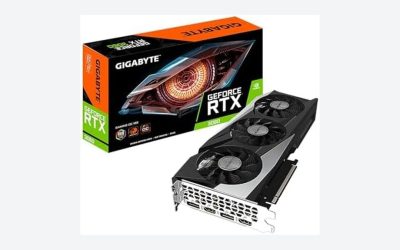
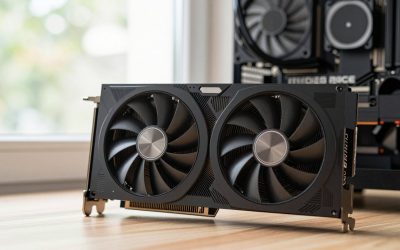
This is the question that should come before any purchase. Driving 4K at 144 frames per second consistently requires a GPU in the RTX 4080/4090 or RTX 5080/5090 class for most modern AAA titles at high settings. Anything below that, and you’ll either run lower settings, use upscaling (DLSS/FSR), or simply not hit 144 fps outside of competitive titles like Valorant or CS2 that are easy to run at high frame rates even at 4K.
If your GPU is a 4070-class card or below, a 4K 144Hz panel is still fine to own, but you’re buying headroom you won’t fully use yet. In that case a 1440p 144-165Hz monitor is the more honest recommendation, and it’s what gets suggested constantly in budget-conscious threads. The resolution bump from 1440p to 4K matters less for gameplay feel than the jump from 60Hz to 144Hz does, so if you’re choosing between a cheaper 1440p 165Hz monitor and a 4K 144Hz one on a tight budget, the 1440p option is usually the better experience per dollar.
Cables and Settings That Trip People Up
A huge share of “my monitor isn’t working right” posts trace back to cables or settings, not hardware defects:
Using an HDMI 2.0 cable with an HDMI 2.1 port will silently cap your refresh rate, and most cables aren’t labeled clearly. Buy a certified HDMI 2.1 “Ultra High Speed” cable specifically, don’t assume the one in the box supports full bandwidth. On the Windows side, 4K 144Hz won’t show as an option in Display Settings unless the GPU, cable, and port all support it simultaneously, and Windows sometimes defaults to a lower refresh rate after a driver update, which is a frequent “did my monitor break” false alarm.
VRR (G-Sync/FreeSync) flicker is another recurring complaint, usually tied to brightness fluctuations in HDR content or a mismatch between the monitor’s VRR range and the game’s frame rate. Turning off HDR or setting a frame rate cap a few frames below the monitor’s max refresh often fixes it, and this comes up often enough in threads that it’s worth trying before assuming the panel is faulty.
Buying Guidance
If you’re set on 4K 144Hz, confirm three things before buying: HDMI 2.1 or DP 1.4 with DSC support, actual panel type (not just marketing terms like “ultra fast IPS”), and your GPU’s realistic frame rate at 4K in the games you actually play. For most buyers chasing the competitive edge, a 1440p 165Hz monitor delivers more usable performance per dollar than stretching to 4K. For buyers prioritizing visual fidelity in single-player and HDR titles with a GPU that can back it up, an OLED 4K 144Hz monitor is where the format actually shows its advantage over LCD panels, particularly in contrast and motion clarity.
The cheaper IPS or VA option is genuinely fine if you’re not chasing competitive response times or deep HDR contrast. Don’t let thread hype push you toward OLED or a higher spec than your GPU and use case actually call for.