The best choice depends on what you store and how you use it. An SSD is the better default for a computer’s main drive: it boots quickly, opens apps faster, and has no spinning parts. An HDD is still useful when you need lots of capacity for less money and can tolerate slower access.
As an Amazon Associate we earn from qualifying purchases at no extra cost to you.

Quick answer
Choose an SSD for Windows or macOS, games you play often, and programs where loading time matters. Choose an HDD for large photo and video collections, backups, or files you rarely open. If your budget allows, a practical setup is an SSD for the operating system and active work, plus an HDD for bulk storage.
For most desktop upgrades, a 1TB SSD is a good starting point. If you regularly work with large video files or keep a big game library installed, compare the cost of a larger SSD with the cost of adding a separate HDD.
SSD vs. HDD at a glance
| Factor | SSD | HDD |
|---|---|---|
| Typical use | Operating system, apps, games, active projects | Backups, media libraries, archived files |
| Access speed | Fast; no mechanical seek time | Slower; the drive must locate data on spinning platters |
| Moving parts | None | Yes; platter and read/write heads |
| Capacity per dollar | Usually costs more for the same capacity | Usually the cheaper option for large amounts of storage |
| Noise and vibration | Silent | May click, hum, or vibrate during use |
| Impact resistance | Generally better while powered off | More vulnerable to shock, especially while running |
Speed figures depend on the drive and connection. A typical hard drive may deliver roughly 100–200 MB/s in sustained transfers, while a SATA SSD can reach around 500–550 MB/s. NVMe SSDs can be much faster in sequential transfers, but those peak numbers matter most for large file workloads. Everyday responsiveness also comes from the SSD’s much lower access latency.
Why an SSD is best for a main drive
With an SSD, a computer usually starts faster and feels more responsive when launching apps, searching files, or switching between tasks. The difference is especially clear when replacing an older HDD: the processor and memory have not changed, but the system spends less time waiting for storage.
For a new build or a computer that supports NVMe, look for an 1TB NVMe SSD if you want a straightforward balance of capacity and speed. Check the motherboard or laptop specifications first. An M.2 slot may support SATA, NVMe, or both, and the slot’s shape alone does not confirm compatibility.
SSDs are also a sensible choice in laptops because they use no spinning mechanism and are less susceptible to damage from a bump while running. They are not indestructible: electronics can fail, and data can become inaccessible without warning. Keep a separate backup rather than relying on the drive type to protect important files.
When an HDD is the better buy
An HDD makes sense when capacity matters more than speed. A large media library, old project files, surveillance footage, or a local backup can fill several terabytes without needing SSD performance. If the drive will mostly hold files you open occasionally, waiting longer to browse or copy them may be an acceptable trade-off.
For a desktop used as a file archive, compare current prices for a large internal hard drive. Check that your case has a mounting spot and that the power supply has a spare SATA power connector. HDDs can click or vibrate, and a failed drive may give little warning; do not keep the only copy of valuable files on one.
HDDs are also slower for small, scattered files. A hard drive can feel sluggish as a boot drive even when its advertised sequential transfer rate sounds adequate, because launching an operating system involves many small reads across the disk.
A two-drive setup often makes the most sense
If you have room and ports, install the operating system and frequently used programs on an SSD, then use an HDD for larger, less active files. For example, a 1TB SSD can hold the operating system, applications, and a selection of games, while a 4TB or 8TB HDD stores media and older projects. Keep current work on the SSD if slow file loading interrupts your workflow.
This arrangement does not automatically create a backup. If the SSD and HDD are inside the same PC, theft, power damage, malware, or accidental deletion can affect both. A backup should include another device or a separate location, and you should periodically check that files can actually be restored.
Check compatibility before buying
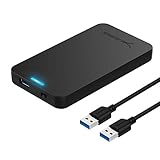
For a desktop, identify whether you need a 2.5-inch SATA drive, a 3.5-inch SATA drive, or an M.2 SSD. A 2.5-inch SATA SSD can often replace a laptop HDD if the laptop uses a standard SATA connection, but some slim laptops accept only a specific M.2 size or interface. Consult the computer’s service manual or manufacturer specifications before ordering.
Also check capacity, not just speed. Leave free space for updates and temporary files; a nearly full system drive can make maintenance harder. When replacing a boot drive, plan how to transfer the operating system: cloning can work when the new drive has enough usable space, while a clean installation avoids carrying over old software problems but takes more setup time.
Make the choice by workload
For a computer that feels slow, an SSD upgrade is usually the most noticeable storage improvement, particularly if it still boots from an HDD. For cheap bulk storage, an HDD remains a reasonable purchase. If you can afford only one drive, prioritize an SSD when the computer is used every day; prioritize an HDD only when you need capacity and can accept slower access. Whatever you choose, keep a separate backup of anything you cannot replace.