The RTX 5090 is Nvidia’s flagship consumer GPU, and it’s built for a specific kind of buyer: people who want the fastest single card on the market and aren’t going to flinch at the price or the power draw. It’s not a card you back into. If you’re asking whether you need one, the honest answer is probably not, but if you already know you want the best, here’s what that actually gets you and what it costs you.
What the RTX 5090 actually is
The 5090 is Nvidia’s Blackwell-generation flagship, sitting above the 5080 by a wide margin rather than a small step. It ships with a large VRAM pool (32GB GDDR7), a wide memory bus, and a power draw that routinely hits 575W under load. That last number matters more than people expect going in. This card changes what your case, cooler, and PSU need to be able to do.
In practice, that means 4K gaming at high frame rates with ray tracing enabled, without leaning entirely on upscaling to get there. It also means strong performance in GPU-bound creative work: video editing, 3D rendering, AI/ML workloads that benefit from large VRAM. If your use case is “I render in Blender for a living” or “I want 4K/120 with path tracing on,” the 5090 is doing a job no cheaper card does as well.
If your use case is 1440p gaming, the 5090 is overkill. You’ll be CPU-bound in most titles before the GPU is the bottleneck, and you’ll have paid flagship money to sit there waiting on your processor.
Who should actually buy this
Three groups get real value out of this card:
4K gamers who want headroom for years, not just this generation’s games. Buying at the top means you’re not upgrading again in 18 months when the next batch of demanding titles ships.
Creators doing GPU-accelerated rendering, video work, or local AI model work where VRAM capacity is the actual constraint, not just raw shader throughput. 32GB opens up workloads that choke on 16-24GB cards.
Enthusiasts who just want the fastest thing available and have budgeted for it accordingly, power bill included. That’s a legitimate reason to buy a GPU. It’s just not a reason to talk yourself into if the budget is actually tight.
Everyone else is better served by a 5080 or a last-gen 4090 if you can still find one at a sane price, both of which give up some ceiling for a meaningfully lower cost and lower power/cooling demands.
How it stacks up
| Card | VRAM | Typical board power | Best for | Where it falls short |
|---|---|---|---|---|
| RTX 5090 | 32GB GDDR7 | ~575W | 4K/high-refresh gaming, heavy creative and AI workloads | Price, power, heat, case/PSU demands |
| RTX 5080 | 16GB GDDR7 | ~360W | 4K gaming on a tighter budget, 1440p with headroom | Less VRAM for large AI/render workloads |
| RTX 4090 (if found at good pricing) | 24GB GDDR6X | ~450W | Buyers who missed the 4090 window and find one discounted | Older architecture, availability and pricing are unpredictable |
What else you need to actually run it
The 5090 isn’t a drop-in upgrade for most mid-range builds. Three things to check before buying:
Power supply. Nvidia’s reference spec wants a robust high-wattage unit with modern connector support, and most builders should be looking at an 850W+ unit from a reputable brand with headroom to spare, not a unit sized exactly to the GPU’s rated draw. If your PSU is five years old or a budget unit, replace it. A browse through 850W 80 Plus Gold power supplies will show you the range of options at a safe wattage tier.
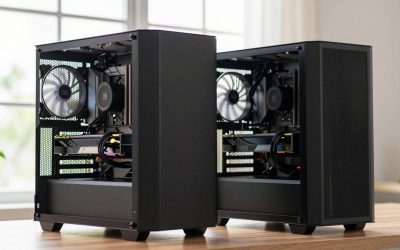
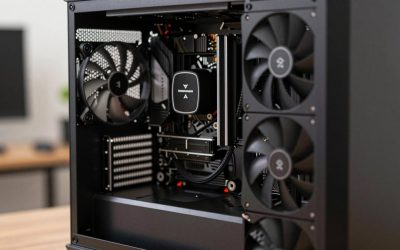
Case airflow. This card dumps a lot of heat into your case, and the card itself is physically large. Measure your case’s GPU clearance before ordering, and make sure you’ve got real intake and exhaust airflow, not just a sealed box with one rear fan. If you’re not sure your case can handle it, a modern high airflow PC case is a cheap insurance policy against thermal throttling.
CPU bottlenecking. At 4K this matters less, but at 1440p or if you’re on an older CPU platform, you can leave real performance on the table. Pair it with a current-generation CPU if you want the GPU to actually stretch its legs.
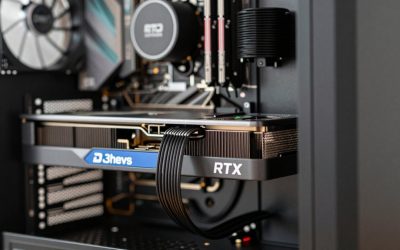
Also worth factoring in: aftermarket power cable issues and connector safety have been a recurring conversation around Nvidia’s high-wattage cards in recent generations. Seat the power connector fully, avoid sharp cable bends right at the connector, and don’t reuse adapters from older PSUs if you can avoid it.
The honest verdict
Buy the 5090 if you have a specific workload or resolution target that needs it, and a build that can actually support it electrically and thermally. Don’t buy it as a default “best GPU” purchase if you’re gaming at 1440p or lower, where a 5080 gets you most of the real-world experience for noticeably less money and far less infrastructure hassle. The gap between “fastest card that exists” and “fastest card you’ll actually notice” is wider than the marketing suggests for most people.
FAQ
Is the RTX 5090 worth it for 1440p gaming?
Usually not. At 1440p you’ll frequently be CPU-bound before the GPU is the limiting factor, so you’re paying flagship pricing for headroom you won’t use. A 5080 or similar mid-upper tier card is the better value at that resolution.
Do I need a new power supply for the RTX 5090?
If your current PSU is older, budget-tier, or close to its rated wattage with other components, yes. The card’s power draw and connector requirements mean most builders should run a quality 850W+ unit with margin to spare, not one sized right at the minimum.
Will the RTX 5090 fit in my case?
Check the card’s listed length, width, and thickness against your case’s GPU clearance specs before buying. These are large, multi-slot cards, and they also need real case airflow to keep temperatures in check under sustained load.
Is a used RTX 4090 a better buy than a new 5090?
If you find one at a genuinely discounted price with a trustworthy seller, it can be a reasonable alternative, especially for gaming-focused builds. But used GPU pricing is unpredictable and you lose warranty coverage, so weigh that risk against the savings.