The RTX A2000 is Nvidia’s entry-level Ampere workstation card, and it keeps showing up in two very different conversations: professionals who need a certified low-profile GPU for CAD and content work, and gamers who’ve spotted one cheap on the used market and wonder if it’s a sleeper deal. It’s neither a hidden gaming bargain nor a card most people need. It’s a specific tool for a specific job, and it’s worth understanding what that job is before you buy one.
What the A2000 actually is
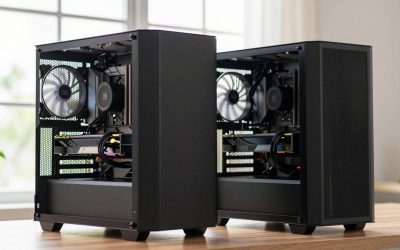
The desktop RTX A2000 uses the GA106 die, the same silicon family as the RTX 3060, but cut down and reconfigured for a 70W power envelope on the 6GB version or 75W on the 12GB version. Both run on a single 6-pin connector with no auxiliary power needed in most builds, and both fit in a low-profile, single-slot bracket. That form factor is the entire point. It’s built for small-form-factor workstations, SFF rendering boxes, and systems where a full-size RTX card simply won’t physically fit or where the power supply can’t support one.
It carries ECC memory support, certified drivers for CAD and DCC applications (SolidWorks, Revit, Maya, etc.), and the kind of long-term driver stability Nvidia’s Studio/workstation line is known for. None of that matters to a gamer, but it matters a lot to someone running simulations or rendering architectural walkthroughs who can’t afford a driver regression breaking their workflow mid-project.
Gaming performance, honestly
If you’re asking “can I game on this,” the answer is yes, modestly. The A2000 performs somewhere in RTX 3050 to low RTX 3060 territory depending on the title and whether VRAM is the bottleneck. The 12GB version actually has an advantage over the consumer 3060’s 12GB in modern titles with large texture pools, but the core and memory bandwidth are both reduced compared to a real 3060, so you’re not getting 3060 frame rates. Ray tracing is usable at 1080p with upscaling, not something you’d lean on at 1440p.
The bigger problem is price. A used A2000 often costs as much or more than a new RTX 3060 or RTX 4060, both of which beat it comfortably in every game and have no exotic form factor to work around. The only scenario where the A2000 makes sense for gaming is when your case genuinely cannot fit a standard dual-slot card and you also don’t want to go all the way down to integrated graphics or a half-height GTX-class card. That’s a narrow use case.
How it stacks up
| Card | VRAM | Power | Form Factor | Best for |
|---|---|---|---|---|
| RTX A2000 (6GB/12GB) | 6GB or 12GB GDDR6 | 70-75W, single connector | Low-profile, single-slot | SFF workstations, CAD, certified drivers |
| RTX 3060 | 12GB GDDR6 | 170W | Dual-slot, standard | 1080p/1440p gaming, better value |
| RTX 4060 | 8GB GDDR6 | 115W | Dual-slot, standard | Efficient 1080p gaming, DLSS 3 |
| RTX A4000 | 16GB GDDR6 | 140W, single connector | Dual-slot, standard | Serious workstation rendering/VFX |
The A4000 is worth mentioning because it’s the card people actually want when the A2000 feels too limited but they still need the workstation certification and ECC memory. It costs more and needs a dual-slot bay, but the performance jump is real.
Who should actually buy one
Buy the A2000 if you’re building or spec’ing a small-form-factor workstation for a design, engineering, or media job where the software vendor recommends or requires a certified professional GPU, and your chassis has a single-slot, low-profile constraint you can’t design around. IT departments buying fleets of SFF workstations for CAD users are the core audience, not individual enthusiasts.
Skip it if you’re buying for gaming, for general content creation (Premiere, DaVinci, Blender all run fine on consumer cards), or if your case can fit a standard card. In those cases a mainstream RTX 3060 or RTX 4060 gives you more performance per dollar, no certification premium, and a far easier time finding stock and support.
If you’re deciding between the A2000 and stepping up to a proper workstation card for heavier rendering work, it’s worth comparing specs against something like an RTX A4000 before committing, since the jump in VRAM and compute can matter a lot for render times on bigger scenes.
Where people get burned
The most common mistake is buying a used A2000 off a marketplace listing without checking which variant it is. The 6GB and 12GB versions have the same name on the box in casual listings but different memory configurations and slightly different clocks, and sellers don’t always specify. Confirm the exact SKU before paying workstation-card prices for the lesser variant.
The second mistake is assuming the single-slot cooler handles sustained load like a beefier dual-slot gaming cooler would. In a cramped SFF case with poor airflow, the A2000 can thermal throttle under long render jobs even though its power draw is low, because the heatsink has very little surface area and the case may not be moving enough air across it. If you’re building a dense SFF workstation, pay as much attention to case airflow as to the GPU spec sheet.
FAQ
Is the RTX A2000 good for gaming?
It’s usable at 1080p for most titles but it’s not a good value pick for gaming. A standard RTX 3060 or 4060 outperforms it for similar or lower cost in a normal gaming build.
What’s the difference between the 6GB and 12GB A2000?
Same GPU core, different memory capacity and slightly different clock behavior. The 12GB version is better for workloads with large datasets, like bigger CAD assemblies or textures, and is generally the one worth seeking out if the price difference is small.
Does the A2000 need extra power connectors?
No. It runs on a single 6-pin connector and draws 70-75W depending on the variant, which is part of why it fits in small-form-factor builds with limited power supplies.
Should I buy a used A2000 instead of a new consumer GPU?
Only if you specifically need a certified workstation driver or a single-slot low-profile card. For gaming or general creative work, a new mainstream GPU is almost always the better buy for the money.