Every desktop PC is built from nine core hardware parts — the motherboard, CPU, CPU cooler, RAM, graphics card, storage, power supply, case, and case fans — plus the hardware attached to the outside: a monitor, keyboard, mouse, and speakers or a headset. This checklist covers what each one looks like, where it connects, and the spec numbers worth comparing before you buy.
As an Amazon Associate we earn from qualifying purchases at no extra cost to you.




The basic hardware parts of a computer at a glance
If you just need the basic hardware parts of a computer named and mapped, start here:
| Part | What it does | Where it connects |
|---|---|---|
| Motherboard | The hub every other part plugs into | Mounts to the case tray |
| CPU | Runs all general processing | Socket on the motherboard (AM5 or LGA1851) |
| CPU cooler | Pulls heat off the CPU | Bolts over the CPU socket |
| RAM | Short-term working memory | DIMM slots beside the CPU |
| Graphics card (GPU) | Renders games and video | Top PCIe x16 slot; cables to the monitor |
| Storage | Holds Windows, games, files | M.2 slots on the board, or SATA ports |
| Power supply (PSU) | Converts wall power for the parts | Cables to motherboard, GPU, drives |
| Case + fans | Houses everything, moves air | Fans wire to motherboard or a hub |
| Monitor, keyboard, mouse, audio | How you see and control the PC | Rear I/O ports and GPU outputs |
Inside the case: every part explained
Motherboard
The large flat board screwed to the case’s standoffs. Everything either plugs into it or connects through it. The numbers that matter: socket (AM5 for Ryzen 7000–9000 chips, LGA1851 for Intel Core Ultra 200S), chipset tier (B850 for mainstream AMD builds, X870 if you want USB4 and more lanes; B860 or Z890 on the Intel side), memory type (DDR5 on all current platforms), number of M.2 slots, and form factor — ATX, micro-ATX, or Mini-ITX — which must match your case.
CPU (processor)
A metal-capped square chip that drops into the socket and gets clamped down — then hidden under the cooler. Compare cores/threads, boost clock, and cache. For gaming in 2026, 8 cores is the sweet spot; AMD’s X3D chips (like the Ryzen 7 9800X3D) lead in games specifically because of their stacked L3 cache, not raw clock speed. Expect to spend roughly $200–$500 for a gaming-appropriate chip.
CPU cooler
Either a finned tower heatsink with a fan, or an all-in-one liquid cooler (AIO) with a pump block and radiator. It mounts over the socket with brackets, and a thin layer of thermal paste sits between. Match the cooler’s rated TDP to your CPU, confirm socket support (AM5/LGA1851 hardware included), and check clearance: air coolers need to fit under your case’s CPU height limit (often ~160 mm), AIOs need a 240 mm or 360 mm radiator mount.
RAM (memory)
Long sticks that click into the DIMM slots to the right of the CPU. For a 2026 gaming build, a 2×16 GB DDR5 kit (32 GB total) is the standard pick; 16 GB is the floor. On AM5, DDR5-6000 at CL30 is the widely agreed price/performance sweet spot. Whatever kit you buy, remember speed ratings aren’t automatic — you must enable EXPO or XMP in the BIOS or the RAM runs at a slow default.
Graphics card (GPU)
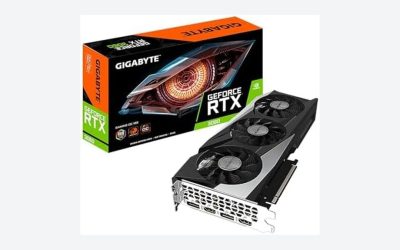
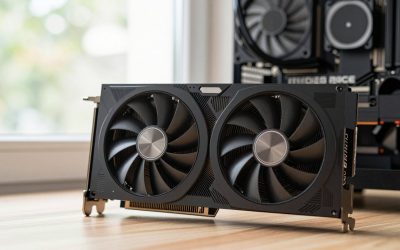
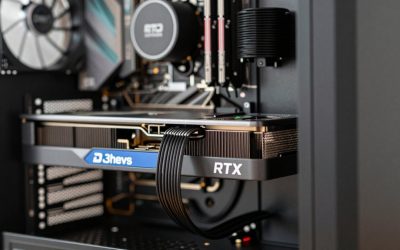
The biggest, heaviest part in the build — a long card with one to three fans that slots into the top PCIe x16 slot and pokes its display outputs out the back of the case. The numbers that matter most are VRAM (8 GB handles 1080p, 12–16 GB is the comfort zone for 1440p, 16 GB+ for 4K), power draw, and physical length versus your case’s GPU clearance. Current cards include NVIDIA’s RTX 50 series and AMD’s RX 9000 series; RTX 50 cards use the 12V-2×6 power connector, so a PSU with a native cable is cleaner than an adapter.
Storage
Two physical forms: M.2 NVMe drives, which look like a stick of gum and screw flat against the motherboard (often under a heatsink), and 2.5-inch SSDs or 3.5-inch hard drives that mount in drive bays and need both a SATA data cable and power. A 1–2 TB Gen4 NVMe drive (Samsung 990 Pro class) is the sensible pick — Gen5 drives are faster on paper but barely move game load times and run hot. Expect roughly $70–$150 for 2 TB of Gen4.
Power supply (PSU)
A heavy metal box, usually mounted at the bottom rear, with a bundle of cables feeding the motherboard (24-pin and 8-pin EPS), GPU, and drives. Shop on wattage (see the calculation below), an 80 PLUS Gold efficiency rating or better, the ATX 3.1 spec with a native 12V-2×6 cable for modern GPUs, and semi- or full modularity so unused cables stay out of the case. Decent units run about $80–$150.
Case and fans
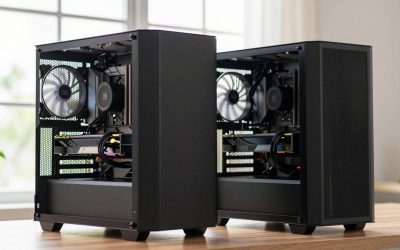
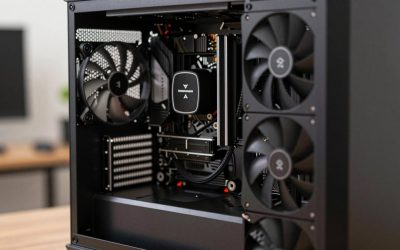
The box everything lives in. Prioritize a mesh front panel over glass and RGB — airflow, not looks, determines temperatures. Check the spec sheet for GPU length clearance, CPU cooler height, radiator support, and fan mounts. The standard air setup is two or three 120/140 mm intake fans behind the mesh and one rear exhaust.
Optional add-in parts
Wi-Fi and Bluetooth come built into many motherboards now, but you can add a PCIe card if not. Capture cards, sound cards, and extra USB expansion cards slot into spare PCIe x1/x4 slots. Most builders in 2026 skip all of these.
Outside the case: attached hardware
The monitor connects to the GPU’s DisplayPort or HDMI outputs, not the motherboard’s (those only work if your CPU has integrated graphics). Match resolution and refresh rate to your GPU tier, and check which cable actually delivers them — see the bandwidth table below. Keyboard and mouse plug into rear USB ports; for gaming mice, wireless models now match wired latency, so polling rate (1000 Hz standard, up to 8000 Hz on newer models) matters more than the cable. Audio runs to a headset or speakers via USB, the 3.5 mm jacks, or a monitor’s headphone out.
Two calculations worth doing before you buy
Power budget: a worked example
PSU sizing is a guess most buyers get wrong. The method: sum worst-case draws, then multiply by ~1.4 for headroom and transient spikes. For a mid-high-end 2026 build:
| Component | Worst-case draw |
|---|---|
| Ryzen 7 9800X3D (PPT limit) | ~160 W |
| RTX 5070 (rated TGP) | 250 W |
| Motherboard + RAM + 2 SSDs + 4 fans + USB devices | ~80 W |
| Total | ~490 W |
| × 1.4 headroom | ~690 W → buy a 750 W unit |
A 750 W ATX 3.1 PSU leaves room for a future GPU upgrade; the same formula with a 450 W flagship card pushes you into 1000 W territory.
Display bandwidth: does your cable support your monitor?
Bandwidth needed ≈ resolution × refresh rate × 24 bits per pixel, plus ~15% timing overhead (HDR adds more). Approximate requirements:
| Target | Bandwidth needed (8-bit SDR) | Cable that covers it |
|---|---|---|
| 1080p 240 Hz | ~14 Gbps | HDMI 2.0 or DisplayPort 1.4 |
| 1440p 165 Hz | ~11 Gbps | HDMI 2.0 or DisplayPort 1.4 |
| 1440p 240 Hz | ~16 Gbps | DisplayPort 1.4 or HDMI 2.1 |
| 4K 144 Hz | ~32 Gbps | HDMI 2.1, or DP 1.4 with DSC compression |
| 4K 240 Hz | ~53 Gbps | DisplayPort 2.1 (UHBR), or DSC |
For reference: HDMI 2.0 carries ~14.4 Gbps, DisplayPort 1.4 ~25.9 Gbps, HDMI 2.1 ~42 Gbps, and DP 2.1 up to ~77 Gbps. The common failure is buying a 1440p 240 Hz or 4K monitor and plugging in an old HDMI 2.0 cable — it “works,” just at a lower refresh.
Final compatibility check before checkout
- CPU and motherboard socket match: AM5 ↔ AM5, LGA1851 ↔ LGA1851. Nothing cross-fits.
- RAM generation matches the board — current platforms are DDR5 only, but double-check the QVL list if you want guaranteed compatibility.
- GPU length fits the case, and the cooler height or radiator fits its clearance spec.
- PSU has the connectors the GPU needs natively (12V-2×6 for RTX 50 cards) and wattage from your calculation, not a guess.
- Enough M.2 slots and fan headers for your storage and cooling plan.
FAQ
How much RAM does a gaming PC need in 2026?
32 GB (2×16 GB) of DDR5 is the comfortable standard for new builds; 16 GB still works but is the minimum, and some newer games plus background apps push past it.
Is a Gen5 SSD worth it for gaming?
Not yet. Gen5 drives roughly double sequential benchmark numbers, but game load times are bound by other bottlenecks — real-world gains are fractions of a second. Spend the difference on capacity or the GPU.
What’s the most commonly forgotten part?
Cables and fans. Cases often ship with fewer fans than their mounts suggest, DisplayPort cables aren’t always included with GPUs (monitors usually include one), and thermal paste only comes with the cooler — if you’re reusing a cooler, you’ll need a fresh tube.