- Top Pick: Aurzen Roku TV D1R Smart Portable Outdoor Projector with WiFi and Bluetooth | Roku TV Built-in, All Top Apps, 1080P FHD, DoIby Audio, Auto Focus & Keystone, Zoom, Mini Projector for Home & Outdoor Movies
- Best Value: ViewSonic LS740HD 1080P Laser Projector, 5500 Lumens, Full HD Home Theater | Optical Zoom, Keystone, Corner Adjustment, Golf Simulation, Classroom, Auditorium, Ceiling Mount, 360 Projection, Quick Setup
- Premium Choice: Official Licensed Google TV – HAPPRUN Native 1080P Bluetooth Projector | Google TV • 10K+ Apps • 4K Decoding • Dolby & AirPlay • Wi-Fi & Bluetooth • Outdoor Ready • Plug & Play • PS5 Compatible
Native 1080p is the sweet spot for a lot of rooms: sharp enough for movies and console games, and far easier to find in budget and mid-range models than true 4K. The catch is that “1080p” on a listing can mean very different things. Some projectors have a genuine 1920 x 1080 imaging chip, while others accept a 1080p signal and scale it. Brightness, lens controls, and built-in streaming matter just as much as the resolution label, so the real question is which kind of 1080p projector fits the way you watch.
This guide is for buyers choosing between a living-room cinema unit, a bright-room business or classroom model, and a small portable that lives in a bedroom or backyard. Every pick below is judged from the listing details only, so you will see specs like lumens, ANSI figures, zoom, and app platforms rather than invented performance claims. Use it to narrow the field for 2026, then confirm the final details on the product page.
Quick Picks
As an Amazon Associate we earn from qualifying purchases at no extra cost to you.


| Product | Best for | Key spec from the title |
|---|---|---|
| Aurzen Roku TV D1R | Easy streaming, portable use | Roku TV built in, 1080P FHD, auto focus |
| ViewSonic LS740HD | Bright rooms, large venues | Laser, 5500 lumens |
| HAPPRUN Google TV | App-heavy streaming, PS5 gaming | Native 1080P, Google TV, 10K+ apps |
| YGSKK Mini Projector | Bedroom movie nights | Electric focus, built-in apps |
| Dxyiitoo Native 1080P | Backyard movies, consoles | WiFi 6, two-way Bluetooth, 300-inch display |
| ViewSonic PA503HD | Classrooms and presentations | 4000 lumens, DLP, 120Hz |
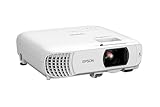
| Epson Home Cinema 980 | Dedicated movie viewing | 3-chip 3LCD, 1080p |
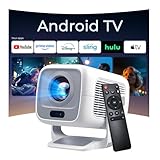
| Android TV 600 ANSI (X3) | Compact smart projector | 600 ANSI, 0.8:1 short throw, HDR10 |
How to Choose
Brightness: lumens versus ANSI lumens
Brightness decides whether a projector works with the lights on, and it is the spec that budget models stretch the most. Business and classroom models such as the ones listed at 4000 and 5500 lumens are built for lit rooms. Home-cinema and portable units are usually meant for dim or dark rooms. Watch the unit: a bare “lumens” number can be a loose marketing figure, while ANSI lumens follow a standard measurement method, so a listing that states 600 ANSI is more comparable than one that only quotes a large unlabeled number. For a dark basement, a few hundred ANSI lumens can be workable, since contrast improves when no light competes with the picture; for a living room with windows, aim much higher.
Native resolution, decoding, and what “4K support” means
Several titles mention “4K” next to “1080P.” Read that as the projector accepting or decoding a 4K file while still displaying at 1080p, unless the title says the chip itself is 4K. If sharpness is the priority, look for the word “native” attached to 1080P, or for a known chip technology such as 3LCD or DLP from an established maker. Treat a “300-inch” claim as a maximum image size rather than a sensible target; most rooms are better served by a screen of roughly 100 to 120 inches, where 1080p still looks crisp from a normal seating distance.
Lens controls and placement
Optical zoom lets you fill the screen without moving the unit, which matters if the shelf or ceiling mount is fixed. Auto focus and auto keystone correct angle problems, while corner adjustment handles awkward mounting spots. A short-throw ratio, such as the 0.8:1 figure on one listing, lets the projector sit closer to the wall. Budget models often keep keystone but drop optical zoom, so check both before buying if your room is not ideal. Digital keystone also shrinks the usable image slightly, which is one reason a straight-on placement is always the cleaner option.
Smart platform, ports, and audio
Built-in platforms (Roku TV, Google TV, Android TV) remove the need for a streaming stick. Licensed platforms tend to be easier to navigate than generic app stores. If you game or use a laptop, confirm HDMI and USB, and look for PS5 or Xbox compatibility mentioned in the title. Internal speakers on small projectors are usually modest, so Bluetooth output to a soundbar or headphones is a useful feature, and Dolby Audio support is a plus for movies. Also confirm how the light source and cooling are described, because a small enclosure running a bright source can be noisy in a quiet room.
The 8 Best Options
Aurzen Roku TV D1R
This portable projector builds the Roku TV platform into a mini body, so there is no separate stick to plug in. The title lists 1080P FHD, Dolby Audio, auto focus, keystone correction, and zoom, which covers the setup steps that annoy first-time buyers. It is pitched at both home and outdoor movies, so it suits someone who wants one small projector to move between the den and the patio.
- Strength: Roku TV is built in, with access to the usual streaming apps.
- Strength: auto focus and keystone adjustments reduce manual setup.
- Trade-off: the listing gives no lumen or ANSI figure, so judge it as a dim-room unit.
Skip it if you need to project in a bright room or want a lens-shift-heavy installation.
ViewSonic LS740HD
The LS740HD is a laser projector listed at 5500 lumens, aimed at big rooms rather than a bedroom shelf. The title adds optical zoom, keystone, corner adjustment, ceiling mounting, and 360-degree projection, a flexible set for spaces where the projector cannot sit directly in front of the screen. Golf simulation and auditorium use appear among the listed scenarios, a hint at how broad the target audience is.
- Strength: 5500 lumens suits auditoriums, classrooms, and lit living spaces.
- Strength: optical zoom and corner adjustment make fixed installs easier.
- Trade-off: the listing shows no built-in streaming platform, so plan on an external player.
Skip it if you want a small, portable projector for occasional movie nights.
HAPPRUN Google TV Projector
This one pairs native 1080P with an officially licensed Google TV interface. The title promises 10K+ apps, 4K decoding, Dolby, AirPlay support, WiFi, Bluetooth, and PS5 compatibility, so it targets people who want streaming and console play in one box without hunting for a separate stick or adapter.
- Strength: licensed Google TV with a large app catalog.
- Strength: AirPlay and Bluetooth support help with phones and speakers.
- Trade-off: the listing shows no brightness figure, so dark-room use is the safe assumption.
Skip it if you prefer a business-grade projector with optical zoom and a high stated brightness.
YGSKK Mini Projector
A small, bedroom-oriented projector with WiFi, Bluetooth, and built-in apps. The title mentions electric focus and a list of supported sources: smartphone, TV stick, iPad, PS5, laptop, HDMI, and USB. The bedroom wording in the title makes clear that it is meant for personal, close-range viewing.
- Strength: a wide list of compatible sources in a compact body.
- Strength: electric focus saves manual dial adjustments.
- Trade-off: built-in apps on mini projectors can be limited, so a streaming stick via HDMI may still be handy.
Skip it if you want a bright-room unit or a certified streaming platform on board.
Dxyiitoo Native 1080P WiFi 6 Projector
Aimed at outdoor movies and console play, this model lists WiFi 6, two-way Bluetooth, and a 300-inch maximum display. Compatibility covers iOS, Android, PC, Xbox, PS4, TV stick, HDMI, and USB, so a shared family projector can switch between a phone, a console, and a laptop.
- Strength: WiFi 6 and two-way Bluetooth give flexible wireless connections.
- Strength: broad device compatibility for phones, consoles, and sticks.
- Trade-off: the title also uses “4k home theater” wording, which should be read as input support, not a 4K chip.
Skip it if you want a recognized-brand lens and warranty setup.
ViewSonic PA503HD
The PA503HD is a 1080p Full HD DLP projector listed at 4000 lumens. HDMI, USB, optical zoom, auto keystone, and 120Hz appear in the title, and the listed use cases are classrooms, business, and presentations. Large screens and smooth action are also named, so it is not limited to slide decks.
- Strength: 4000 lumens handles rooms where lights stay on.
- Strength: 120Hz and DLP are a reasonable fit for fast motion on screen.
- Trade-off: it is positioned for presentations, so cinema-style black levels are not a stated feature.
Skip it if your main goal is a dark-room movie theater.
Epson Home Cinema 980
Epson’s listing is short but telling: a 3-chip 3LCD 1080p movie projector. 3-chip designs project red, green, and blue through separate panels, a design associated with color consistency, and it is the only title in this group that leans on a three-panel image engine as its headline feature.
- Strength: the 3LCD architecture from a major projector maker.
- Strength: positioned plainly as a movie projector, not a presentation tool.
- Trade-off: the title lists no lumens, smart platform, or lens details, so confirm those on the spec sheet.
Skip it if you want a built-in streaming system without adding a stick.
Android TV 600 ANSI Projector (X3)
This compact smart projector pairs Android TV with a 600 ANSI figure, HDR10, and a 0.8:1 short throw ratio. Auto focus, keystone, a HiFi speaker, WiFi, Bluetooth, and a 270-degree rotating stand are all named in the title. The combination makes it a tidy choice for a small apartment where throw distance is limited.
- Strength: a stated ANSI figure, which is easier to compare than an unlabeled number.
- Strength: the rotating stand and short throw suit tight rooms.
- Trade-off: “4K Support” in the title is about input handling; native output is 1080P.
Skip it if you want a brand with a long projector track record.
Which One Fits Your Situation
A bright living room or a classroom
Go with the ViewSonic LS740HD for the largest rooms, or the ViewSonic PA503HD if 4000 lumens is enough. Both are built for lit spaces.
A dedicated dark-room movie corner
The Epson Home Cinema 980 is the straightforward pick because it is described as a movie projector with 3LCD technology. Pair it with a streaming stick.
A bedroom setup with minimal wiring
The Aurzen Roku TV D1R keeps streaming built in, and the YGSKK Mini Projector is a lighter alternative with electric focus.
Backyard nights and console play
Choose the HAPPRUN Google TV projector for its app catalog and PS5 compatibility, or the Dxyiitoo model for WiFi 6 and a long list of supported sources.
Common Mistakes
- Treating a bare lumens figure as equal to an ANSI figure.
- Reading “4K support” as native 4K resolution.
- Ignoring ambient light and choosing a dim-room projector for a sunlit space.
- Skipping optical zoom and keystone checks when the mounting position is fixed.
- Assuming built-in speakers are enough for movies, when Bluetooth to a soundbar often improves things, and chasing a maximum image size such as 300 inches when the room has no wall that large.
Related guides
- Battery Operated Smoke And Carbon Monoxide Detectors
- Combination Smoke And Carbon Monoxide Detectors
- Aio Liquid Coolers For High Performance Gaming
Frequently Asked Questions
Is 1080p enough for a projector?
For screens up to a typical living-room size, yes. It is also the most common resolution for console games and streaming, so the content matches the hardware.
How many lumens do I need?
A dark room can work with a few hundred ANSI lumens, while rooms with ambient light call for models in the thousands, like the 4000 and 5500 lumen ViewSonic units.
Do I need a projector with a smart platform?
Not strictly. A streaming stick over HDMI works with almost any projector, but a built-in platform reduces cables and remotes. Whichever you pick, check that the services you subscribe to are actually listed, since some generic app stores omit major ones.
What does keystone correction do?
It reshapes a trapezoid image into a rectangle when the projector sits at an angle. Optical zoom and lens placement still give a cleaner result than digital correction alone.